Donizetti – Maria Stuarda
Maria Stuarda – Eleonora Buratto
Elisabetta – Silvia Tro Santafé
Leicester – Ismael Jordi
Giorgio Talbot – Manuel Fuentes
Lord Guglielmo Cecil – Carles Pachon
Anna Kennedy – Laura Orueta
Cor de la Generalitat Valenciana, Orquestra de la Comunitat Valenciana / Maurizio Benini.
Stage director – Jetske Mijnssen.
Palau de les Arts, València. Saturday, December 16th, 2023.
This Maria Stuarda represents the next instalment in Donizetti’s Tudor trilogy at the Palau de Les Arts. Conceived in collaboration with De Nationale Opera, Amsterdam, this run also features Eleonora Buratto, Silvia Tro Santafé and Ismael Jordi in principal roles, just as they featured in last year’s Anna Bolena. Also in common with the Bolena last year is Maurizio Benini’s musical direction.
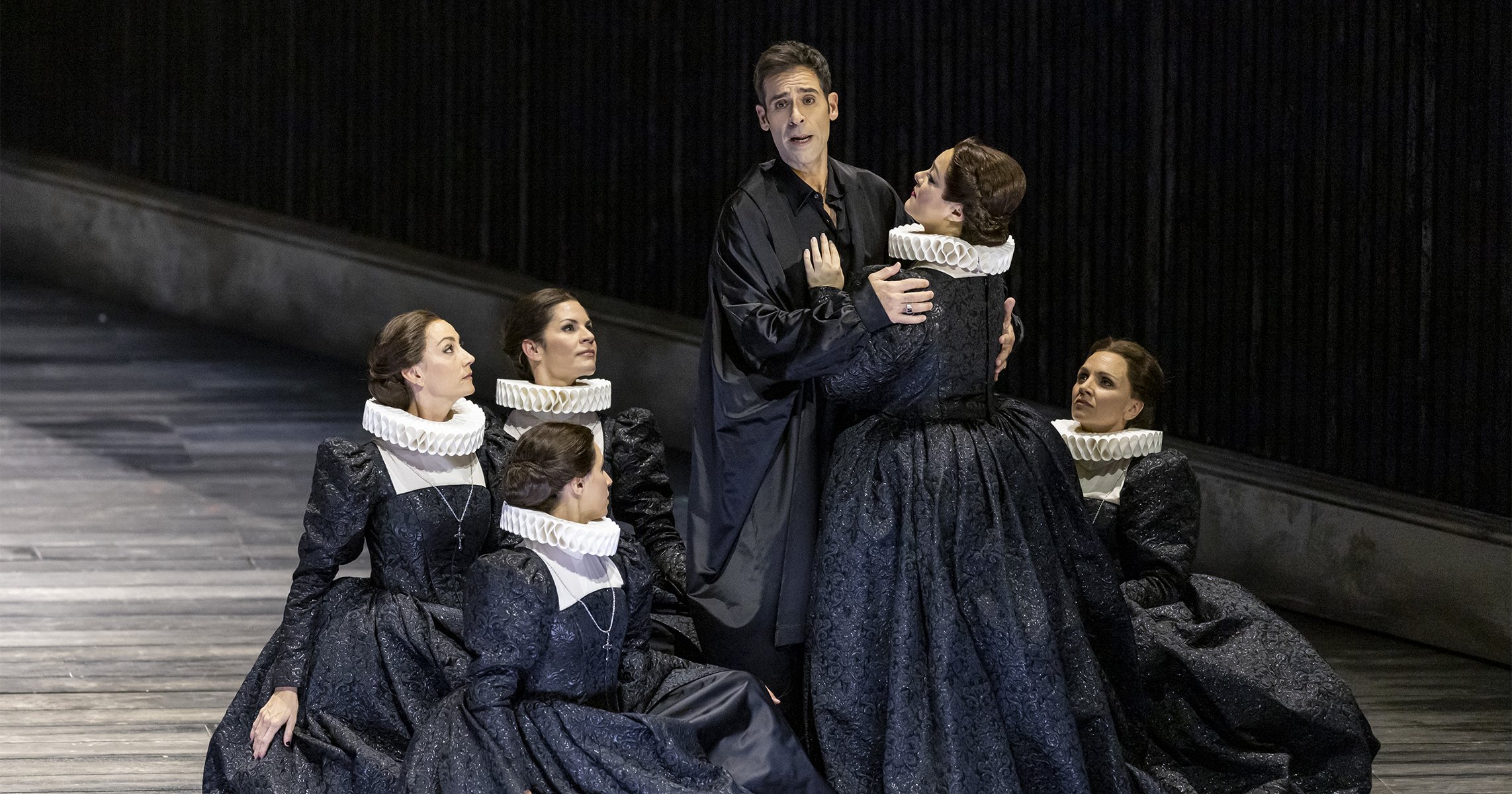
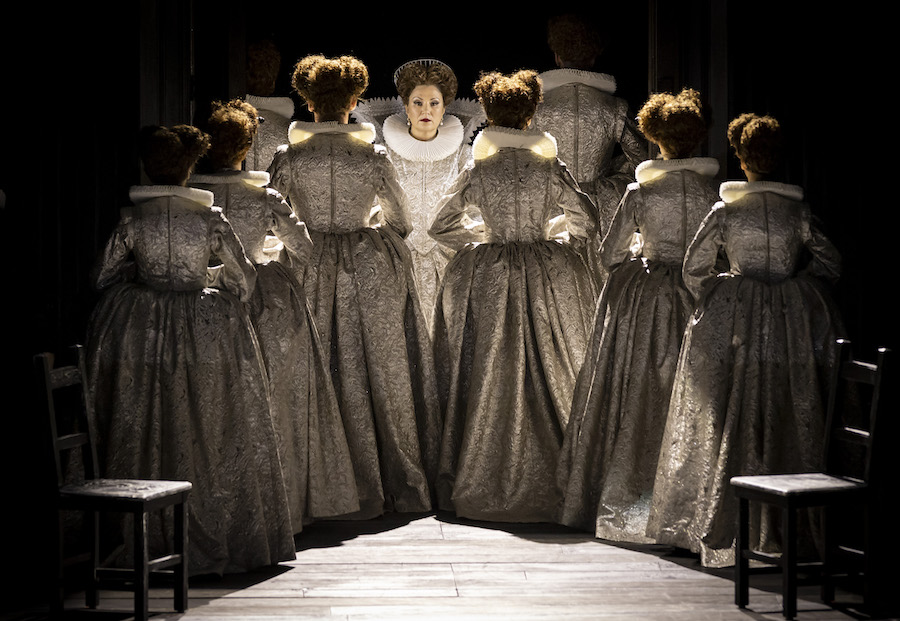
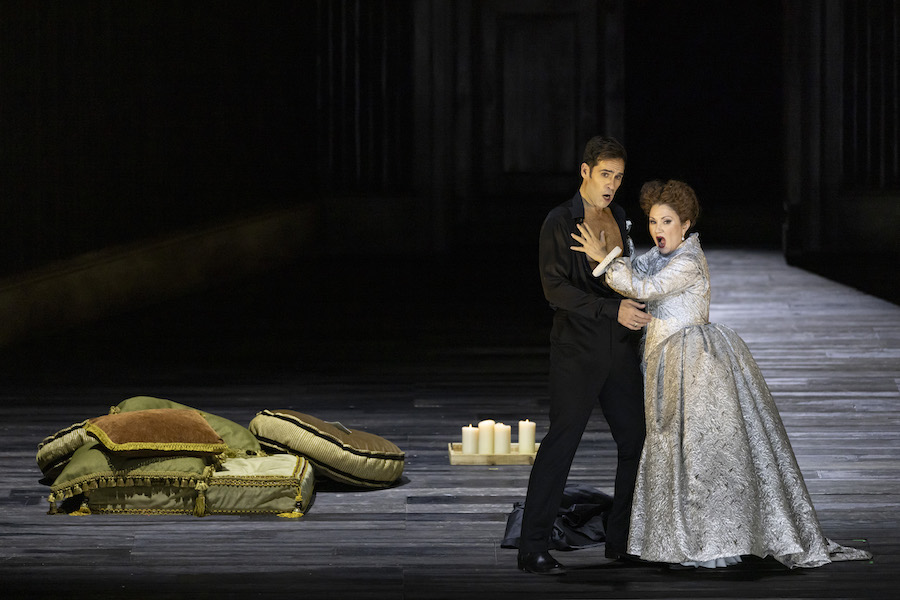
Perhaps unsurprisingly, given this production forms part of a trilogy, there’s an element of déjà vu in Jetske Mijnssen’s staging. Ben Baur’s set also brings back recollections of last year’s performances, setting the action in a wood-panelled room which tapers to a door at the rear of the set. The evening takes place exclusively within this set, with Mijnssen frequently using a corps of danseurs, choreographed by Lillian Stillwell, to add additional visual interest. Indeed, this focus on the visual was both a strength and a weakness of Mijnssen’s staging. She does give us some memorable stage pictures – for instance with Elisabetta singing her opening scene walking around a stage populated by courtiers, demonstrating her solitude despite her public role. Similarly, as Leicester and Talbot recall Stuarda, around a half dozen doubles of Stuarda perambulate around the stage. The most memorable image of the evening came after the intermission, with the set recessed further back, enclosing Stuarda in both a mental and physical prison, while the shadowy figures of the chorus circulated at the front of the stage.

Yet, it also felt that Mijnssen failed to trust her singers to tell the story on their own. There was some frankly risible choreography with the danseurs indulging in some high kicks in the opening scene, perhaps having gotten lost on the way from the Moulin Rouge. Indeed, every time the danseurs appeared, one had a sense of ‘here we go again’. I found that their presence barely added anything to proceedings, rather adding a sense of verbal clutter that was in stark contrast with the cleanness of the set. We also, in common with Bolena, had a young girl dressed as Elisabetta occasionally perambulate around the stage. I just wish Mijnssen had instead trusted her superb cast of singing-actors to fully guide the story themselves – although the danseurs did add a note of, presumably unintentional hilarity, to the proceedings.
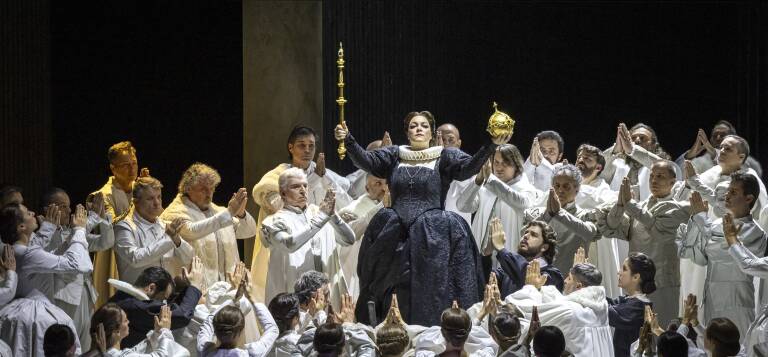
Musically, things were much more positive – although here also, my impressions were a bit mixed. In last year’s Bolena Maurizio Benini led a wonderfully rhythmically vigorous reading. Here, I found him somewhat less satisfying. The precision of attack he obtained from the superlative house orchestra was undeniable. And yet I found his tempi to frequently sag, rather than giving us a sense of drama rushing to its inevitable conclusion – it all felt like a congenial amble through the score. I longed for Benini to bring a sense of dynamism to his conducting, one that matched the precision of the approach that was provided by the house forces. The quality of the orchestral playing was undeniable. The string tone had a wonderful autumnal richness to it, yet never felt too fatty in vibrato, while the eloquence of the wind playing, in particular the clarinets, was beguiling. The brass was on excellent form all night. Francesc Perales’ chorus sang with its customary blend and warmth of tone, giving us a rousing account of the prayer that was sung with heartfelt generosity.
Indeed, that moment was a highlight of the entire evening, with Buratto’s Stuarda soaring over the textures gloriously. I’ve said it multiple times about Buratto, but when listening to her one has this undeniable sense that she represents the unbroken line of the great Italian vocal tradition, both in technique and in the kind of profound understanding of the idiom that cannot be taught. Her soprano has a fabulous strawberries and cream tone, with wonderful sheen. Her opening number saw her spin seemingly endless lines, using rubato intelligently and always at the service of the text, combining easy agility with an impeccable legato. Her big denunciation of Elisabetta was delivered with relish, emerging from a rich chestiness and opening up thrillingly further up, the registers always integrated. I will, however, add a note of caution. There was a tendency for the tone to thin out a little further up in her initial duet with Leicester and the very top takes on a slightly metallic edge. I am convinced that Buratto is the finest Italian soprano before the public today and she’s an immensely serious and diligent artist. I very much hope that she will continue to look after her fabulous instrument, because she’s a singer of rare quality. Her big closing scene was absolutely riveting.
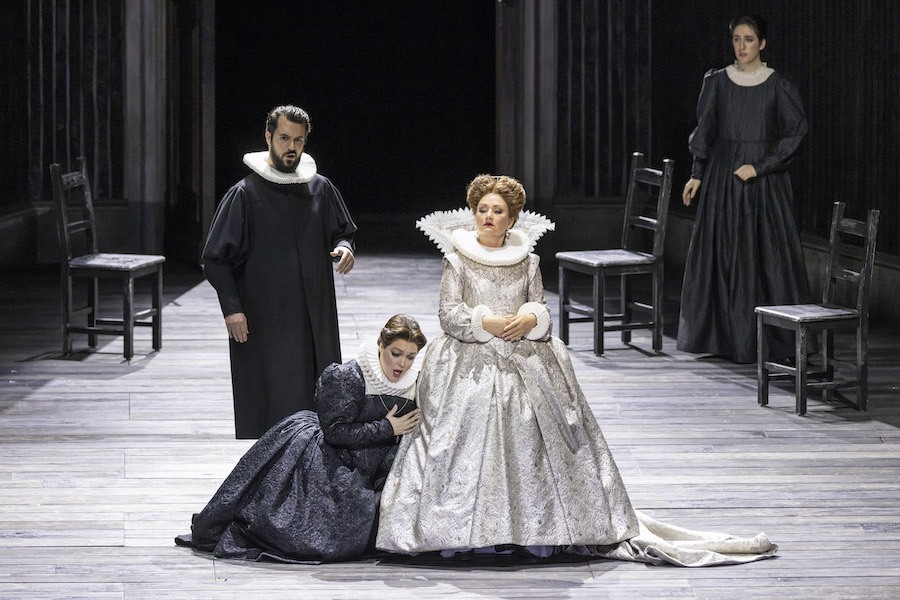
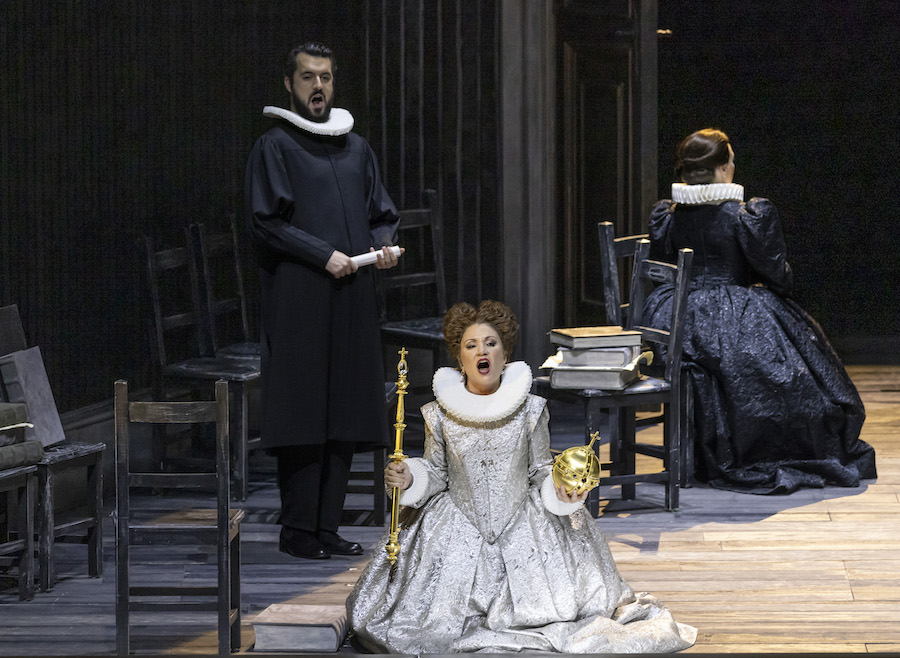
Tro’s Elisabetta also demonstrated a deep understanding of bel canto style and technique. She turned the corners with ease, offering some attractive embellishments to the line in her opening scene. It was a genuine shame that it was accompanied by an incredibly bronchial audience – it seemed that every single measure was accompanied by a cough from somewhere in the hall. Her mezzo has an agreeably orange tone, perhaps appropriately so for a singer from València, and she was fearless in the way that she approached the top. Tro was also unafraid to exploit a rich chestiness, using it as the foundation for a voice that was even throughout.
Jordi brought a focused elegance to the role of Leicester, similarly able to turn the corners with ease. His tenor is easily produced and he attacked the higher reaches with enthusiasm. I did find that to my ears, Jordi had a tendency to sit under the note. Carles Pachon gave us an earnestly-sung Cecil, in a similarly focused baritone with a bright and easy top – certainly a singer I would like to hear more from. As indeed would I like to hear more from Manuel Fuentes as Talbot. For a bass, he’s still very young, but there’s some serious promise here. His legato is excellent and he also enjoys an implicit bel canto sensibility. The tone is already handsome and well produced and will surely fill out even more with time. Laura Orueta, a member of the house’s young artist’s program, was a positive presence in her brief interjections.
There was a lot to enjoy in this evening’s Maria Stuarda. Theatrically, the impressions were a bit mixed, particularly given the frankly ridiculous choreography, but there were some notable stage pictures and the entire cast was very committed. Musically, there were multiple rewards, not least the fabulous orchestral playing and choral singing and the consistently excellent performances from the principals. What will stay with me from this evening was the glorious noise that Buratto and the chorus made during the prayer, both soaring with seemingly unlimited ease. The audience responded throughout the evening with generous applause and loud cheers at the final curtain, particularly so for Buratto and Tro.
 operatraveller.com
[…] first of three Don Carlo(s) this year, and my penultimate opera of the year was in València with Maria Stuarda. Both featured Eleonora Buratto in the lead soprano role. I am convinced that Buratto […]
[…] with De Nationale Opera in Amsterdam and the Teatro San Carlo in Naples. In common with Maria Stuarda in 2023 and Anna Bolena in 2022, we had the presence of Eleonora Buratto and Silvia Tro Santafé in […]