Strauss – Ariadne auf Naxos
Primadonna / Ariadne – Margarita Vilsone
Der Tenor / Bacchus – Heiko Börner
Zerbinetta – Sara Fanin
Harlekin – Gurgen Baveyan
Scaramuccio – Mathias Frey
Truffaldin – Vladimir Sazdovski
Brighella – Christian Collia
Der Tanzmeister – Andrea Galli
Der Komponist – Sophie Haagen
Ein Musiklehrer – Marcello Rosiello
Ein Perückenmacher – Dario Giorgelè
Ein Lakai – Francesco Samuele Venuti
Der Offizier – Gianluca Sorrentino
Najade – Olga Dyadiv
Dryade – Eleonora Vacchi
Echo – Chiara Notarnicola
Der Haushofmeister – Peter Harl
Orchestra della Fondazione Teatro Lirico Giuseppe Verdi di Trieste / Enrico Calesso.
Stage director – Paul Curran.
Teatro Verdi, Trieste, Italy. Saturday, February 24th, 2024.
Today marked my first ever visit to the Teatro Verdi in Trieste, for this opportunity to see Paul Curran’s staging of Ariadne auf Naxos, produced in collaboration with Bologna and the Venetian Fenice. It’s a house that’s been on my radar for quite some time, since they frequently have some very interesting casting. The city itself has become familiar to a wider public thanks to the excellent Italian crime drama, La porta rossa, which features an episode centred around this beautiful house. The theatre is exquisite, the welcome cordial, and the acoustic delectably warm and clear.
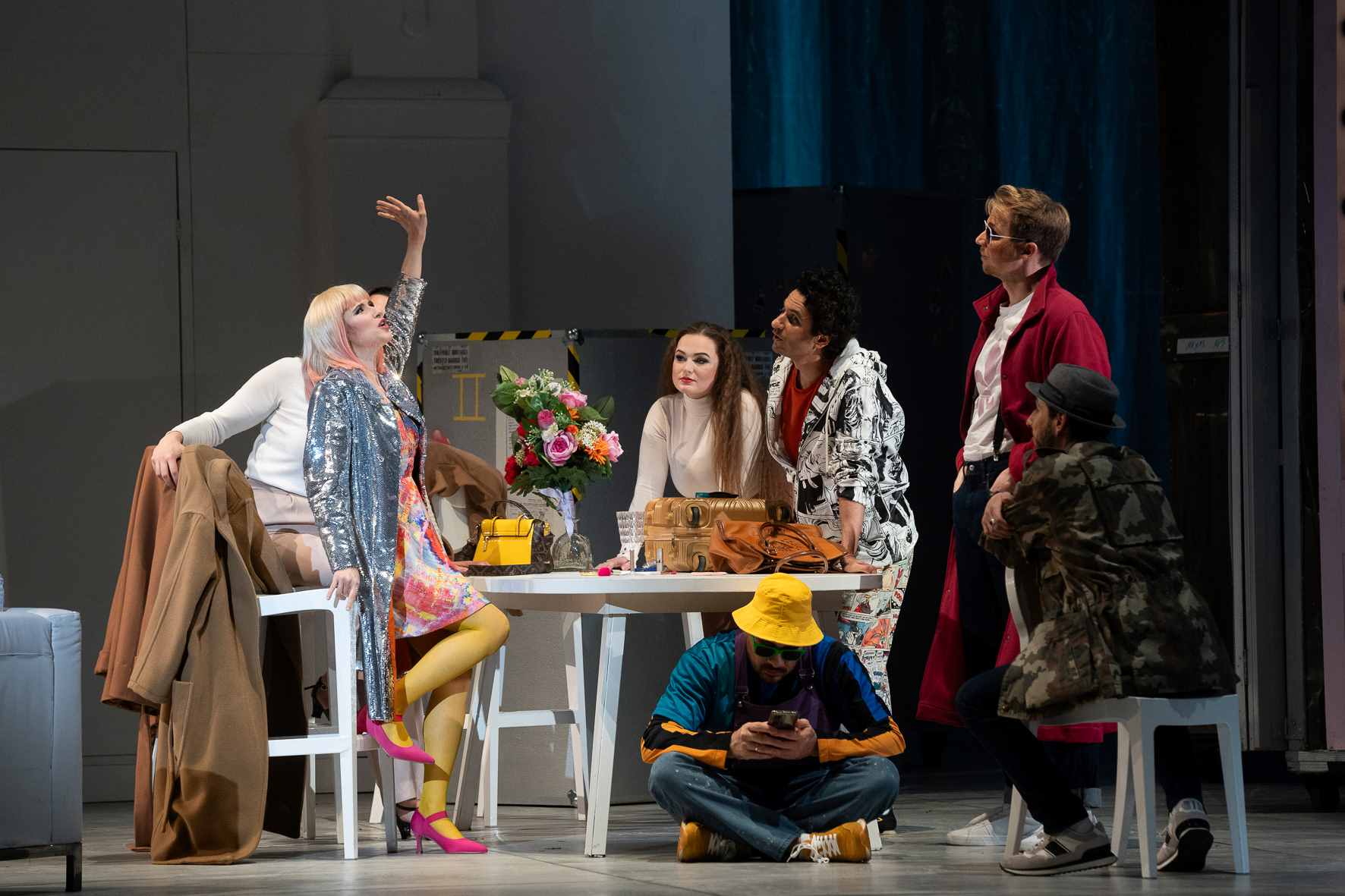
Curran’s staging, here revived by Oscar Cecchi, sets the action in a suitably palatial home. The staff scurry around in the prologue, using their smartphones to communicate, Curran placing the action very much in the modern day. The opera proper takes place in the same room, here accessorized with mythological furniture for Ariadne’s initial contributions, with a shiny box rolled out for when Zerbinetta and her troupe show up. Curran very much sees the opera as a continuation of the prologue, with the Tanzmeister, Musiklehrer and Komponist all present at the start of the opera directing the cast, while the principals seem to be continuing the tensions between the troupes that erupted in the prologue. Curran isn’t the first director to carry characters who only appear in the prologue through to the opera – Robert Carsen did it in Munich, while Katie Mitchell had the Komponist conduct the opera from one side in her quite dreadful staging at Aix-en-Provence. But then, after ‘es gibt ein Reich’, the other characters disappear and Zerbinetta sings her aria alone on stage. I don’t know if Curran is attempting to make the point that an opera, at a certain moment, takes on a life of its own, independent of its creators. The less charitable interpretation would be that he simply ran out of ideas. Personally, I quite like the idea of a work of art just taking on a life of its own.
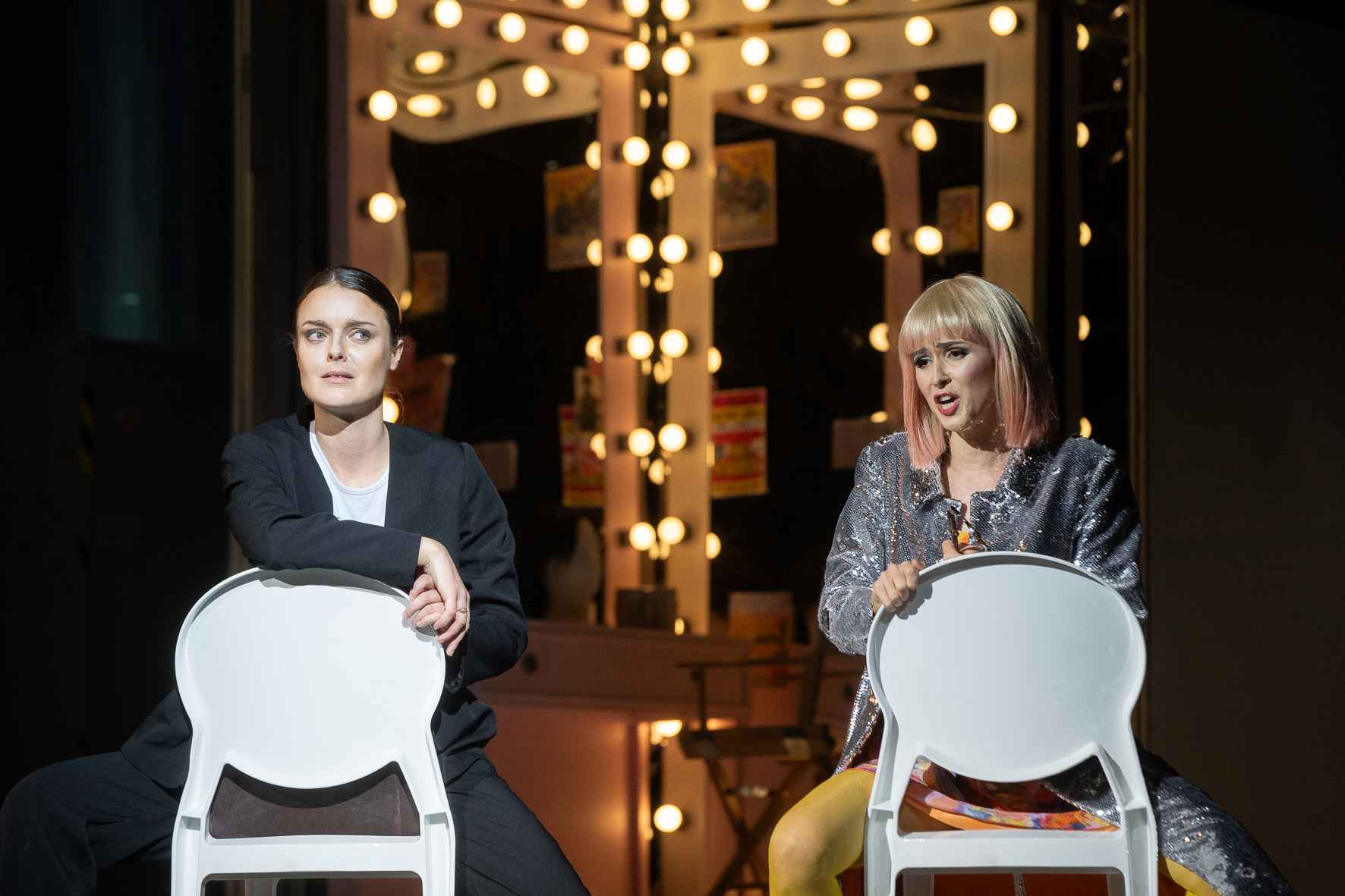
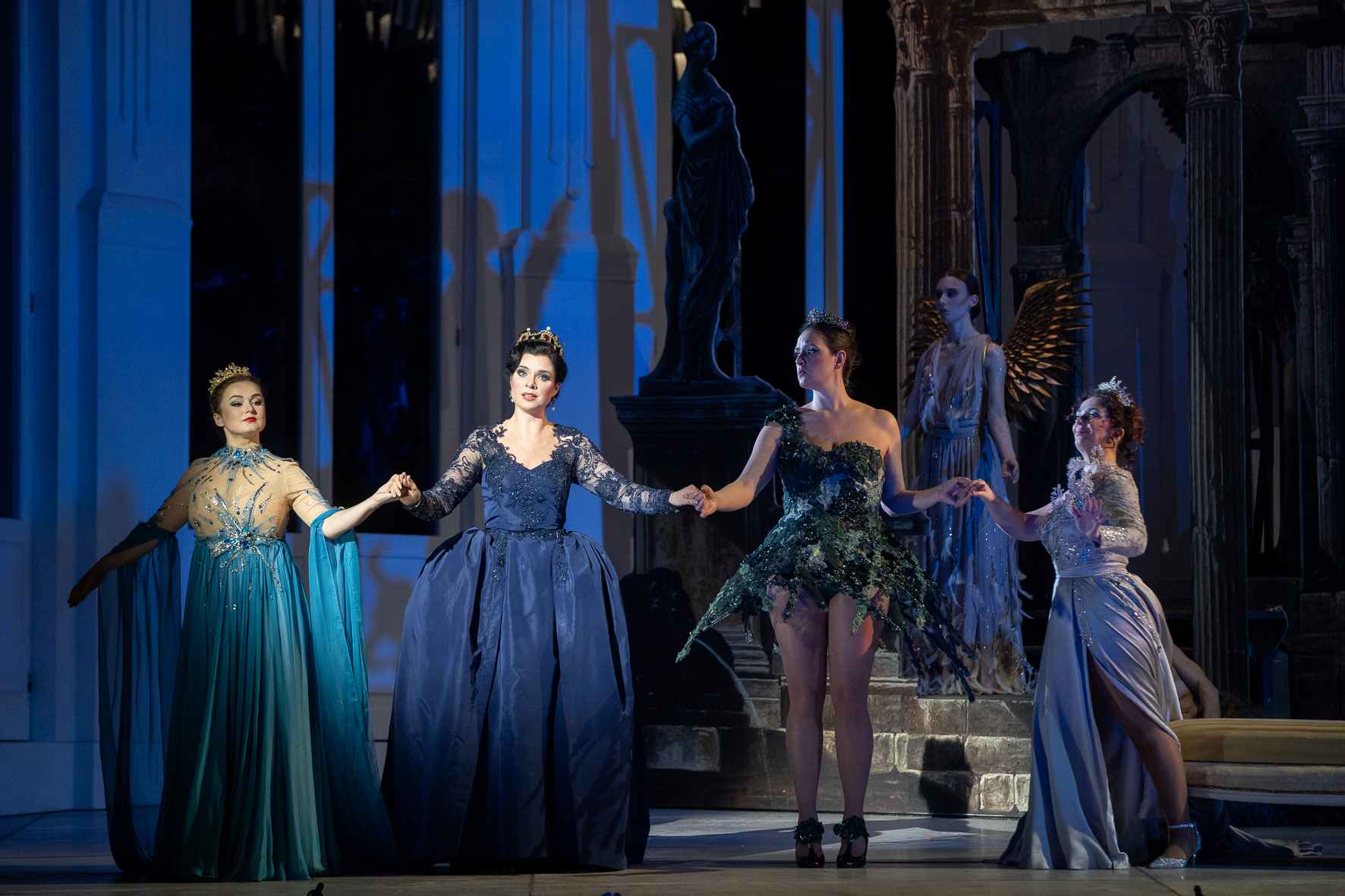
Some of Curran’s stage pictures were undeniably beautiful. The way that the household bustle stopped while the Komponist sang that glorious arioso, or the genuine and touching chemistry between the Komponist and Zerbinetta as the latter sang about the shortness of moments. The set for the opera itself was undeniably beautiful, with its Grecian hints. The personenregie was generally active, but there was a fair bit of standing and delivering for Ariadne in her arias.
Musically, there was much to enjoy, starting with the playing of the excellent house orchestra. There’s something very special about hearing an Italian opera orchestra play Strauss. Under Enrico Calesso’s direction, the sheer pulchritude of phrasing they gave us was magical. This is a score full of glorious melodies – the way the solo clarinet and cello phrased theirs in the prelude to the opera was so full of cantabile loveliness. One could understand Calesso’s desire to pull back on the tempo to focus on this exquisiteness, but his approach was perhaps less than ideal for a Saturday matinee where the audience had been enjoying a lunch of the local speciality of gnocchi con gulash. Although, the caffè served at the theatre bar is superb. The result, was that there were many moments where the tempi simply sagged and I longed for Calesso to bring a lighter, more playful touch to Zerbinetta’s aria, for instance. Still, the quality of the orchestral playing was undeniable.
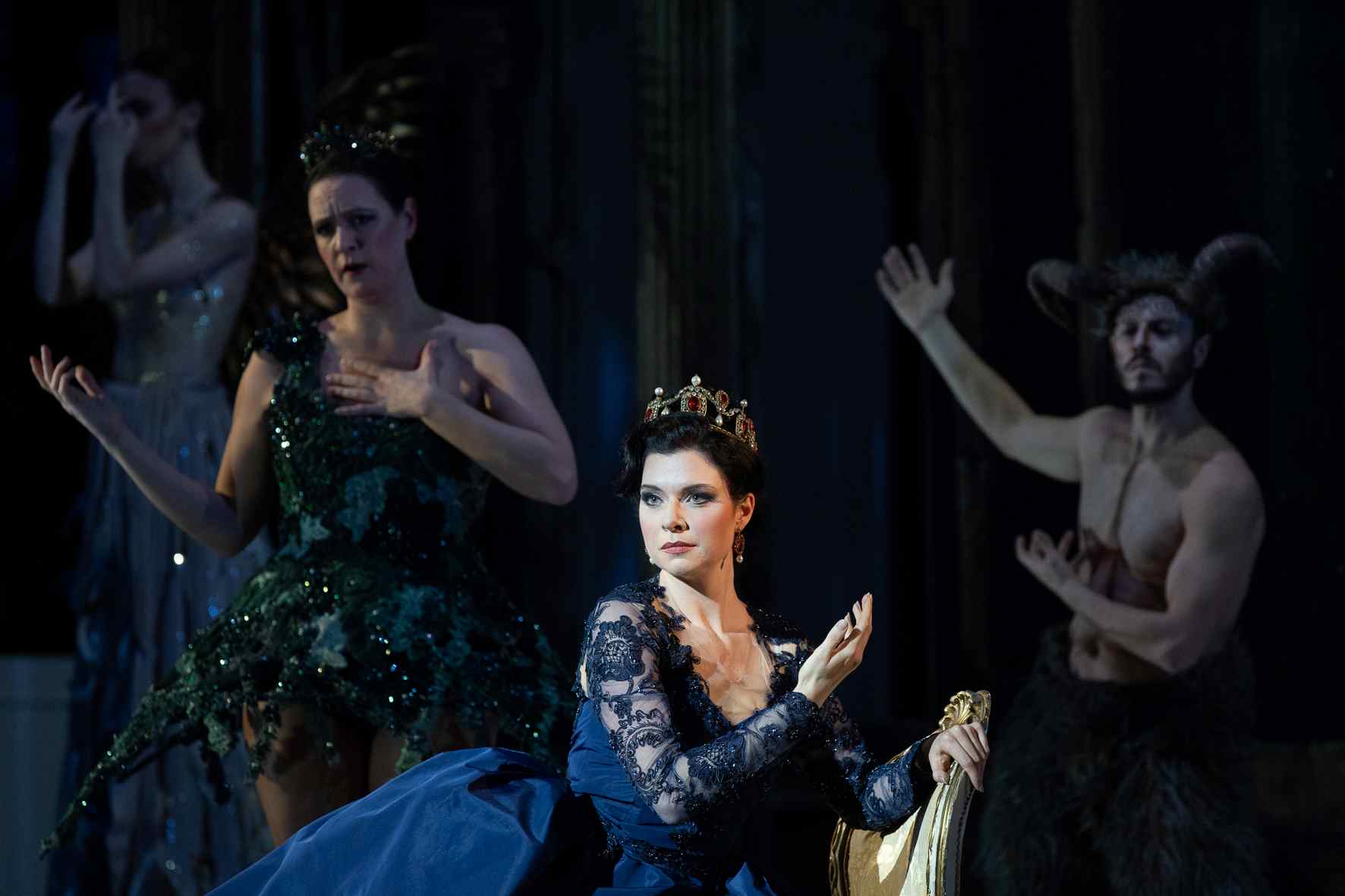
As is usually the case here, the run was double cast, with different singers for the roles of Ariadne and Zerbinetta. I saw Margarita Vilsone in the title role, while Simone Schneider, a glorious Kaiserin in Stuttgart recently, was in the other cast. The Latvian soprano has a burgeoning career in the Strauss roles, having appeared in a number of German theatres. She brought an appropriately statuesque presence to her role, combined with some witty comic timing in the prologue. She filled her ‘ein Schönes war’ with so much emotion, pouring her heart out for us, searching for, and bringing out, meaning in the text and the music. The voice isn’t the most sheerly beautiful to have essayed this role – there’s a steely edge to it and her intonation is woozy, sitting around the note, sometimes flat, sometimes sharp. To my ears it sounds like a lyric instrument being pushed to be a few sizes bigger, with the core support not quite strong enough to sustain the volume that she aims to produce. Vilsone did give so generously of herself, and in that respect, I found her performance deeply moving, but the technique does sound like a bit of a work in progress.
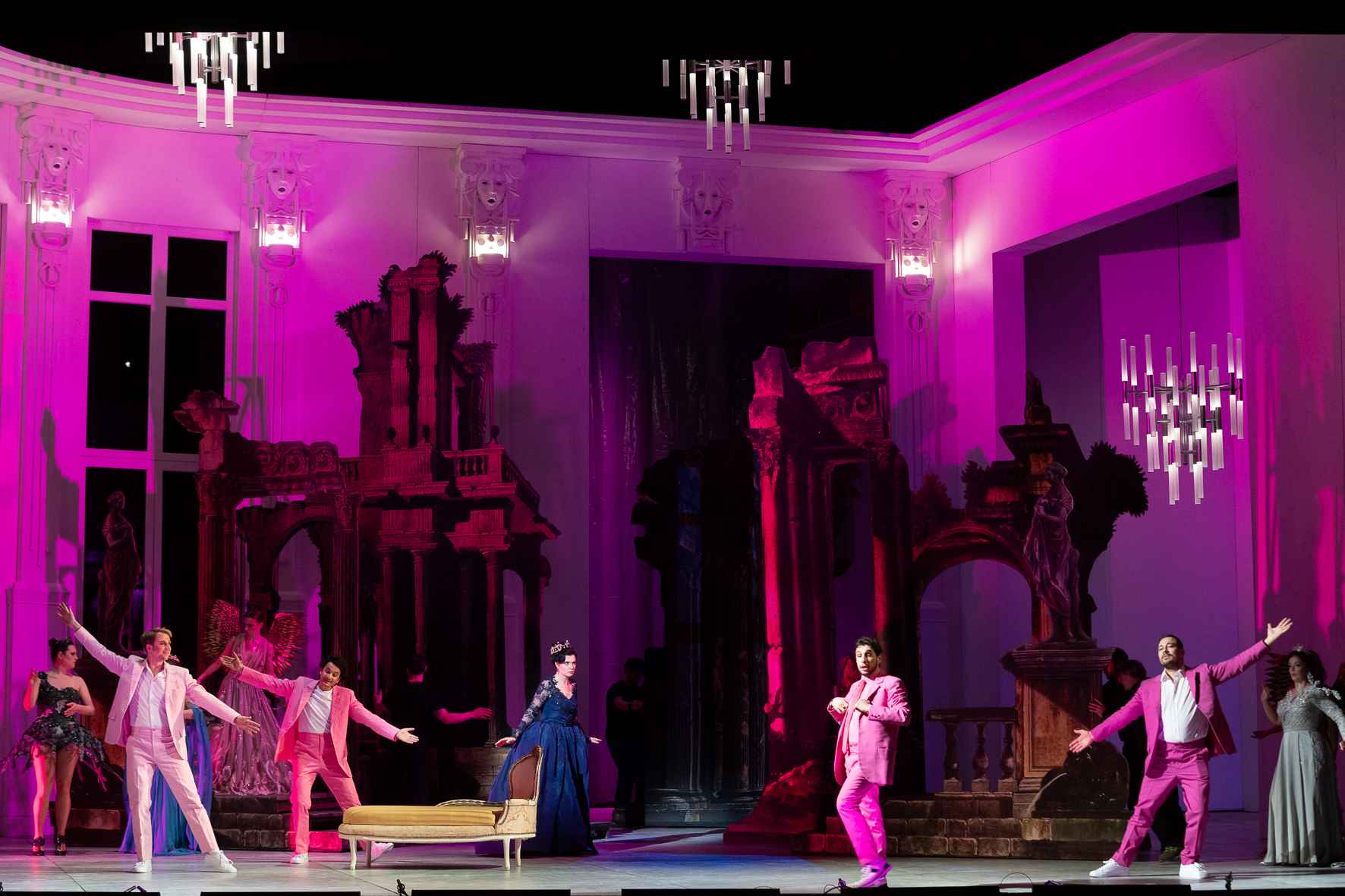
Sara Fanin was a delightfully game Musetta. She has a deliciously fizzy voice, the fast vibrato redolent of a dry prosecco. She dispatched her big aria with confidence, the high E most certainly present – though I wish she’d held on to it a bit longer as it was nice and full. Fanin also made a respectable attempt at a trill and her vivacious stage presence was most engaging. I did find, however, that she could have made more of the text. I longed for her to use the words to bring out meaning, rather than singing over them. Heiko Börner has been singing all the performances of Bacchus in this run. Unfortunately, he was placed too far away for his off-stage interjections in the opera to be heard from my seat in the middle of the Platea. When he came on stage, he sang with real freedom, bravely ringing out on top in a sandy tenor with clear text. It was a real shame that he ran out of steam in his very final phrase after having sung with such ardour up until this point, but he didn’t crack and almost got to the end which, in this role, is an achievement.

Sophie Haagen brought a warm, claret-toned mezzo to the Komponist. The voice is nicely rich in the middle and she was fearless as she approached the top. It might seem churlish to mention that she never quite hit the core of the note in very highest reaches, but this is a role that sits high for mezzos. She phrased her arioso with warmth and generosity, the long, winding lines delivered with impeccable breath control. As the Musiklehrer, Marcello Rosiello went into valiant battle with the German tongue, but on this occasion the language won. It was regrettable that one could barely perceive the text as his vocalism was excellent, the voice resonant and a good size, always firm in tone and never succumbing to the need to hector.

Andrea Galli was an equally game presence as the Tanzmeister, working it around the stage in a terrifically extrovert manner. Galli made a real attempt to communicate the character through the text, his bright, well-focused tenor full of character. Gurgen Baveyan sang the Harlekin with genuine eloquence, sung off the text with warmth and generosity of phrasing – and in a very handsome baritone. The remainder of the cast reflected the admirable standards of the house. Christian Collia brought a similarly bright and lyrical tenor to Brighella, in good German, while Vladimir Sazdovski was a rich and resonant presence as Truffaldin. Francesco Samuele Venuti made much of little as a very handsomely voiced Lakai. We also had a most agreeable trio of nymphs with Olga Dyadiv bright and crystalline as Najade, Eleonora Vacchi’s piquant and firm mezzo as Dryade, and Chiara Notarnicola’s attractively milky soprano as Echo – all three blended charmingly together. Peter Harl was an appropriately sardonic Haushofmeister.
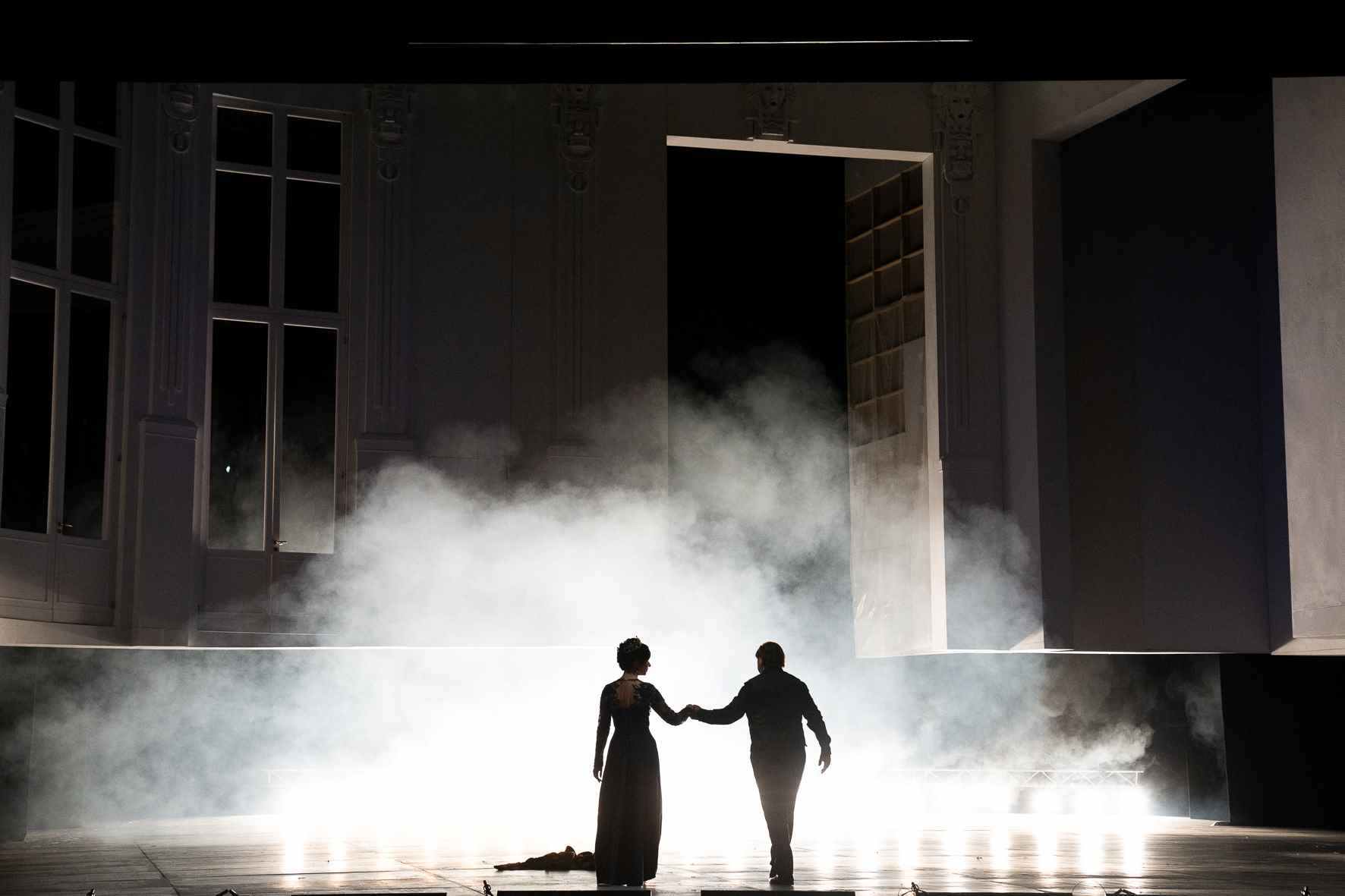
There was a lot to enjoy in this afternoon’s Ariadne. Getting to hear this orchestra play this glorious score was a real privilege. The way that they phrased those glorious melodies was simply magical and always so wonderfully cantabile. Calesso obtained some fabulous playing from them, although he seemed far too keen to focus on beauty, rather than dramatic impetus. Curran’s staging looked good, and brought an admirable clarity of storytelling to the events on stage. The singing was always enthusiastic and genuine and, in that respect, gave much to enjoy. The audience gave a warm ovation at the final curtain.
 operatraveller.com
[…] On the other side of the Alps, I visited the Teatro Verdi in Trieste for the first time to see Ariadne auf Naxos. The house orchestra made that score soar in the most wonderful […]