Verdi – Falstaff
Sir John Falstaff – Pietro Spagnoli
Alice Ford – Dora Rodrigues
Ford – André Baleiro
Nannetta – Rita Marques
Mrs Quickly – Maria Luísa de Freitas
Meg Page – Cátia Moreso
Fenton – Michele Angelini
Dr Cajus – Marco Alves dos Santos
Bardolfo – Leonel Pinheiro
Pistola – Miguel Ángel Zapater
Coro do Teatro Nacional de São Carlos, Orquestra Sinfónica Portuguesa / Antonio Pirolli.
Stage director – Jacopo Spirei.
Teatro Nacional de São Carlos, Lisbon, Portugal. Monday, May 13th, 2024.
For its last mainstage production of the 2023 – 24 season, the Teatro Nacional de São Carlos has imported Jacopo Spirei’s staging of Falstaff from the Teatro Regio di Parma, led by the house Music Director, Antonio Pirolli, with a Portuguese and international cast. Indeed, this is the last mainstage production in the São Carlos, before this beautiful house is closed for renovations over the next two years, and the house forces will perform elsewhere in this glorious city during the closure. Spirei, of course, gave us that incredibly moving Madama Butterfly here last fall, probably the most convincing production I’ve seen of the work, although his Lucie de Lammermoor in Bergamo, also last fall, was much less successful.
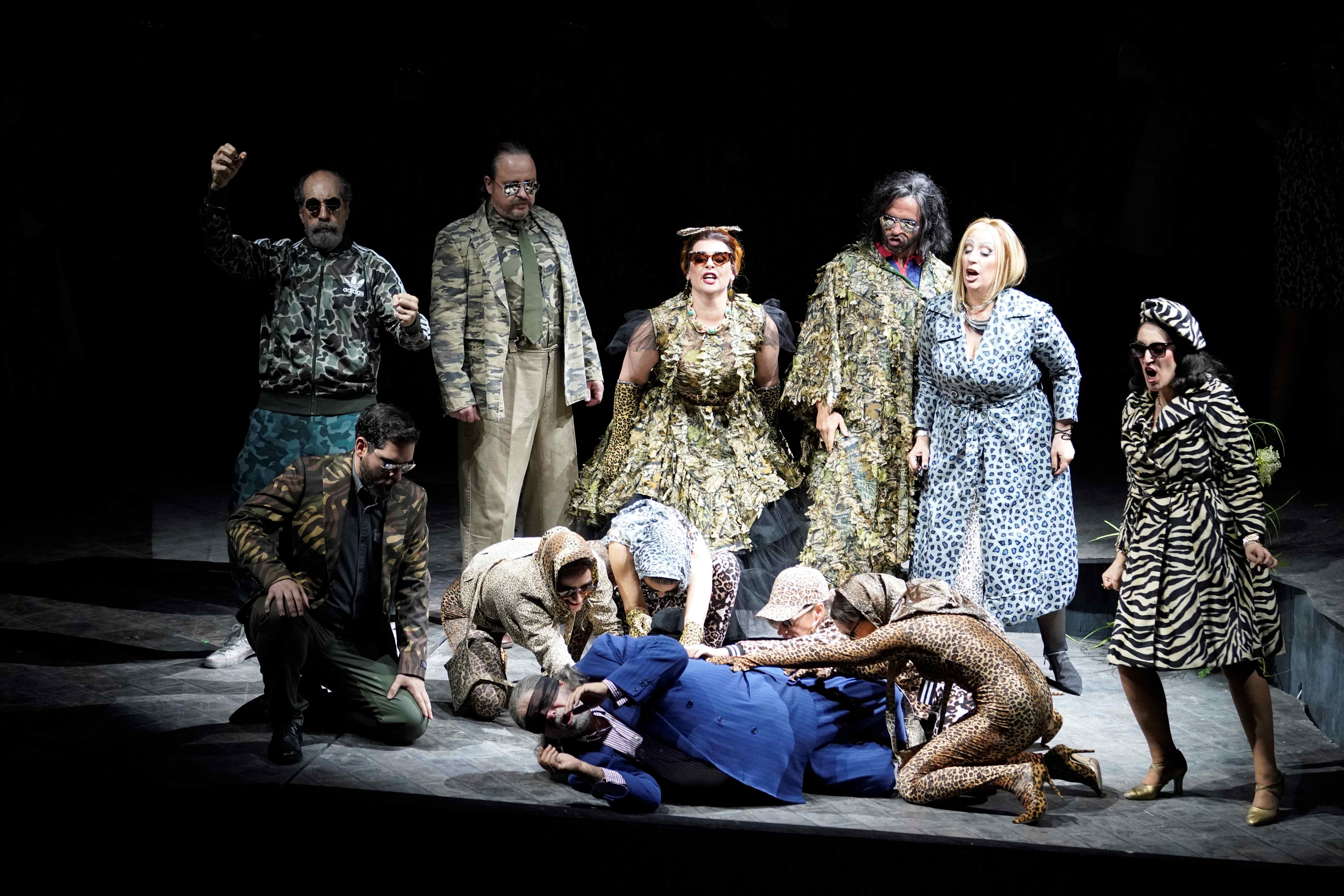
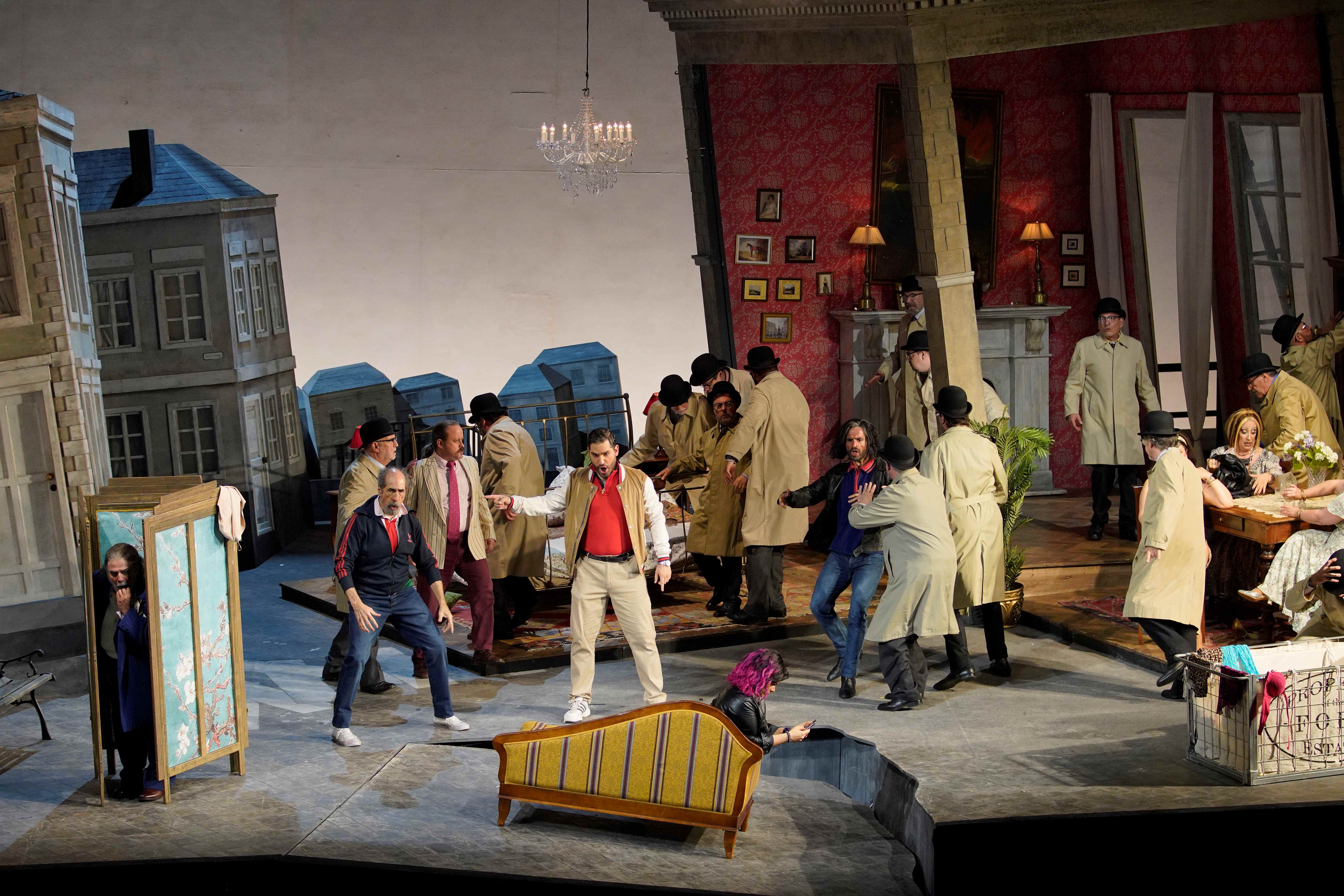
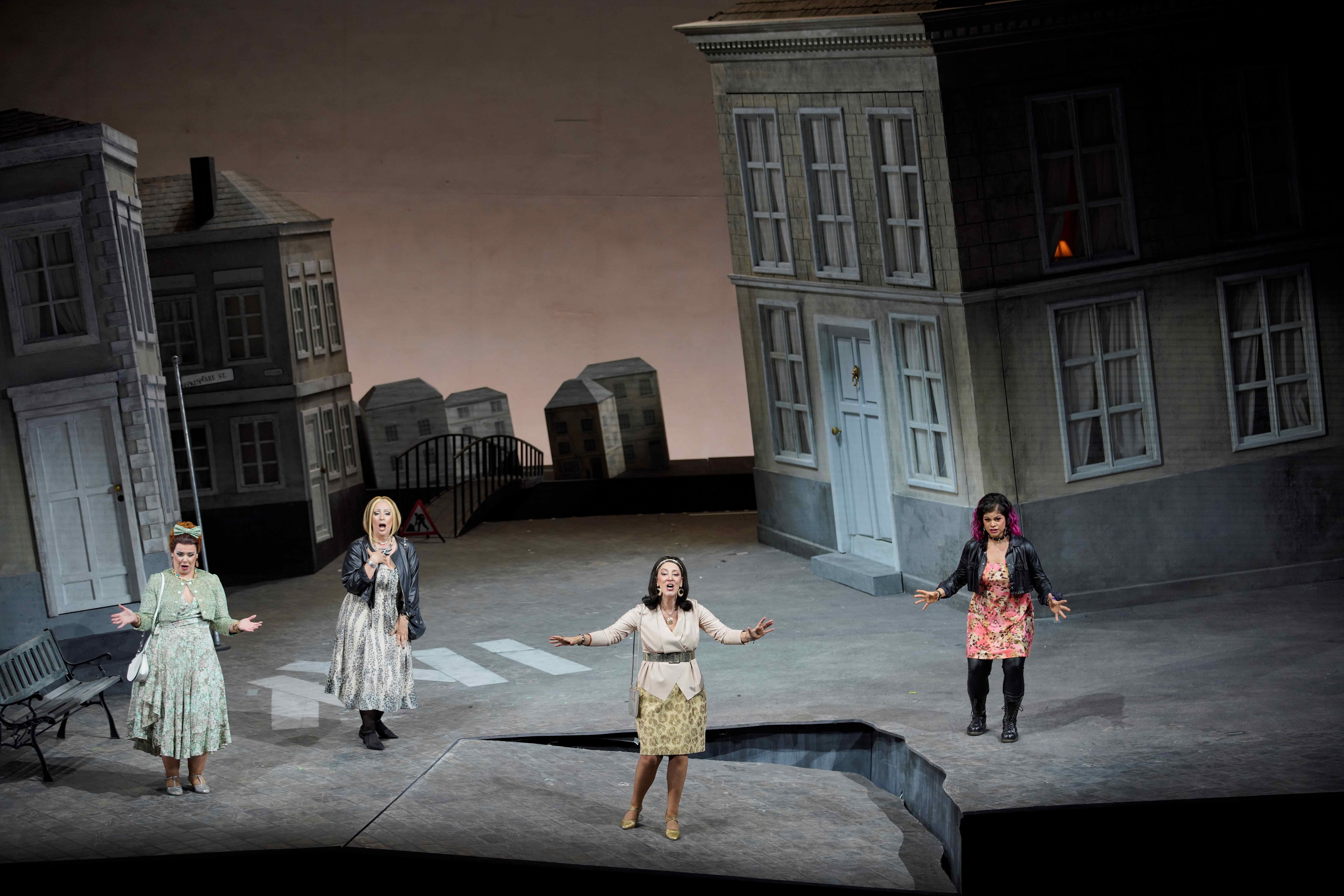
What struck me in particular about Spirei’s staging is how he knows how to work with the acoustic of the house – something that trips so many other directors up. He sets the action in two main sets: one for the Garter inn, where the floor collapses under the significant weight of Falstaff as he walks in, and the centre of Windsor, where the town is set on a slope – perhaps as a nod to the castle hill so well-trodden by those visiting the town. The design of the set allows the singers maximum impact, and when the action takes place in more open spaces, Spirei always brings the singers to the front to encourage audibility. On entering the auditorium, the audience is greeted by the sight of a large Union Jack curtain, a reminder that Britannia was once considered cool – sometime around 1997. The Britishness is a theme throughout, with one of the waiters at the Garter Inn replacing a portrait of Queen Elizabeth with King Charles.
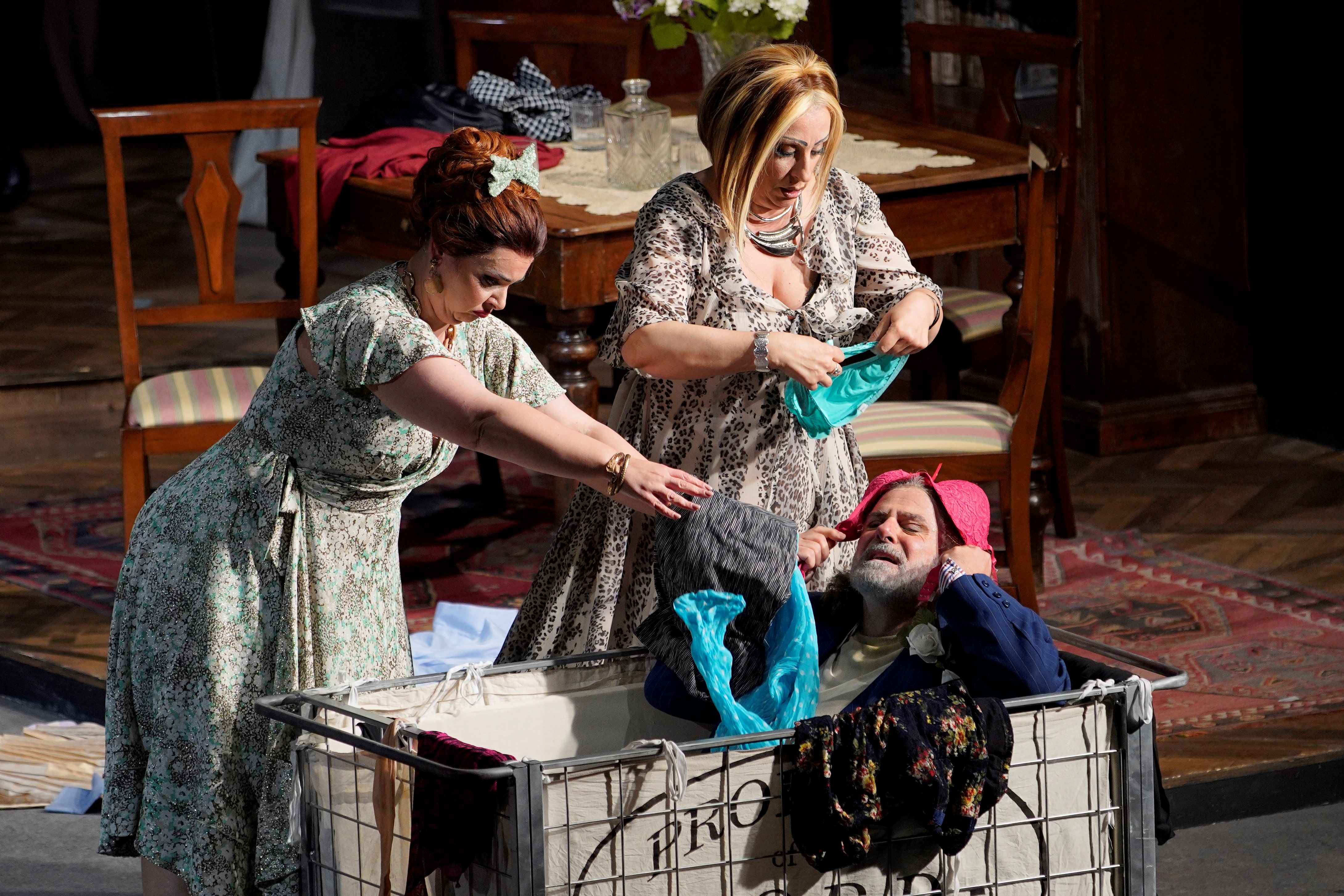
Another strength of Spirei’s staging is in the personenregie. The evening abounds in genuine and vivid interactions between the entire cast. Nannetta is a selfie-snapping goth, flirting with her punk boyfriend Fenton. Quickly’s visit to the Garter Inn sees her wiping the table with disgust. The forest scene is vibrantly brought to life, with the stage crammed with characters, yet never in a way that draws attention away from the principals. Spirei has given us an evening that lives with irrepressible spirit and the cast seemed to be having the most wonderful time.
Right from the opening measures, it was clear that this was going to be an evening of great enthusiasm and bracing wit. Pirolli led his orchestra in a reading that was delightfully swift throughout. He found that ideal balance between those long cantabile lines and a rhythmic punchiness that drove the evening along. In this, he was helped by the strings of the Orquestra Sinfónica Portuguesa, who played with striking accuracy and unanimity in the rapid-fire writing. The winds also played with sheer poetry and pulchritude as they accompanied the young lovers. In their brief interjections, the chorus, prepared by Giampaolo Vessella, sang with warm tone and negotiated the complex stage action expertly.
Pietro Spagnoli gave us a superb assumption of the title role. Unrecognizable in his costume, by Silvia Aymonino, the voice was in fabulous shape tonight, absolutely even from top to bottom. Indeed, the top rang out thrillingly, more so than any previous exponents of the role I’ve heard. It goes without saying that his diction was exemplary, the role truly sung off the text, using Boito’s libretto for genuine comic effect. His ‘Onore’ monologue exemplified that approach, every word filled with meaning. The voice sounded so healthy. Without a doubt, this Falstaff is the best thing I’ve heard from Spagnoli.
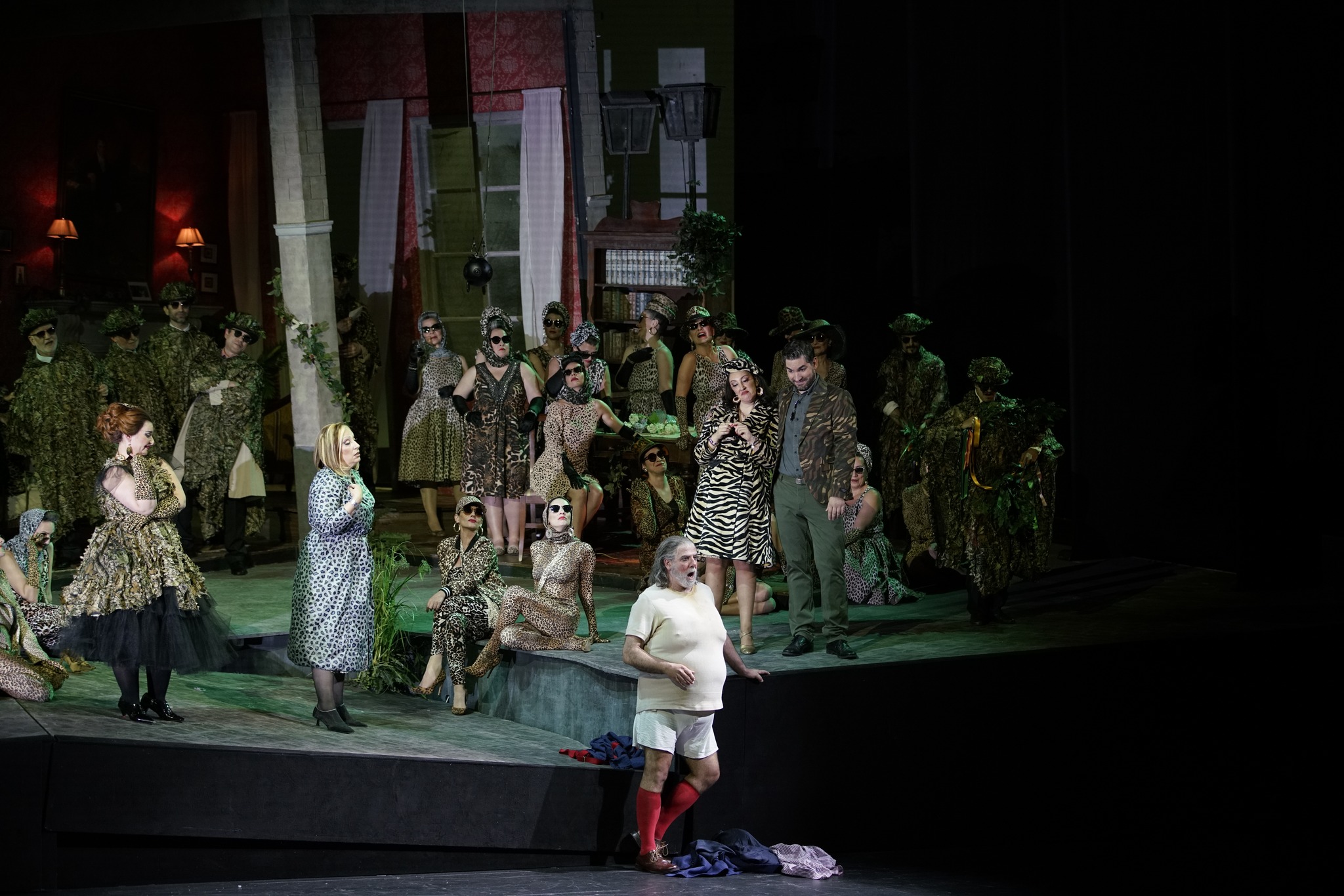
André Baleiro sang Ford in a very handsome baritone. The voice has an attractive, chestnut warmth in the middle and also rises to a seemingly limitless top. His diction is also excellent. I did wonder if this role is a bit large for Baleiro currently. There was a sense there of him generally singing within his means, but there were also a few moments where he compromised on the integrity of the tone, succumbing to the urge to hector for dramatic effect. Still, it’s an extremely handsome voice and he’s an intelligent interpreter – certainly an artist I would like to hear more from. His current repertoire includes Pelléas and this is a role I would very much like to hear him sing.
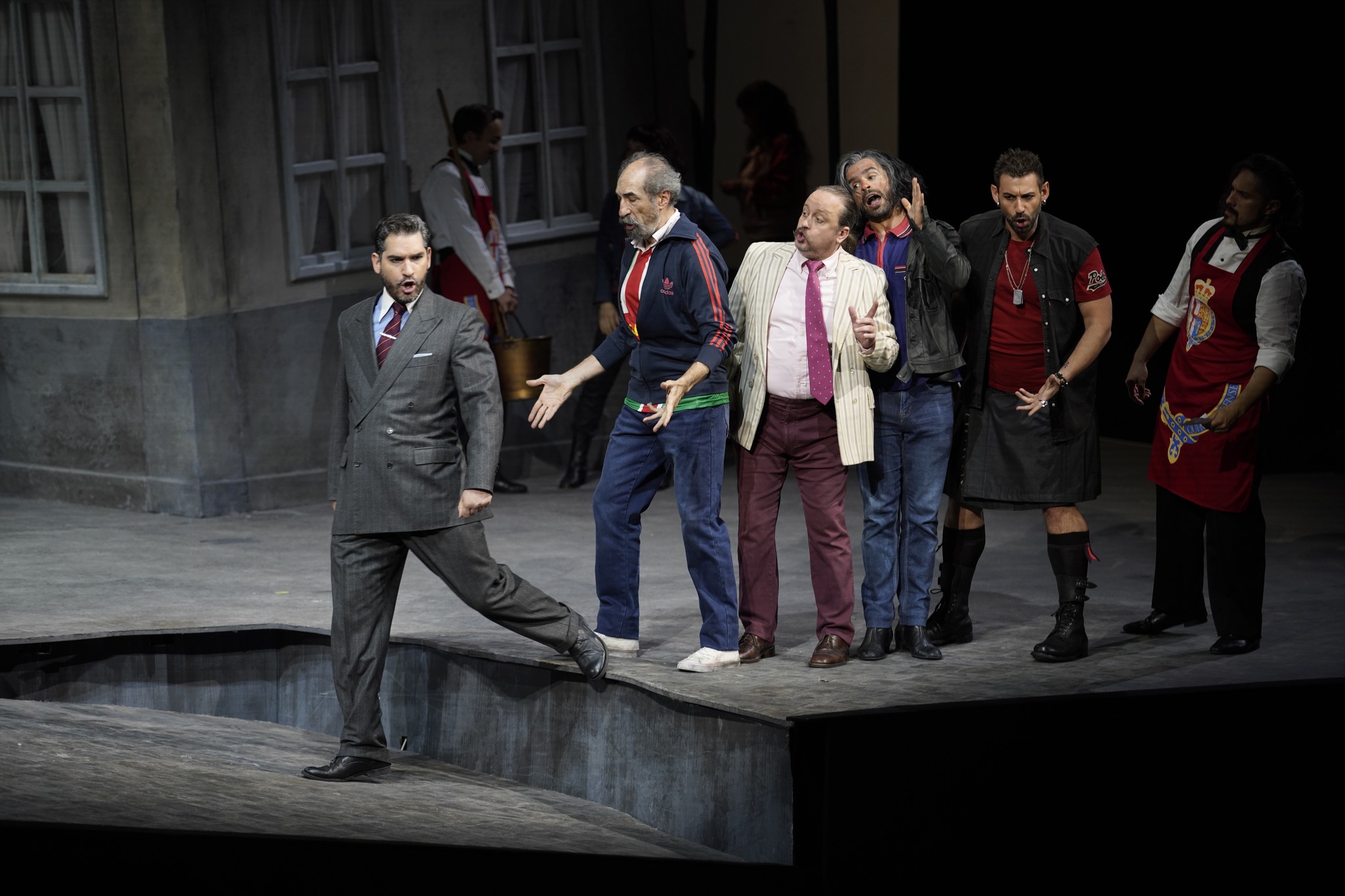
Michele Angelini sang Fenton with romantic ardour, his tenor soared with bright, optimistic ease and focused tone. Marco Alves dos Santos gave us a Dr Cajus that was so keenly sung, making so much of the text and finding genuine wit. As Bardolfo, Leonel Pinheiro sang in a warm tenor, while Miguel Ángel Zapater’s drier bass had an agreeable rustic charm as Pistola.
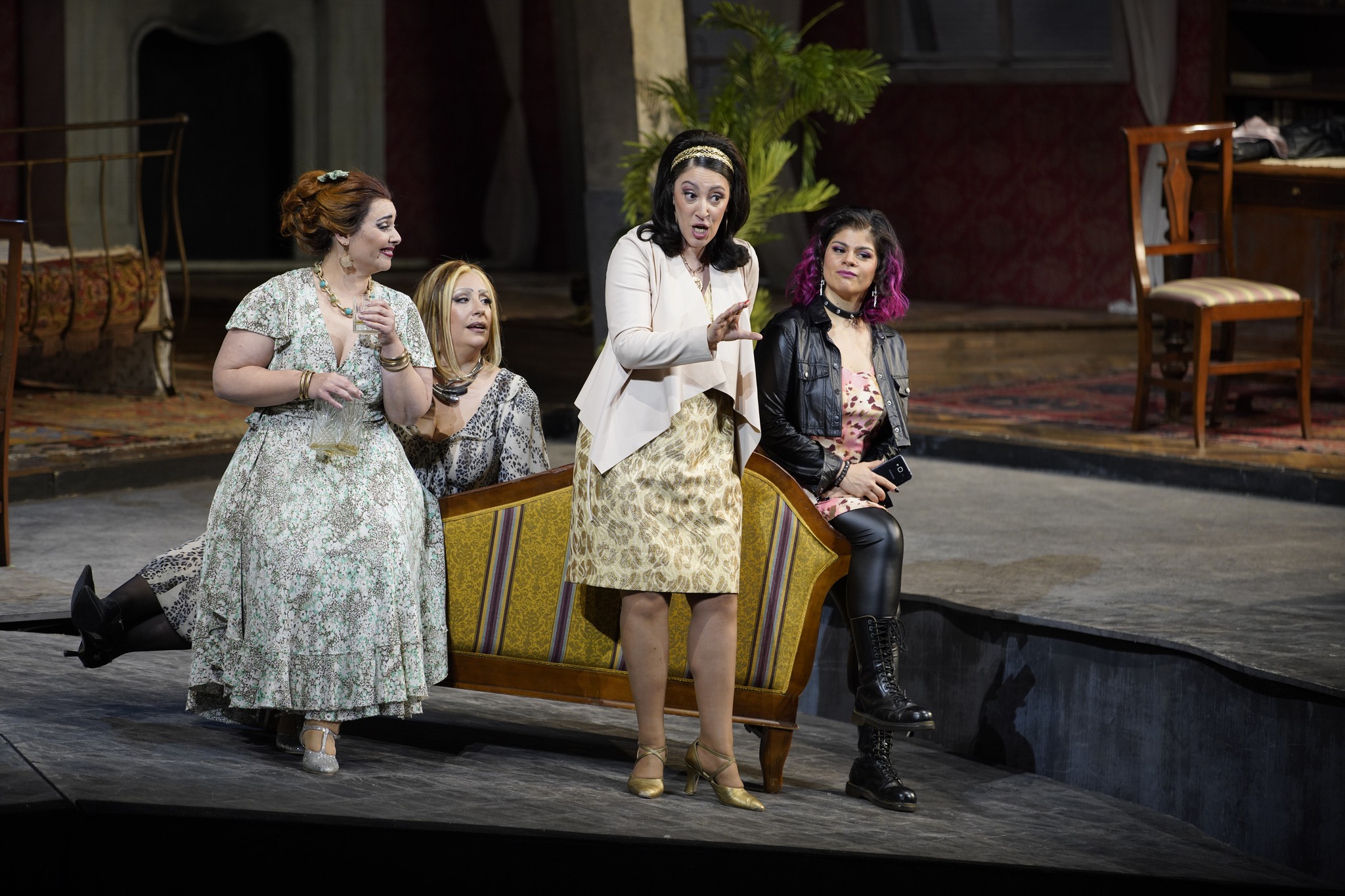
As for the merry wives, Dora Rodrigues’ ripe soprano was a positive presence in the ensembles. The voice has an agreeable darkness to the tone, with easy vibrations. Cátia Moreso’s Meg Page was sung with her characteristic commitment and generosity. Maria Luísa de Freitas was a delicious Quickly, with irresistible comic timing. She was generously chesty in her ‘reverenza’s and if there was an audible gear change as she crossed the registers, she was delightfully uninhibited in her vocalism and acting. Rita Marques’ Nannetta was fabulous. Marques demonstrated a true bel canto technique, spinning seemingly endless phrases on the breath, the voice light with an easy reach on top, combined with a delightful fizz of vibrato. She’s such an engaging actress, so able to inhabit a character fully with charming facial expressions. A lovely singer and a name to watch. Indeed, Marques will be launching her first album at the end of this month and it promises to be worth a listen.
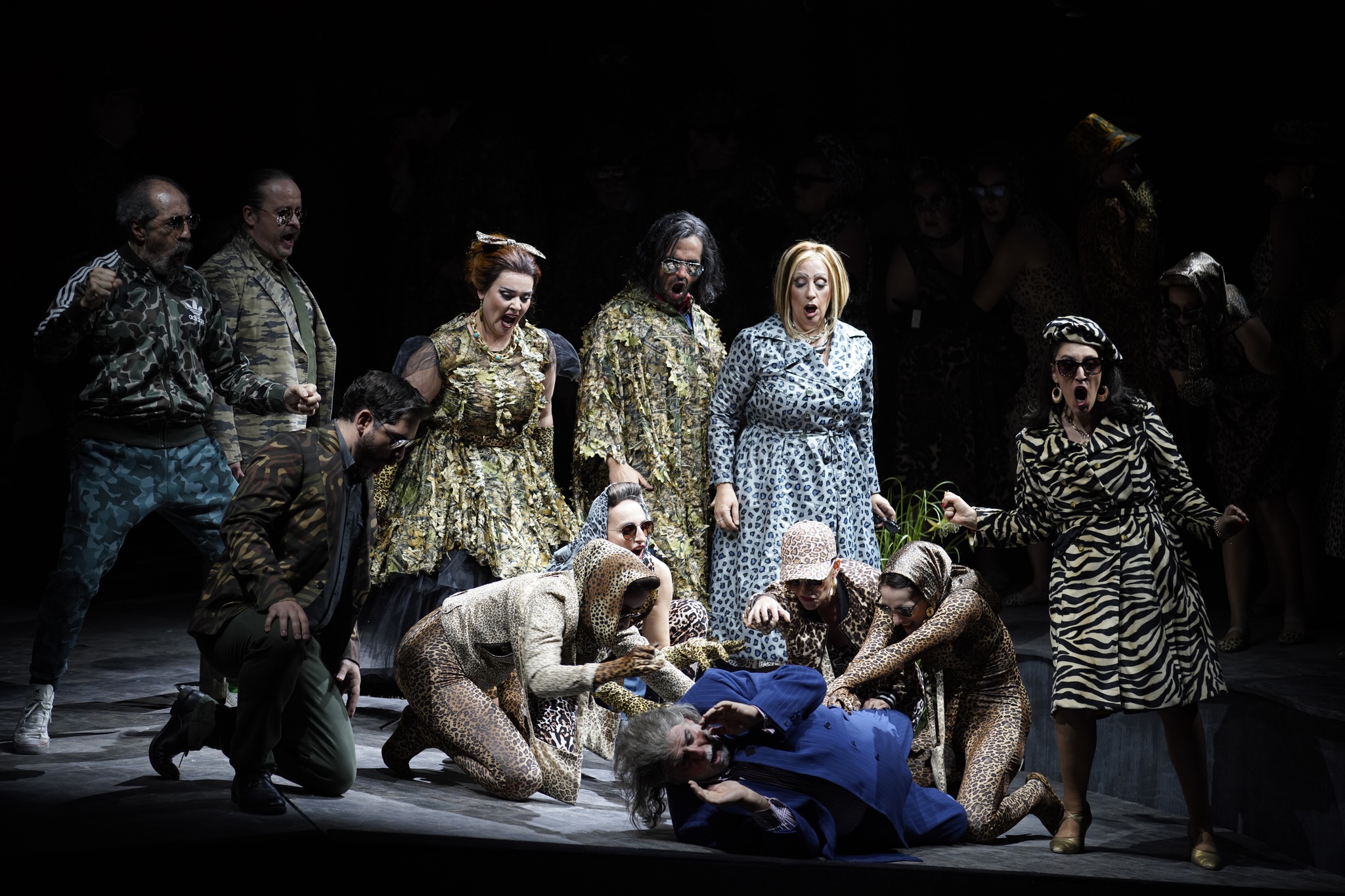
With this Falstaff the São Carlos is ending its mainstage season on a bright and uplifting note. Spirei has given us an engaging piece of theatre, with genuine and believable personenregie – and a cast whose enthusiasm fills the house in a warm glow. Pirolli led a reading that kept the evening moving along, yet was always so impeccably Italian in its phrasing. The singing gave a great deal of pleasure, with a towering assumption of the title role from Spagnoli. The audience responded with warm applause at the close.
 operatraveller.com
[…] intonation issues and lack of radiance in her singing. The São Carlos gave us an uplifting Falstaff with Pietro Spagnoli giving us a terrifically witty account of the title role. In València, […]