Händel – Ariodante
Ariodante – Cecilia Molinari
Polinesso – Teresa Iervolino
Ginevra – Francesca Lombardi Mazzulli
Dalinda – Theodora Raftis
Lurcanio – Manuel Amati
Re di Scozia – Biagio Pizzuti
Odoardo – Manuel Caputo
Orchestra Barocca Modo Antiquo / Federico Maria Sardelli.
Stage director – Torsten Fischer.
Festival dalle Valle d’Itria, Teatro Verdi, Martina Franca. Monday, July 22nd, 2024.
For this, my second evening at this fiftieth edition of the Festival dale Valle d’Itria, it was time for some baroque. More specifically, Händel’s Ariodante in this new festival staging by Torsten Fischer. Rather than the courtyard of the Palazzo Ducale, the opera was presented instead in the neighbouring Teatro Verdi. These days, the Teatro doubles as a movie theatre, with extremely comfortable, semi-reclining seats, in addition to the very welcome air conditioning.
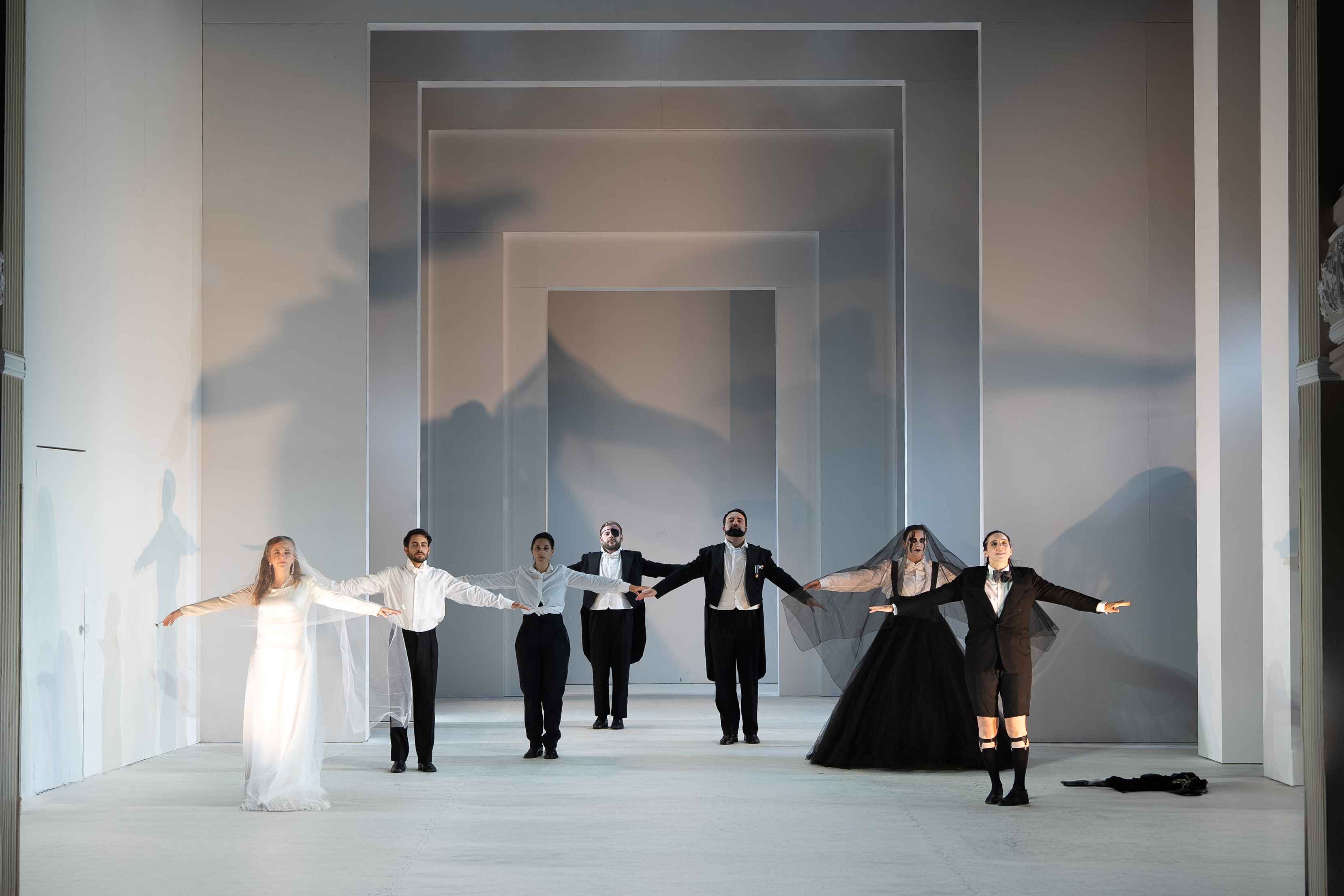
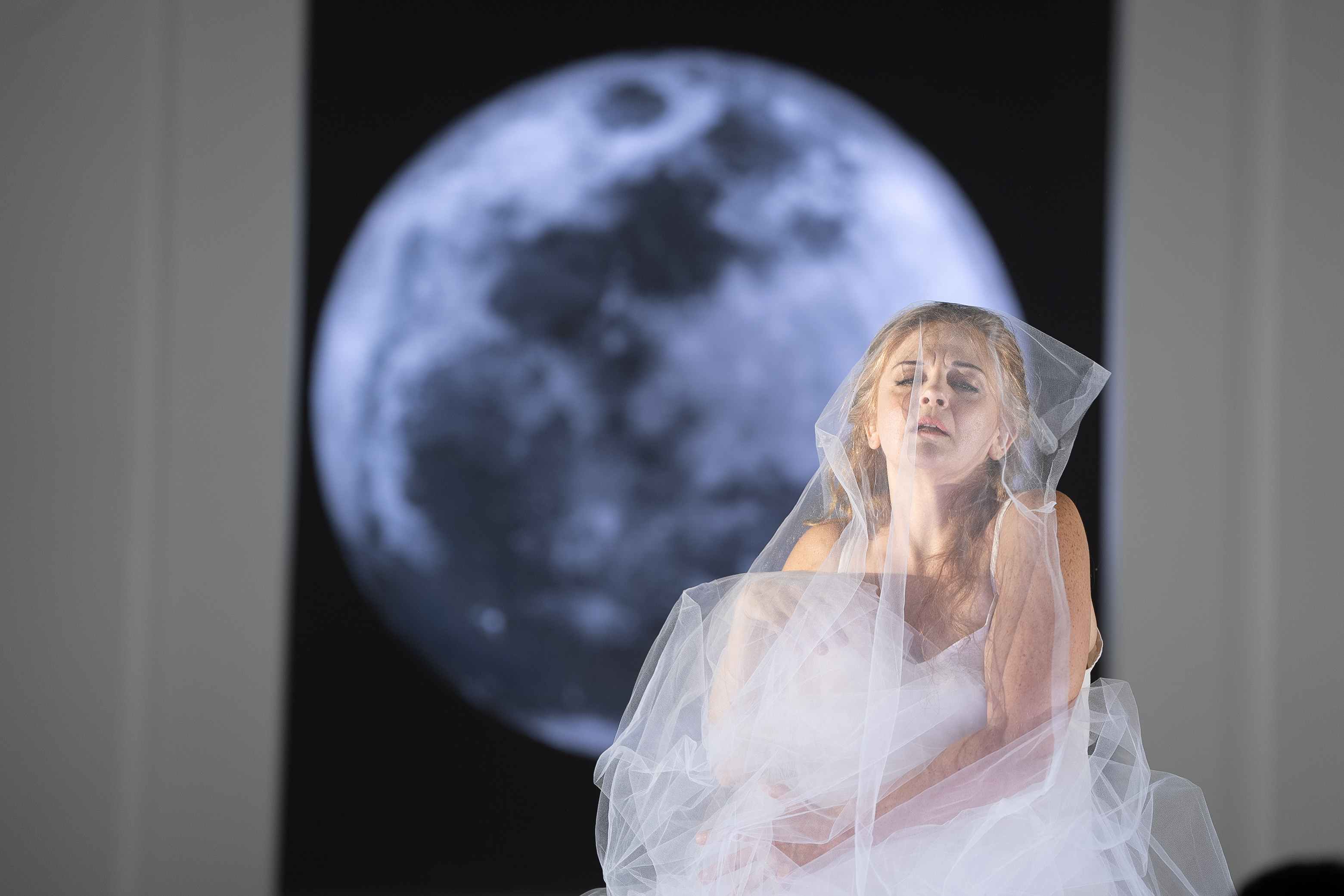
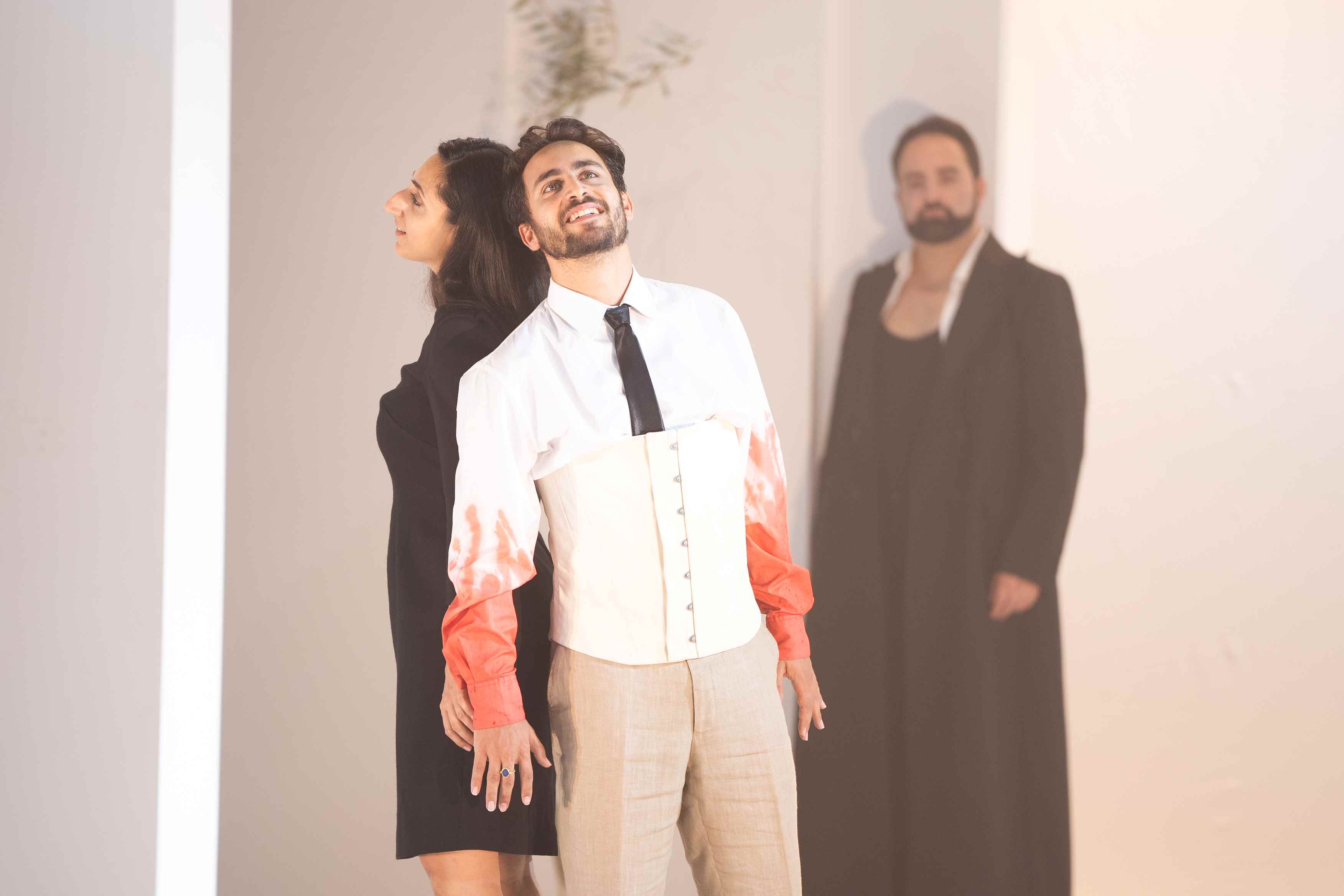
My only other encounter with Fischer’s work was a double-bill of the Gluck Iphigénies a decade ago at the Theater an der Wien. That was an extraordinary evening in the theatre and I had high hopes for this evening’s performance. Fischer sets the action on a single, white stage. Unlike Nicola Raab in last night’s Norma, Fischer uses his cast to provide constantly-changing and engaging visuals that clearly illustrate the narrative. Moreover, the cast as a whole had very clear personalities, all with convincing and believable relationships with each other. Fischer contrasts the whiteness of the set with mainly black costumes for the cast, with Polinesso given a zombie-like white face, and Ginevra’s bridal status exemplified by her white dress.

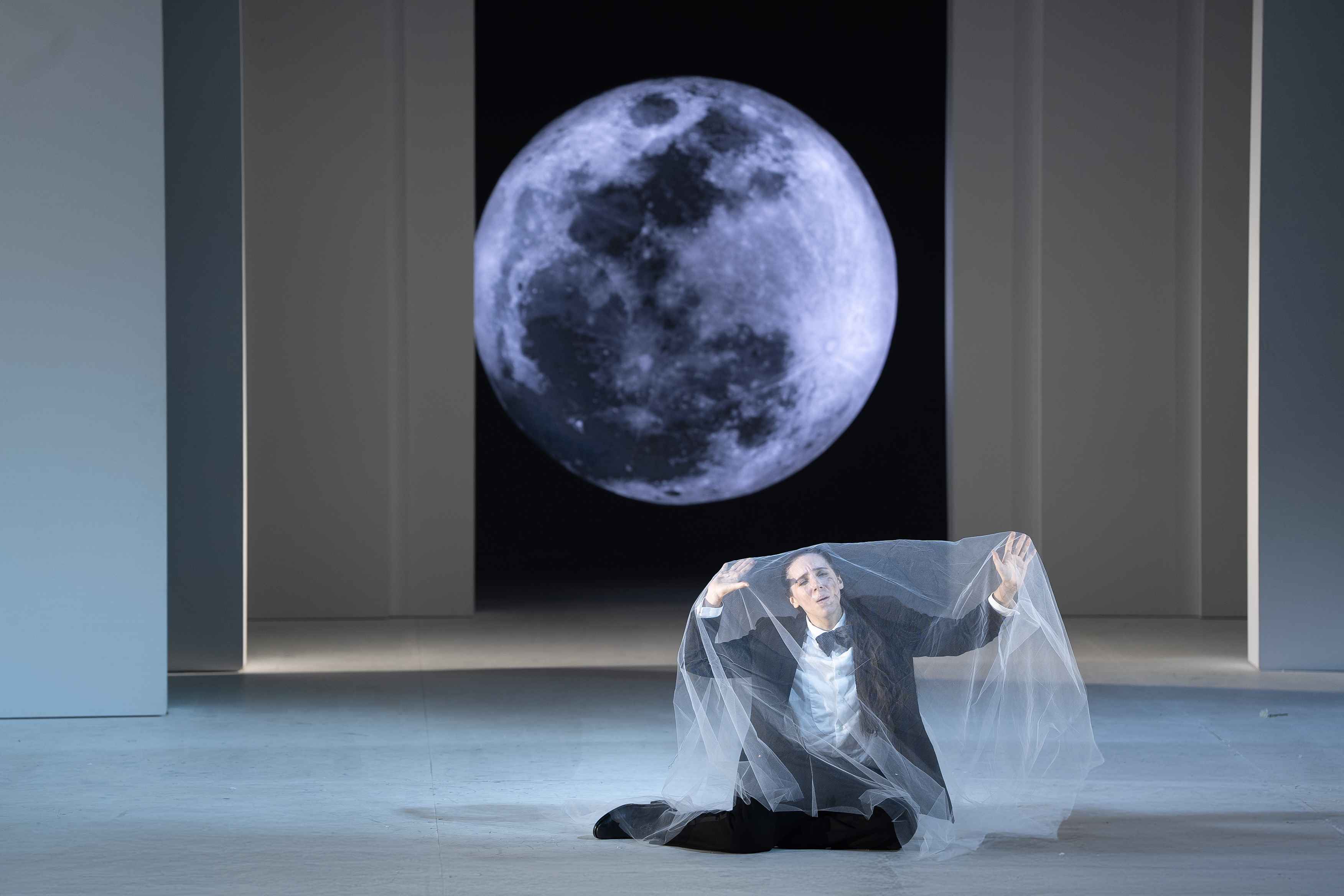
Moreover, it struck me that Fischer was particularly aware of the presence of dance in the score, particularly through the manifestation of veiled figures in dresses who circulated around the stage, their beards visible under the veils giving an impression of gender fluidity that I found particularly intriguing. Indeed, Cecilia Molinari’s Ariodante was a very feminine representation – although dressed in shorts and a shirt with bow tie, with very long hair, she danced around the stage in ‘dopo notte’ with uninhibited glee. Fischer wasn’t afraid to show us the ugly side of this work – the abusive relationship between Dalinda and Polinesso was shockingly real. Yet, Fischer also filled us with genuine joy and happiness as the story reached its lieto fine. The overriding impression I left with this evening, is that Fischer’s staging magnified this glorious score, using his cast fully to bring it to life and to find the humanity within. And it’s testament to his clarity of storytelling that the nonne behind me were completely silent throughout, expressing happiness and admiration of the youthful cast at intermission.
Musically, this was an equally fabulous evening. Conducting the intimately-proportioned Orchestra Barocca Modo Antiquo, Federico Maria Sardelli led a deliciously swift and vigorous reading. In this smaller theatre, the orchestral sound had real and refreshing physical impact, sweeping us along with it, so that it was impossible not to be invigorated. Indeed, the entire evening seemed to pass by in seconds. The quality of the orchestral playing was excellent, with some impressively accurate horn playing. There were a few passing moments of sour violin intonation, understandable given the length of the evening and challenge of using period instruments. Sardelli’s tempi were swift, but he also pulled back to give ‘scherza infida’ the space it needed, combined with some deeply eloquent bassoon playing. Sardelli also understands the emotional power of a sforzando, using dynamics and attack to reinforce meaning. Recitatives were appropriately and fluently paced, while ornamentation throughout the cast was tasteful and genuinely enhanced the line.
Ariodante is the best thing I’ve heard so far from Molinari. Her youthful, bright tone was an ideal match for the innocent optimism of her character, yet she was also able to find real devastation in her ‘scherza infida’. What was apparent throughout was Molinari’s seriously impressive breath control, sustaining apparently endless melismas whether in her outpouring of despair, or later in her cries of joy in ‘dopo notte’. The voice took flight in streams of virtuosity, dispatching line after line of effortless coloratura with impressive precision. If I were to be extremely churlish, I would have to comment on an occasional tendency for some breathiness to enter the tone at some of the more rapid-fire moments higher up, but these were passing. Molinari really did present herself tonight as a singer of extremely rare gifts.
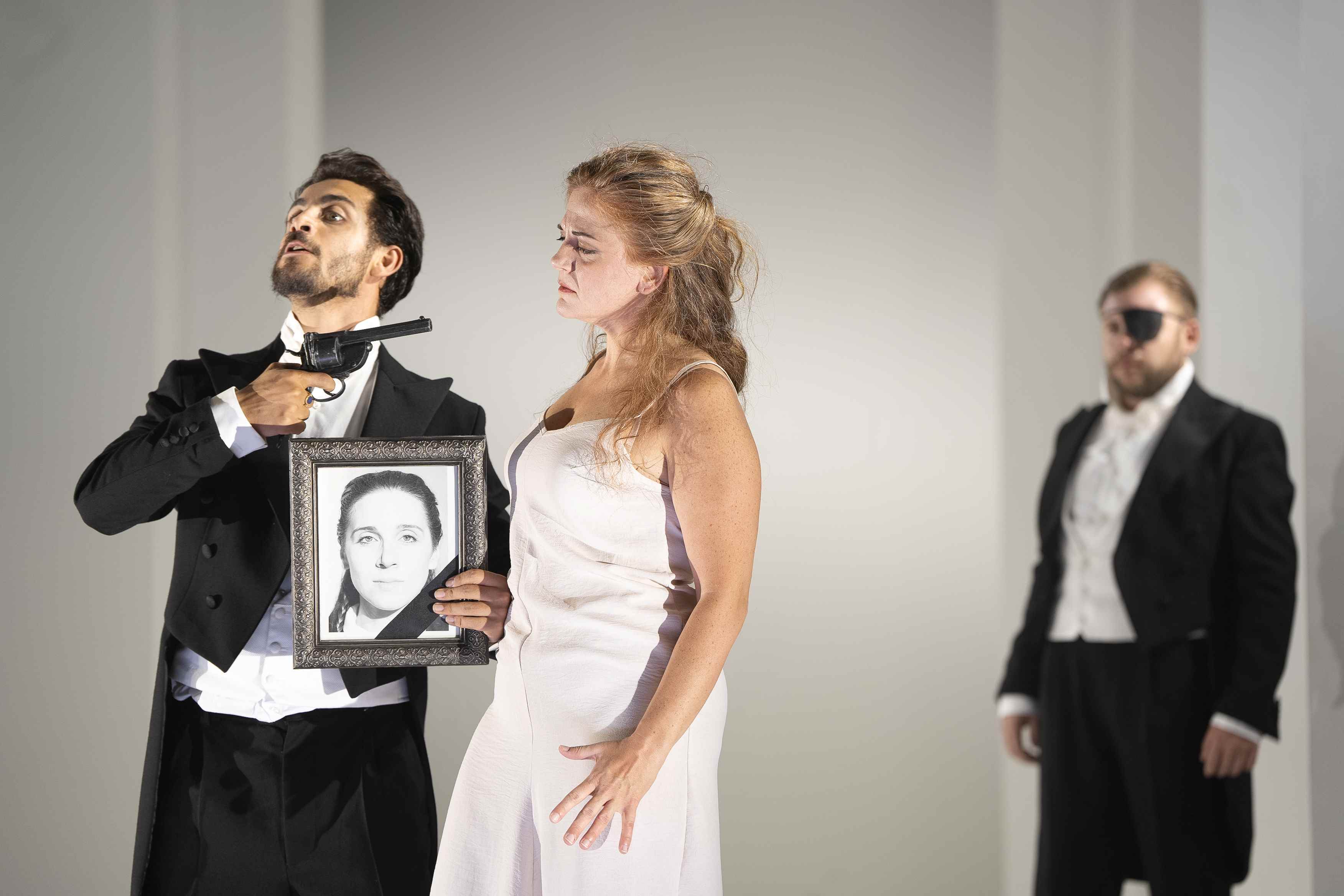
As Ginevra, it sounded to my ears that Francesca Lombardi Mazzulli took a little while to find her groove. Her opening number saw her runs sounding rather lumpy, something that was not a feature of her singing once she got into her stride. Lombardi Mazzulli made use of pure tone throughout, the voice lacking in any vibrato, and it meant that I did miss a little bit of spin higher up in the voice. That said, she coloured the tone and text most impressively in ‘il mio crudel martoro’, using the spareness of the Händelian writing, and the emotional impact of the lines, to illustrate the pain of Ginevra’s delirium – here her use of pure tone really came into its own.
Teresa Iervolino sang Polinesso in a liquid, yet darkly resonant contralto. Taking on this role is a challenge for any singer given how closely it was associated with the late, great Ewa Podleś. Iervolino made ‘dover, giustizia, amor’ very much her own, adding some impressively wide-ranging embellishments to the line. I do, however, wonder whether Iervolino needs to work further on integrating the registers – there were a few isolated moments where the break was audible. Still, the juiciness and warmth of her tone give much pleasure. As indeed did Theodora Raftis as Dalinda. The Cypriot soprano was the only non-Italian singer on stage tonight, although she lacked nothing in textual acuity in comparison with her colleagues. Her soprano is bright and silky, with an agreeable fizz to the tone through a natural vibrato – qualities that make her a natural Händelian.
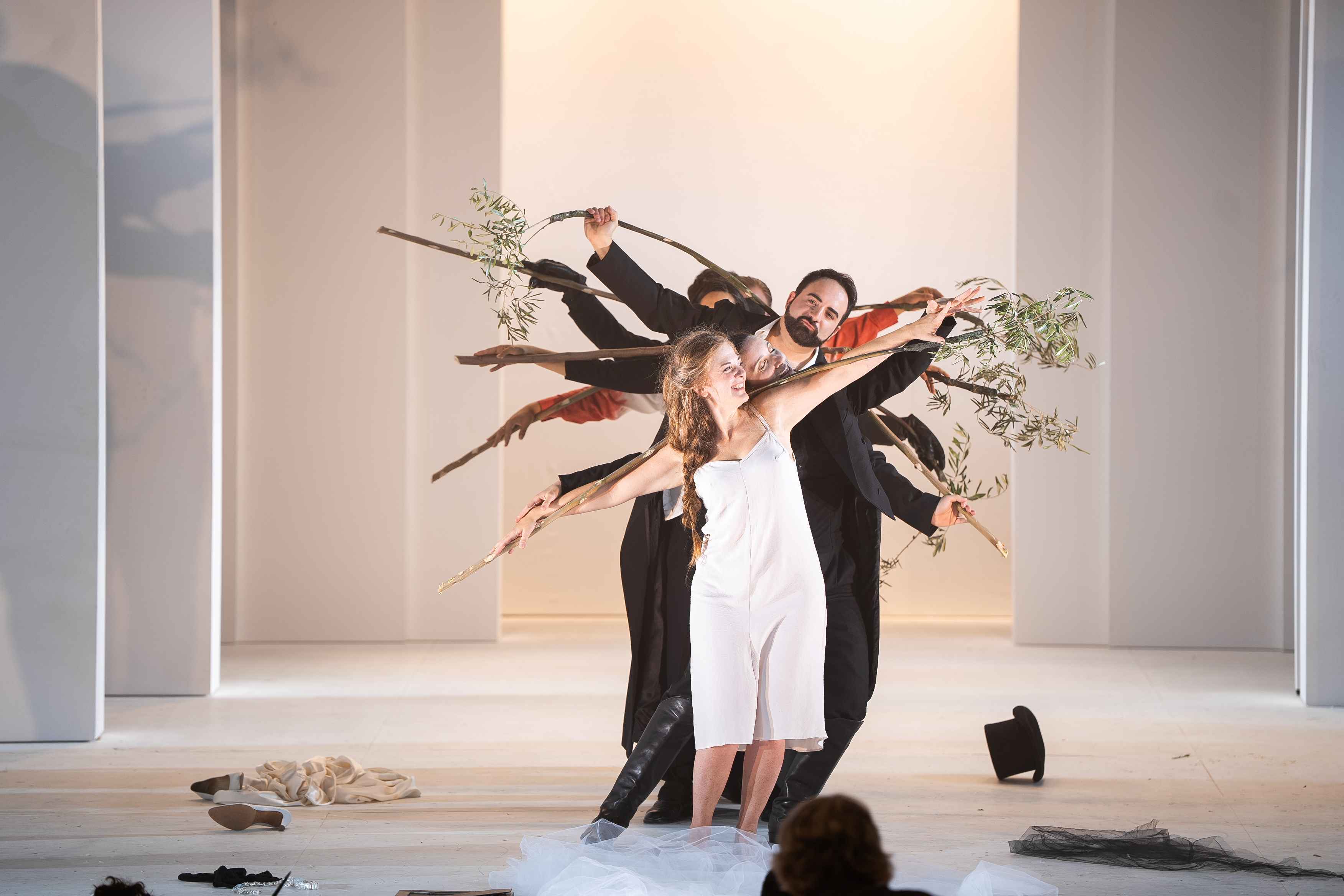
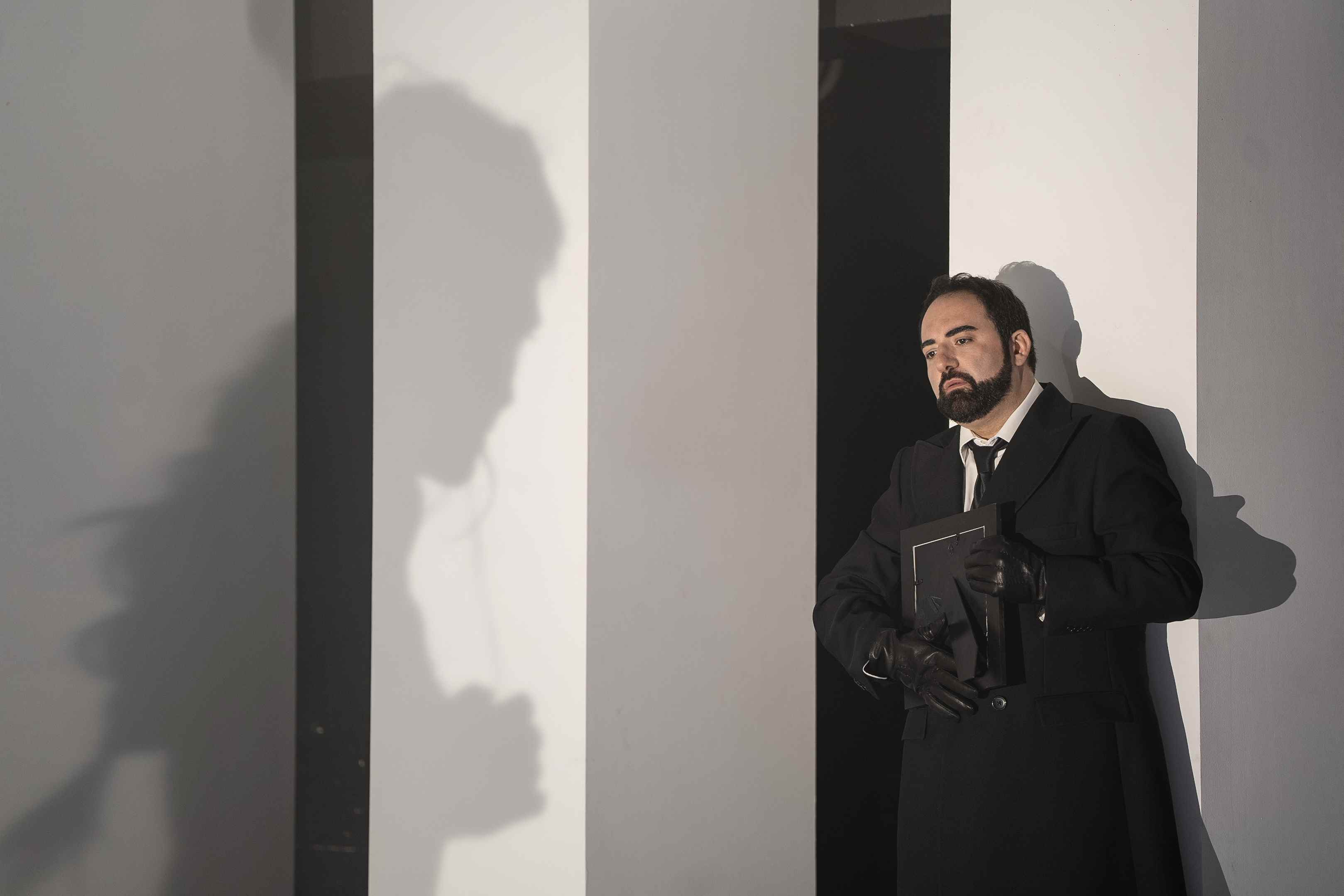
As the Re di Scozia, Biagio Pizzuti sang his music in a wonderfully warm, handsome and resonant baritone. Despite the relatively generous size of the voice, compared to his colleagues, he was able to turn the corners with ease, dispatching some impressively firm and even runs. Manuel Amati, a native of Martina Franca, was also a positive find as Lurcanio. His tenor is bright and focused, with a slight nasality to the tone giving it an attractive raspiness that recalled the equally late, great Anthony Rolfe Johnson. He sang his ‘Del mio sol vezzosi rai’ with real beauty and admirable command of dynamics. Manuel Caputo was an effective presence in Odoardo’s brief contributions and a game stage presence throughout.
This was a wonderful evening in the theatre, one that showed this festival in the very best light. The singing throughout was fabulous, the youthful cast giving us a feast of Händelian virtuosity, in a cogent staging that was notable for its fantasy and clarity of storytelling, conducted with style and vigour. Indeed, it has been a lovely few days in this beautiful and welcoming part of the world. It might have been my first visit to Martina Franca and the festival, but I hope it won’t be the last. The audience received the cast and production team at the close with generous and enthusiastic cheers.
 operatraveller.com
[…] by Airam Hernández’ stylish and immaculately-sung Pollione. The following evening, Ariodante was given by a youthful, mainly Italian cast, fabulously played under Federico Maria Sardelli, in a […]