Wagner – Siegfried
Siegfried – Magnus Vigilius
Brünnhilde – Ingela Brimberg
Mime – Peter Hoare
Der Wanderer – Gábor Bretz
Alberich – Scott Hendricks
Fafner – Wilhelm Schwinghammer
Erda – Nora Gubisch
Stimme des Waldvogels – Liv Redpath
Symfonieorkest van de Munt / Alain Altinoglu.
Stage director – Pierre Audi.
La Monnaie – De Munt, Brussels, Belgium. Sunday, September 22nd, 2024.
This wasn’t quite how this Ring was meant to proceed. As readers will well know, the first two instalments of the cycle, a planned coproduction with the Liceu, were directed by Romeo Castellucci – and were widely seen and discussed. In April this year, with the realization that the concept for the remaining two parts would exceed the time and budget available to the house, Castellucci withdrew from directing the remainder of the cycle, with Pierre Audi jumping in to take on the second half. Given how long productions are conceived in advance and the need for the workshops to produce sets and costumes, what De Munt – La Monnaie has achieved here in giving us a fully staged and costumed production of Siegfried is nothing short of miraculous.
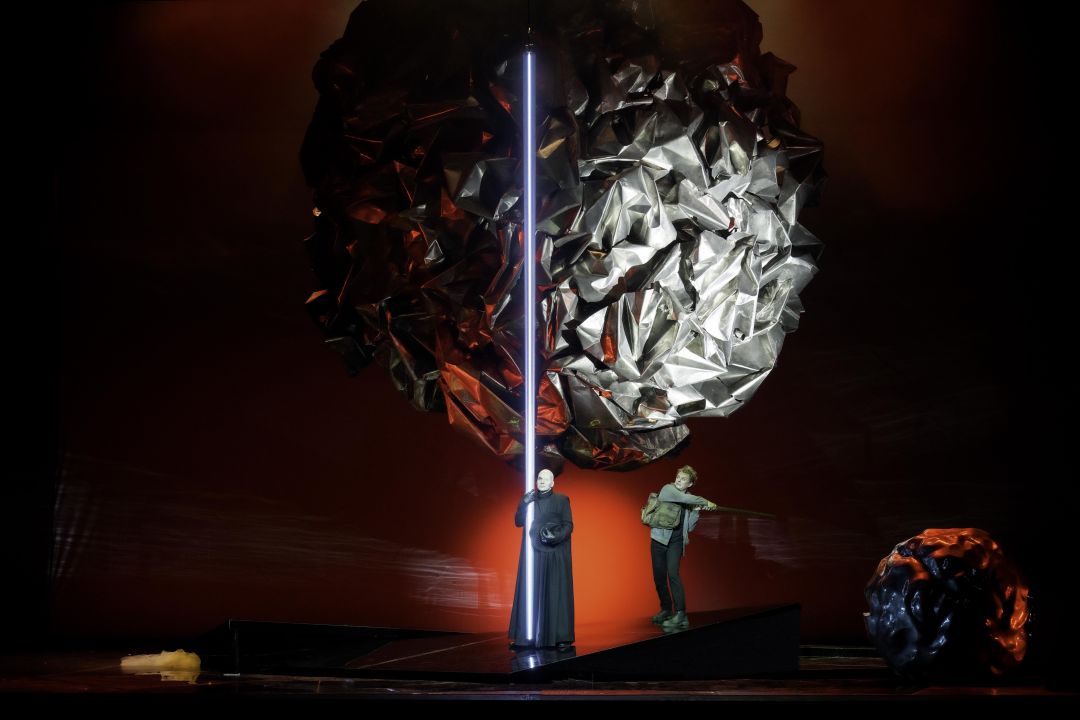
That said, it’s perhaps inevitable that one wonders what might have been had Castellucci concluded his reading of the work. Given the restricted time, and presumably also budget, available for this production, it struck me that there was a focus more on the individual characters here, rather than elaborate installations that characterize other stagings. This was a performance where the drama was pushed ahead primarily through the text. The clarity of the diction of the cast was, by and large, excellent, the only exception was ironically Liv Redpath’s virtually wordless Waldvogel. Otherwise, the drama here emerged from the words much more than through the visuals. Moreover, the drama came more from the text than through the relations between the characters. In Audi’s personenregie, characters barely looked and interacted with each other. Far too often, they would address each other by one standing in front of the other – the exception being the big Siegfried/Wanderer scene where, for once in the evening, characters addressed each other directly and the physical intimidation of Magnus Vigilius’ Siegfried of Gábor Bretz’ broken Wanderer was palpable.

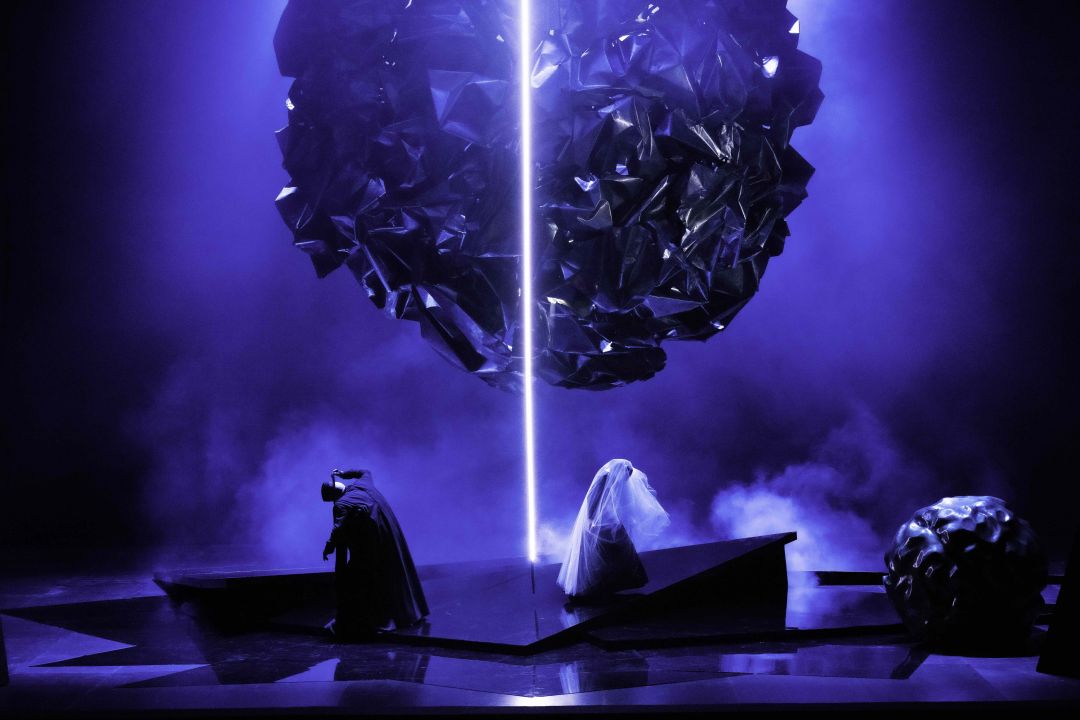
Despite the relatively sparse set, Audi did give us several striking stage pictures. A large ball at the rear of the stage, which looked like some crumpled up foil initially, provided visual interest in the first act, apparently incarnated the head of Fafner the dragon in the second act, and was elevated to the flies and replaced by smaller pieces in the final scene. I found it an interesting idea, incarnating the course of a fate that, through the meeting of Siegfried with Ingela Brimberg’s Brünnhilde, was changed irretrievably. This impression was doubled by the fact that, for much of the evening, a long rod representing Wotan’s spear was present on the stage, changing colour with the prevailing lighting for that scene. When it was finally broken by Siegfried, this was cleverly done, one half raised up into the flies, the other held on to by the Wanderer. Audi sets the action in a futuristic space, the costumes, by Petra Reinhardt, scruffy for Siegfried, metal futuristic for Brünnhilde, while the Wanderer and Alberich were identically outfitted in long black coats with hats. Interestingly, Audi had the Waldvogel incarnated by a child, while a veiled woman (Redpath) walked behind. It struck me that Audi might be saying that the Waldvogel was Sieglinde’s way of sending messages to Siegfried. Otherwise, this was a staging that did what it needed to do. It gave us something to look at and told the story logically, even if personenregie did feel rather perfunctory.
As was the case in the previous two instalments, the glory of this Ring is, above all, in the pit. In the eight years that he’s been music director here, Alain Altinoglu has transformed this orchestra into one of the finest opera orchestras in the world. And nowhere is this more evident than in the quality of the playing that he secured from his musicians. I didn’t hear a single ragged entry all night and there was just one brief second where one of the horn players landed short of target. Otherwise, the playing was utterly irreproachable. Altinoglu’s reading was generally swift, fortunately keeping things moving through the forest scene, which in other hands can drag interminably. The Wanderer/Erda scene was paced with real urgency, while the opening of Siegfried and Brünnhilde’s scene was given the space it needed to breathe. I did wish that Altinoglu had allowed his superb musicians off the leash a little more in the closing pages of Act 1 – these felt a little earthbound. He also secured a seemingly unlimited palette of tone colours from his musicians: the delicacy of the string playing in the forest was ravishing, the constant threat of the low brass was as menacing as it should be, while the violins were impeccable in tuning in those treacherous exposed passages as Siegfried arrives on the rock. The solo clarinet also pealed with delicious piquancy. Altinoglu brought out string playing that was both rich and deep pile, but also had a beguiling silkiness. This was orchestral playing of the highest distinction.
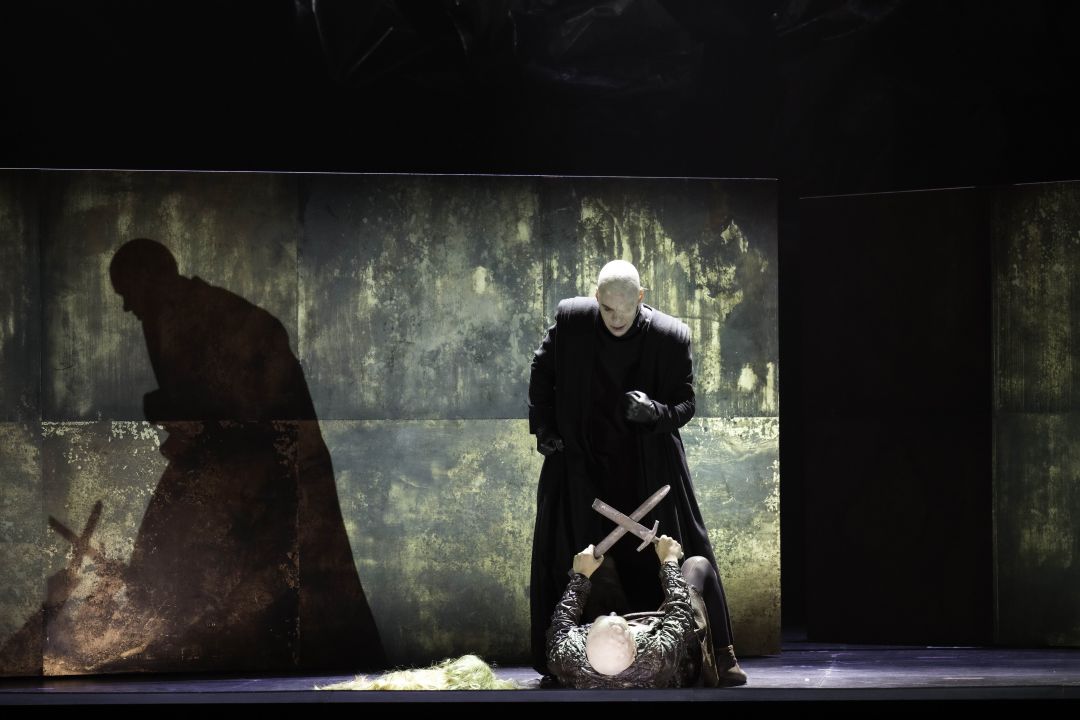
Vigilius was a tireless Siegfried. The Danish tenor has number of Wagner roles under his belt and he most certainly has stamina. The voice isn’t the most handsome – there’s a wiriness to the tone, rather than a beefiness, that suggests he perhaps isn’t the most heroic of heldentenors. And yet, the voice has good cutting power, able to ride the orchestra with ease, while the tone is firm and focused. The voice does have a tendency to narrow, rather than open up at the top, and while this isn’t an issue yet, I do fear it might cause problems for Vigilius in the future. Still, he has stamina to spare, there was never any sense of him singing beyond his limits, and the text was always clear. Similarly, Bretz sang the Wanderer with a genuinely bel canto sense of line. Like Vigilius, he never pushed the voice further than it could go, yet was still able to ride the orchestra. There’s a darkness to Bretz’ tone that felt particularly apposite for the incarnation of his character in this instalment, but this was combined with an ease on top that had intense focus, while never compromising on the implicit beauty of the tone. I must admit I was nervous at the start of the cycle about Bretz’ taking on this monster role, given the handsomeness of the voice, but throughout the cycle, he has demonstrated the importance of a bel canto technique and never pushed the voice further than it can go. Undoubtedly a major milestone in his career.
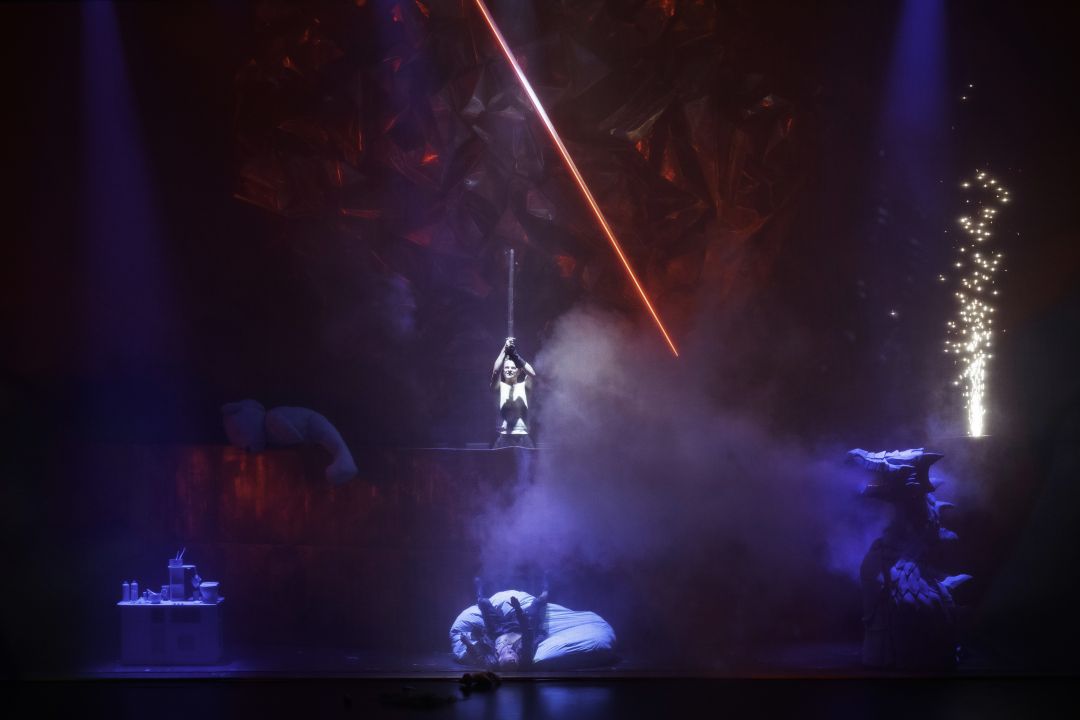
Peter Hoare brought his familiar stage presence and verbal acuity to Mime, sung in impeccably crisp German. His tenor seems to defy the years, sounding utterly fresh throughout. Scott Hendricks gave us a powerful Alberich, his baritone with an appropriately acidic edge, singing with an exciting sense of abandon. Nora Gubisch filled Erda’s lines with genuine urgency of utterance, but the register switches did highlight a relative lack of integration from top to bottom. Wilhelm Schwinghammer boomed appropriately as Fafner, while Redpath’s Waldvogel was beguiling sung, with a delightful fizz of vibrato – I just wish there had been words to go with the attractive tone. Not to be ungentlemanly, but I was surprised to find out that Brimberg is actually in her seventh decade, having turned 60 in May this year. That information has certainly changed my perception of her singing. Previously, I had found her to have a youthful tone, yet with a tendency to sit under the note, due to being a more lyrical voice being made artificially wider to create volume. And yet, that youthfulness of tone is remarkable given that Brimberg is of the same generation as her compatriots Stemme and Theorin. Brimberg certainly gave us volume, but also found vulnerability by pulling back on the tone in her interactions with Siegfried. She capped the evening with a big, closing high C which she held on to, to give us the maximum value.
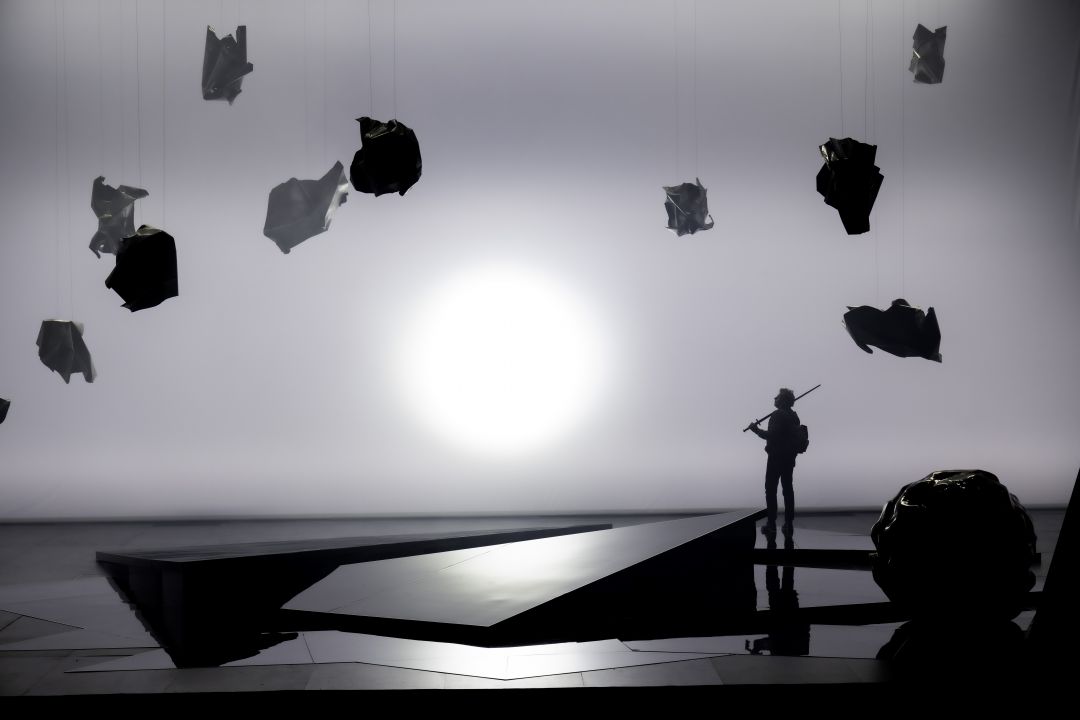
This Siegfried was a fitting continuation to the Brussels Ring. Theatrically, it makes so much of little, the drama distilled and focused in the text. Given the circumstances in which it was produced, what Audi and his team have come up with is nothing short of miraculous. That said, I did wish for more interaction between the characters through the personenregie. Musically, it once again highlighted Altinoglu and his superlative orchestra who played like heroes. It was also satisfyingly sung, introducing us to an exciting young Wagnerian tenor. The audience response at the close was extremely positive, with particularly loud cheers for Altinoglu and his orchestra.
 operatraveller.com
Interesting. Thank you.
[…] beauty of line to a punishing part, while Marie-Nicole Lemieux’s Fricka was magnetic. In Siegfried, Magnus Vigilius was tireless in his demanding assignment, while Pierre Audi’s staging was […]
[…] reduced budget. It’s something of a miracle, then, that we got fully staged productions of Siegfried last fall, and now Götterdämmerung, with Pierre Audi taking over directing duties at very short […]