Haydn – Die Schöpfung
Gabriel – Kathrin Zukowski
Uriel – Sebastian Kohlhepp
Raphael – Alex Rosen
Eva – Giulia Montanari
Adam – André Morsch
Chor der Oper Köln, Gürzenich-Orchester Köln / Marc Minkowski.
Stage director – Melly Still.
Oper Köln, Staatenhaus Saal 2, Cologne, Germany. Saturday, October 5th, 2024.
Another opera season begins, and with it another year for the Oper Köln to be based in its temporary home at the Staatenhaus exposition centre, on the opposite bank of the Rhine from the opera house itself. The house is opening its season with two premieres – a new Elektra will open tomorrow evening, which I hope to see towards the end of this month – while this evening marked the premiere of Melly Still’s new staging of Haydn’s Die Schöpfung. The musical direction was confided to Marc Minkowski, following François-Xavier Roth’s departure from the house. It was a bit of a coup for Cologne to call on the services of such an experienced interpreter of Haydn, on what must have been relatively short notice.
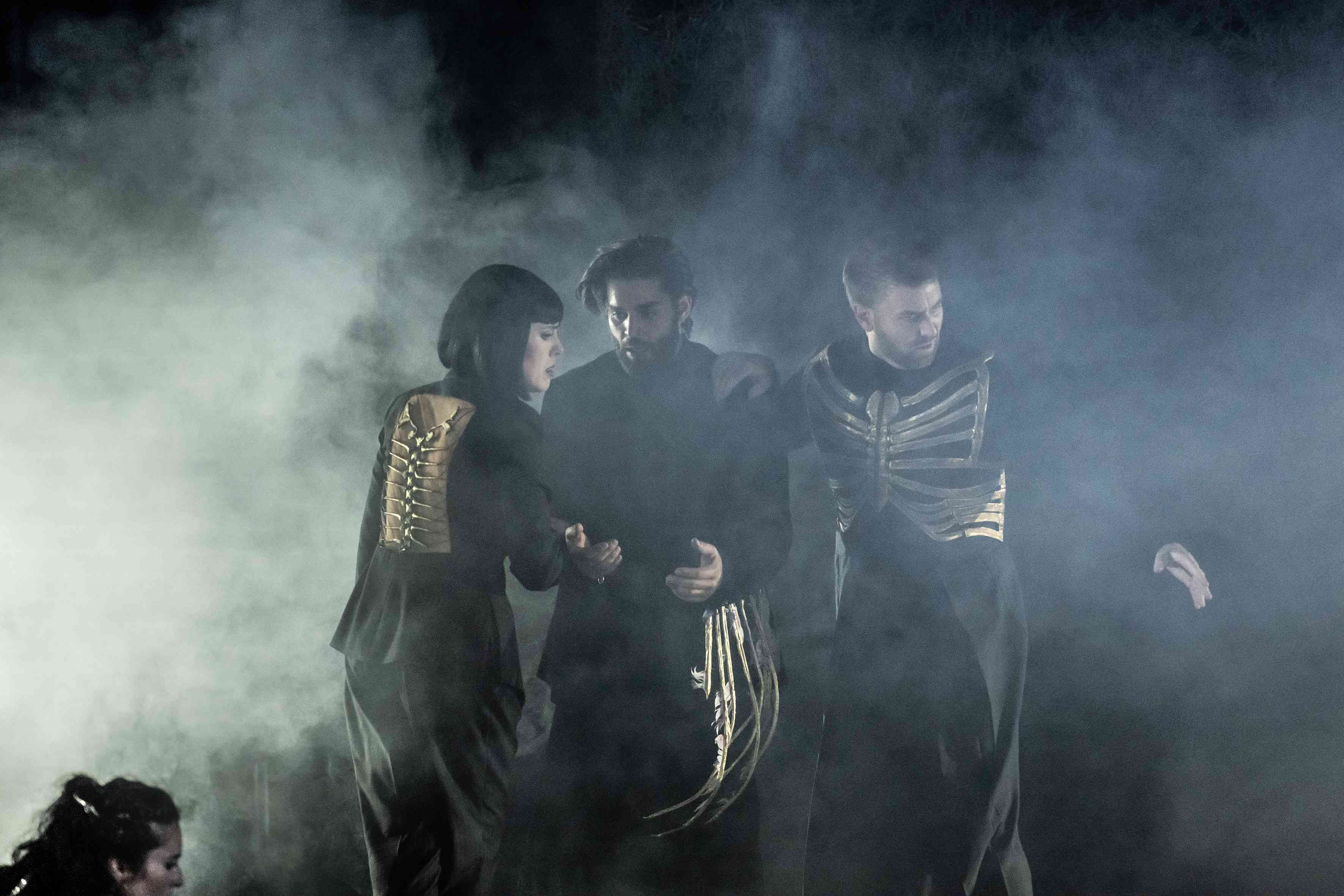
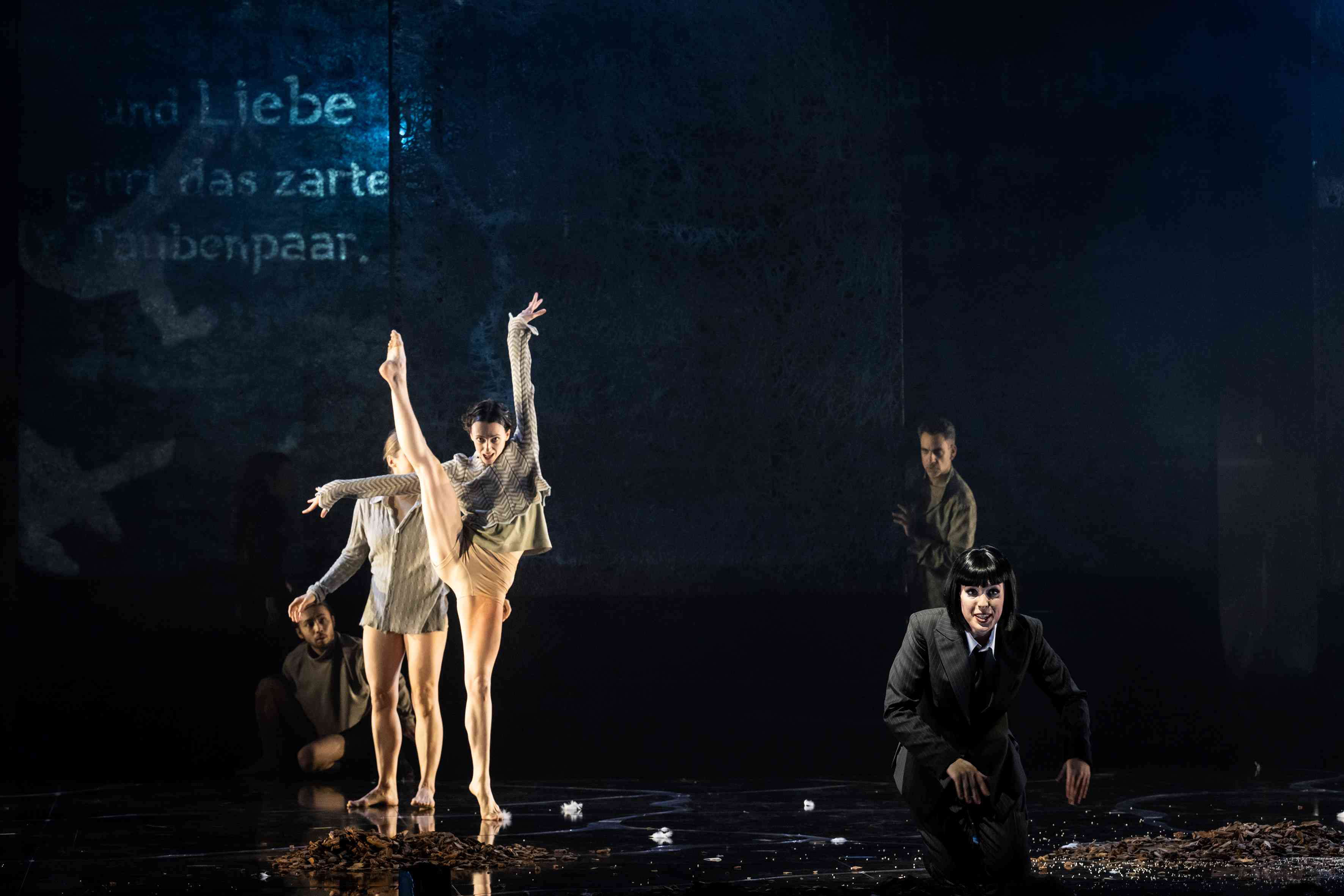
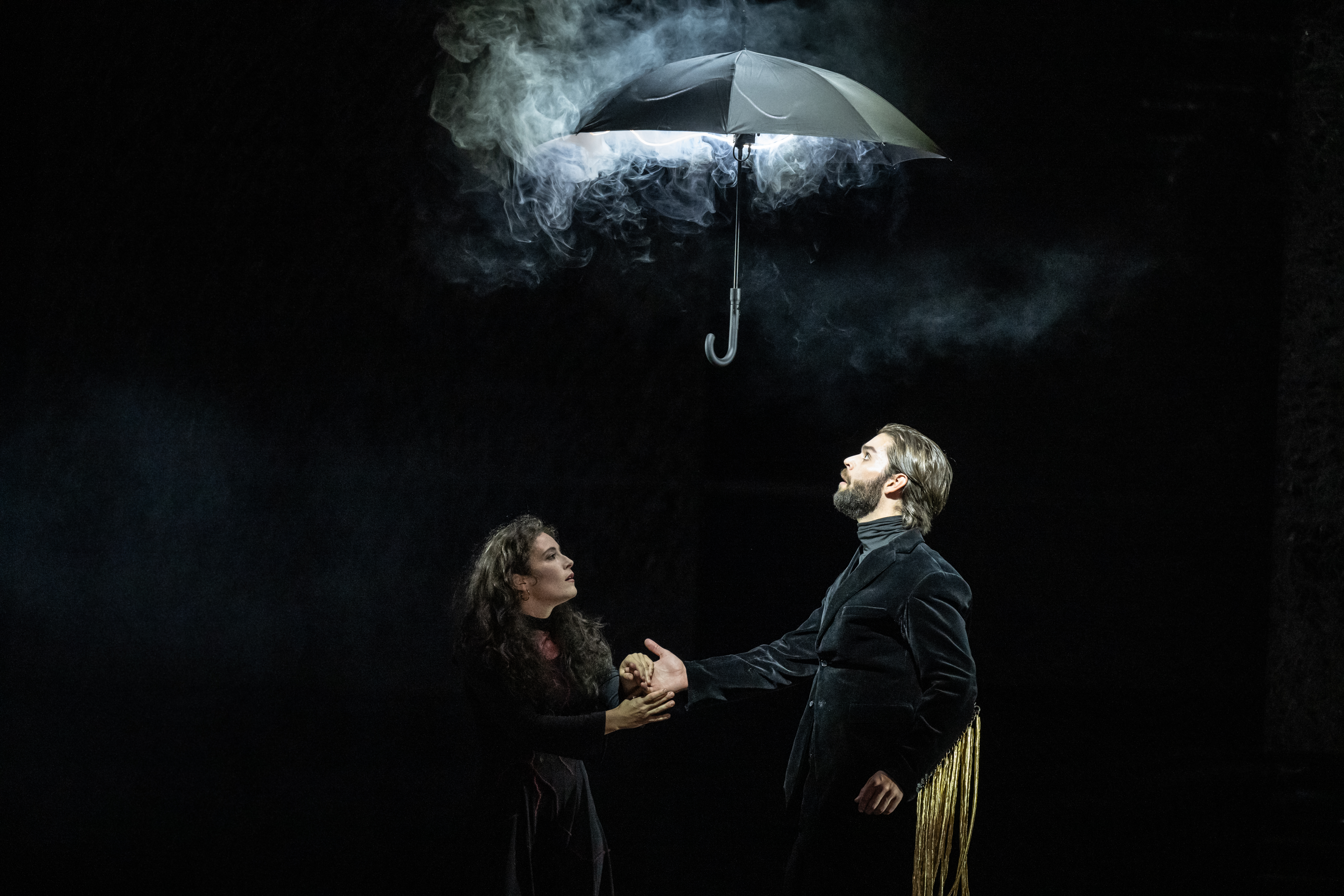
Still’s staging sets the action on a black stage, upon which projections show the surtitles as well as various bits of imagery – memories of late 90s Microsoft screensavers, flashes of lights, as well as the faces of the principals and chorus magnified. It wasn’t always ideal. There were moments on which the surtitles weren’t legible due to the lighting design, although given the clarity of the diction throughout, this wasn’t much of a concern. The larger concern was that it all felt like the production team sat down and said ‘we need to do something’, so they came up with various bits of imagery. In the closing Adam/Eva duet and final chorus, a slideshow at the back of the stage illustrated a progression of the years since Haydn wrote his masterpiece, accompanied by images of covers of books, including Paradise Lost, Le Deuxième Sexe, and a tome by Greta Thunberg, alongside images that appear to be of earthly destruction – but it wasn’t particularly clear what precisely these images were. Whether Mademoiselle Thunberg’s literature bears comparison with the aforementioned masterpieces is open to debate, yet it seemed again that this exemplified Still’s approach of seemingly needing to add something, to justify the work being staged.
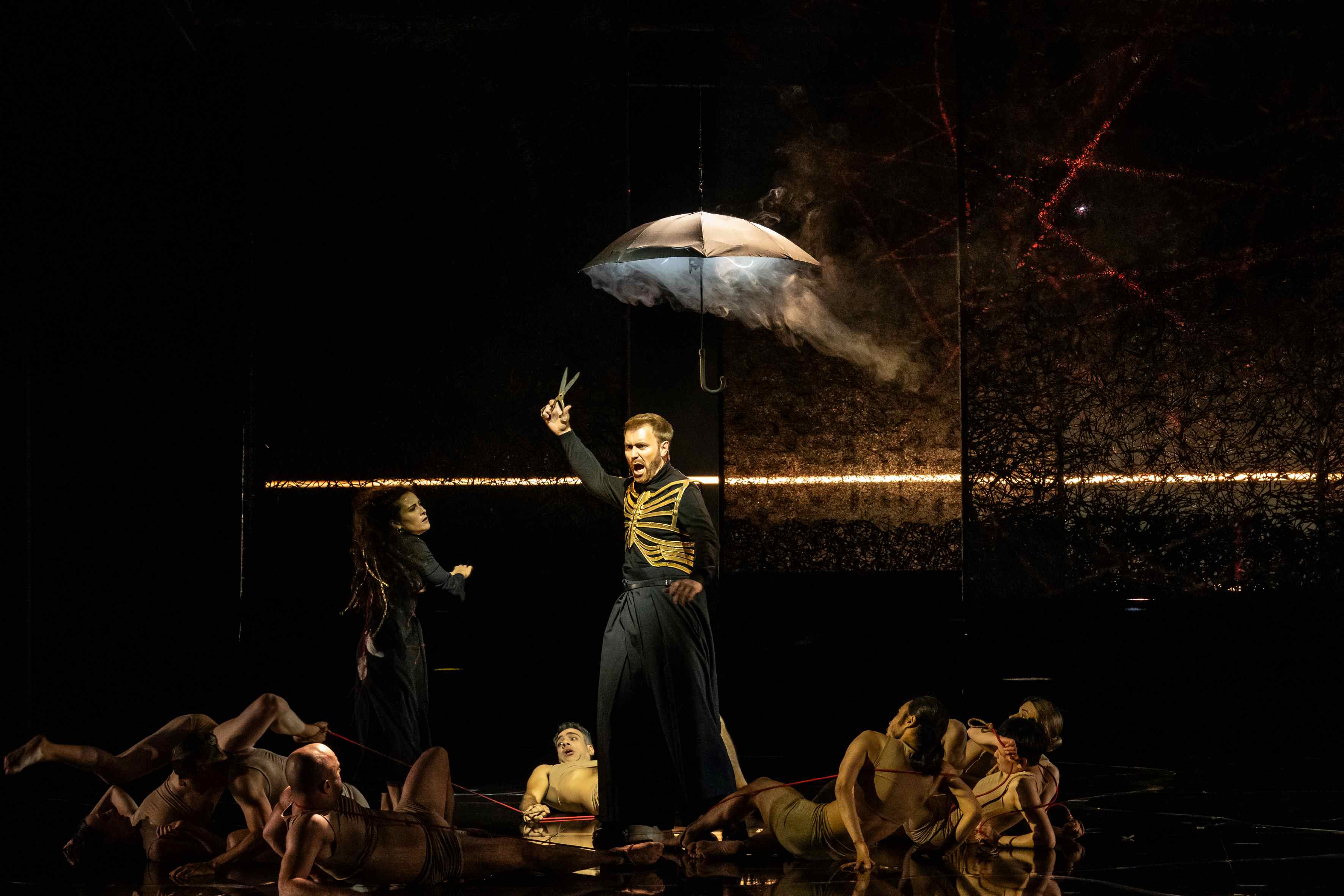
This extended further to the use of a group of danseurs and danseuses, who gyrated around the stage randomly. There were a few moments where it brought a smile to the face – mainly because of its ridiculousness more than anything else. As Raphael sang of the appearance of the animals, one of the danseurs entered jumping up and down on an inflatable orange ball, to interpret a tiger, while another waved her hair around to pretend to be a horse. Moreover, Still added another character, Satan, interpreted by danseuse Francesca Merolla, who was a constant presence on stage. She attempted to draw Adam and Eva away from each other, while at other times gyrating around the stage aimlessly. Although Alex Rosen’s Raphael was very game in engaging with her, allowing Merolla to pounce on him or run in between his legs. The closing tableau saw Merolla bringing a laptop to the front the stage, the apple that she used to tempt Eva appearing in the projections, seemingly suggesting that either Apple is evil, or computers more widely. I must admit I don’t really know what Still was getting at, other than, again, trying to make a point for the sake of it. This was my overriding impression of her staging throughout the evening – that rather than heighten the effect of this glorious score, her staging served to draw attention from it and undermine it.
This was doubly frustrating since the musical side was so strong. Minkowski solicited some excellent playing from the orchestra: strings without vibrato, natural trumpets, and timpani struck with hard sticks, gave the orchestral texture a beguiling range of colour. I did, however, find his tempi on the slow side. Yes, there was some vigour and rhythmic propulsion; yet far too often the music seemed to come to a halt. This was exemplified in ‘Vollendet ist das grosse Werk’, where the choral section had genuine rhythmic impulsiveness, while the central trio fell into stasis. That said, Minkowski encouraged his musicians to phrase the music with a deeply-felt beauty of phrasing, bringing out the cantabile pulchritude of Haydn’s wind writing, in particular. The orchestral playing was superb across the board and they were clearly at one with Minkowski’s view of the score.
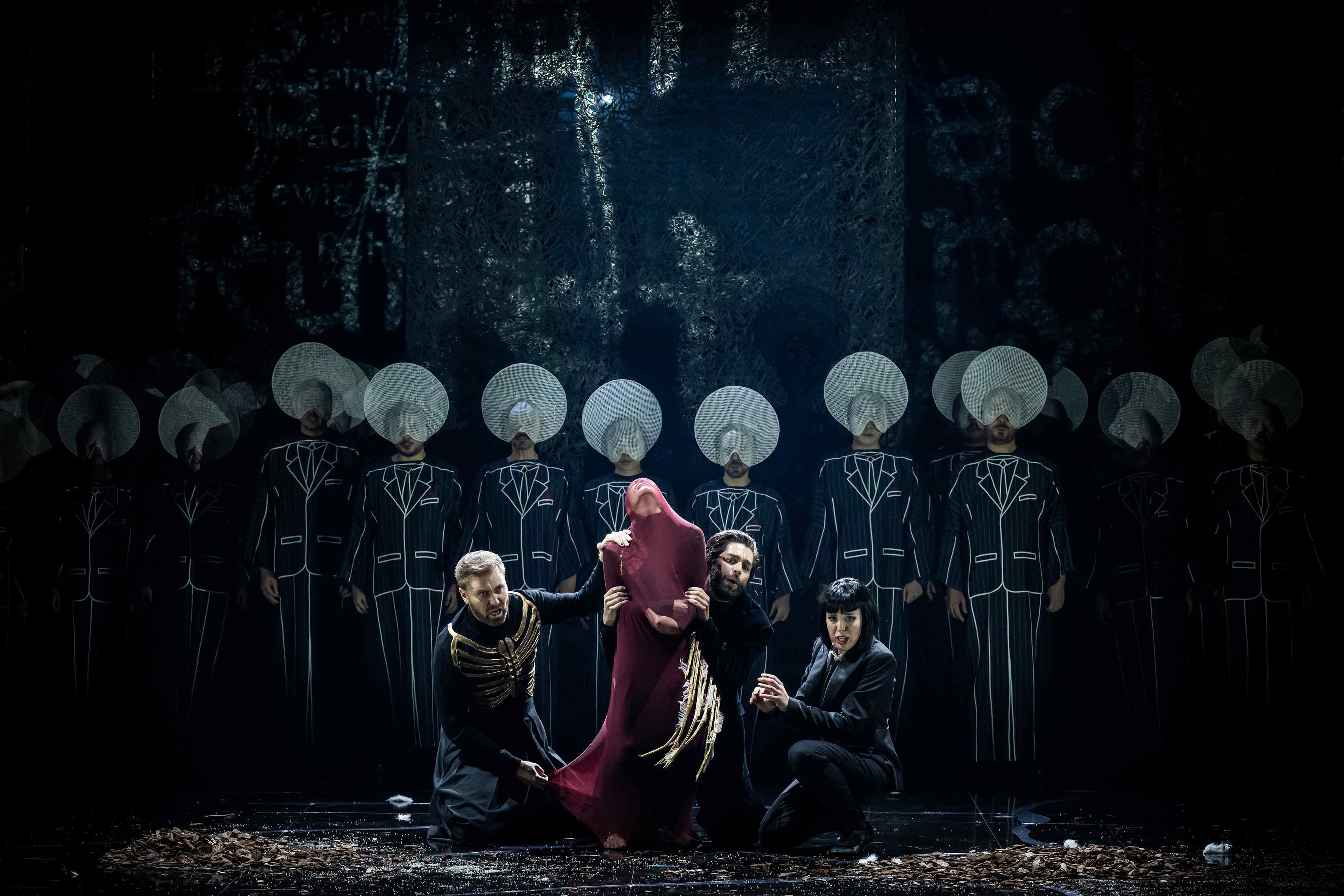
The chorus, prepared by Rustam Samedov, were costumed as ambulant lightbulbs for the first two parts. They made quite the impression in their opening ‘Licht’ as they were placed throughout the auditorium, drowning the room in a blaze of sound. It’s a shame, then, that the sopranos were slightly under the note, both there and throughout the evening. Of course, an opera chorus isn’t one of the specialist concert choruses we’re used to hearing in this work. They did sing with vibrant tone and undoubted enthusiasm, while they negotiated the fugal writing with confidence. The direction of the singers by Still, essentially involved them being either parked on stage or walked around in circles.
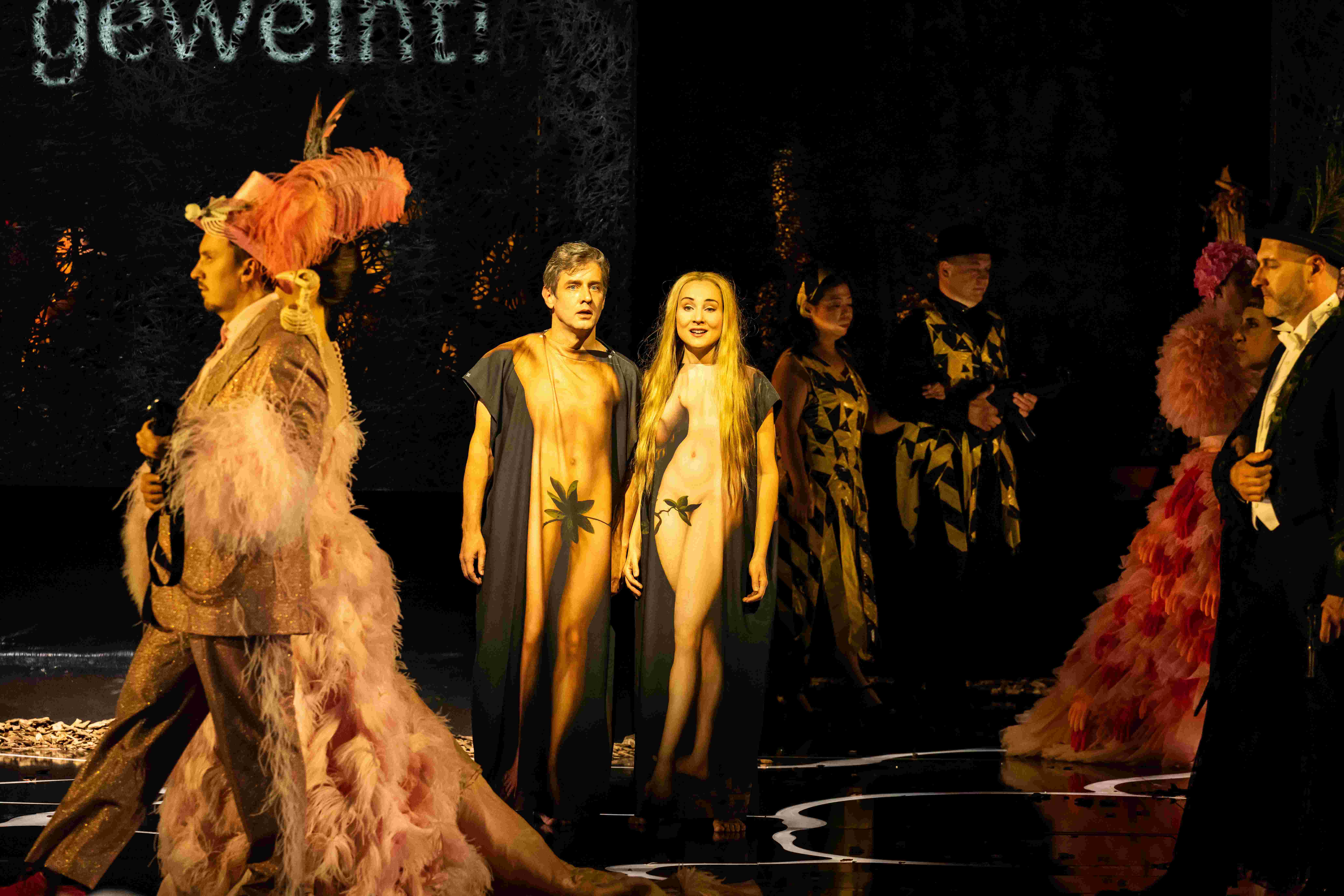
Kathrin Zukowski’s soprano was delightful. She has just that strawberries and cream tone that the part requires, soaring up with ease on top in ‘Mit Staunen sieht das Wunderwerk’, and dispatched her florid writing impeccably. Her fuller tones contrasted with Giulia Montanari’s more girlish, lighter soprano, able to float on the air throughout this difficult acoustic. Sebastian Kohlhepp’s bright, focused tenor coped well with the lower tessitura of his part, while the voice shone with a radiant glow higher up. Rosen chose some of the lower options and these were confidently attempted, if not quite completely there. His bass has a wonderfully warm, oaky tone, and the youthfulness of the voice is delightfully fresh. It does, however, sound like an instrument he’s still growing into – the vibrations aren’t always completely even and the tone occasionally hollow. Still, he’s most definitely an artist to watch. André Morsch sang Adam’s music in a lighter, higher baritone, firm of tone and blending exquisitely with Montanari in their duets.
Musically, this was a highly enjoyable evening. Even if I didn’t always agree with Minkowski’s tempo choices, in that far too often it felt too slow, there’s no denying that he was able to secure outstanding playing from this orchestra, that he phrased the music with affection, and that he galvanized his forces. The choral singing was enthusiastic and the solo singing gave much pleasure. Still’s staging was an incoherent jumble of ideas, that resulted in drowning out the impact of this glorious score. That said, the audience reaction at the close seemed to be a lot more enthusiastic than mine. I must admit to wishing I was able to close my eyes and enjoy the musical side, but then I wouldn’t be able to give you such a complete review. Definitely worth seeing for the musical aspects of the performance.
 operatraveller.com
[…] new production of Elektra at the Oper Köln opened the day after the staging of Die Schöpfung I saw here at the start of the month. To premiere two very different productions, with very […]
[…] opera house continues to be restored. Following the musically excellent but scenically risible Schöpfung in September, and the superbly-conducted Elektra in October, tonight marked the premiere of this […]
[…] it in another year. That said, the choice of turkey of 2024 was easy: Melly Still’s staging of Die Schöpfung in Cologne. Musically it was more than decent. Yes, Marc Minkowski’s tempi were bit too slow […]