Strauss – Salome
Herodes – Thomas Blondelle
Herodias – Evelyn Herlitzius
Salome – Amanda Majeski
Jochanaan – Markus Marquardt
Narraboth – Mario Lerchenberger
Ein Page der Herodias – Ekaterina Chayka-Rubinstein
Erster Jude – Aaron Pegram
Zweiter Jude – Timothy Oliver
Dritter Jude – Simeon Esper
Vierter Jude – Gerald Hupach
Fünfter Jude – Pádraic Rowan
Erster Nazarener – Neven Crnić
Zweiter Nazarener – Hong Jongwoo
Erster Soldat – Andrew Harris
Zweiter Soldat – Peter Lobert
Ein Cappadocier – Gerrit Illenberger
Ein Sklave – Rosalia Cid
Sächsische Staatskapelle Dresden / Juraj Valčuha.
Stage director – Michael Schulz.
Semperoper, Dresden, Germany. Saturday, November 2nd, 2024.
Tonight’s performance of Salome represented the first in this season’s revival of Michael Schulz’s 2016 production. It also represented the prise de rôle of Evelyn Herlitzius in the role of Herodias, around four years later than originally planned thanks to the plague, having herself given several sensational accounts of the title role over the years. Around her, the house assembled a cast of house regulars and guests, all under the direction of Juraj Valčuha.
I must admit that Schulz’s staging is one of those where one spends the entire evening wondering what on earth is going on. He sets the action for the most part in a child’s bedroom. The evening starts with Herodes putting a red dress on the bed. As the action unfolds, children’s toys come to life in the form of Narraboth as a teddy bear or one of the soldiers as a cowboy. The bed recedes into the background, to reveal Jochanaan sitting at a desk playing with an iPad or similar tablet computer, the hydraulic stage going up and down presumably to show to emerging power relationship between Salome and Jochanaan, as she emerges from the receded bedroom to engage with him. The bedroom also recedes for the final scene, to show Salome alone with the bedroom in the distance, only for her to go to bed to be murdered in it at the close of the evening.
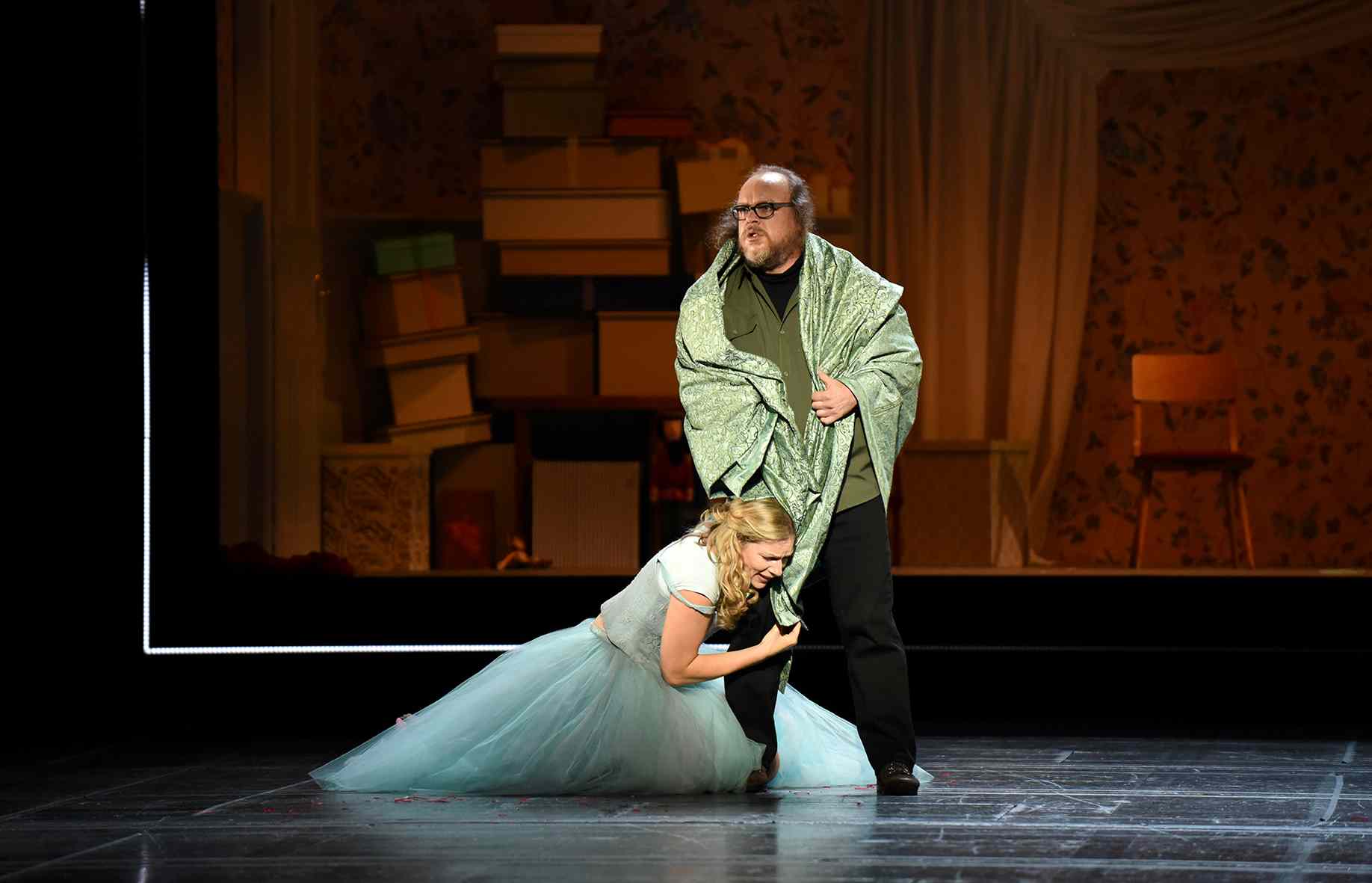
Perhaps, Schulz was saying that this was all a fantasy of Salome’s imagination, although given that Herodes placed the dress on the bed at the start of the evening, perhaps it was more his imagination. It might be that Schulz is showing us Herodes’ fantasies of abuse more than Salome’s experience of it. Schulz stages the dance as a procession of burlesque dancers, complete with nipple tassels, jiggling their booties to the pulsating rhythms. Similarly, Herodias is a lady who is determined to have a fantastic time with a tall muscular individual, all while downing sparkling wine from the bottle. While Herlitizus was terrific value in her vivid acting, I did start to question whether Schulz’s staging of the dance was rather facetious. In turn, it began to feel that he made light of the horrific theme of abuse, treating the work as something of a comedy, rather than bringing out and making us reflect on the deeper, darker meaning within. The evening as a whole was extremely fluently executed, in terms of the staging working well with the hydraulics giving the impression of the action taking on its own life. At the same time, the lack of clarity of the narrative arc, the impression that Schulz may be taking a somewhat flippant attitude to abuse – these were much less convincing aspects.
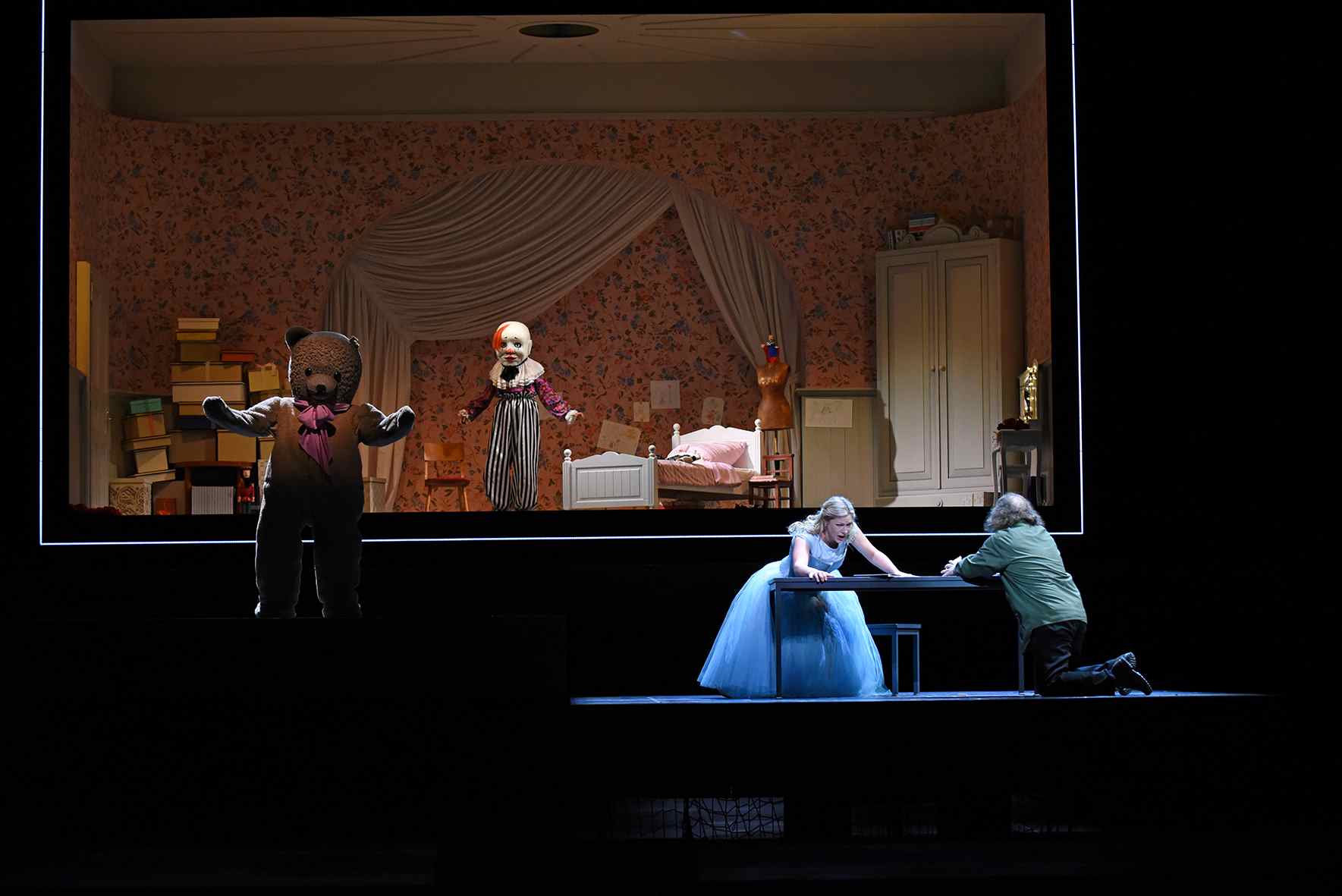
Musically, though there was so much to appreciate. Getting to hear this particular score in this glorious acoustic was an absolute treat. This is, of course, the place where the work was first performed and the Staatskapelle could probably perform it in its sleep. Which they most certainly did not tonight. The quality of the playing was superlative. Valčuha brought out a staggering range of colours from the orchestra – the organ pedal in the final scene seemed to vibrate through the floor under our seats, the sarcasm of the bright clarinets, the brass emerging from the pits of hell, and the silky Dresden strings. His was a very swift reading, the whole evening coming in at around 95 minutes. Yet it never felt rushed. Instead, Valčuha led the evening with a determined hand through to its gruesome conclusion. It also felt that he and his musicians played the room as much as they played the score, making this an overwhelming sonic experience. Due to the frequently wide-open nature of the set, which didn’t always offer optimal acoustic support to the cast, there were moments where Amanda Majeski’s Salome was covered by the orchestra, at least from my seat towards the centre of the Parkett. But getting to hear this score played so well, in the place where it first saw the world, was something very special.
Majeski was a determined Salome. She certainly acted most convincingly as a teenager, within the framework that Schulz gave her. She had also clearly mastered the text, making the words clear. However, the voice is probably a few sizes too small for the role. Her intonation was woozy, at times flat and others sharp. When she forced the tone to create volume in the final scene, it took on a hardness and lack of spin that was troubling. Similarly, in her big ode to Jochanaan as she first saw him, Majeski focused on pouring out long, lyrical lines, but here again the intonation was inconsistent and the lack of spin on top betraying a lighter voice being pushed too far. Majeski deserves our admiration for the sheer hard work that she had put into her singing and characterization, but I have to say to my ears, this was not a comfortable experience. Markus Marquardt was an implacable Jochanaan, singing with an appropriately world-weary baritone. The top tended to take on a greyness, and he also wasn’t helped by the wide-open staging with lack of acoustical support. Still, his determined vocalism and firmness of tone lower down were impressive.
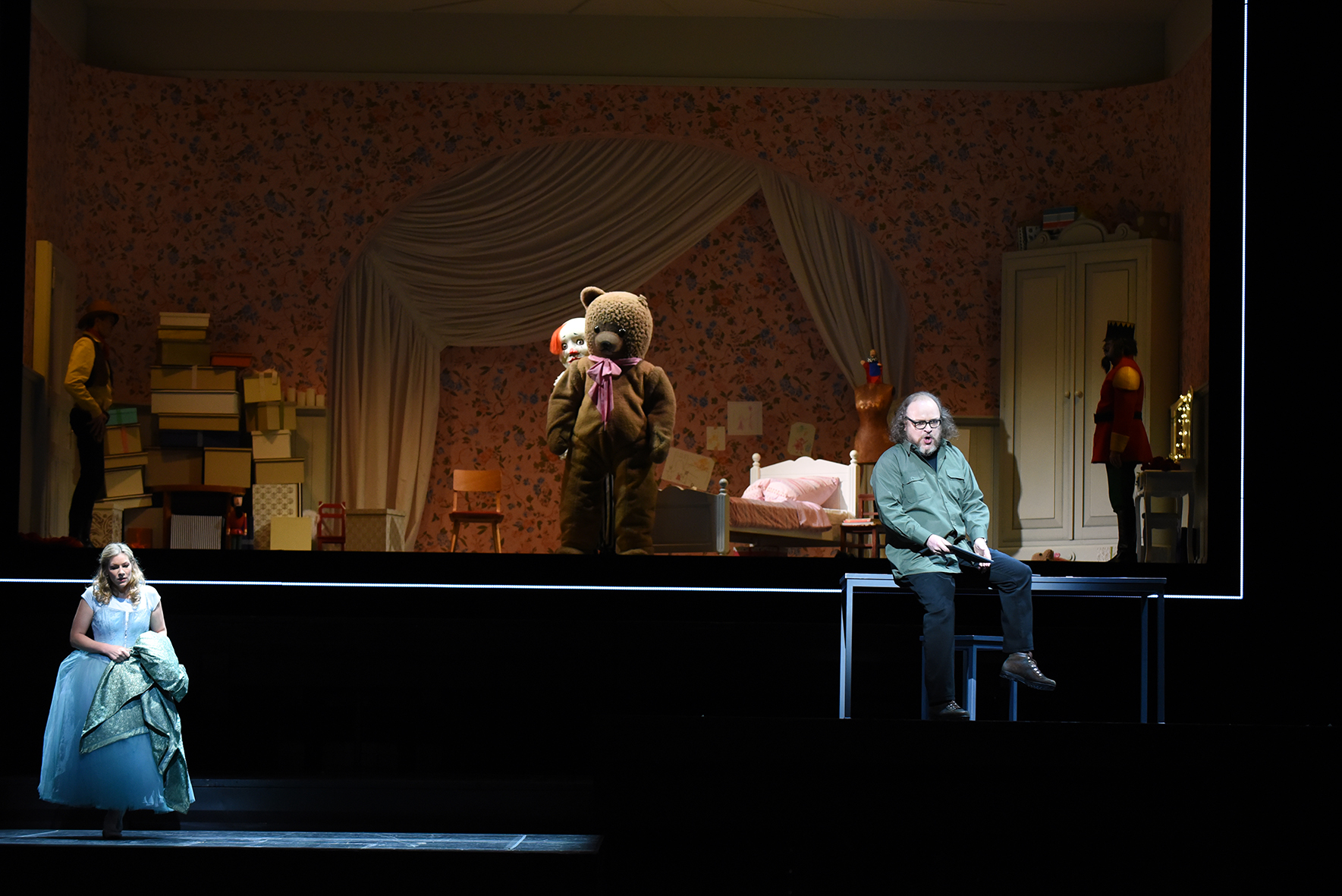
I must admit that Herodes is the best thing I’ve heard from Thomas Blondelle. He brought so much textual awareness to his singing, combined with his vigorous acting, that the dramatic temperature rose exponentially when he and Herlitzius appeared on stage. The voice was in excellent shape tonight, never pushed too far, everything sung off the text. Herlitzius was also in tremendous form. She seems to have taken to this role with great gusto, making the most of those sarcastic lines about the moon and the camel parentage. She also negotiated the tessitura expertly, her dramatic soprano ringing out into this splendid acoustic on top. Indeed, she could very probably still have sung a much more convincing account of the title role than we heard tonight. Although, she may well have appreciated being able to put her feet up and watch someone else get on with it.
The remainder of the cast represented the excellent standards one would expect from this address. A major find was Ekaterina Chayka-Rubinstein. The German-domiciled Ukrainian mezzo is, on this evidence, a significant talent. The voice has wonderful warmth lower down, the richness of tone in the middle and integration of the registers are most impressive. Undoubtedly a name to watch. Mario Lerchenberger sang Narraboth with a focused, firm tenor, very well placed, with easy reach and mellifluousness. All this while dressed as a giant teddy bear. Neven Crnić also made an impression as the Erster Nazarener, singing with an equally firm and focused baritone. The remaining roles were all very well taken.
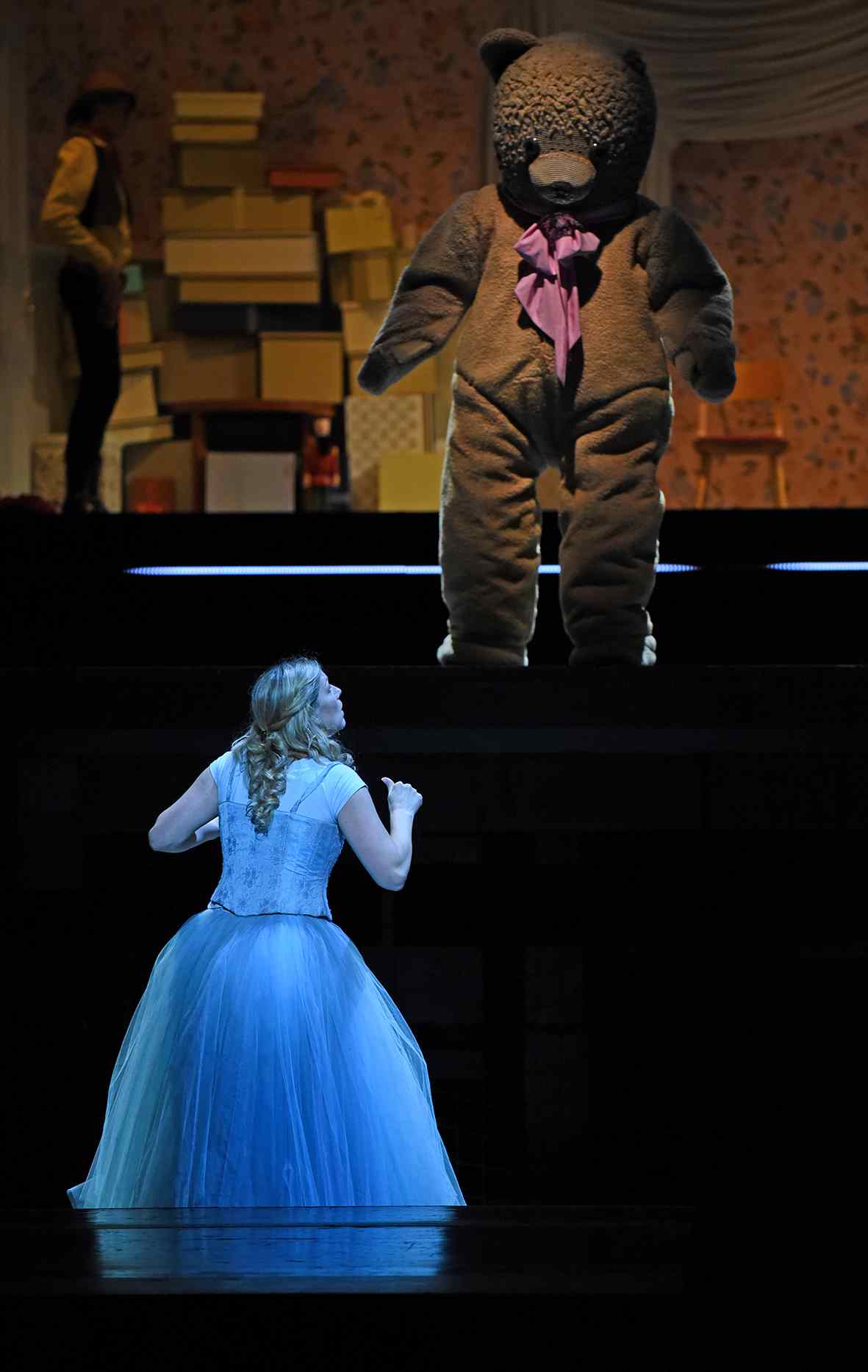
This was a Salome that was musically worthy of this historic house. The orchestra played with staggering security and virtuosity, conducted with fluent ease and allowing the drama to speed towards its horrific conclusion. Schulz’s staging was problematic. While there were moments of genuine comedy, the lack of clarity of the narrative arc and perceived flippancy towards the horror of abuse were problematic. Vocally, the honours went to Blondelle and Herlitzius and the supporting cast. That said, Majeski was very warmly received at the curtain calls, with the capacity audience giving her a generous ovation.
 operatraveller.com
[…] do of her Herodias, which Herlitzius debuted in Dresden in November, notably in the theatre where Salome was premiered. The playing of the Staatskapelle was unimpeachable, full of colour. On […]
[…] is recognized as one of the finest character tenors before the public today, his Herodes is one of the best I’ve had the pleasure of hearing, so he was a surprising choice for Siegfried, […]