Verdi – Simon Boccanegra
Simon Boccanegra – Claudio Sgura
Jacopo Fiesco – Michele Pertusi
Amelia Grimaldi – Eleonora Buratto
Gabriele Adorno – Ştefan Pop
Paolo Albiani – Gevorg Hakobyan
Pietro – Luciano Leoni
Un capitano dei balestrieri – Michael Alfonsi
Un’ancella di Amelia – Angela Nicoli
Coro del Teatro dell’Opera di Roma, Orchestra del Teatro dell’Opera di Roma / Michele Mariotti.
Stage director – Richard Jones.
Teatro dell’Opera di Roma, Rome, Italy. Saturday, November 30th, 2024.
This new production of Simon Boccanegra, directed by Richard Jones and conducted by house musical director, Michele Mariotti, opened a few days ago, marking the start of the 2024 – 25 season of this venerable house. As is often the case here, the run was double cast and tonight we should have been hearing the same cast as the premiere. Unfortunately, Luca Salsi (pictured), who sang the title role at the opening night, was indisposed. An announcement was made five minutes after the performance should have begun that Claudio Sgura, the alternate Boccanegra who had sung the role last night and will sing again tomorrow, had graciously agreed to sing for us and the performance would start around a half-hour late.
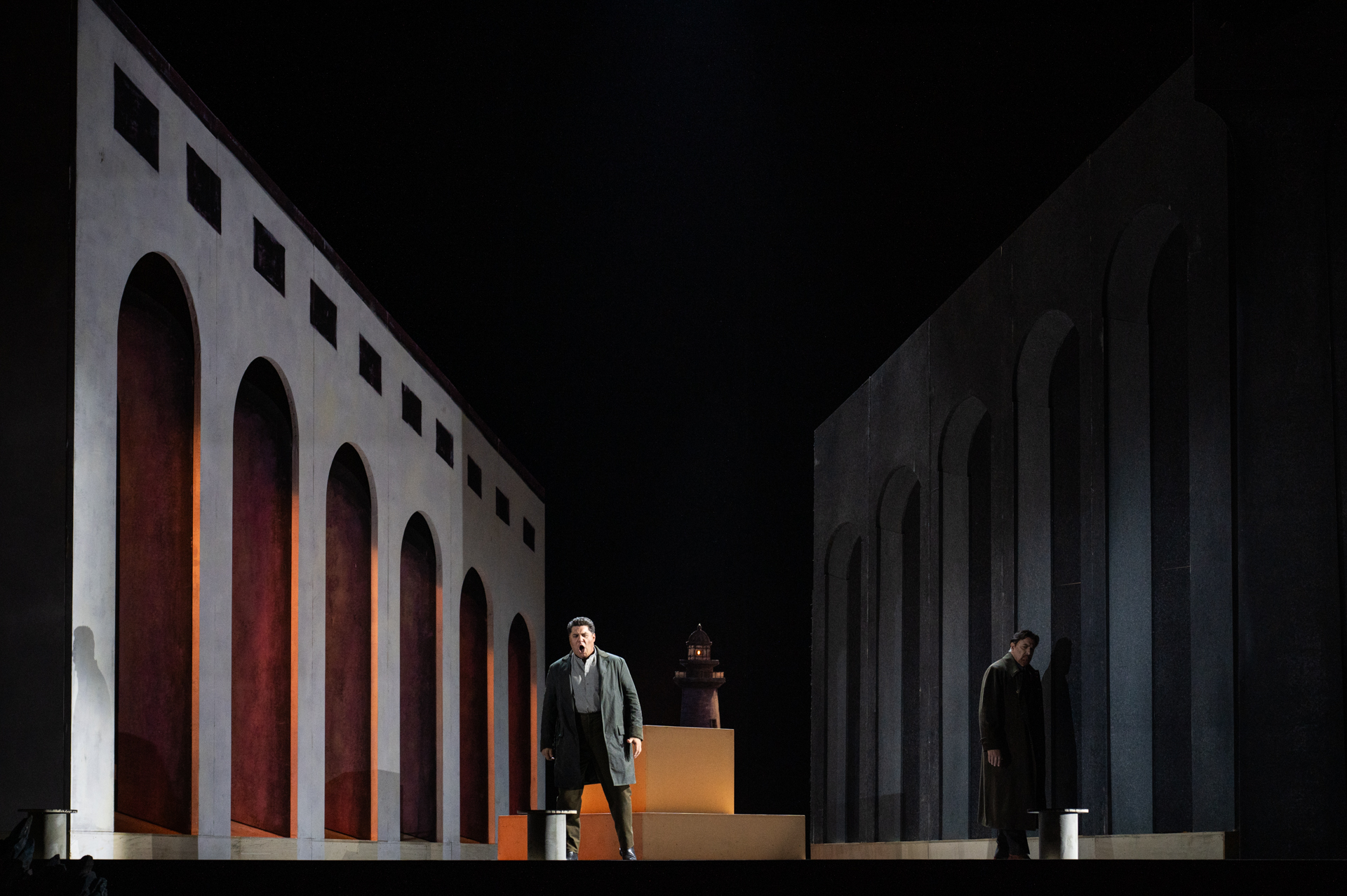
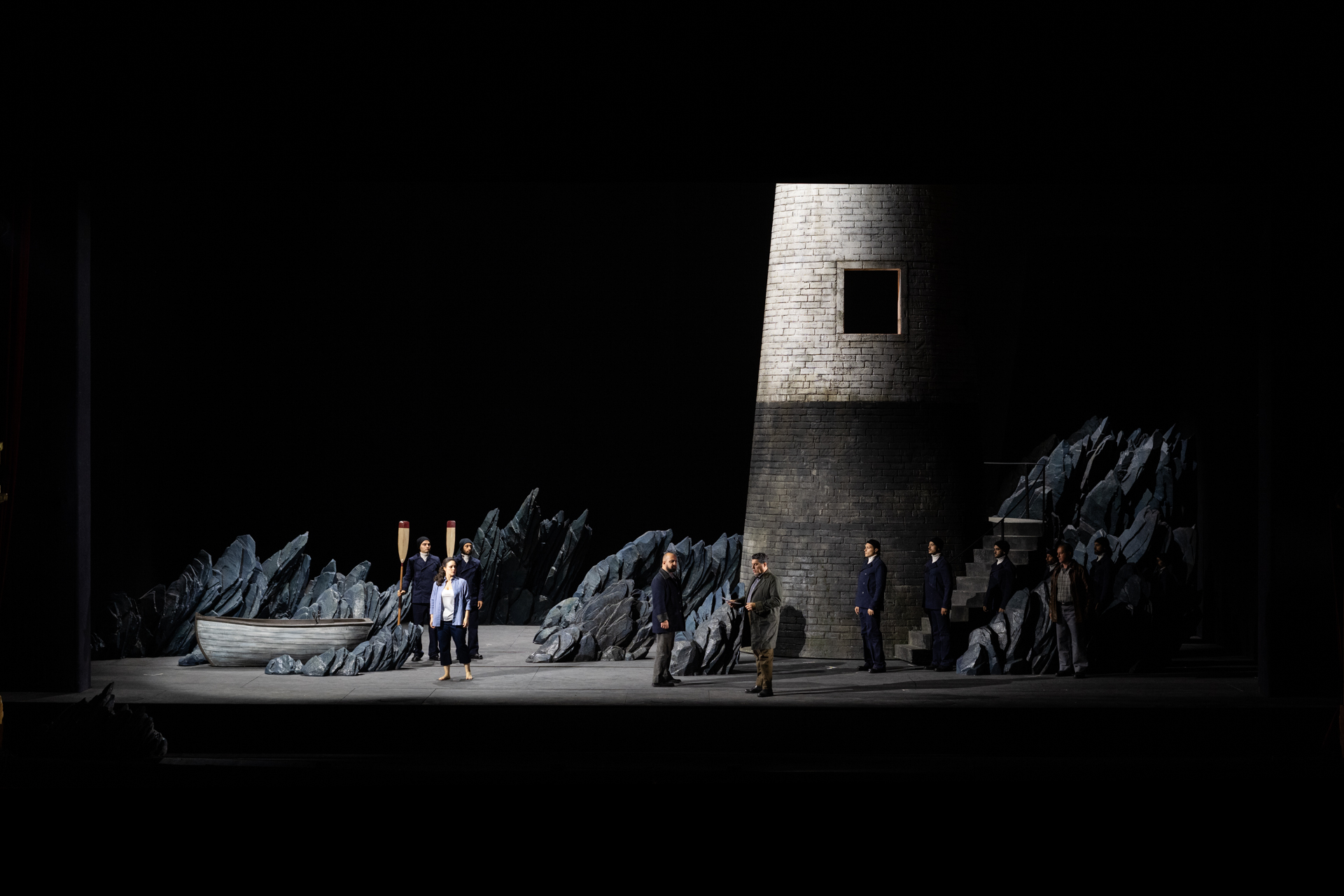
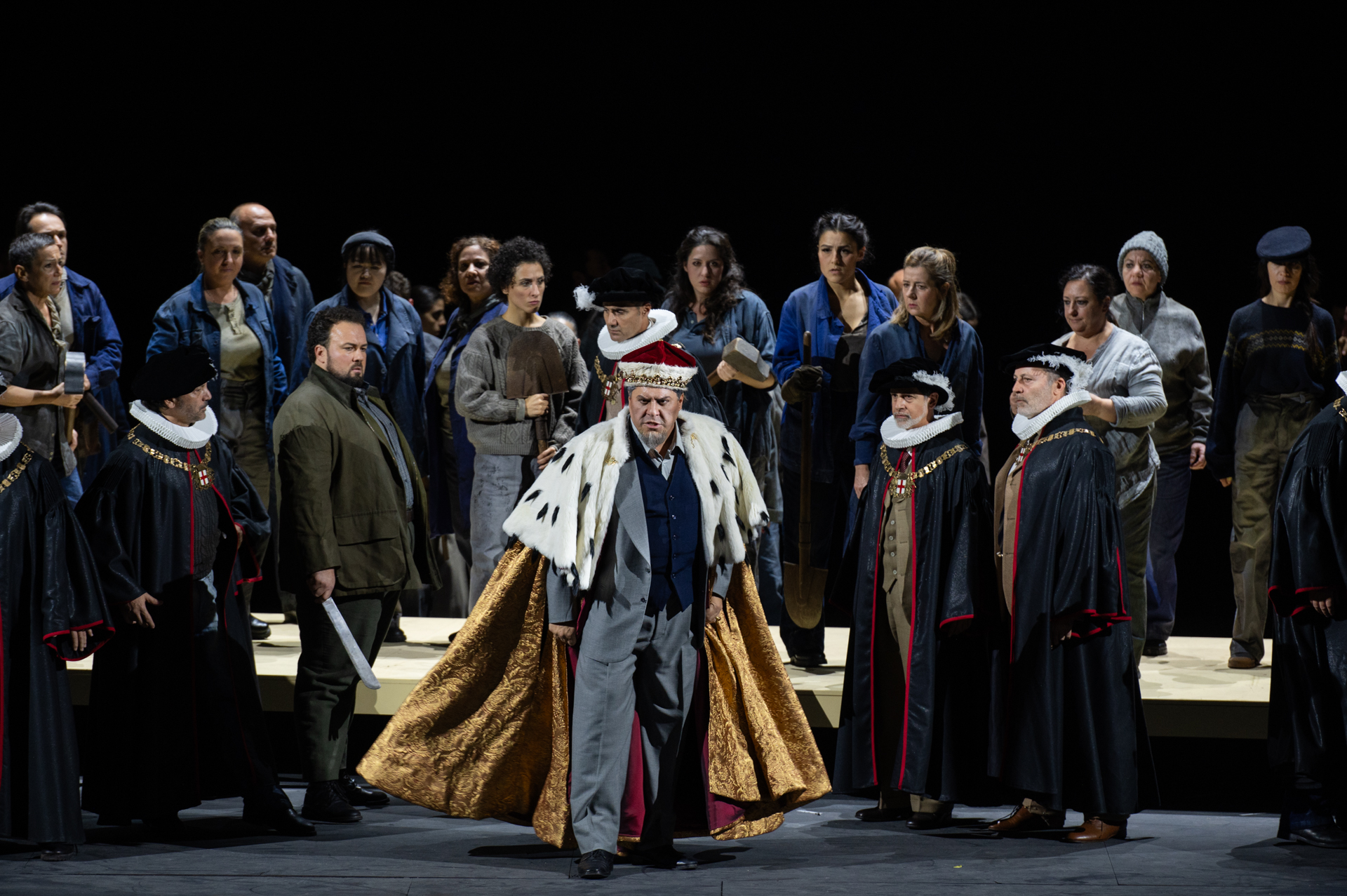
Jones’ staging sets the action in a modern-day fishing village, albeit one where the council dresses up in grand, historic regalia for the council scene – costumes and sets by Antony McDonald. In many respects, McDonald’s sets are redolent of film noir. The large, grey columns of the town, and the forbidding grey lighthouse that represents the Grimaldi house, add an air of mystery and intrigue. Yet, the very colourful bright jackets worn by the sailors, or the historic regalia of the council, are in opposition to that shadowy greyness that prevails in the visuals. In many respects, it feels that Jones is attempting to universalize the work, to make it feel like a classic story of conflict that spans the centuries. Transforming it from less of a meditation on the isolation of power, into more much more of a domestic, small-town tragedy. In so doing, Jones does bring out the claustrophobia inherent in the work. And yet, it also feels like that conflict between the private and the public is barely explored.
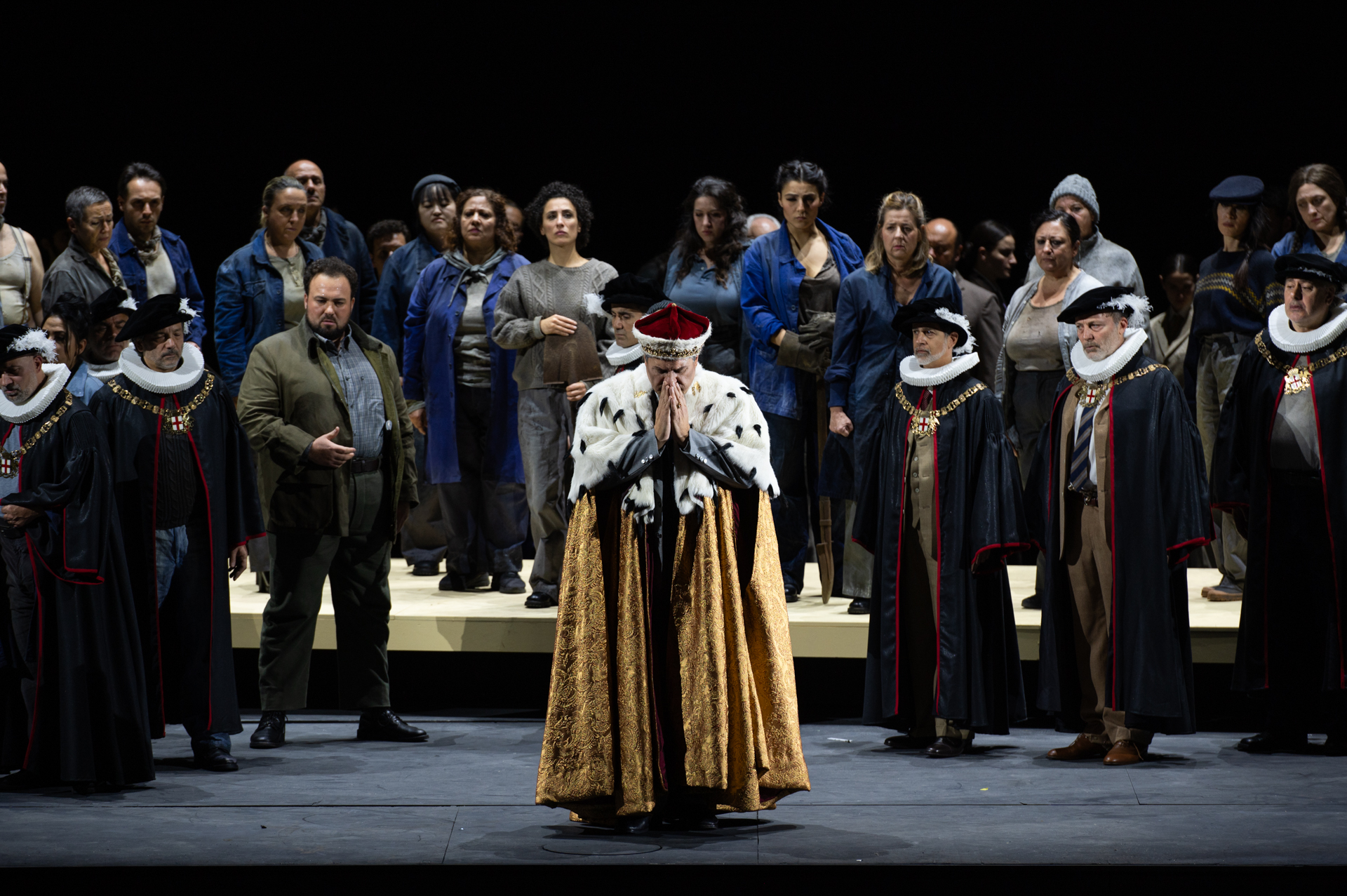
His personenregie is also rather basic. Some of the principals coped better than others with this. Ştefan Pop’s Adorno was particularly under-directed, frequently planted on stage to gesticulate to the front. Similarly, the chorus was marched on, parked with the occasional arm held aloft, and then marched off again. Sgura is an exceptionally tall gentleman and it was striking how he dominated the stage through sheer height, physically towering over the massed forces in the council scene. Of course, we had the usual Jones clichés, notably the wallpaper in Boccanegra’s home – here a modest fisherman’s cottage. The one insight I did find interesting from Jones was in the way he displayed the expired mother Maria on a bed, covered in a black sheet, who then woke up to reveal herself as Amelia at the start of Act 1; while in the closing scene of the evening, Boccanegra expired on the bed, himself covered in the sheet. It felt that Jones was making an astute point about the inevitability of the fate of these characters, one I found interesting. Otherwise, Jones’ staging was logical enough, told the complicated plot with clarity, although the principals seemed to be pretty much left to themselves in terms of physical direction.
Musically, this was an evening that offered multiple rewards. Mariotti led his orchestra in a reading that focused on the score’s nocturnal tinta, offering a contrast to the greyness of the visuals from the stage. He phrased the music with the utmost delicacy, making Verdi’s score sound almost revolutionary in its modernity – clarinets offering echoes of a ship’s horn, or the dark foreboding brass underneath. Mariotti obtained some silky string playing of great beauty, with intonation pretty much optimal throughout the evening, always paying scrupulous attention to Verdi’s dynamics and accents. That said, I did find his tempi to focus with a priority on precisely that beauty of texture, rather than dramatic thrust. He’s an exceptionally singer-friendly conductor, never allowing the band to overwhelm the voices on stage. However, in that explosive moment where Boccanegra and Amelia realize their true identities, the outburst from the pit felt contained, although Mariotti’s prioritizing of the audibility of the voices was welcome. It also felt, that Mariotti lingered perhaps too much in that final scene of the evening, the dramatic momentum sagging at that moment. I appreciate this is very much a matter of personal taste, but I did long for Mariotti to allow the strings to attack with sharper focus, rather than the elegance he requested, using the insights we have learned over the years from period playing styles. The chorus, prepared by Ciro Visco, had a very good evening. The tenors and basses sang with impeccable tuning and blend, while the sopranos vibrated generously.
Sgura poured his soul out for us in the title role. His baritone is ideally suited to the younger Boccanegra of the prologue, sounding relatively bright and youthful in tone. He maintained this brightness of tone throughout the remainder of the evening, making his Boccanegra sound more energetic and virile than the haunted figure we usually hear. The voice is a good size, with an admirable legato, and carried over the massed forces with ease. It does, however, sound that the top tends to taper off and lose focus of tone, although given that he was singing a demanding role two evenings in a row, this is perhaps understandable.
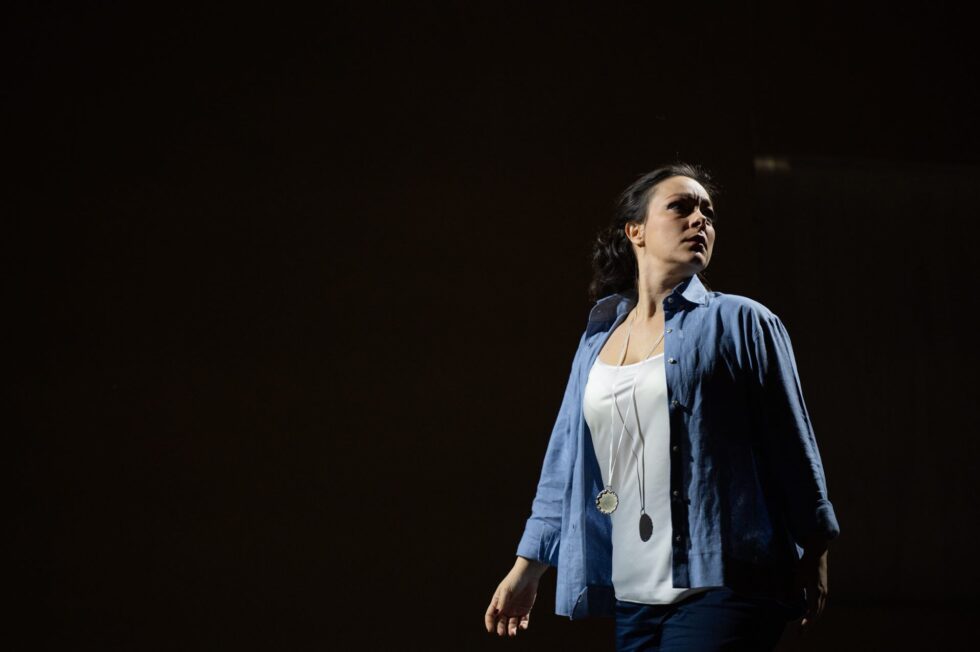
Eleonora Buratto, who I also had the pleasure of seeing as Amelia earlier this year at the Scala, gave us an exquisite account of her glorious music. This is a role that fits her like a glove, allowing her to bring her strawberries and cream soprano, with its limpid line. She sang her ‘Come in quest’ora bruna’ with focused tone, the voice rising with a fabulous sense of ease, the words always nicely forward and used to bring out meaning. For me, however, the highlight of her performance was her contribution to the big ensemble of the council scene. Buratto’s soprano soared over the texture with sheer pulchritude, with the kind of innate sense of line that cannot be taught, and a genuine trill. I seem to say this every time I see Buratto live, but watching her, one cannot fail to be aware of the fact that in her singing, one sees that great Italian tradition incarnated, not only in the way that she makes the text such an inherent part of the line, but also in the beauty of her legato.
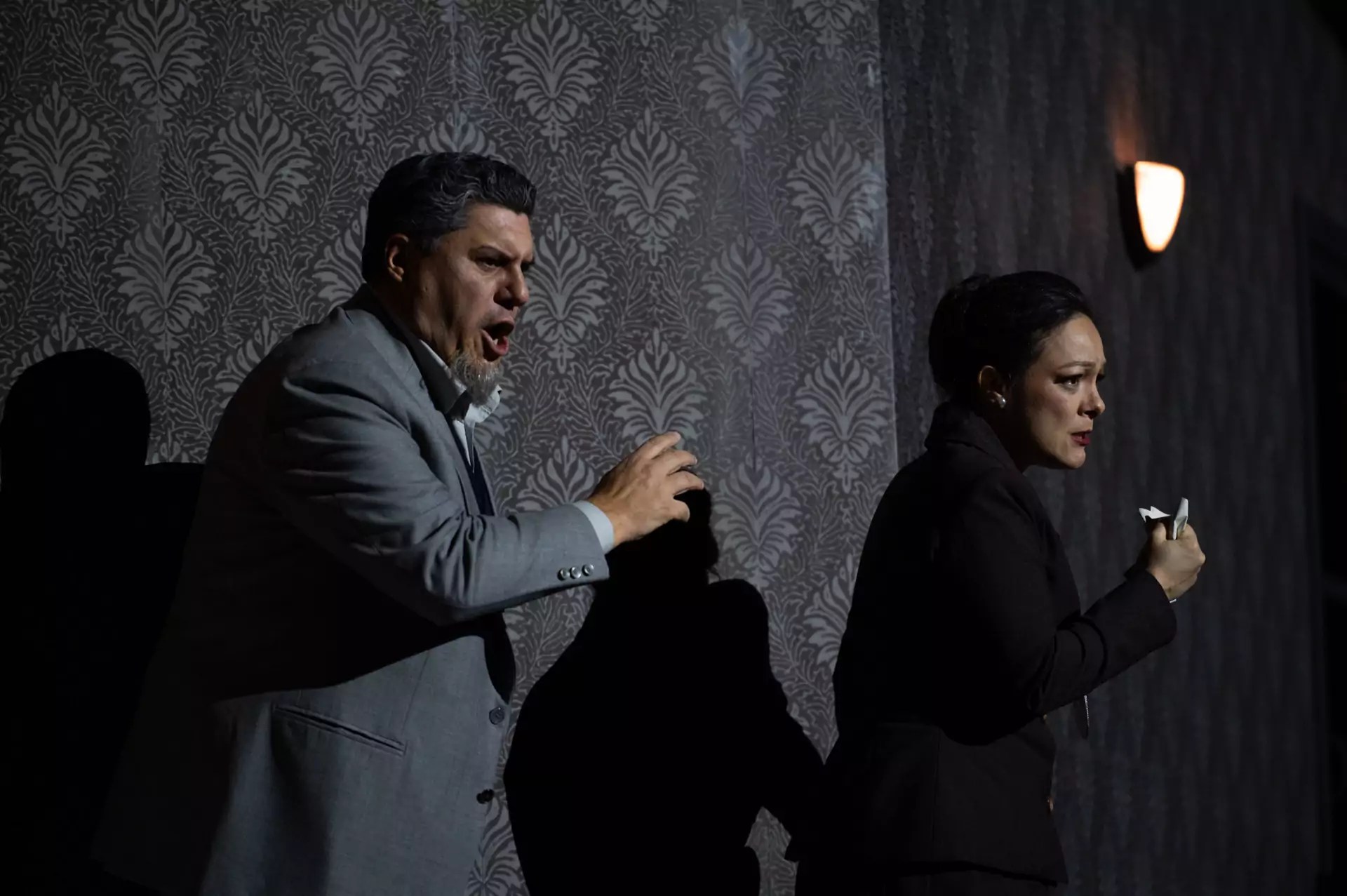
Pop gave us an ardent Adorno, full of warm Italianate tone. He suffered most from Jones’ under-direction, but made up for it in his generous and honorable singing. The voice has a wonderfully full and rich middle, but does take on an element of wiriness in the higher, sustained writing. Still, the generosity and sensitivity of his singing gave much pleasure. As indeed did Michele Pertusi’s as Fiesco. Pertusi sang his aria of mourning for Maria in the prologue with eloquent dignity and warmth of line. As the older Fiesco, as we progressed through the evening, the voice took on a touch of greyness, lacking the sheer range of colour of yore, although this was of a piece with his character. Indeed, in Pertusi’s vocalism tonight, it was hard to know where the character ended and the real person began, such was the insight that he brought to his role.
Gevorg Hakobyan’s Paolo was superbly sung. His baritone has a touch of acid to the tone, making the evil of his character’s motivations even more apparent. The voice is so firm, and completely even from top to bottom, ringing out thrillingly into the house. Hakobyan also sang with scrupulous attention to the text, filling the words with meaning. Luciano Leoni sang Pietro in a full, lugubrious bass, one I imagine would make a very satisfying Fiesco. The remaining roles reflected the quality one would expect at this historic theatre.
This was an evening that offered multiple rewards, musically. The singing was always very good, with Buratto’s Amelia absolutely exquisite and Hakobyan outstanding. Mariotti achieved orchestral playing of excellent quality, even if I found he prioritized beauty of line to the detriment of drama. Jones’ staging did what it needed to do: it presented the narrative clearly, did not draw undue attention to itself, although direction of the principals was perfunctory. The audience greeted the close of the evening with generous cheers, particularly so for Pop, Buratto, Sgura and Mariotti. What this evening did, above all, was confirm that Verdian singing is very much in good health these days.
 operatraveller.com
[…] it was Claudio’s son Daniele Abbado who provided the stage direction. I saw another Boccanegra, this time in Rome, also featuring Buratto’s heavenly Amelia, who in her limpid beauty of tone, […]