Donizetti – L’elisir d’amore
Adina – Enkeleda Kamani
Nemorino – Valerio Borgioni
Belcore – Lodovico Filippo Ravizza
Dulcamara – Simone Alberghini
Giannetta – Yulia Tkachenko
Coro Teatro Regio Torino, Orchestra Teatro Regio Torino / Fabrizio Maria Carminati.
Stage director – Daniele Menghini.
Teatro Regio, Turin, Italy. Sunday, February 2nd, 2025.
This new staging of L’elisir d’amore at the Teatro Regio Torino, a coproduction with Parma, opened last week and, as is common at the house, was double cast, led by the musical direction of Fabrizio Maria Carminati. The stage direction was confided to Daniele Menghini. This is the third show I have seen by Menghini and the previous two left me with less than a universally positive impression. The first I saw by him, was a Carmen in Macerata which included a clown who enumerated loquaciously in the Italian tongue during the show. It didn’t add anything in particular to the drama, but instead became increasingly tedious. The second, was a Tristan und Isolde in Palermo, which began as a reading in a rehearsal room, morphed into a traditional production, and then went back to the rehearsal room. That said, the naked man on stage did give a lot to look at.
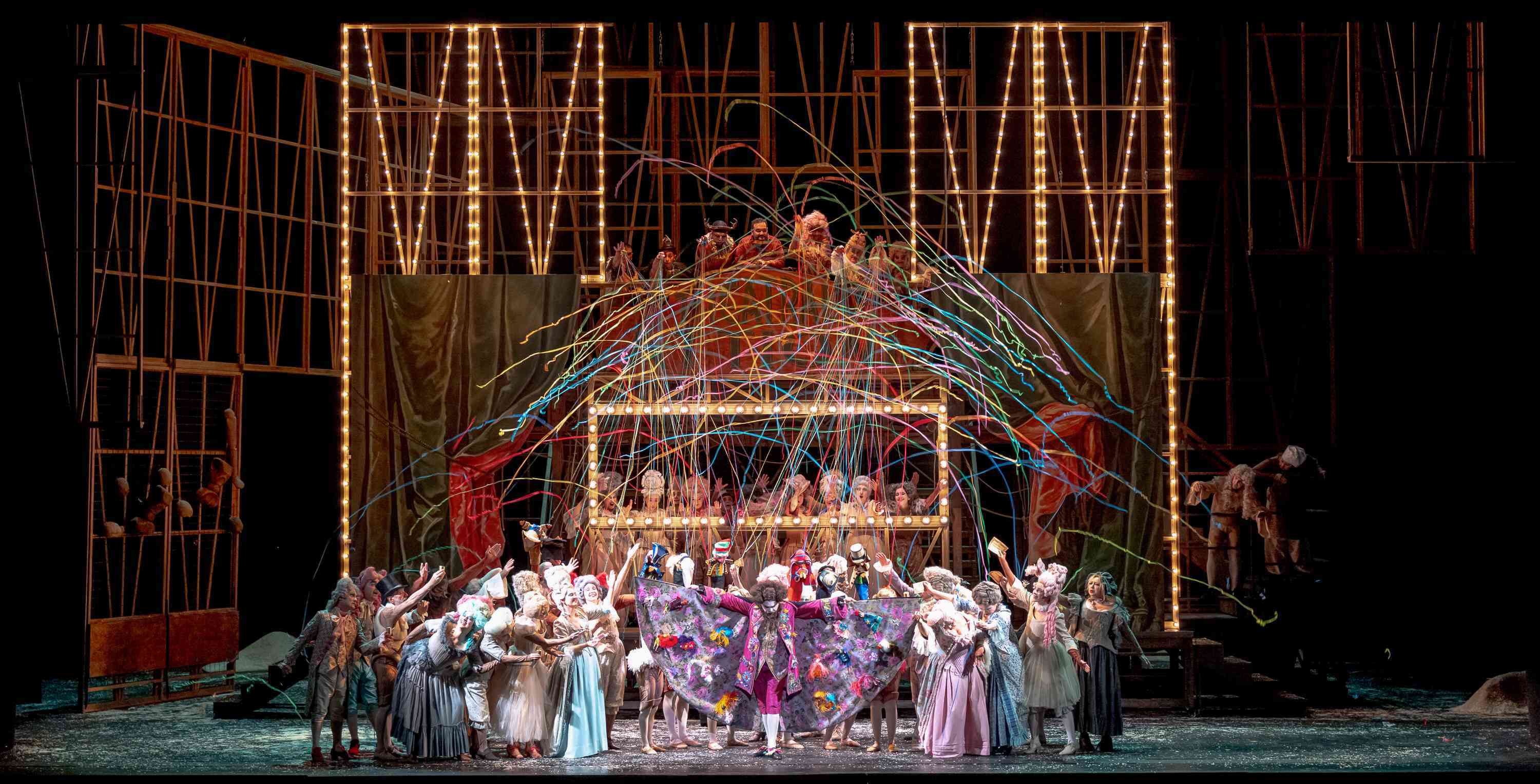
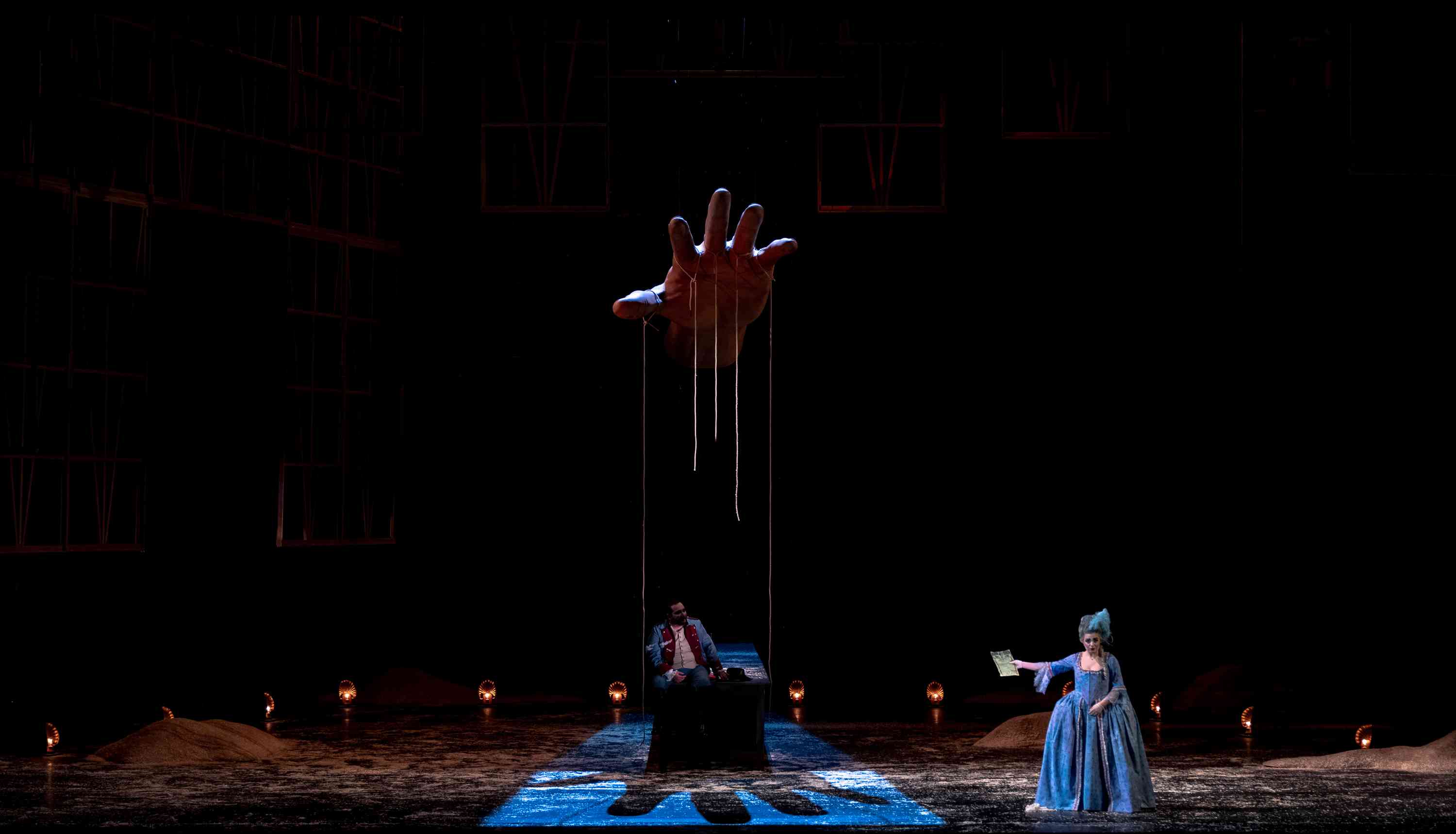
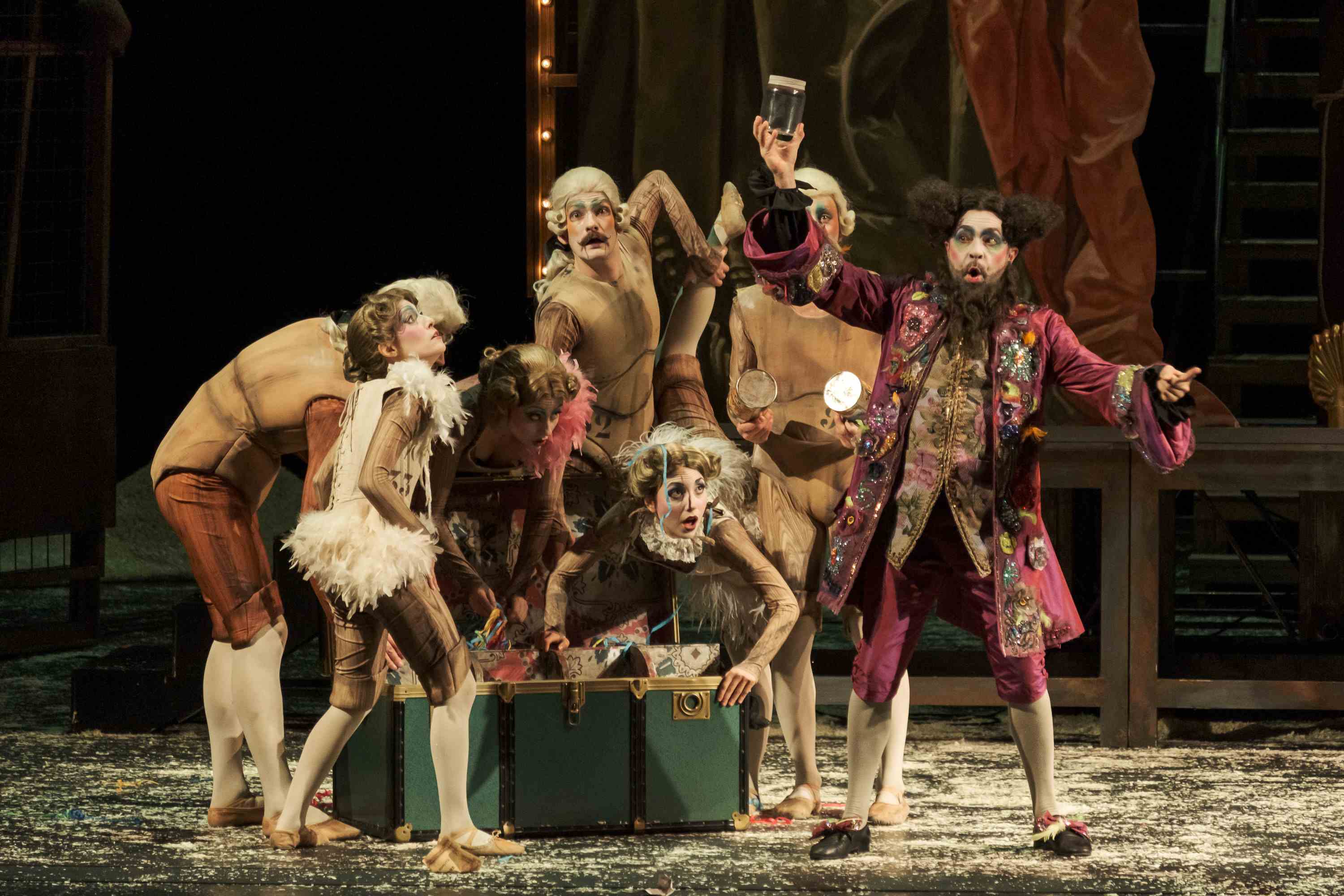
I mention these, because this Elisir appears to conflate both those two previous productions into one – though alas without the naked man, who would have given additional visual interest. Menghini sets the action in what appears to be a puppet-maker’s workspace. Nemorino is the only person in modern dress, who falls asleep in the opening chorus while watching something on his laptop. As he does so, the puppets come to life and start acting out the plot. Then, as the evening progresses, Nemorino becomes implicated in the story, with the close of Act 1 seeing him dressed up as a clown. He continues so in Act 2, until the final chorus sees him put on a modern jacket, and the red hoodie, that he started the evening wearing, is put on Adina. I found that there were several issues with Menghini’s approach. The first, is that the clarity of his narrative is obscured, to the extent that the Nonna sitting next to me turned to me at the end and asked me what exactly was it that she had just watched. The second, is that the symbolism seems to make little sense and, rather than being absorbed by the music, one spent so much of the evening asking ‘why’? For instance, as Nemorino sang ‘una furtiva lagrima’, he did so standing on a table with a giant hand over him with strings cut. Was this Nemorino breaking free of his puppets? Was it that the puppets took on an independent life of their own? It’s hard to know.
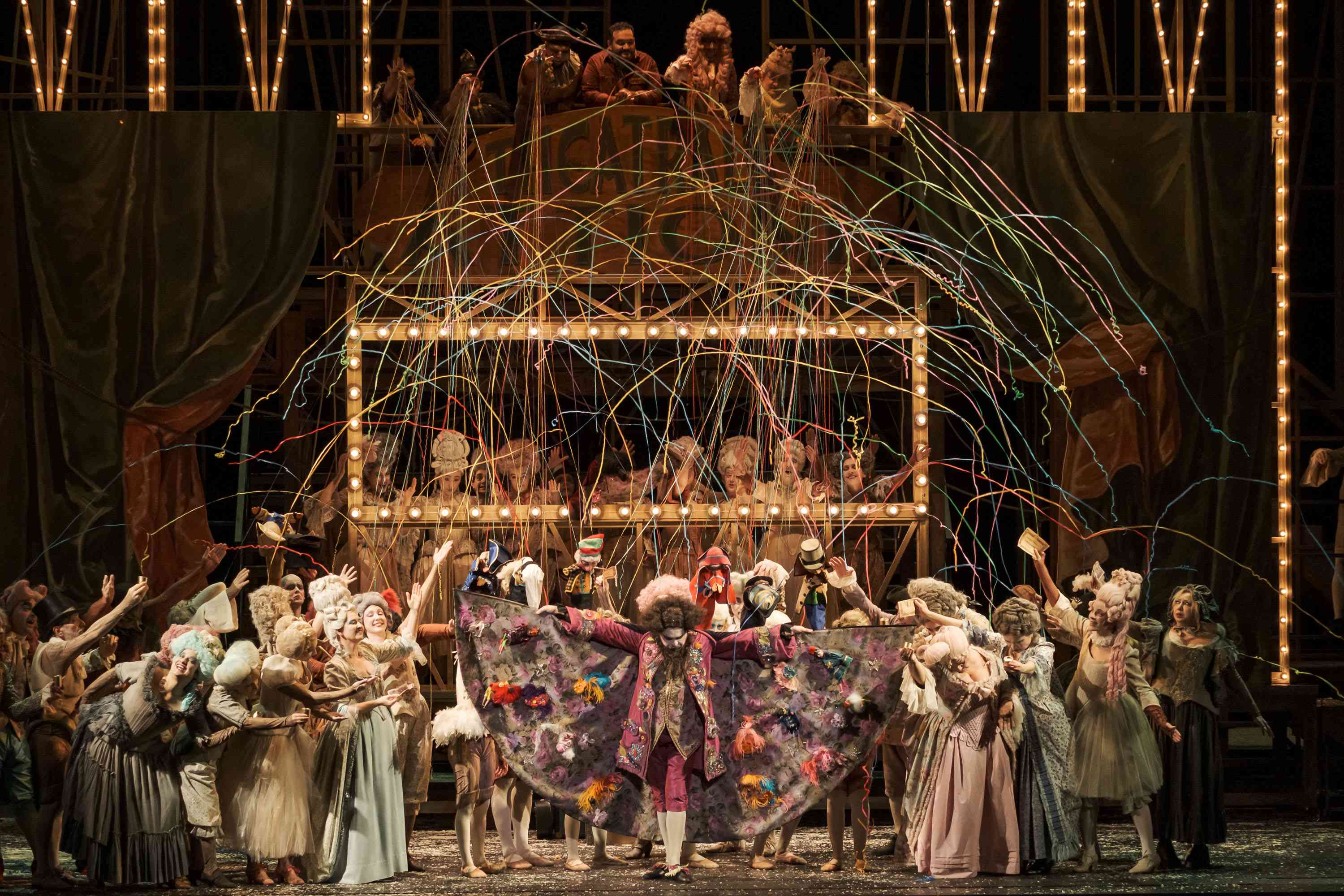
Moreover, the overriding impression I left with – and this is in common with both the Carmen and the Tristan – is that, rather than taking the score as a starting point, using the staging to amplify the musical colours, the staging undermines it. Interestingly, the photographs make it look like a much more colourful staging than I experienced in the theatre. As regular readers will know, I am very open to alternative interpretations of classic works, but the most successful are those that use the score as the starting point for that interpretation, using the staging to amplify and bring out what we hear. This is one of the sunniest, happiest works in the repertoire, that opening chorus so full of Italian brightness. Yet in Menghini’s hands, the gloom on stage became all-consuming. I also think the first time I heard the audience laugh today, was in the final scene.

A shame, because the musical side had so many rewards. Fabrizio Maria Carminati led a Regio orchestra on excellent form. They played with admirable precision of attack and impeccable intonation throughout. The instrumental side was also enhanced by Paolo Grosa’s fortepiano, who interjected some charming moments into the recitatives, using influences from Bach and Wagner, to make the work even more universal. I found Carminati’s conducting elegantly phrased and congenially paced. That said, I did wish for a little more swing, for instance in Dulcamara’s entrance, or at the start of Act 2. It all felt a little too graceful there and could have picked up more to energize the gloom emanating from the staging. The chorus, prepared by Ulisse Trabacchin, sang with enthusiasm and warm tone, and were extremely game in executing Menghini’s stage directions that had them acting like puppets.
I had the pleasure of hearing Valerio Borgioni’s Nemorino in Bologna just over a year ago, and I was very keen to hear him again. Borgioni is a singer of exceptional promise. Still in his twenties, he has such focused, ripe tone, implicit musicality, and that Italianate insight into this music that cannot be taught. His ‘una furtiva lagrima’ was phrased with loving generosity and seemingly endless lines, and shaded with genuine delicacy. I do still have a slight concern that the top isn’t completely integrated, but Borgioni is young and this is something that can be worked on. He is, without doubt, a major and very exciting talent and I look forward to continuing to follow his career with great eagerness.
Enkeleda Kamani is a new name to me and one I predict we will be hearing a lot more of. She has a fabulous technique. Kamani demonstrated a limpid line, able to spin long, languid lines on the breath with a milky-smooth legato. Her mastery of the passagework was impeccable, also bringing a deeply instinctive musicality to her singing that gave an enormous amount of pleasure. Kamani also added some enchanting embellishments to the line, giving her singing even more individuality. She has all of the bel canto tools at her disposal and is another name to look out for.
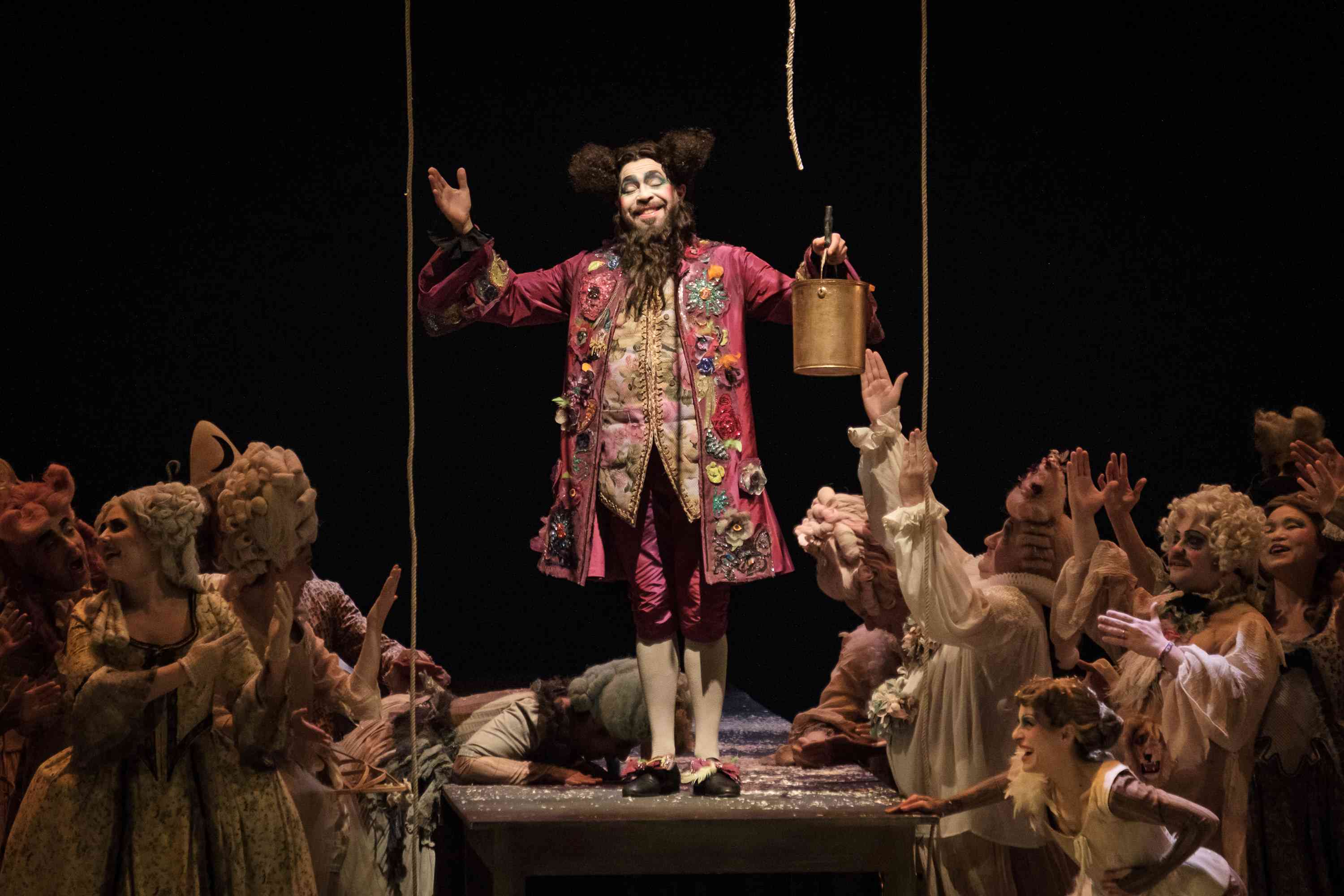
Lodovico Filippo Ravizza gave us a warm and masculine Belcore. He sang his music in such handsome tone, that it was impossible not to be won over. His opening ‘Come Paride vezzoso’ showed excellent command of the passaggio, a beautiful legato, and immaculate diction. I did feel that Simone Alberghini’s Dulcamara was somewhat overshadowed by the staging, although it was hard to compete with the visual ‘noise’ that Menghini surrounded him with. That said, his warm and generous bass also gave a great deal of pleasure. He dispatched the rapid-fire patter in his Act 2 duet with Adina with easy agility and his diction throughout brought the text to life vividly. A very last-minute replacement, Yulia Tkachenko coped well with the staging as Giannetta and sang her music in a charming, creamy-toned soprano, also with excellent diction.
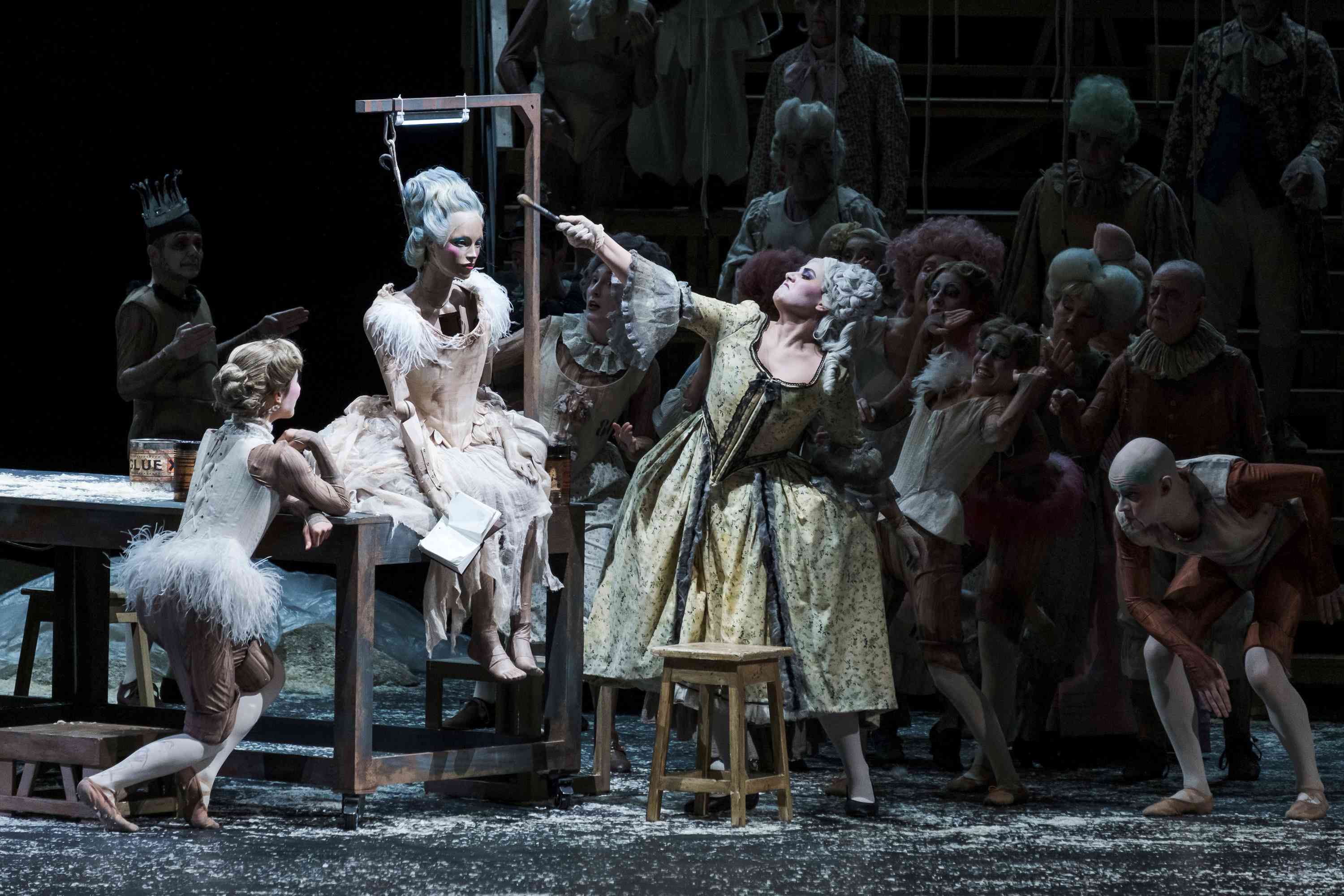
This was a rather mixed afternoon in the theatre. I found it hard to escape from the impression that Menghini’s staging worked against the music, rather than with it, draining out the colour and life-enhancing vigour of the score as it reached its lieto fine. That said, the singing was absolutely terrific. There are so many reasons to be pessimistic right now, but the future of bel canto in its homeland really isn’t one of them. The audience responded with polite applause during the show, with generous applause for the cast at the close.
 operatraveller.com
[…] vibrant opera tedious, a Tristan in Palermo that had a naked man perambulating the stage, and an Elisir in Turin that sucked the life out of that glorious […]
[…] Nottingham was Lodovico Filippo Ravizza, who I had the pleasure of seeing as a congenial Belcore in Turin earlier this year. Nottingham is very much a step up in terms of size, and I do have to write […]
[…] Roberta Mantegna sang with generosity in Naples, accompanied by a solid cast. In Turin, an Elisir d’amore reminded us what a superb talent Valerio Borgioni is singing Nemorino, the voice full of Italian […]