Puccini – La bohème
Mimì – Hanna Husáhr
Rodolfo – Bror Magnus Tødenes
Marcello – Jeremy Carpenter
Musetta – Vivianne Holmberg
Schaunard – Ola Eliasson
Colline – John Erik Eleby
Benoît – Niklas Björling Rygert
Alcindoro – Peter Haeggström
Barn från Adolf Fredriks Musikklasser, Kungliga Operans Kör, Kungliga Hovkapellet / Vincenzo Milletarì.
Stage director – José Cura.
Kungliga Operan, Stockholm, Sweden. Friday, February 28th, 2025.
Surprisingly, tonight marked my first-ever visit to the Kungliga Opera in Stockholm, Sweden. It’s certainly a handsome venue; the auditorium a gilded jewel of a theatre, intimate in size and seating 1200. The main attraction for this revival of José Cura’s 2015 staging of La bohème, was the presence of Vincenzo Milletarì in the pit. Having seen him conduct a sublime Suor Angelica in Milan last year, I was very keen to have the opportunity to hear him in a much more substantial work. As always, I very much appreciate the opportunity to hear young singers and names new to me. I was also keen to see Bror Magnus Tødenes, who was a revelation in Armide in Vienna around a decade ago, similarly singing a more substantial role than his assignment there.
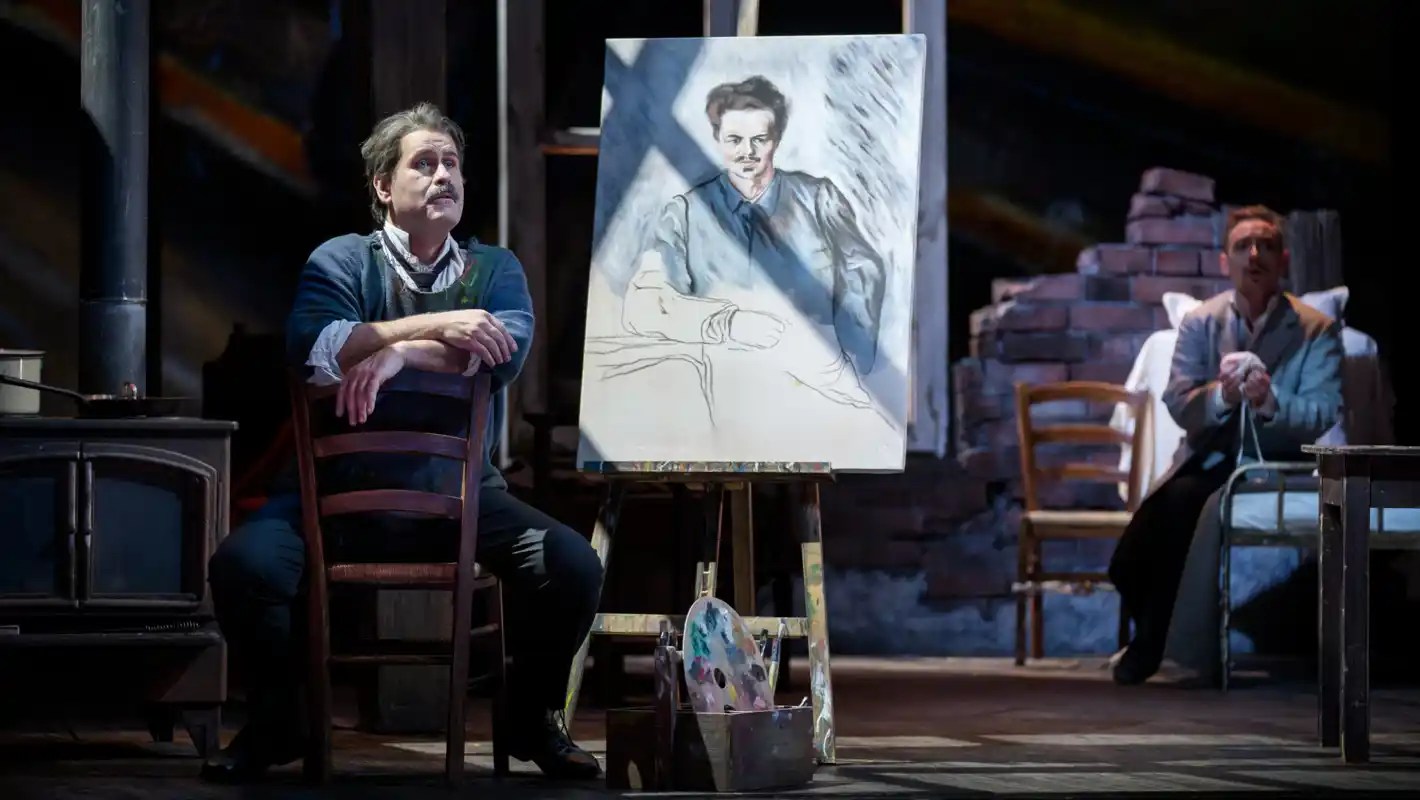
Cura’s staging takes a very interesting angle on this, one of the most-performed titles in the repertoire – and tonight celebrating its thousandth performance in Stockholm. Rather than setting it in Paris, Cura instead sets it in the Swedish capital. He wouldn’t be the first to change the location of this opera – after all, there have been productions of bohème set in outer space. Yet he goes even further. He changes the libretto, instead making it about actual cultural figures in Scandinavian cultural history. Rodolfo becomes August Strindberg, Marcello is Edvard Munch, Schaunard incarnates Edvard Grieg, while Colline becomes Søren Kierkegaard. Musetta is similarly transformed into Tulla Larsen, Café Momus becomes a place called Berns, while the references to ‘Parigi’ in the libretto are changed to ‘Stoccolma’. The one character who doesn’t have a Scandinavian equivalent is, of course, Mimì. I found that quite a moving idea – the thought that the other bohemians went on to produce significant works of art and literature, while Mimì is today forgotten, a person whose happiness and demise are now merely a footnote in the lives of those she entered. This sense of fleeting happiness is an aspect I find particularly true to the work and a deeply affecting one.
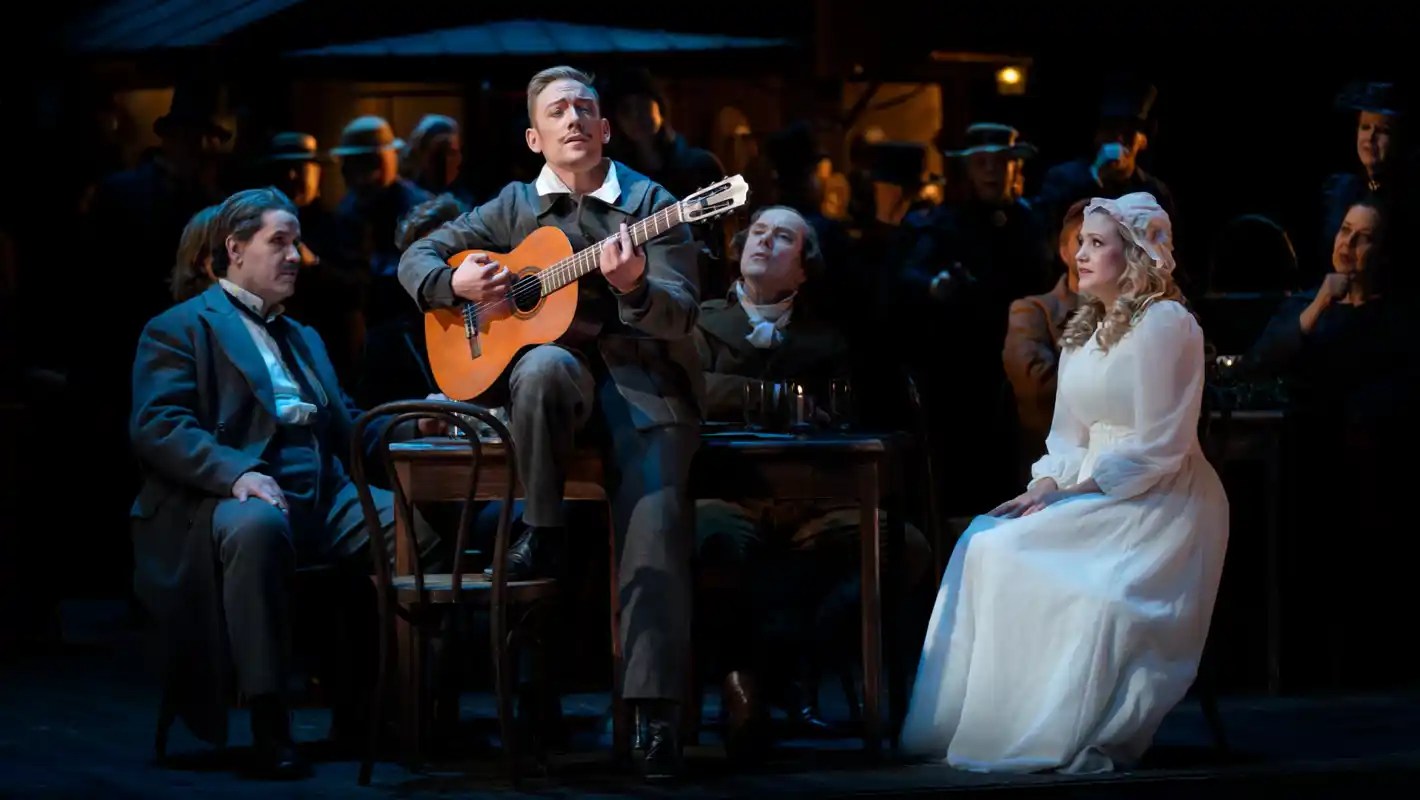
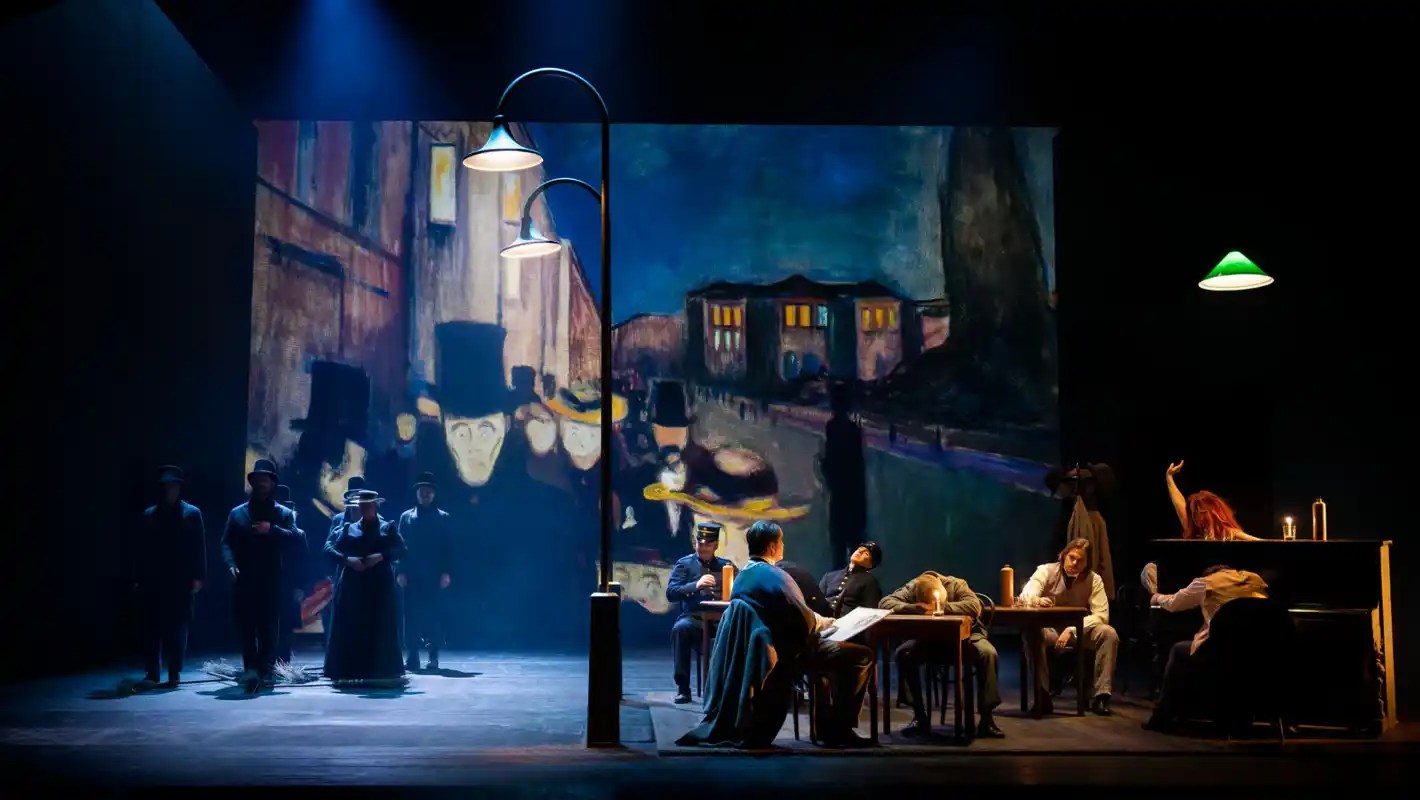
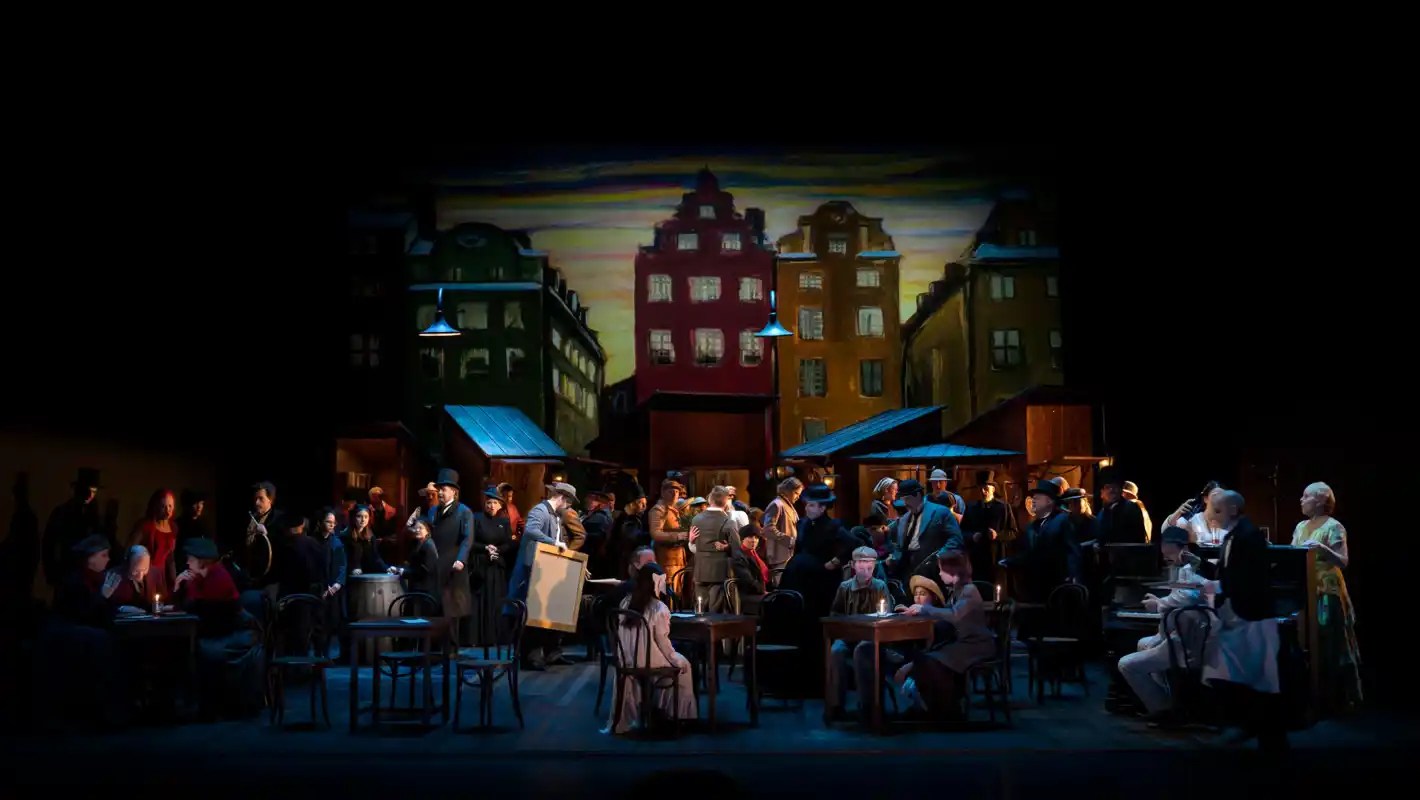
Moreover, Cura, who also designed the lighting, sets and costumes, uses the back of the stage to project images of artworks by Munch – including The Scream at the start of Act 4. This certainly added context to the evening, particularly so as the ‘mar rosso’ to which Marcello referred in his opening lines was a woman with a red wig. That said, there were a number of aspects that I found less convincing in Cura’s staging. The placement of the choruses in Act 2 had them too far back on stage for maximal impact. Similarly, the sets were relatively bare, not necessarily providing the acoustical support the singers would benefit from – particularly noticeable given that this was a relatively light-voiced cast. The set changes also required some considerable assembly time, slowing down the pace of the evening, despite Milletarì’s best efforts to keep tension high. I certainly felt that the adaptation worked on the whole, and I wasn’t particularly deranged by name changes in the libretto, although I wasn’t always convinced by the execution.
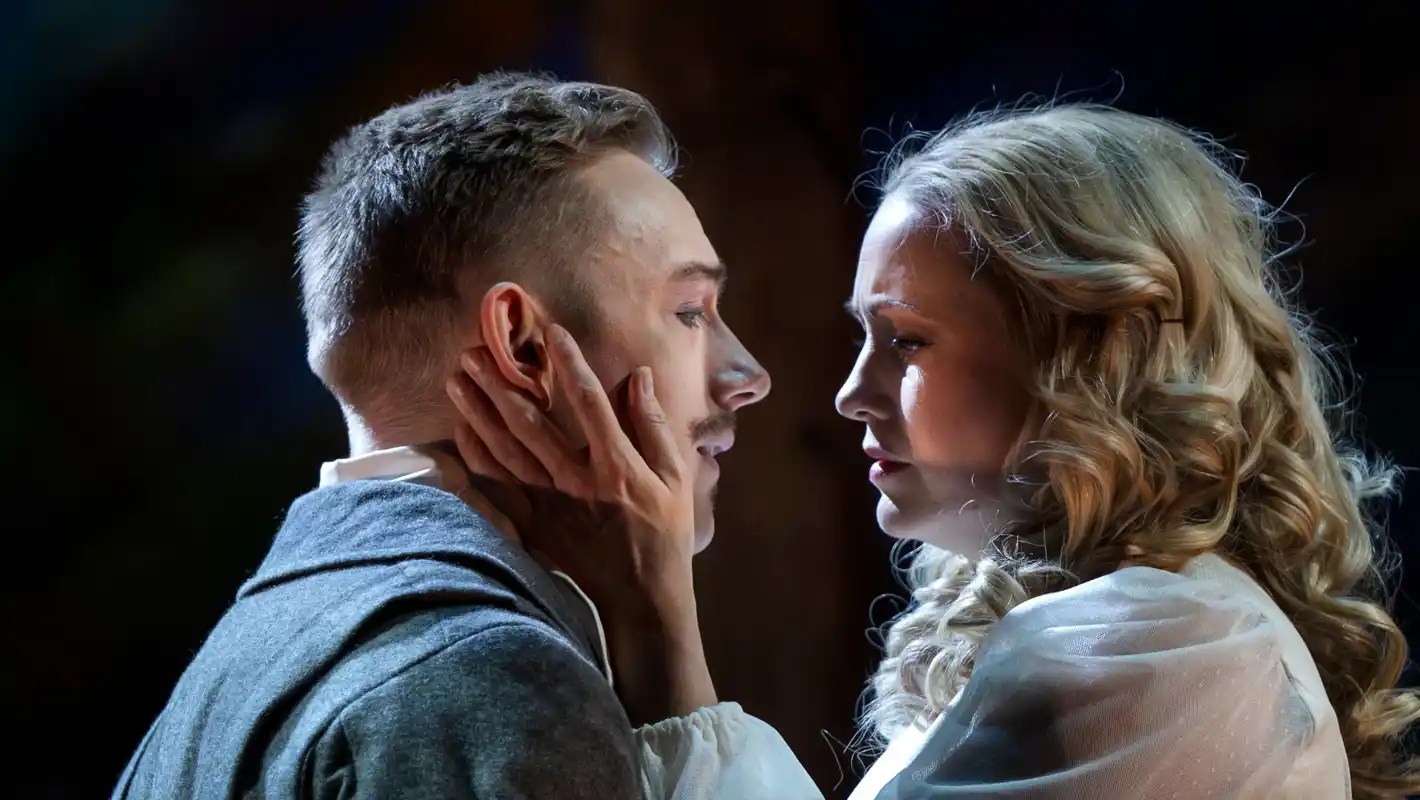
Tødenes brought a youthful, focused tenor to Rodolfo’s music. The voice is bright, with the crystalline purity of a Norwegian spring. He’s also a bright-eyed, eager stage presence. It pains me to write, however, that I’m not convinced this is a role for him at this time – even in such an intimately-sized house. He made the effort to sing with an admirable legato, though those Italian double consonants needed more attention. While he attempted to sing with an uplifting high C in ‘che gelida manina’, the top sounded under pressure, losing that beauty of tone that the voice has so much of. Tødenes also made the unfortunate choice of singing the final phrases of Act 1 in octaves with Mimì, and was sadly unable to sustain it. There was a generosity to his singing that was admirable, but I would suggest that his strengths lie more with Mozart and Händel, than with Puccini – at least for now.
Hanna Husáhr sang Mimì in a similarly bright soprano. The voice had a glacial iciness to the tone that gave her Mimì a haunting sense of her imminent demise. She filled her music with emotion, as she sang ‘il primo sole è mio’ in her ‘mi chiamano Mimì’, there was a sense of hopefulness of wanting to hold onto a tangible moment that was so deeply affecting. Indeed, the gentleman seated next to me was in floods of tears. Later, as Husáhr sang her ‘D’onde lieta usci’, she was able to add a creaminess to the tone that made the music full of optimistic regrets. Undoubtedly a thoughtful and intelligent reading of the part.
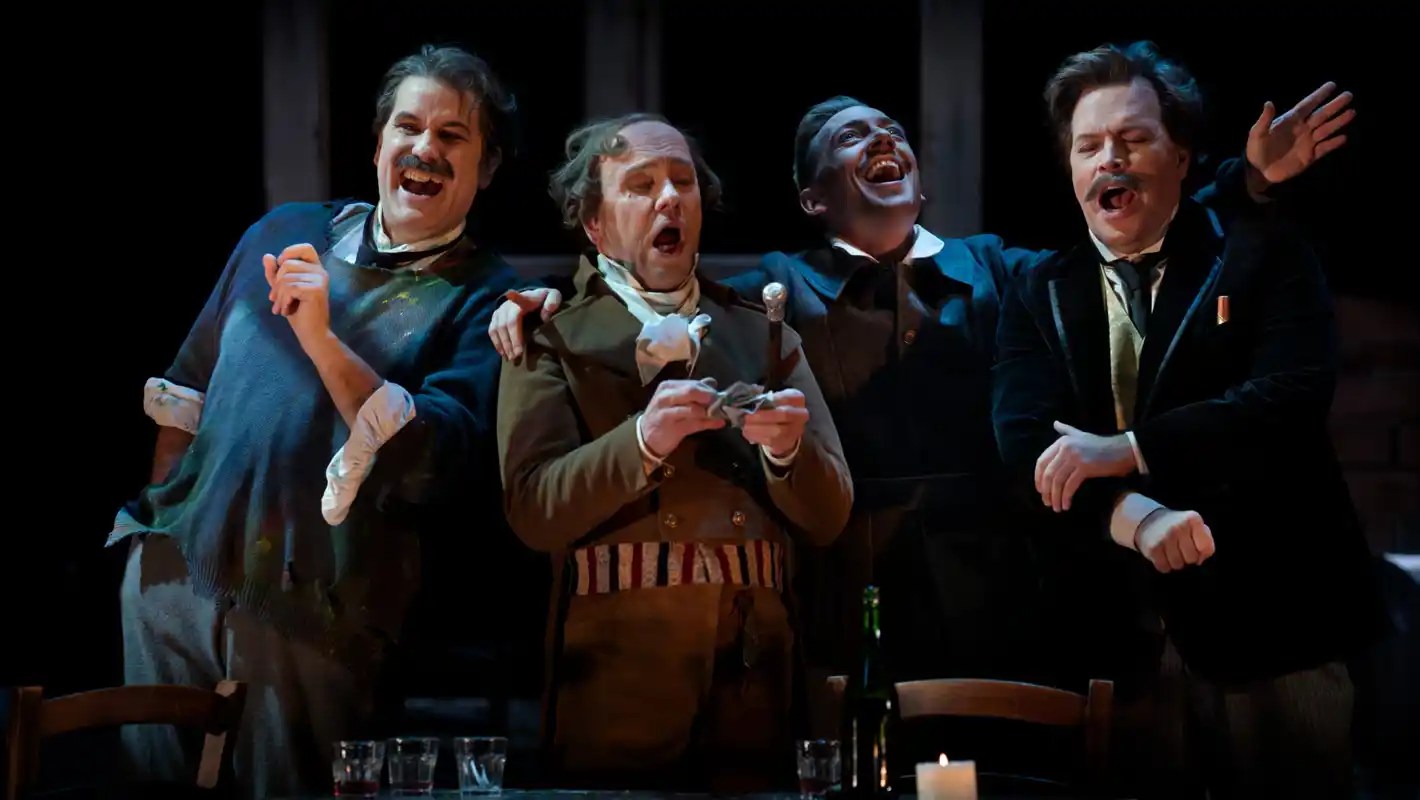
The remaining cast was decent. Jeremy Carpenter sang Marcello in a slightly grainy baritone at first, though as he warmed up through the evening, the tone filled out. Vivianne Holmberg sang Musetta in a focused, diamantine soprano, able to carry with ease through the house. Ola Eliasson was a firm-voiced Schaunard, while John Erik Eleby was a very welcome find as Colline, singing his ode to the coat in a rich, resonant bass – very impressive. Niklas Björling Rygert and Peter Haeggström were confident as Benoît and Alcindoro respectively. The choruses, with adults prepared by Ines Kaun and children by Karin Bjurvald, dispatched their contributions with precision – although I do wish they had been brought forward on stage to bathe us more in that wall of sound.
That brings me to Milletarì and his orchestra. His conducting was very special indeed. Right from those opening measures, there was a real sense of cantabile beauty, of soaring lyricism, of optimism and high spirits, that just made the impending tragedy all the more moving. Stockholm may be a long way from Lucca, but Milletarì managed to get his Nordic players to phrase like real Italians. He brought out so much colour in the orchestration, helped by absolutely superb playing from the band: silky strings embossed with twinkling harps, piquant winds, and brass that sounded full of portents of modernity. Moreover, there was an absolute and total sense that Milletarì breathes this music just like a singer does, supporting his colleagues, giving us both a fabulous bath of sound from the pit, while always letting the voices through. Milletarì is a major talent. I left tonight with a sense that he truly lives and breathes this music with the essence of his soul. Without doubt, one of the finest Puccini conductors I’ve had the privilege of hearing.
There was much to enjoy in tonight’s bohème. The singing was decent on the whole, even if I left concerned for Tødenes’ undeniably handsome instrument with such a heavy assignment, while Husáhr gave us a lovely Mimì. Cura’s staging was definitely intriguing. I felt that the Scandinavian updating worked on the whole, although I wasn’t completely convinced by some of his directorial choices in terms of personenregie. But where tonight gave an enormous amount of pleasure was in Milletarì’s glorious conducting and in the playing of the excellent house orchestra. The ovations at the closing curtain were generous, particularly so for Tødenes.
 operatraveller.com
[…] the musical values. Having heard him lead two superb performances of Puccini operas in Milan and in Stockholm, I was very keen to hear Vincenzo Milletarì in Verdi. He was absolutely superb. His reading […]
[…] with a youthful cast, sadly hampered by the poor acoustic of the temporary theatre. In Stockholm, Vincenzo Milletarì once again proved that he’s a Puccini conductor of the very first rank, […]