Tchaikovsky – Yevgeny Onegin (Евгений Онегин)
Tatyana – Aida Garifullina
Olga – Elmina Hasan
Larina – Alisa Kolosova
Filippyevna – Julia Gertseva
Lensky – Dmitry Korchak
Yevgeny Onegin – Alexey Markov
Triquet – Yaroslav Abaimov
Zaretski – Oleg Budaratskiy
Prince Gremin – Dmitry Ulyanov
Coro del Teatro alla Scala, Orchestra del Teatro alla Scala / Timur Zangiev.
Stage director – Mario Martone.
Teatro alla Scala, Milan, Italy. Sunday, March 2nd 2025.
Following on from his thoughtful and intelligent staging of Khovanshchina in 2019, just before the world changed, the Teatro alla Scala has once again, with this Yevgeny Onegin, confided one of the greatest of all Russian operas to Mario Martone’s stage direction. Similarly, after his positive interpretation of Pikovaya Dama in 2022, at the start of the Russian invasion of Ukraine, the house again invited Timur Zangiev to lead the musical direction of the evening. It isn’t often these days that we see a cast made up of almost entirely Russian singers in the west, and it’s a reminder that Russia has given us some of the greatest art of western civilization, even though, right now, the country is more known for its violence rather than its culture.
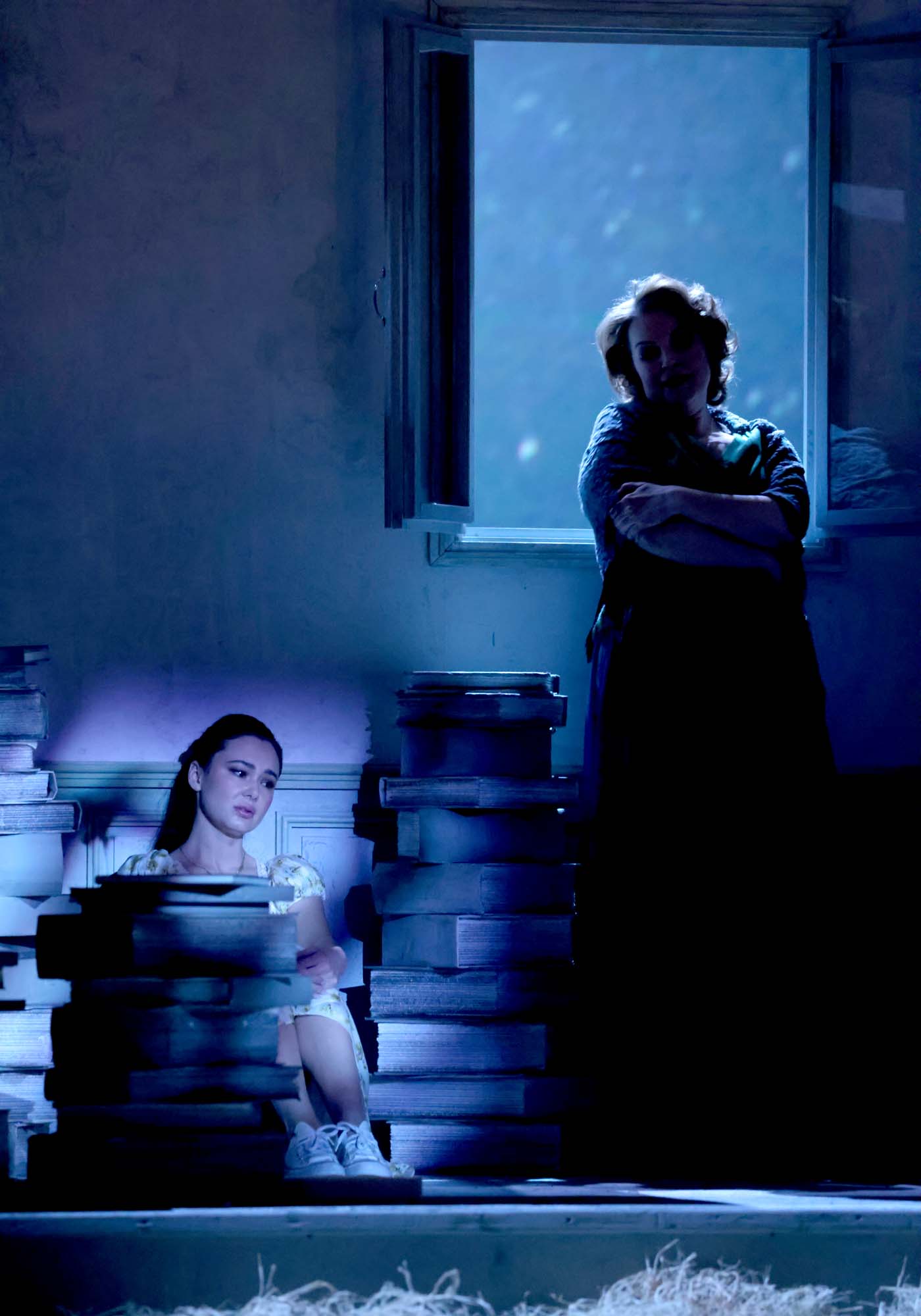
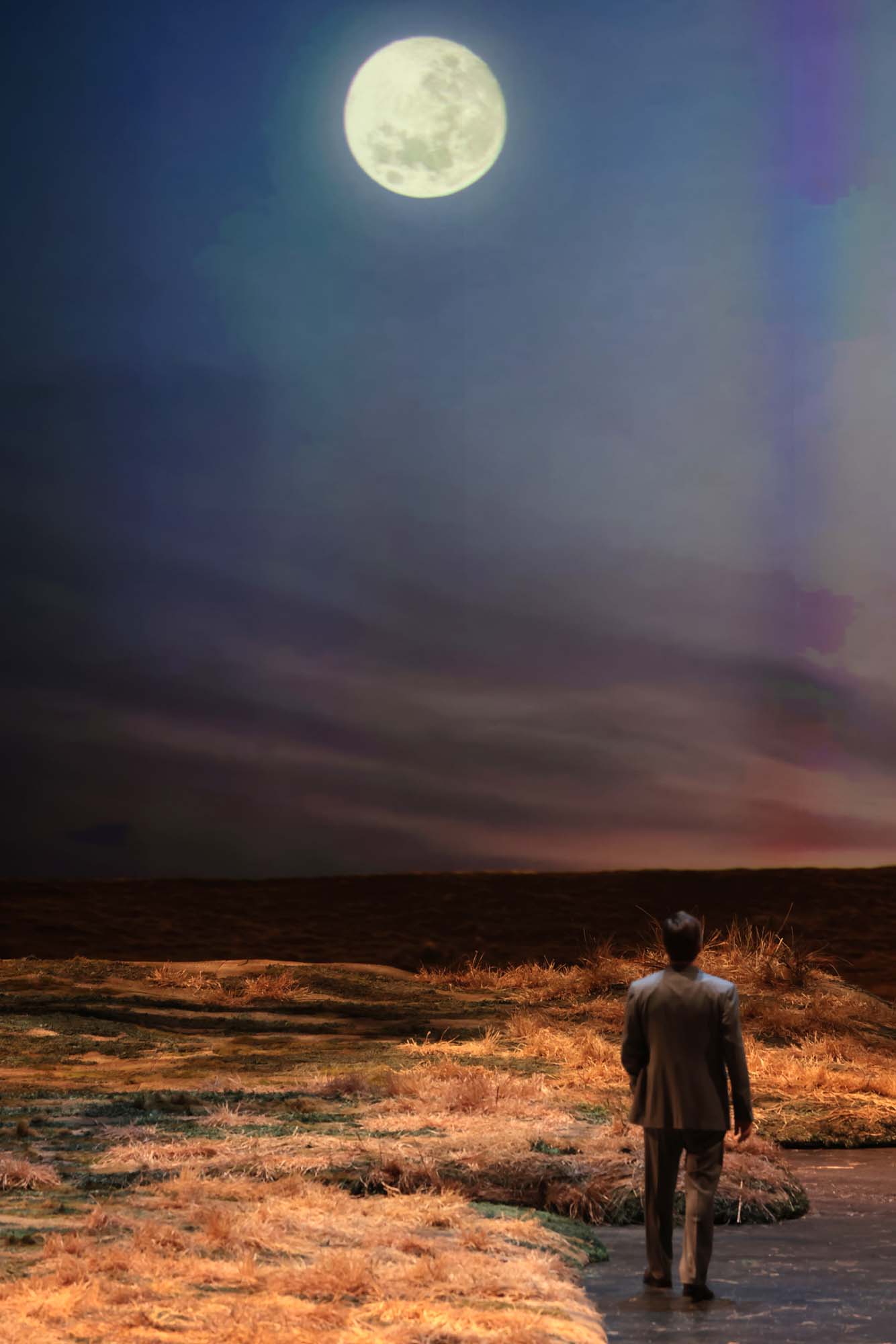
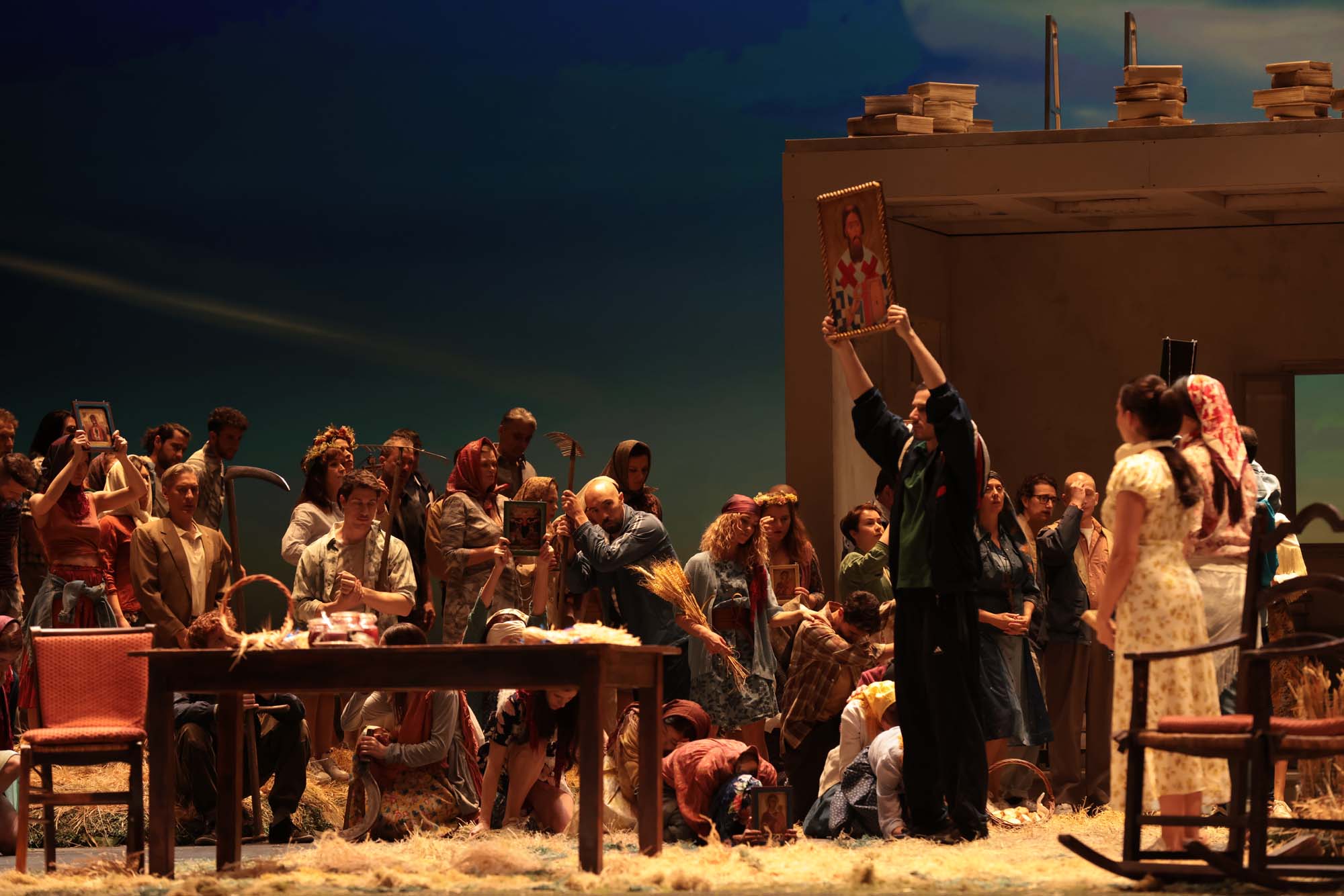
What Martone’s production of Onegin has in common with the Khovanshchina of six years ago is its intelligence and thoughtfulness. He sets the action in the present day, initially in a field of wheat with a bunker-like room in which Tatyana sings her letter scene, which is also crowded with books. Martone pulls out a real tension here between the knowledge and dreams that emerge from literature (and indeed how Tatyana listens to music on her headphones, from music), and the more quotidian, carnal interactions of the country-dwellers. As the crowd celebrated in the opening scene, Tatyana was seen sitting at the front of the stage, listening to music and reading, separated from society. Similarly, in her name day party, Tatyana isn’t seen at first. Instead, she’s revealed to be sitting in her room, alone with her books, immediately after Onegin’s dance with Olga. That contrast between reading and social interaction I found to be most compelling – particularly in how Onegin sat on a pile of books to give his rejection to Tatyana, literally sitting on her dreams, just after he flirted with a group of young ladies on his way to see her.
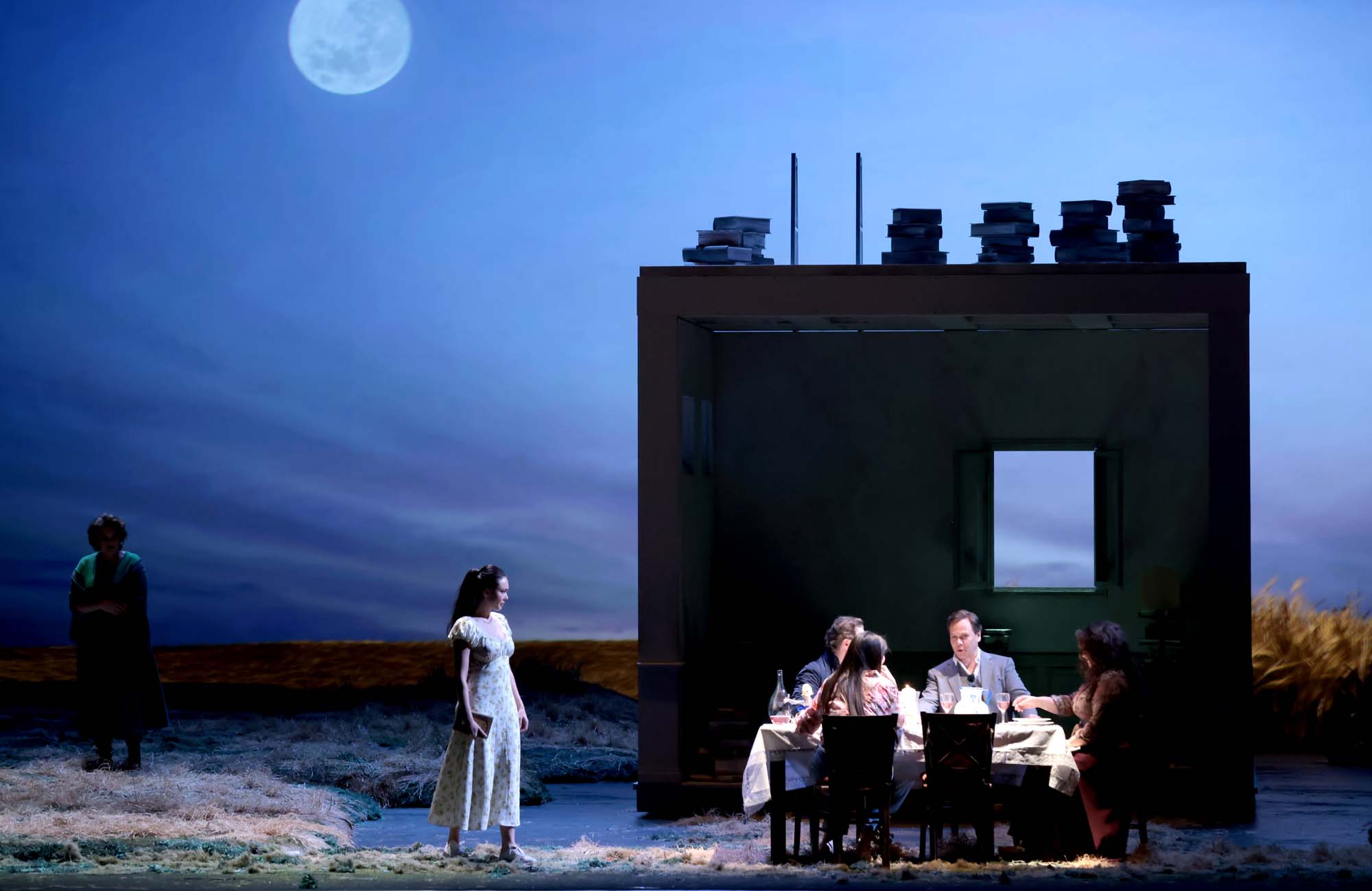
Yet, Martone makes an even deeper point and one that seems especially timely. In the name day party, the chorus sings of the appearance of a military band. And indeed, the band shows up, while chorus members brand Kalashnikovs in celebration. While this happens, a group of danseuses pile Tatyana’s books up, and these subsequently go up in flames, while her room collapses. I found it an extremely potent image, that idea that to get ahead Tatyana needed to forget her reading and the joy she obtained from literature; but also, that we as a society lose so much of our humanity by focusing on militarism and forgetting the greatness and influence of literature and art. Yes, Tatyana may end up a Princess, but at what cost? The way Martone stages the St Petersburg scene is also incredibly striking. A red drape at the front of the stage allows us to perceive people dancing and celebrating behind, while Onegin, now the outsider, ruminates at the front of the stage – his role and that of Tatyana, literally reversed. It was interesting to hear a woman in the Platea complain loudly after the scene that the ‘discoteca’ she saw was not what she expected with the music, simply because Martone’s reading has a rare intelligence and visual flair. The final scene is staged on a completely bare, black stage, the idea that Tatyana and Onegin, now without books, without art, left alone with their emotions with nowhere to hide, fully brought out the solitude experienced by both characters.
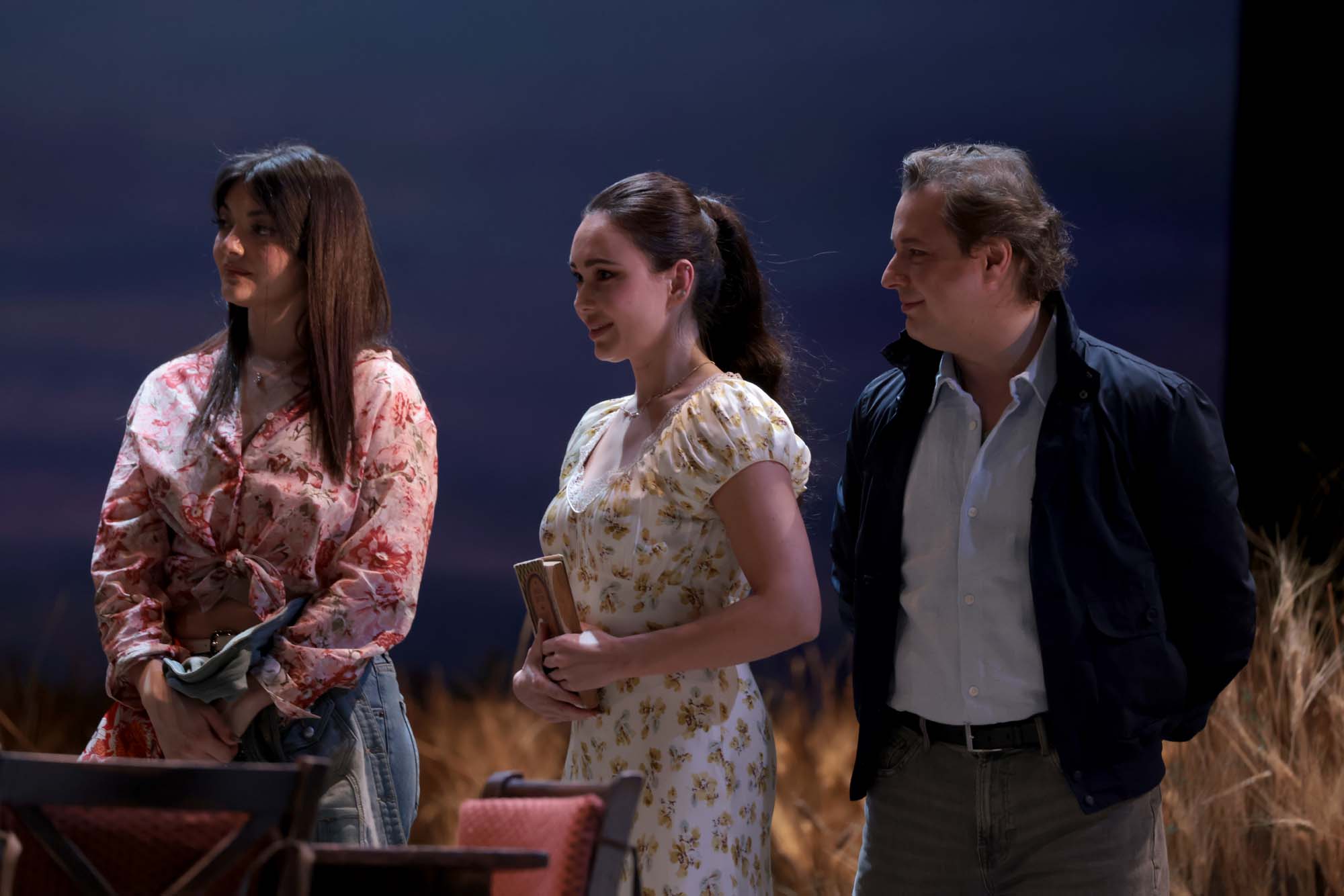
In the main, Martone’s personenregie was efficient. Given the lack of a substantial set, he rightly had his singers spend most of the evening at the front of the stage. The chorus was parked on stage to sing, with the danseurs and danseuses providing the physical activity. Indeed, I found the breakdancing in the opening peasants’ chorus to be most exhilarating. That said, I left the theatre tonight with an appreciation that Martone’s was an extremely thoughtful and intelligent reading, but not one that particularly moved me. I do, however, think that that wasn’t ultimately due to his direction, but rather it was due to the musical aspects of the evening.
Starting with Zangiev’s conducting. I did have some positive impressions at first. He brought out a haunting loneliness and solitude in the opening measures that promised much. Similarly, the descending phrase in the double basses just before the peasants’ chorus, was phrased like a group of Russian choral basses descending to the sepulchral depths. Yet as the evening developed, it was clear that Zangiev was focusing on beauty of sound rather than a sense of dramatic impetus, in turn draining the work of its deep emotion. Tempi would frequently come to a complete halt – for example in ‘kuda, kuda?’, where I longed for him to keep things moving. Furthermore, despite it being well into the run, there were a number of moments where he lost control of the ensemble, for instance in the peasant’s chorus where the chorus went their own way, or during the letter scene where the strings were not unanimous in approach. The playing from the orchestra was not at the level I know they’re capable of, following their thrilling playing in December’s Forza del destino, with string intonation frequently rather raw. That said, the horn playing was notable for its cantabile beauty. The chorus, prepared by Alberto Malazzi, continued to demonstrate the significant improvements made under his direction. Although ensemble wasn’t always watertight, this was more likely to be due to direction from the pit rather than their preparation. They sang with confidence: sopranos solid in tone, while there were some deliciously rich contraltos. The tenors and basses sang with ringing tone.
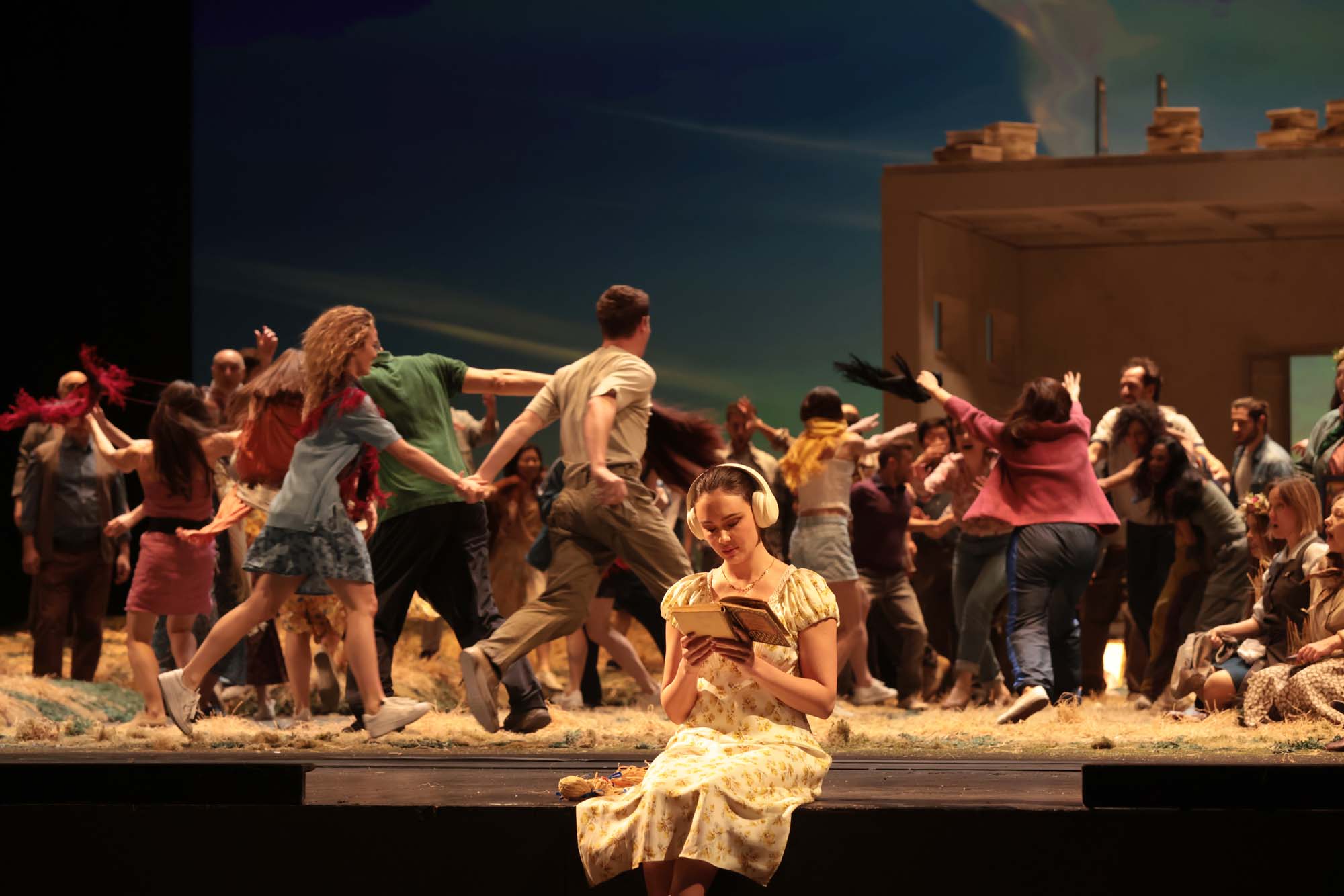
Aida Garifullina was a scenically rather glamorous Tatyana. She started well, her opening duet with Olga demonstrating an agreeably dark-toned soprano with silky reach. As the evening progressed, it became clear that Tatyana is a role that is somewhat heavy for Garifullina’s current vocal estate. The voice is narrow, lacking in the creamy richness the part requires, with the tone frequently sharp due to the pressure she put on it to reach into the house. Indeed, her intonation really wasn’t suitable for those of a sensitive disposition, with the final duet showing her to be skating around the notes rather than sitting directly on them. Unfortunately, the voice didn’t quite have the heft it needed to take wing in those glorious soaring phrases in that final duet. The letter scene also felt lacking in emotional depth, not fully bringing out the beauty of those particularly Russian sounds.
Alexey Markov was an implacable Onegin. There was a coldness to his interpretation due to the icy tone, that was at one with the conception of his character as unfeeling. It did mean that the steeliness at the core of the voice made his dancing with Olga at the name day party seem particularly malicious. The downside is that this approach made his duel scene with Lensky, here staged as a game of Russian roulette, lack any kind of emotion or regret. In turn, I lacked a sense of his character’s journey as he realized his mistake in rejecting Tatyana years ago, simply because of the narrowness of his palette of tone colours. Furthermore, the voice took on an alarming dryness in the final scene, which left me to fear that Markov would not be able to last the course. He managed to get to the end, but it did sound like that it was touch and go as we got there.
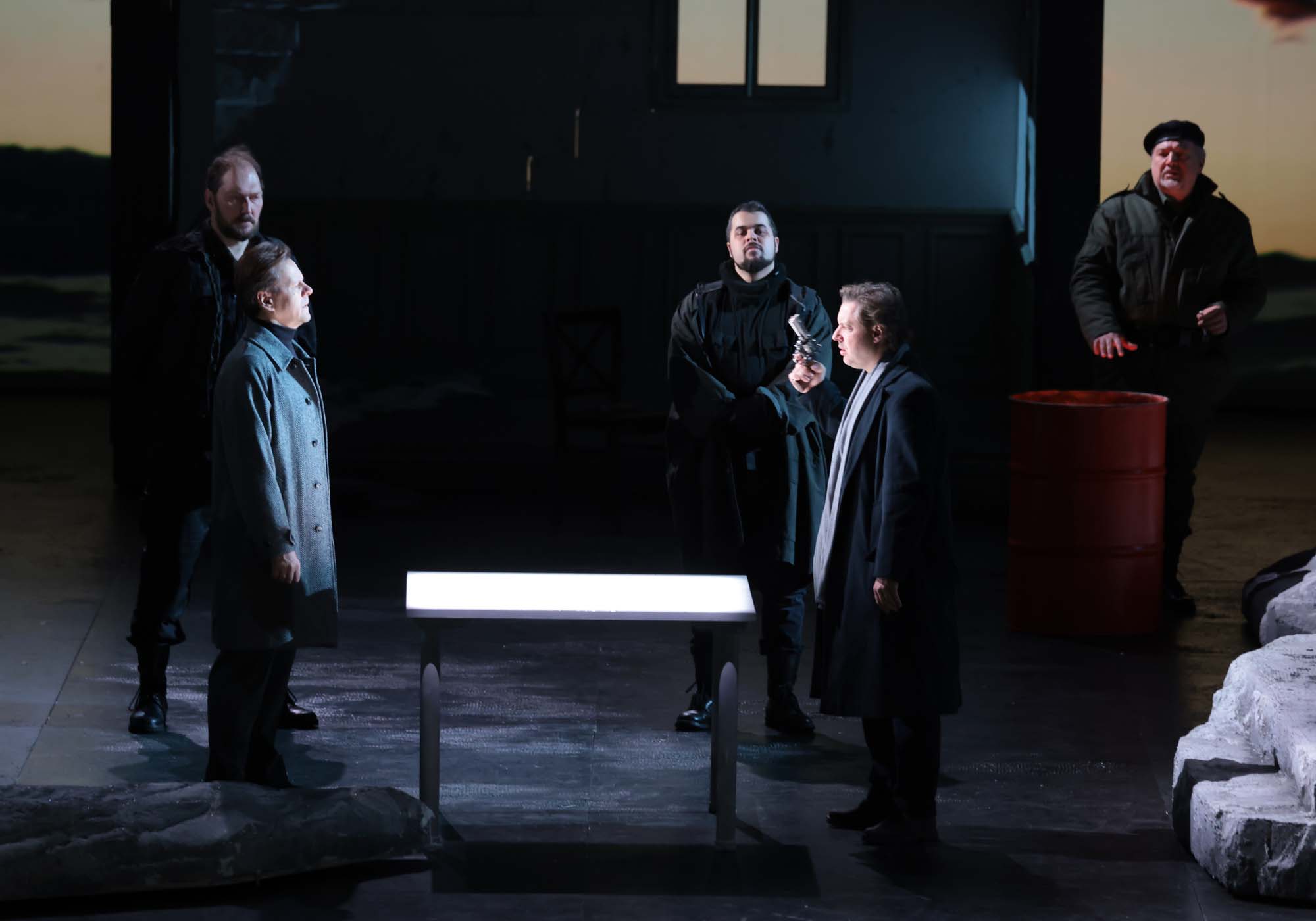
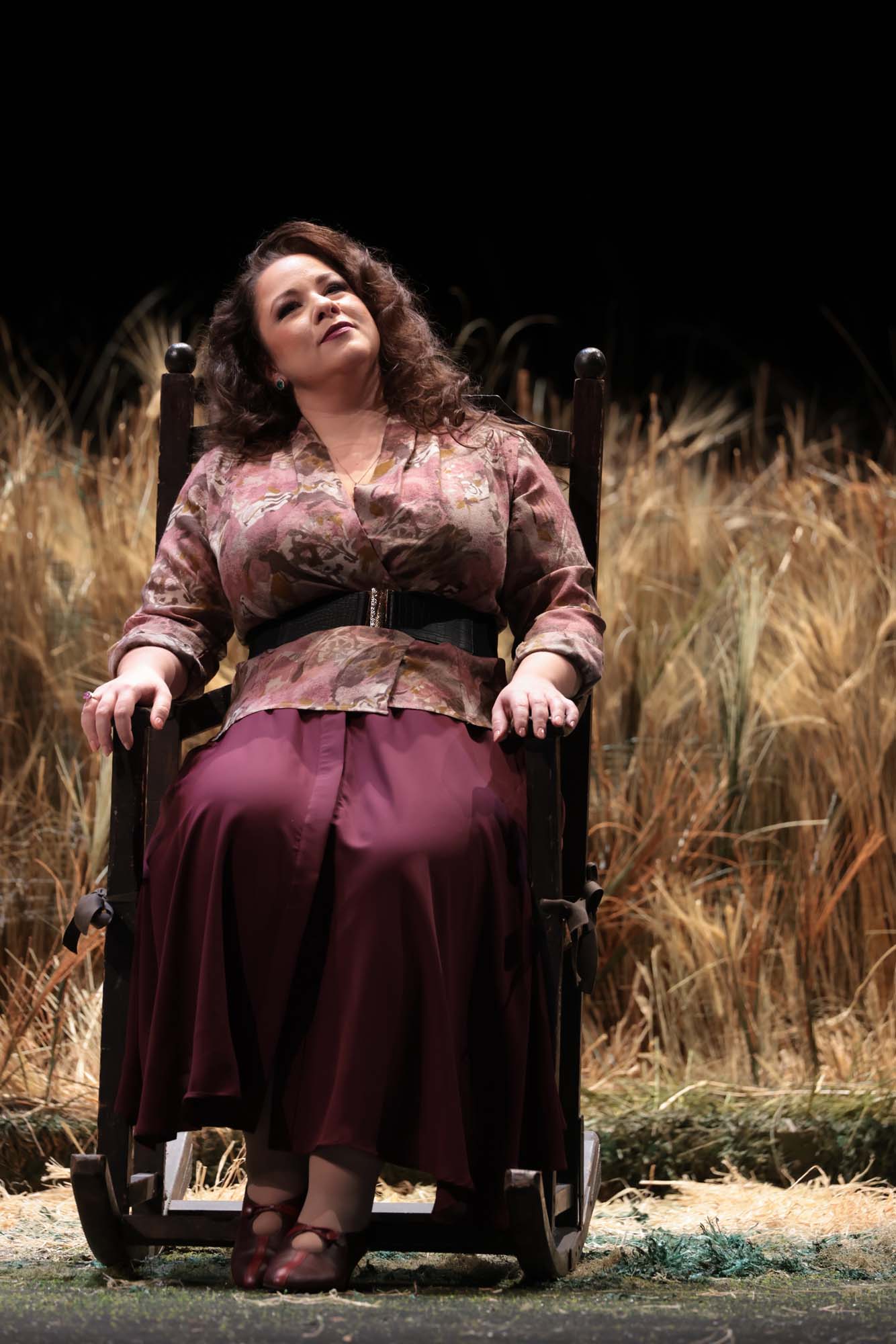
Dmitry Korchak sang his opening expressions of love to Olga with real extroversion, perhaps influenced by the location, it initially sounded more like Puccini than Tchaikovsky. Later, he found more light and shade in his reading – his ode to chez Larin in the name day party sung with real delicacy and impeccable breath control, particularly necessary due to the stasis from the pit. His ‘kuda, kuda?’ was sung with focused inwardness and impressive control of dynamics. Elmina Hasan was a confident Olga, sung in an agreeably peachy mezzo, although she had an unfortunate memory lapse and missed out the final phrase of her opening arioso. Alisa Kolosova was a very glamourous sounding Larina. Her mezzo is wonderfully rich and rounded, with fabulous sheen to the tone and utterly healthy in sound. The registers may have parted company in Julia Gertseva’s mezzo, but she sang her Filippyevna with genuine warmth and humanity. Dmitry Ulyanov sang Gremin’s aria with eloquence and long phrases, again necessary due to the slow tempo, although the tone did tend to a little greyness. Yaroslav Abaimov sang Triquet’s couplets in impeccable French. The remainder of the cast was much more at the level one would expect at this legendary address.
This was a rather mixed evening. Musically, the most positive aspects were found in Korchak’s Lensky, Kolosova’s Larina, and the enthusiastic singing of Malazzi’s chorus. I found Martone’s staging to be thoughtful and insightful, although it didn’t move me quite as much as I felt it could have, simply due to the slow tempi set in the pit and the rather problematic assumptions of the two leading roles. That said, Martone gives us a plea for humanity and reminds us of the centrality of art and literature to civilized society – a message that could not be more pertinent today. Audience reaction at the close was generally polite, although there were boos for Garifullina and Markov. That said, as always, simply being in this legendary house is a privilege.


[…] musical direction was confided to Timur Zangiev, who I saw conducting this score at the Scala last year. That was a less than fully satisfying evening, so it gives me great pleasure to […]