Rimsky-Korsakov – The Tale of Tsar Saltan (Сказка о царе Салтане)
Tsar Saltan – Ante Jerkunica
Tsaritsa Militrisa – Svetlana Aksenova
Tkachikha – Stine Marie Fischer
Povarikha – Bernarda Bobro
Babarikha – Carole Wilson
Tsarevich Gvidon – Bogdan Volkov
Tsarevna Swan-Bird – Nina Minasyan
Old man / Shipman – Alexander Kravets
Messenger / Shipman – Alejandro del Cerro
Skomorokh / Shipman – Alexander Vassiliev
Coro Titular del Teatro Real, Orquesta Titular del Teatro Real / Ouri Bronchti.
Stage directors – Dmitri Tcherniakov.
Teatro Real, Madrid, Spain. Sunday, May 4th, 2025.
In the world we live in today, there’s much to be pessimistic about. Yet the health of the operatic art form might not be one of them. When I saw Dmitri Tcherniakov’s staging of The Tale of Tsar Saltan at De Munt – La Monnaie in December 2023, I found it to be one of the most transformative evenings I’ve ever had in an opera house. When the Teatro Real announced its first-ever production of Tsar Saltan with a revival of Tcherniakov’s staging, with almost the same cast as in Brussels, I knew in an instant that I’d need to come to Madrid to see it.
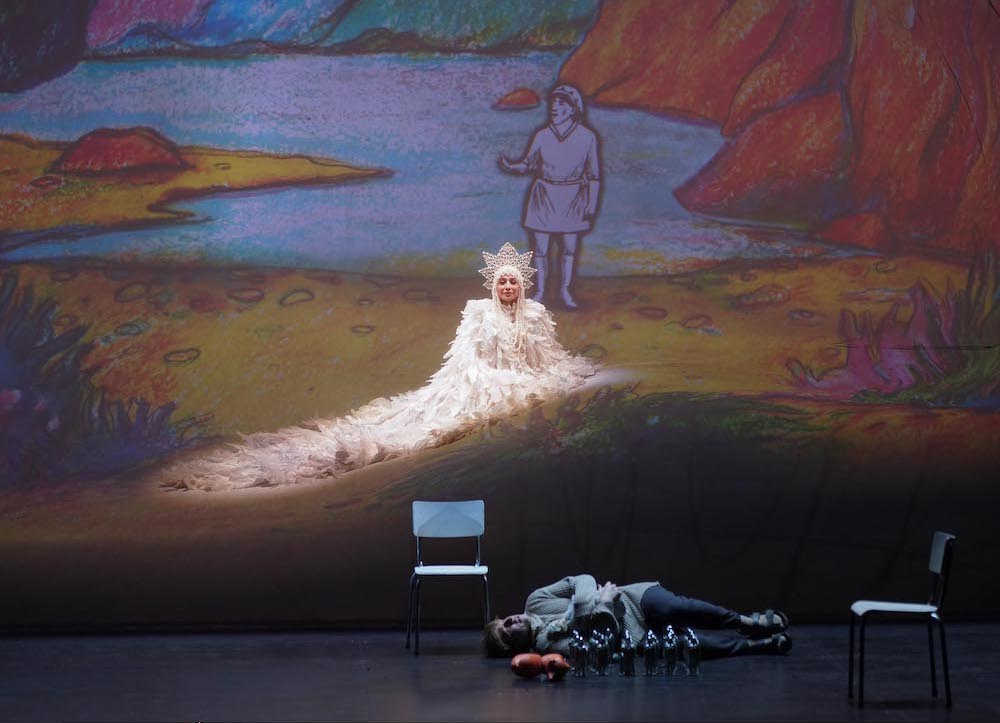
I discussed the staging in some detail in my previous review. Yet seeing it for a second time gave it even more emotional impact. In short, rather than giving us a strict reading of the narrative, Tcherniakov instead transforms the opera into a modern-day fairy tale. A boy, performed in staggering detail by Bogdan Volkov, incarnates the Prince Gvidon of Pushkin’s story, while his mother, performed by Svetlana Aksenova, takes on the role of Militrisa. The boy is neurodivergent and non-verbal to all except his mother. Tcherniakov takes us into the mind of what life may well be like for those close to us who are neurodivergent. He uses video, by Gleb Flishintsky, to bring Gvidon’s fantasies to life. I found it fascinating how the video frequently started with scrambled graphics, similar to an old television set searching for the channel, then transformed into vistas and stunning landscapes. What I noticed more this time was how the set where Gvidon saw his visions was shaped like a brain, giving what we saw even more emotional impact, allowing us to see and, for a moment, live with the wonders of a neurodivergent mind.
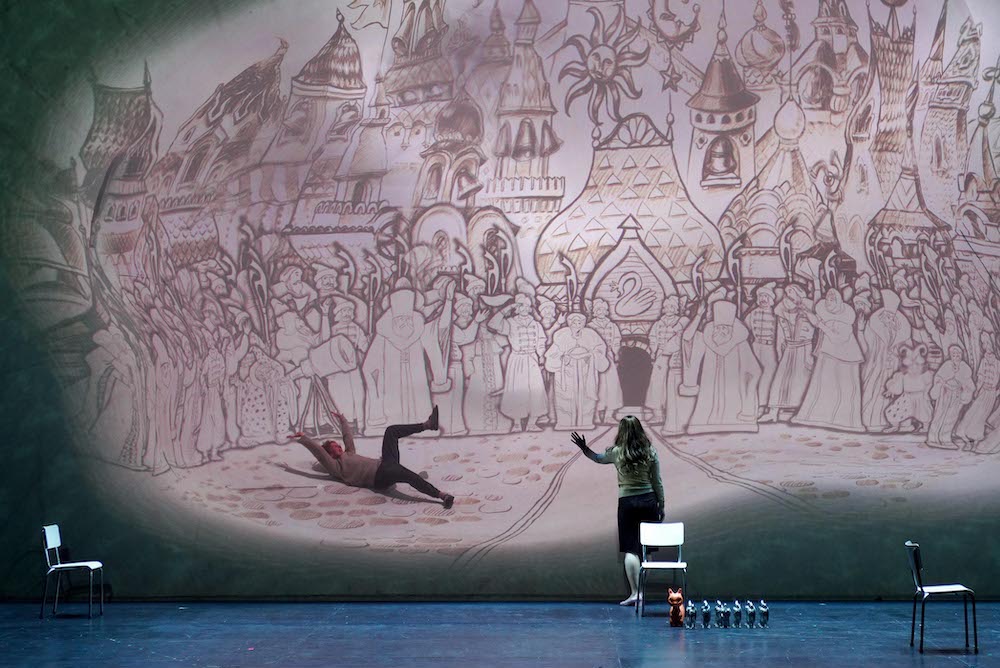
Indeed, I found one of the most powerful moments in the evening came at the end of Act 2, where Gvidon imagined the grand vistas of the city of Ledenets, while Militrisa played along with him. For the audience in the room, Tcherniakov allowed us to see both Gvidon’s imaginings and, momentarily, the blank space that Militrisa might see. This brought out the sheer tenderness of Militrisa and Gvidon’s relationship. She may not be able to see or understand what his brain sees, but she encouraged him and loved him deeply regardless, even despite the fact she could only watch him live his dreams from outside.
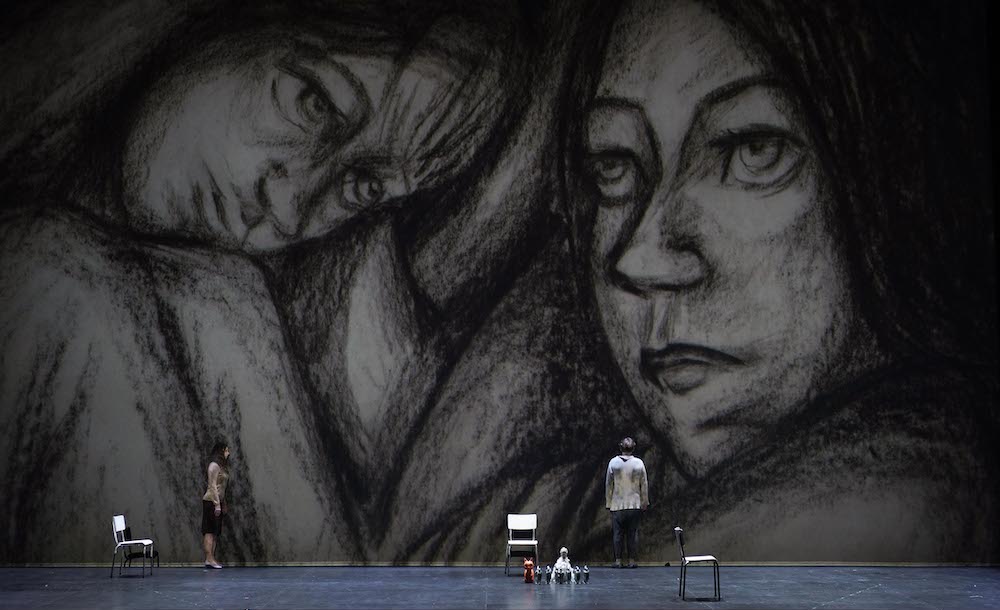
This time around, I also found it telling how the way the evil sisters and Babarikha wrote to the Tsar, while at war, to inform him that Militrisa had given birth to a monster. Tcherniakov takes us to see beyond the stereotypes and preconceptions to appreciate and value difference, to love unconditionally, just as Militrisa and the Swan Princess love Gvidon. In that respect, and in so much more, this is a staging that abounds in so much humanity and love. One that those of us who cherish the neurodivergent people in our lives will appreciate enormously.
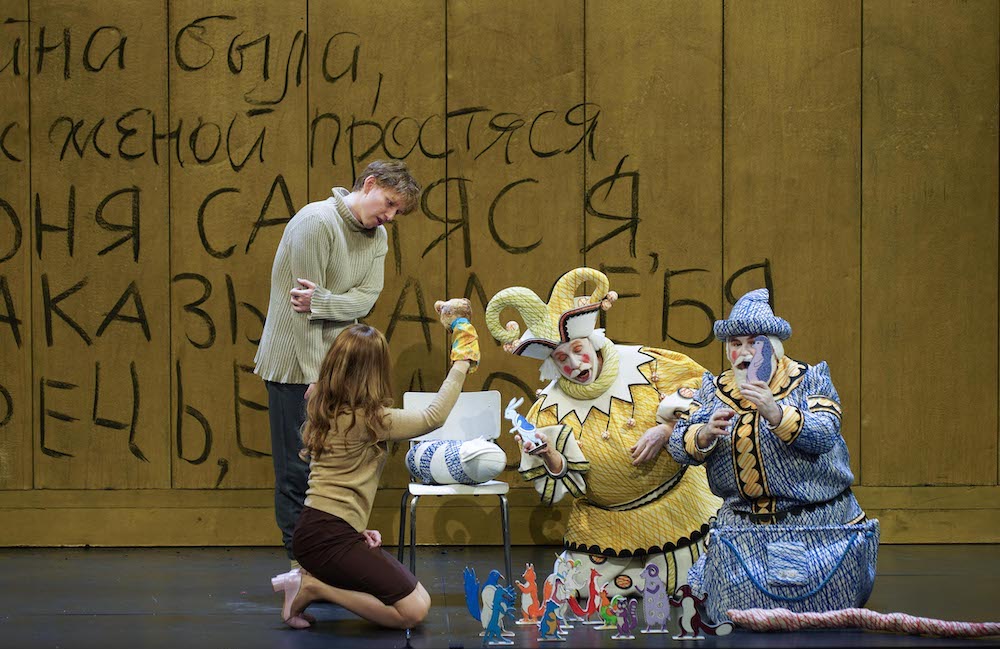
Musically, the evening had so many rewards. Ouri Bronchti’s familiarity with the work as Alain Altinoglu’s assistant in Brussels meant that we were in very safe hands. Indeed, he led a delightfully sprightly reading, wonderfully springy rhythmically, with tempi very well judged throughout. The general rehearsal had to be cancelled due to the blackout last week and that might explain the tentativeness on stage that marked the celebrated bumblebee scene – although the introduction to the scene was taken at a terrific lick. Otherwise, the orchestral sound was big, bold and immediate, the clarity of the individual orchestral parts helped enormously by the Real’s excellent acoustic. There was a richness to the brass playing that exuded warmth, while the strings phrased their music lovingly. The chorus, prepared by José Luis Basso, appears to have been rejuvenated, sounding much fresher in tone than previously. The sound was delightfully even, although there were a couple of tenor voices that stuck out of the texture slightly. There was a depth to the tone that was wonderfully rich. There was just one moment that disappointed and that was precisely that last scene of Act 2. In Brussels, I recall it felt that the chorus was placed around the highest balconies, bathing the room in a blaze of sound. Here, they were piped in from off stage and were too recessed in the sound picture for optimal impact. A shame because that really is one of the most emotional moments of the staging which the music really amplifies.
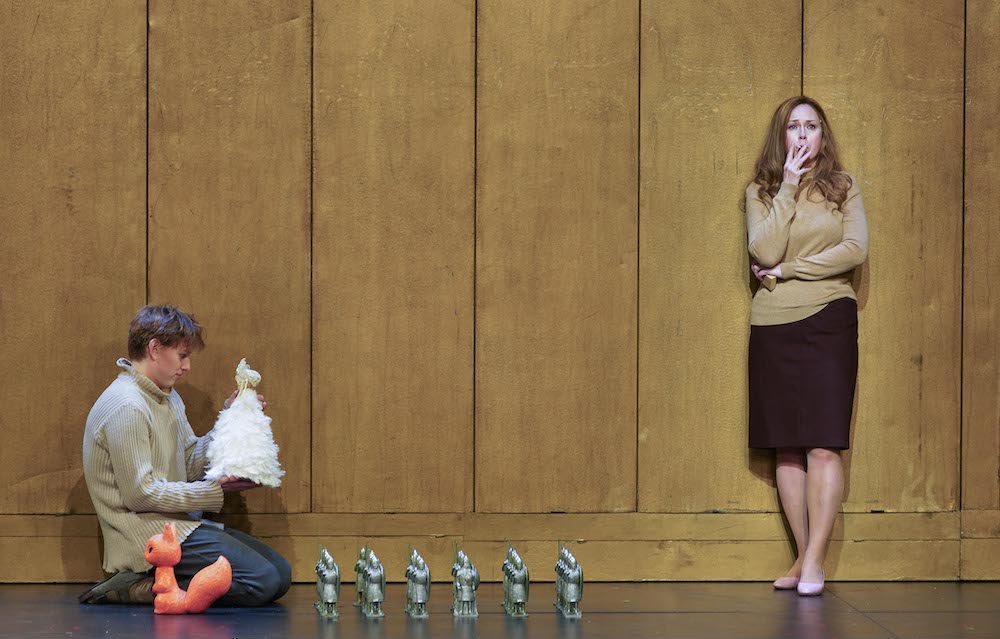
Volkov gave the performance that will define his career in the title role. He’s absolutely tireless throughout. It’s hard to know where Bogdan starts and Gvidon ends. He incarnates his character so fully and so selflessly, vocally and physically. The awkwardness he brings to Gvidon’s physicality is delightfully affecting, but is also full of the humanity that makes Tcherniakov’s staging what it is. He sang the role in a focused, ringing tenor, the tessitura holding no terrors, soaring up with open freedom on top. The role shows us the very best of Volkov as an artist and a singer. Aksenova sang Militrisa with genuine generosity. Her soprano isn’t the most sheerly beautiful in sound, it has a tendency to sit south of the note on top and the tone curdles up there, but what it is, is human. She sang her lullaby with tenderness and generous vibrations, filling the tone with warmth and kindness. Aksenova is similarly a genuine stage presence, her love for Gvidon so selfless and warm, it was impossible not to be moved.
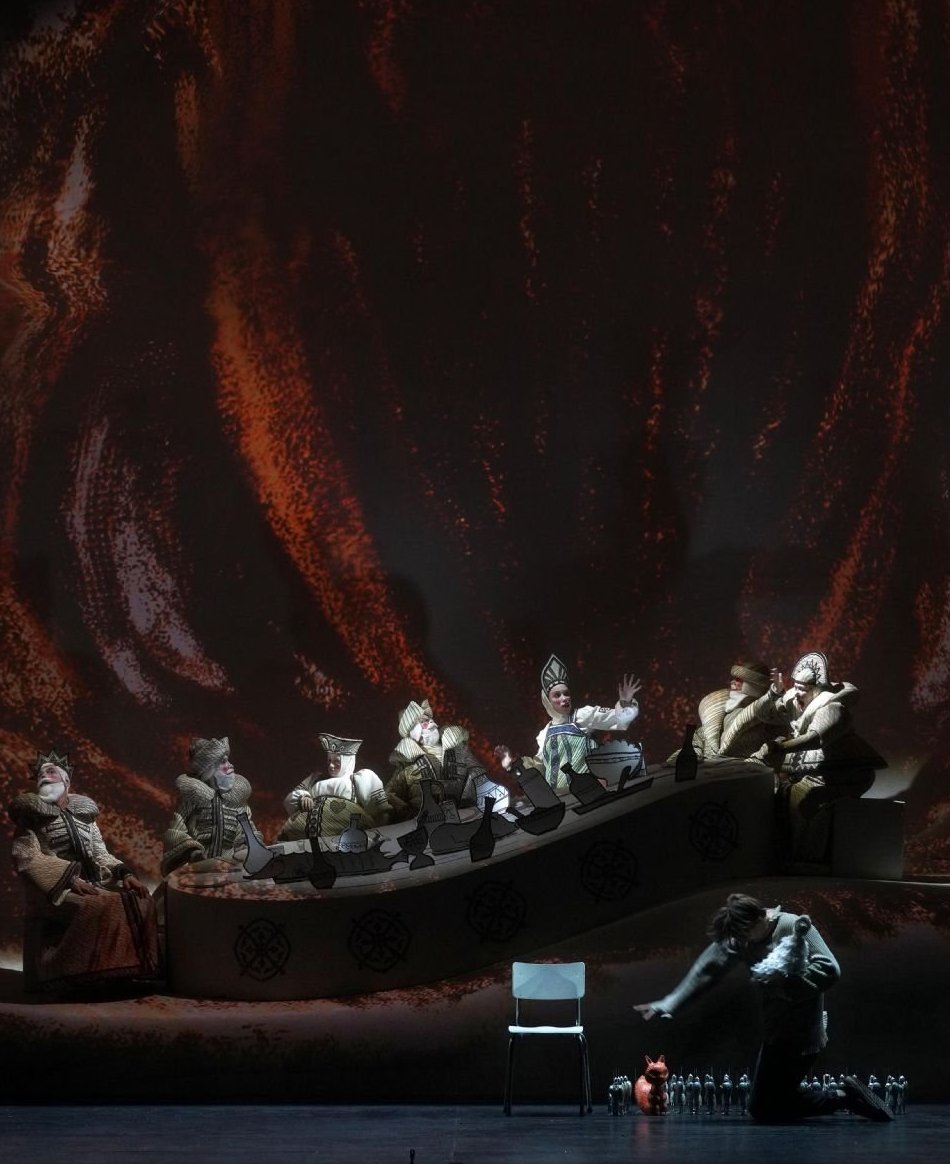
Nina Minasyan was one of the new additions to the cast as the Swan Princess. She has the measure of the role, able to pour out the stratospheric tessitura in a diamantine tone. I just wish she had actually used a variety of dynamics, since she sang pretty much the entire role in an unbending forte. She really had no issues with the tone carrying in this grateful acoustic and I longed for her to pull back, to bring delicacy to the sound and to shade it more. She was, however, an engaging actress in her first meeting with Gvidon, the kindness and love that emanated from her personnage was palpable. The remaining cast was almost entirely the same as in Brussels. Carole Wilson once again brought her tremendous stage presence and timing to the role of Babarikha, dispatching her music in a ripe mezzo. Stine Marie Fischer made much of a generous chestiness as Tkachikha, while Bernarda Bobro’s healthy-sounding soprano was an asset in the role of Povarikha. Ante Jerkunica sounded somewhat out of sorts in the title role, his bass not as fresh as I recall it recently, the top tapering off, although the bottom was still warm. The remaining roles were as well taken as they were in Brussels, with Alejandro del Cerro the new member of the cast as the Messenger.
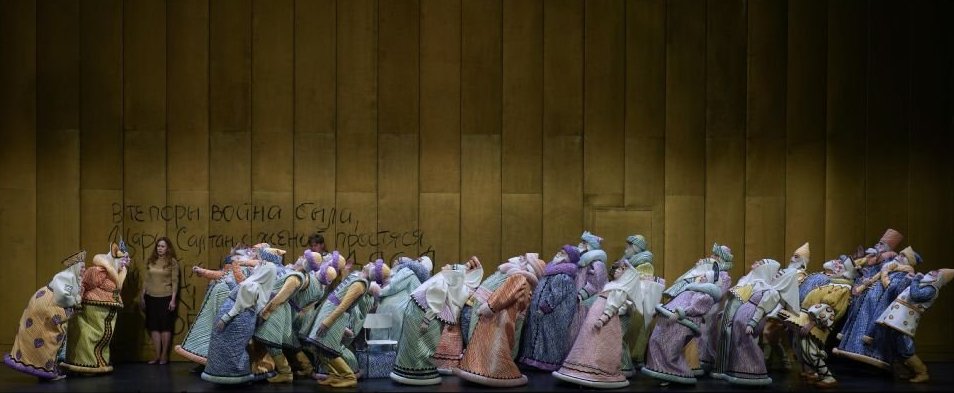
It was a privilege to see Tcherniakov’s staging again. It’s an evening of enormous emotional impact, one that amplifies the score and uses it to make us feel – just as the best operatic productions should. It was superbly performed throughout the cast, with Volkov once again assuming a role that will forever be one of the great assumptions of his career, combined with superb orchestral playing and choral singing. Above all, what I’ll take with me from tonight is the sheer humanity of Tcherniakov’s staging, the generosity with which he treats his characters, and the way he allows them to live and tell their stories on their own terms while creating a modern-day fairy tale. The audience responded at the close with deservedly generous ovations.


[…] Teatro Camões. At the Teatro Real, they produced Dmitri Tcherniakov’s glorious staging of The Tale of Tsar Saltan. This is one of those stagings that feels lifechanging and Bogdan Volkov once again gave the […]