Strauss – Der Rosenkavalier
Die Feldmarschallin – Véronique Gens
Der Baron Ochs auf Lerchenau – Peter Rose
Octavian – Niamh O’Sullivan
Herr von Faninal – Jean-Sébastien Bou
Sophie – Regula Mühlemann
Jungfer Marianne Leitmetzerin – Laurène Paternò
Valzacchi – Krešimir Špicer
Annina – Eléonore Pancrazi
Ein Polizeikommissar / Ein Notar – Florent Karrer
Der Haushofmeister bei der Feldmarschallin / Der Haushofmeister bei Faninal – François Piolino
Ein Wirt – Yoann Le Lan
Ein Sänger – Francesco Demuro
Maîtrise des Hauts-de-Seine, Chœur Unikanti, Orchestre National de France / Henrik Nánási.
Stage director – Krzysztof Warlikowski.
Théâtre des Champs-Élysées, Paris, France. Saturday, May 24th, 2025.
What is Der Rosenkavalier if not a multifaceted piece? On the one hand, if you’ll permit the focus on gender binary, it’s a farce, where a woman sings a man who plays a woman. On the other hand, it’s a work full of poignancy, one that takes us deep into the human condition and reflects on the passage of time. For his new staging at the Théâtre des Champs-Élysées, Krzysztof Warlikowski once again takes his inspiration from the world of movies as a starting point for his exploration of the work, giving an insight into the lives of those who have given us pleasure over the years, in a similar way to his Contes d’Hoffmann in Brussels a few years ago. Having two singers making their prises de rôle in Véronique Gens as the Marschallin and Niamh O’Sullivan as Octavian, meant that we were likely to have an account of the opera that was even fresher, unencumbered by other incarnations.
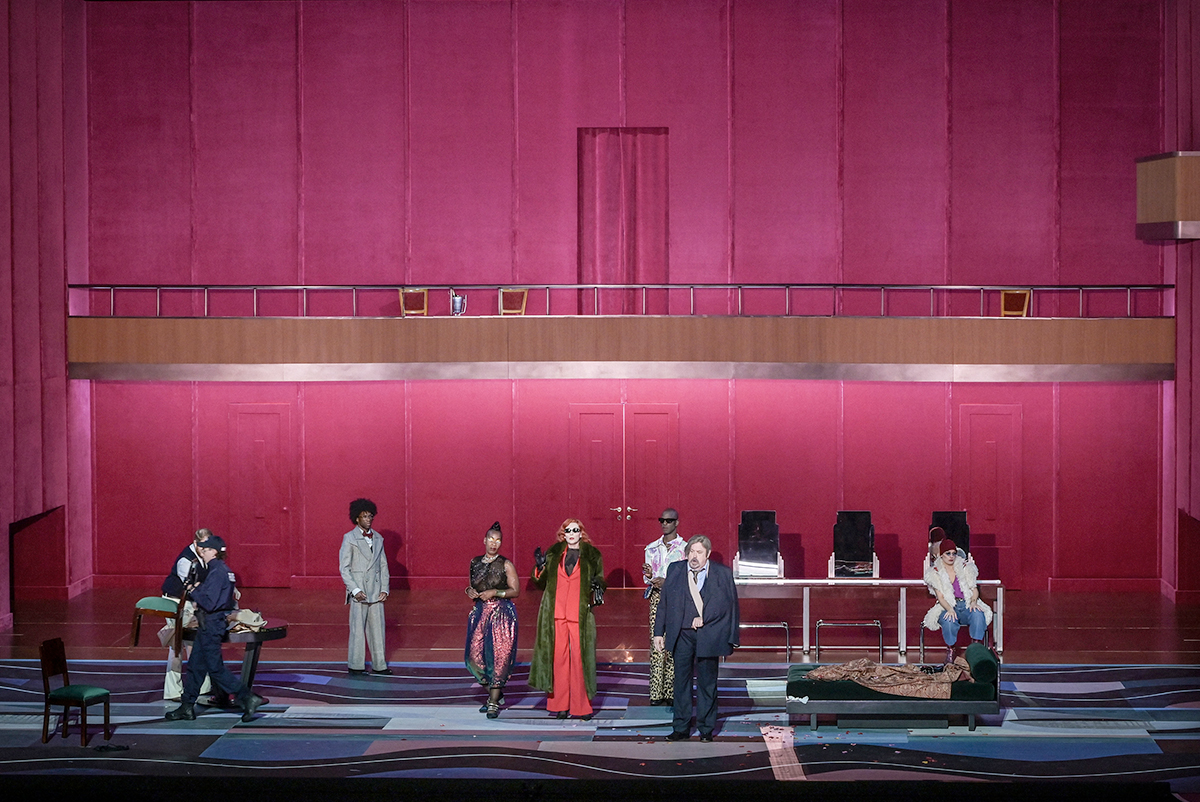
Warlikowski sets the evening in a single set, by his long-term collaborator Małgorzata Szczęśniak, which is accessorized at times by items of furniture and walls with frosted glass. In his reading, the Marschallin is an actress, Octavian a filmmaker, both enjoying a torrid love affair at the start of the evening. The prelude is accompanied with a film of Gens and a very feminine O’Sullivan enjoying, what I presume to be, quality naked time. This brought home how the Marschallin might have seen the affair with Octavian as a way of regaining her youth. Similarly, Warlikowski has Gens sing her Act 1 monologue into a camera at the front of the stage, reminding us that for celebrities, nothing is truly private – even those most intimate and vulnerable moments. He populates the stage with a variety of extras in Act 1, adding potential layer upon layer on the narrative, making us question what might be real and what might be imagined. The costumes, also by Szczęśniak, are bright and vibrant, the presence of the servant, here a twerking, Grace Jones lookalike, passing knowing glances to the Marschallin as she breakfasts with Octavian, making clear that Octavian was one of the Marschallin’s many lovers. Similarly, the Marschallin is dressed up in quite a ridiculous hat, while the Italian singer sings to her, which prompts her comment of ‘Mein lieber Hippolyte, heut haben Sie ein altes Weib aus mir gemacht!’. Yet what these multiple layers and visual interest succeed in doing is, rather than occluding the narrative, Warlikowski makes it even more potent. So that when the Marschallin is finally alone at the end of Act 1, the effect is so emotional, it becomes heartbreaking. Particularly so since the closing pages of Act 1 see Gens’ Marschallin walk off, while a younger girl takes her place sitting at the dressing room mirror. In so doing, Warlikowski not only gives us a mediation on the passing of time, he also reminds us that in film, indeed also in opera, there will always be a younger person to take over. That could sound quite cynical in a way, but that was certainly not the effect. Rather, there was a sense of acceptance of the passage of time, of knowing when to let go of a love that, however much one might want it to, just can’t last forever, and that in walking away through the doors at the back of the set, the Marschallin gave her lover the chance to live the life he was meant to live.

Even with the pain and the heartbreak, this was a Rosenkavalier that also abounds in comedy. I never thought I’d write that a danseur breakdancing to the Act 2 waltz would work, but here it does. There was a sense of joy to the visual that amplified Strauss’ uplifting music. Similarly, that burgeoning love between Sophie and Octavian is brought to life through suggestive lighting, by Felice Ross, with both characters becoming physically closer on a sofa. The bright costumes, seemingly crossing eras from the 1970s to the present day, bring a touch of fantasy and joy that also bring the score to life. This isn’t a conventional Viennese reading, but it’s one that mines the universality of the emotions in the work, that amplifies the feelings contained within; a staging that makes us laugh, but also makes us cry, and moves us to the very core of our souls.
That potent effect of the staging most certainly wouldn’t have been the case had the musical side not been as strong. Henrik Nánási led a very swift account of the score. He kept the comedy moving along briskly, one might say too briskly in Ochs’ interventions in Act 1, but also gave his singers the space when they needed it. Indeed, the Marschallin’s reflections on the clocks seemed to make time stand still, even though we knew it couldn’t. The playing of the Orchestre National de France was decent, for the most part. The harmonics in the violins in the closing pages of Act 1 weren’t quite optimally sustained, while the big fanfare as Octavian entered in Act 2 seemed to have taken the trumpets by surprise. The orchestral sound had a wonderfully French transparency in the strings, while Nánási encouraged them to dig deep to give us full, and emotionally rich, portamenti. The oboe and clarinet playing were also delightfully eloquent. The choral contributions were efficiently taken, with the six children deliciously raucous in Act 3.

We’ve waited a long time for Gens’ to take on the Marschallin, and the wait was most definitely worth it. Hers has always been the most aristocratic of sopranos, that noble line and sheer beauty of tone ideally matched to this role. She has also clearly worked exceptionally hard on the text, the words always immaculately clear and deep of emotion. There are two moments that I’ll take with me from tonight, moments that I hope I’ll remember forever. The way that Gens floated her ‘silberne Ros’n’, the tone taking wing, the dynamics beautifully shaded in a fabulous double hairpin, was simply exquisite. In Act 3, her costume seemed to be a nod to Huma Rojo, the late Marisa Paredes’ character in Todo sobre mi madre. I felt a sense of Gens not just singing the role, but living it, so that when we got to the trio, something truly special happened. She capped the line gloriously, that instantly recognizable soprano soaring with ease. When she sang that big high B at the climax, it spoke directly to the soul. It was less the sense of hearing a note and text, and more the sense of hearing a life well lived. In that note, and in the subsequent closing phrase, she brought out a sense of love, of acceptance, of looking back, yet looking ahead. Gens made it sound utterly transcendental in a way I’ve never heard it before. And yes, the tears flowed, as they seemed to for the entire room. Gens’ Marschallin was something really special indeed.
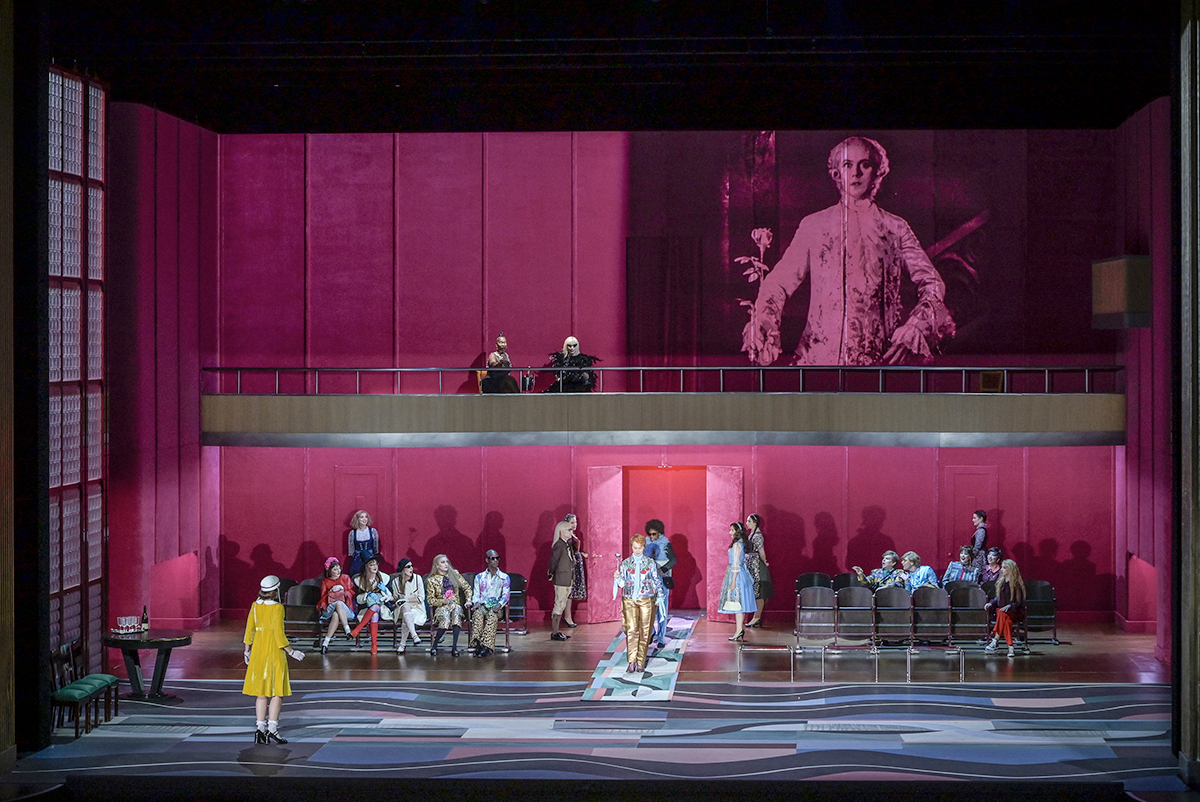
O’Sullivan is the owner of one of the most sheerly beautiful lyric mezzos I’ve had the pleasure of hearing in some time. The voice has wonderful sheen, with a ruby red exterior enveloping a creamy core. The tessitura of the role held no terrors for her, taking wing effortlessly on top. A native of County Cork, there’s a Celtic warmth to her sound that sounded uniquely Irish. Perhaps with more exposure to the role, O’Sullivan will learn to make more of the words. Her protests to the Marschallin in Act 1 lost impact, due to the relative lack of textual clarity. In Act 3, I also wish she had more made of those Viennese diphthongs as Mariandel – they sounded barely attempted. Still, O’Sullivan is most definitely a lovely singer and I have no doubt that with more experience in the role, she’ll bring out much more in the text. Announced as ‘souffrante’ at the start of the evening, there was no sign of tiredness in the tone from Regula Mühlemann’s Sophie. Her peachy soprano appears to defy gravity, soaring pulchritudinously on high. She also brought out so much in the text, making her Sophie a much stronger character than we’re used to hearing. She blended magically with O’Sullivan in their music together, the closing duet floated on a cushion of sound and milky-smooth legato.

Peter Rose’s Ochs is very much a known quantity, having seen him in the role in Baden-Baden a decade ago. His bass is seemingly ageless, still wonderfully rich at the bottom and he dispatched those Viennese diphthongs with a deliciously witty touch, while his comic timing throughout was absolutely unimpeachable. He was also a game stage presence, waltzing around the stage with joy, while his physical appraisal of Sophie was just as disgusting as it should be. Yes, there was a sense that Nánási could have let him through a bit more in Act 1, but that was also at one with a reading of the part that makes Ochs a chattering figure that nobody really pays attention to. The remainder of the large cast reflected the high standards expected at this address. Francesco Demuro was luxury casting as the Italian Singer, gamely singing his arioso while dressed in very short briefs and incarnating a temperamental actor. The voice had fabulous Italian warmth, reaching up on high with full-throated warmth. Jean-Sébastien Bou blustered effectively as Faninal, never compromising the integrity of the tone. Laurène Paternò was an extrovert and youthful Marianne, while Krešimir Špicer and Eléonore Pancrazi were keenly sugn and effective conspirators. The sung German in some of the other supporting roles could have been somewhat clearer, but the quality of the voices we heard was not in doubt.
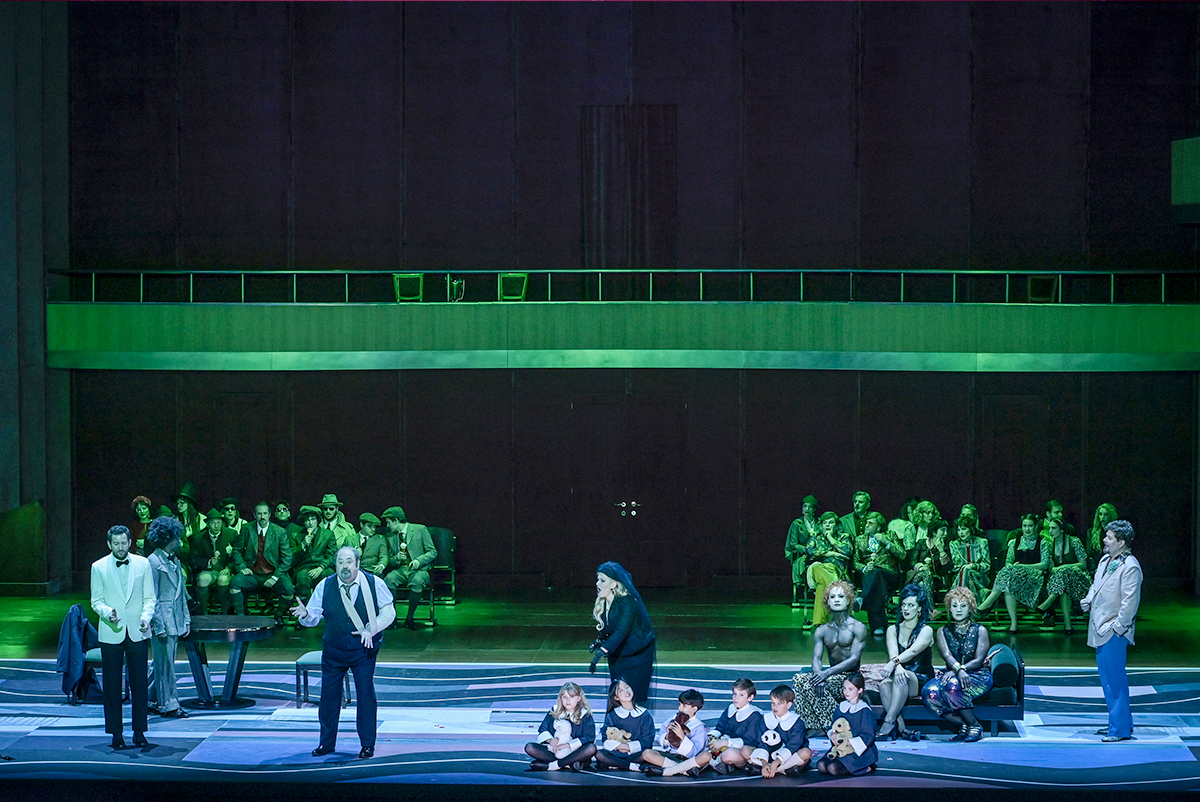
This was an overwhelming evening in the theatre. Musically, it gave so much enjoyment, with Gens giving us a career-defining incarnation of the Marschallin, bringing those decades of experience to give the role so much emotional impact. Warlikowski’s staging was a fantasy of both farce and acceptance of the passage of time. In those four hours, he manages to take us from the highest highs, to the most emotional of moments, as he highlights one woman’s journey into acceptance of the passage of her life. This felt like an evening that will live in the mind for a very long time to come. The audience responded with enormous and generous ovations at the curtain calls.
 operatraveller.com
[…] the great Véronique Gens finally made her debut as the Marschallin in a deeply moving staging of Der Rosenkavalier by Krzysztof Warlikowski. Something happened in the trio. As Gens sang her final high B of the […]