Gounod – Faust
Faust – Iván Ayón-Rivas
Méphistophélès – Alex Esposito
Valentin – Florian Sempey
Wagner – Bryan Sala
Marguerite – Ruth Iniesta
Siébel – Ekaterine Buachidze
Dame Marthe – Gemma Coma-Alabert
Cor de la Generalitat Valenciana, Orquestra de la Comunitat Valenciana / Lorenzo Viotti.
Stage director – Johannes Erath.
Palau de les Arts, València. Friday, October 3rd, 2025.
With this evening’s opening performance of Johannes Erath’s staging of Faust, the Palau de les Arts in València opened its 2025 – 26 season. Over the past two decades, this has become one of the most exciting opera houses to visit – home to one of the top three opera orchestras in the world, in my humble opinion, and one of the finest choruses also. Erath’s staging is a coproduction with the Staatsoper Berlin, the Scala, and the Teatro Real and it certainly looks like a show that has had a good amount of money spent on it.
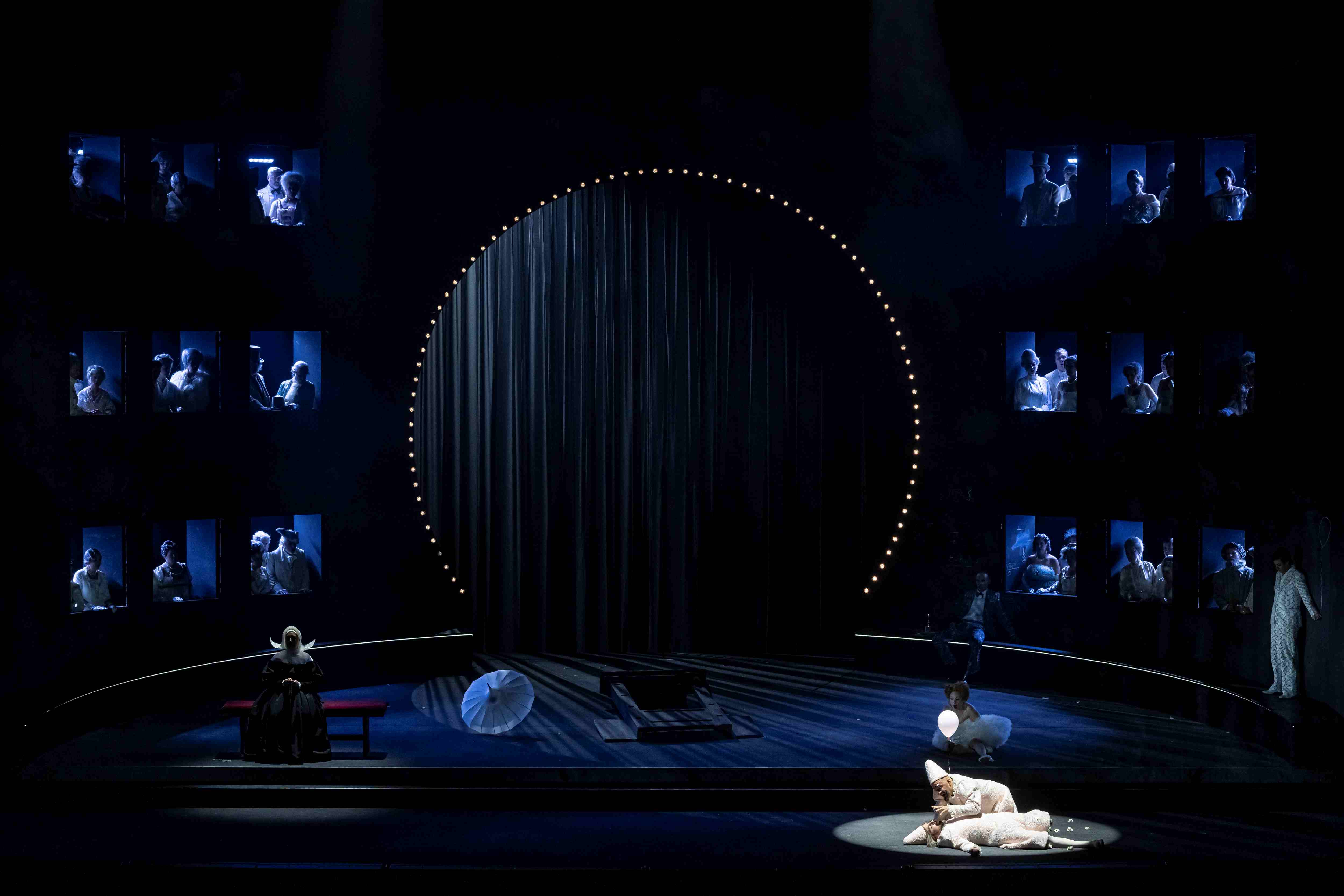
Erath appears to set the action in the nineteenth century, using video to provide images of the Paris Opéra projected onto the set. Marguerite is apparently a ballet dancer, Valentin a clown who throws knives, and Dame Marthe a nun. Erath makes frequent use of doubles – an older man accompanies Faust throughout, another dancer shadows Marguerite, who at one point turns out to be Siébel in drag, who then returns to being a man. If this sounds confused, that is most certainly the effect. Erath fills the stage with extras, with constant movement, yet in doing so fails to do those most basic of tasks – to tell a story and make us feel. In the soldiers’ chorus, Valentin appears to be suffering from PTSD, throwing his knives around. It was quite interesting how the duel between Valentin and Faust was set up as a knife throwing competition, with Faust throwing the knife to an extra, who then threw it on to another, eventually to Valentin, effectively ensuring his demise with the same means that he used to make a living. Similarly, in the ballet, what appeared to be the older Faust, walked around the stage with a mirror, forcing the younger to look at himself. And yet, it all felt like a jumble of ideas thrown together, without a coherent thread.
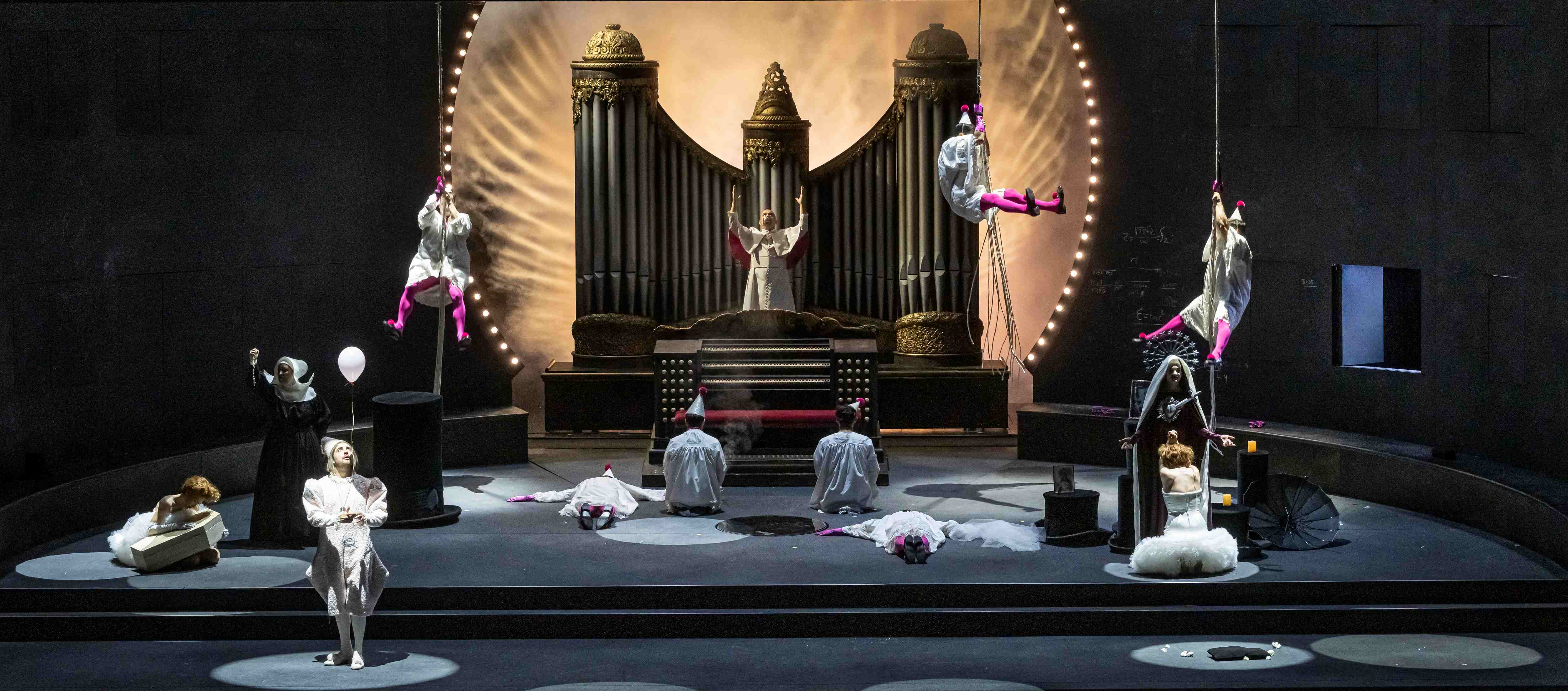
Indeed, I’m still wondering why Marguerite opened act 4 inserted into a giant top hat. Or why in the love duet, Faust and Marguerite engaged with doubles rather than with each other. Why did the Madonna show up in the corner of one scene, disappear for the rest of the evening, only to show up at the end at the top of a staircase beckoning Marguerite up to the top? As I mentioned above, Erath’s staging looks expensive, the costumes, by Gesine Völlm, are extravagant, and the circus artists on stilts add a festive air. Erath had clearly also convinced the principals and chorus to get into the spirit of his staging, with the chorus standing at the front waving jazz hands, and he knew how to place the characters on stage for maximum audibility and impact. In that respect his staging is competent. And yet, I longed for him to actually allow us to feel, to empathize with his characters, to understand their motivations. Instead, the staging felt cold and lacking in emotion.

What also didn’t help with the clarity of the staging was the clarity of the diction of two of the principals – Iván Ayón-Rivas’ Faust and Alex Esposito’s Méphistophélès. I am so happy the house provided the French version in the seatback titles as, in both cases, they were very difficult to understand. Ayón-Rivas has a very fine instrument, with real ping on top and genuine musical instincts. He also has a good line and an easy flexibility. Yes, he didn’t quite successfully negotiate the diminuendo on the high C in ‘Salut! Demeure chaste et pure’, but that may well be first night nerves and even if it’s a big moment, it’s only a very tiny part of the role as a whole. He’s also an engaging actor who fully threw himself into Erath’s concept. And yet, what holds him back is his French diction. It robbed his singing of the impact it should have, despite the excellence of his vocalism. Ayón-Rivas should have the ideal instrument for this repertoire and I very much hope that he can find a French coach who will support him to fulfill the promise he very much has.
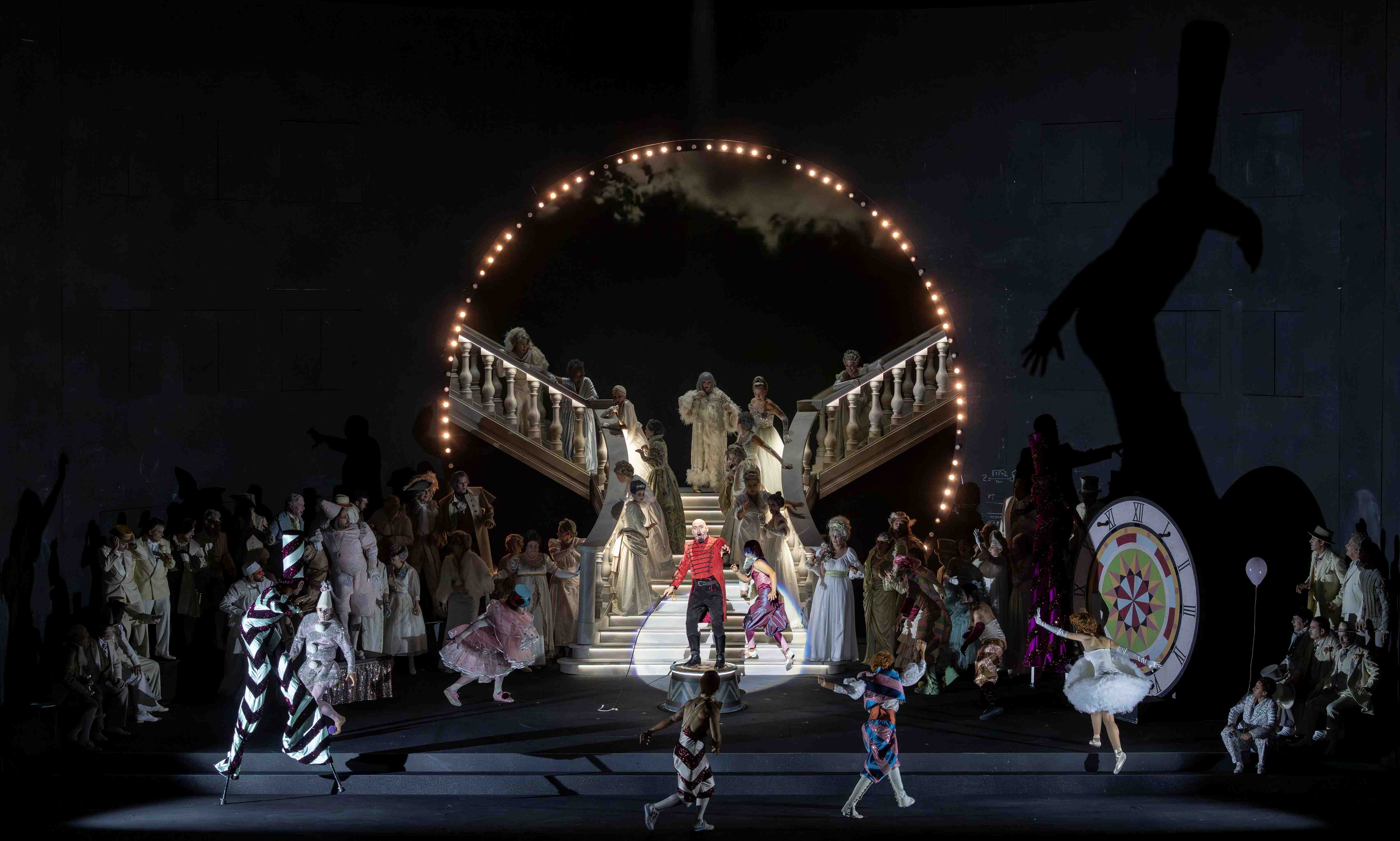
Esposito is a singer who I have a great amount of esteem for. He’s a real stage animal, his ‘veau d’or’ was electrifying in its abandon, the voice commanding attention, his acting, whipping the extras was immensely watchable. Yet here also, his singing lacked the ultimate impact it should have had due to the lack of clarity in the text. His bass-baritone is in excellent shape, his comic timing and use of tone both nicely sardonic. I just wish he had used the text as a starting point for the line rather than a secondary aspect. It was doubly frustrating because there was so much to appreciate in his devilish portrayal and vocal command, but if the words aren’t clear then the drama dims.
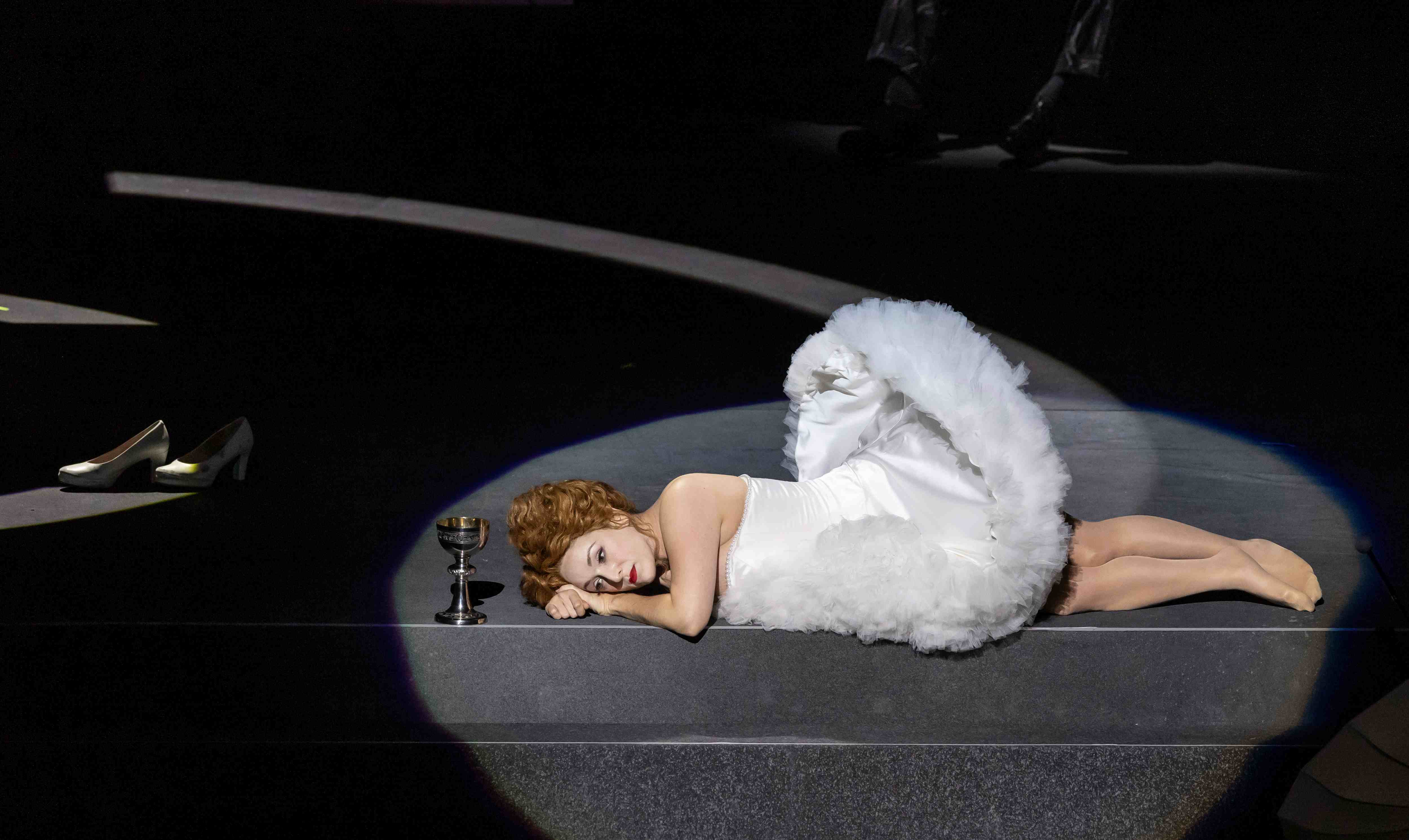
Ruth Iniesta gave us a glorious Marguerite. She sang the entire role in impeccable French, her assumption having considerably more impact since the text was so clear. She found a limpid poise to her ‘roi de Thulé’, while her air des bijoux scintillated and glistened thanks to her easy trill and effortless negotiation of the florid lines. Moreover, Iniesta was also able to pull out the stops in the final scene, the voice opening up with thrilling amplitude, her singing drawing out meaning and desperation with the text being so clear and moving, soaring over the surging pit. Another magnificent assumption from this splendid singer.
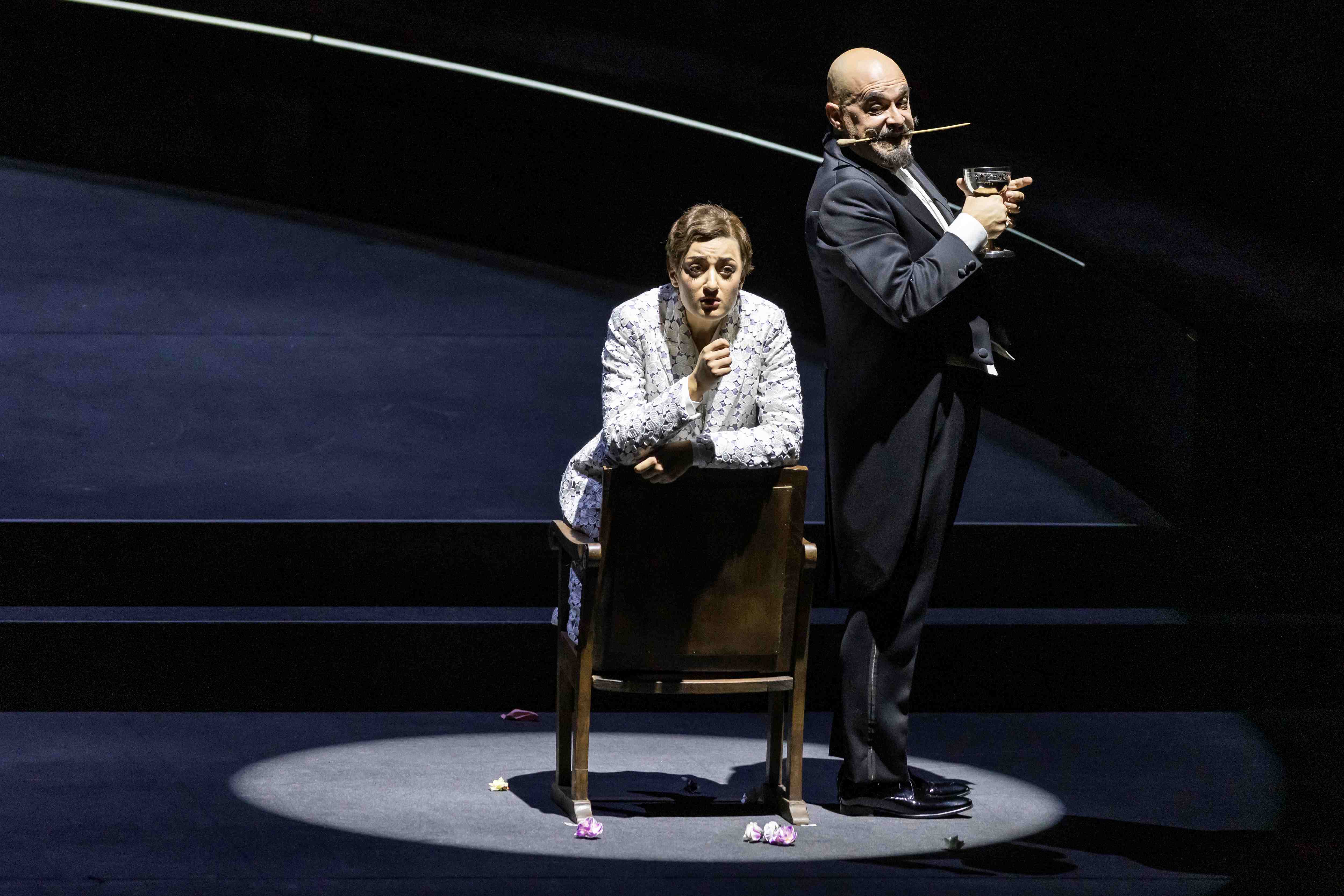
Florian Sempey sang his ‘Avant de quitter’ with his customary handsome tone, the voice soaring and opening up with ease on top. He also very convincingly acted out the role Erath had designed for him. Bryan Sala was a very happy find in the role of Wagner, his firm and equally handsome baritone gave much pleasure and he sang in excellent French. Ekaterine Buachidze sang her ‘faites-lui mes aveux’ with silvery tone, an eloquent line, even throughout the range, while Gemma Coma-Alabert brought a fruity and full mezzo to Dame Marthe’s music. The Cor de la Generalitat Valenciana was on very good form tonight, having been prepared by Jordi Blanch Tordera. The tenors and basses made a tremendous sound in their big soldiers’ chorus, while the tuning of the unaccompanied passage at end of Act 4 was staggering in its unanimity at a pianissimo dynamic. Their corporate sound, full and rich, with impressive blend, gave a great deal of pleasure, although here again, they could ideally have benefitted from some further French diction coaching.
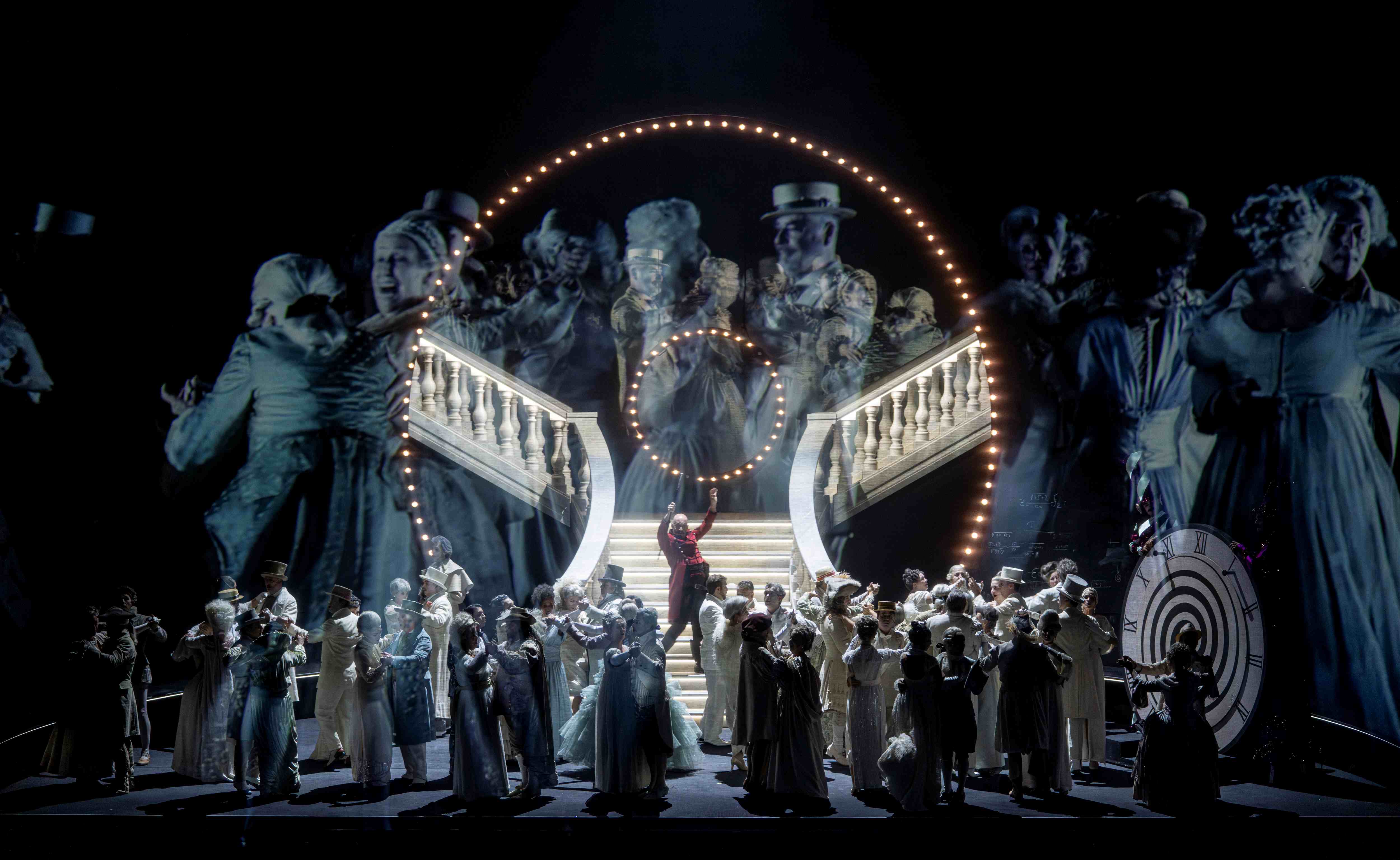
As indeed did the playing of the house orchestra under Lorenzo Viotti. I must admit I did find some of Viotti’s tempi to be rather saggy and slow, even if he did bathe in the beauty of Gounod’s score. Similarly, the ‘veau d’or’ did feel a little heavy on its feet, and in the ballet music also, there was a sense that he was keeping this fabulous orchestra on the leash, rather than letting it go. Of course, this was a first night, and perhaps as we proceed through the run, he may begin to feel more comfortable in letting these outstanding musicians loose. There was a real poetry in their playing, particularly in the solo oboe, and in the solo violin in ‘Salut! Demeure’. Viotti also brought out a deep pile carpet of sound in the strings, using the acoustic to bring out the various ‘voices’ in the band, giving the sophistication of Gounod’s scoring the utmost clarity. The brass playing was superb in its accuracy and in the sheer wealth of colour they brought. Once again, tonight proved that this house has an orchestra they can be justifiably proud of.
I must admit I found this an evening that was rather mixed. The staging lacked narrative clarity, cluttering the visuals, yet never actually making us empathize with the characters and truly ‘feel’. This was an effect compounded by the lack of clarity of diction from two of the principals, despite the fact that their vocalism had so much to offer. Fortunately, we were given a glorious assumption of Marguerite by Iniesta, who sang the role with so much feeling and beauty. The audience responded to the principals with generous cheers and to the orchestra with a standing ovation. The production team was greeted with polite applause and a very few isolated boos and bravos in equal measure.
 operatraveller.com
[…] creating a narrative clarity that was in very welcome comparison to the fog of last night’s Faust in València, for example. De Amicis clearly knows how to tell and communicate a story and […]
[…] making José a much more complex and enigmatic character than we often see. In València, a Faust was saved by a glorious Ruth Iniesta as Marguerite and that house’s superlative orchestra and […]