Offenbach – Robinson Crusoé
Robinson – Sahy Ratia
Edwige – Julie Fuchs
Vendredi – Adèle Charvet
Sir William Crusoé – Laurent Naouri
Toby – Marc Mauillon
Jim-Cocks – Rodolphe Briand
Suzanne – Emma Fekete
Deborah – Julie Pasturaud
Atkins – Matthieu Toulouse
accentus, Les Musiciens du Louvre / Marc Minkowski.
Stage director – Laurent Pelly.
Théâtre des Champs-Élysées, Paris, France. Friday, December 12th, 2025.
For its final staged opera production of 2025, the Théâtre des Champs-Élysées has chosen to present Offenbach’s Robinson Crusoé. Premiered in 1867, it was Offenbach’s second work for the Opéra Comique, and his attempt to move away from the Opéra bouffe he had been commercially successful with, to a more dramatic idiom. It was reasonably successful in its initial run, but then lapsed into relative obscurity until the second half of the twentieth century. Who better to take us through the work than the team of Marc Minkowski and his Musiciens du Louvre, with Laurent Pelly directing – artists with considerable experience in Offenbach’s music.
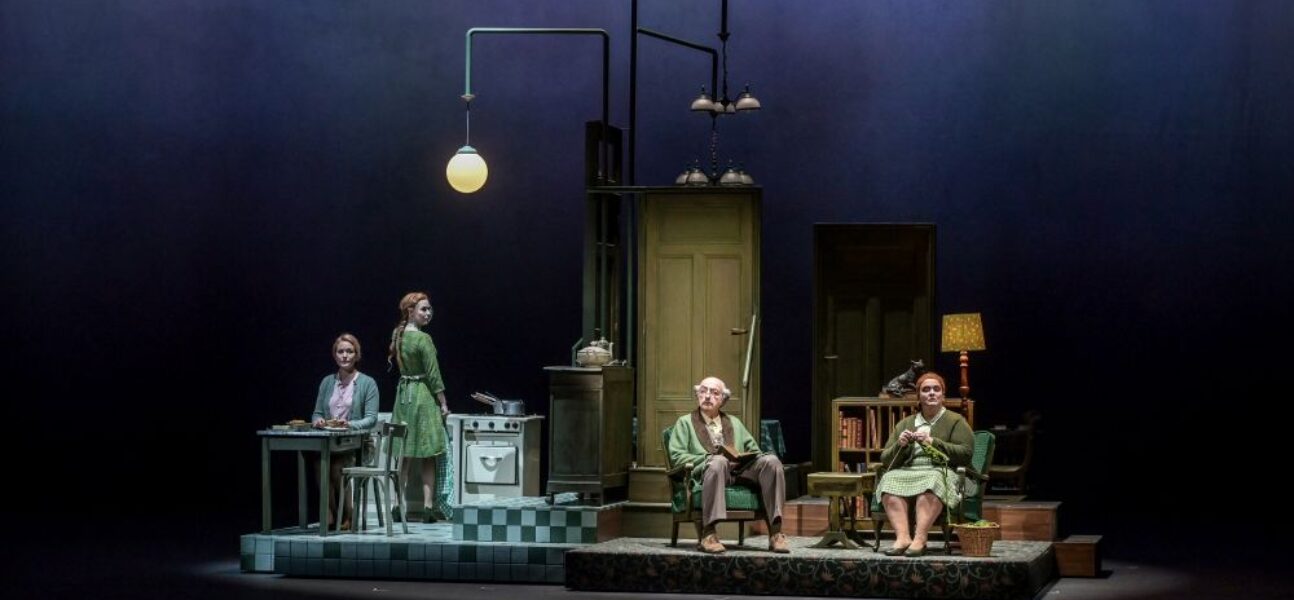
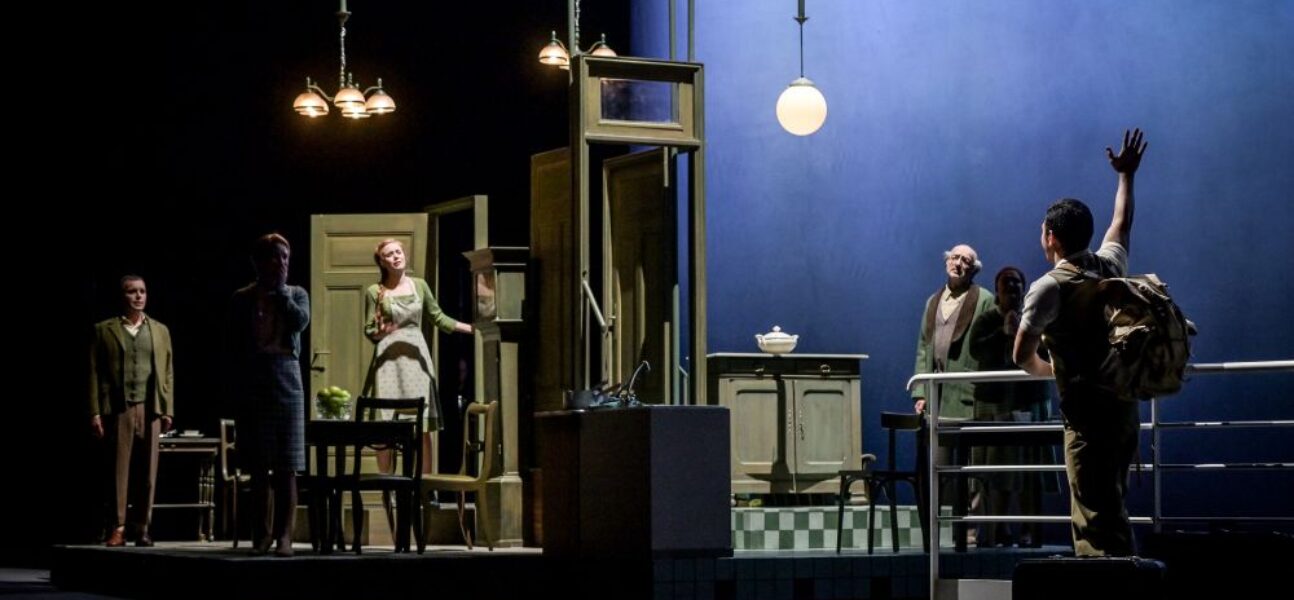
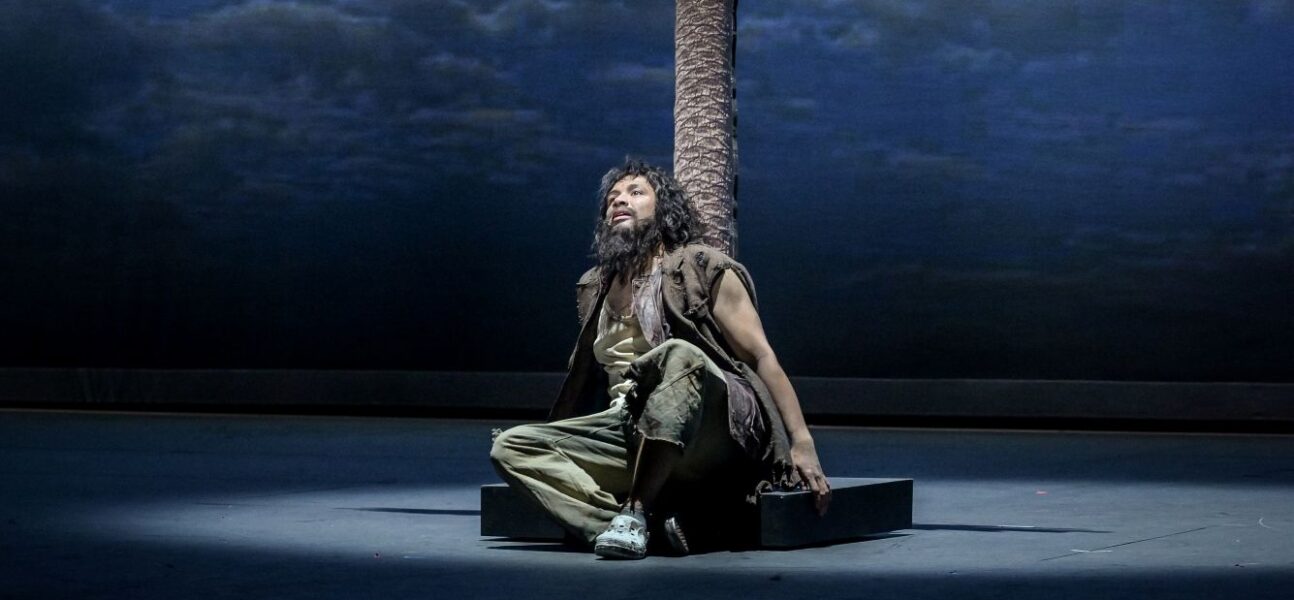
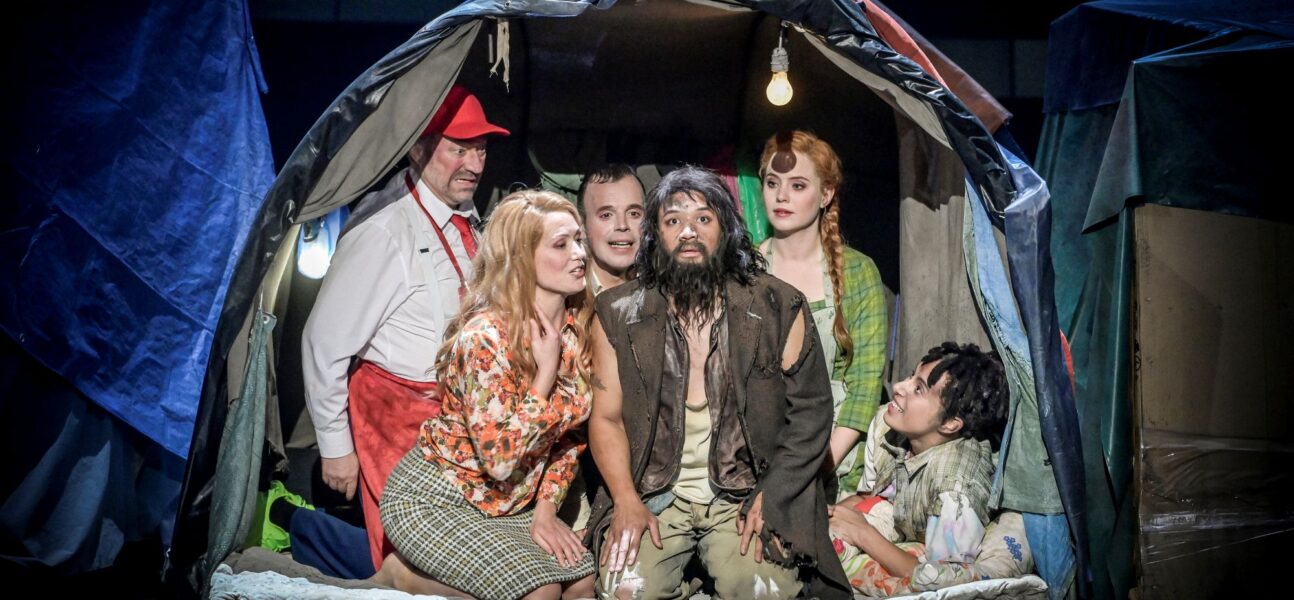
Offenbach’s opera, with a libretto by Eugène Cormon and Hector-Jonathan Crémieux, is loosely based on Daniel Defoe’s celebrated book. It takes us from Crusoé’s family life in Bristol, to his adventures with his sidekick Vendredi in Brazil, where his love interest Edwige, and their friends Toby and Suzanne, come to rescue him. While the music may not be top drawer Offenbach, it does contain some splendid numbers, not least Edwige’s waltz ‘Conduisez-moi vers celui qui m’adore!’. For this production, the dialogue was extensively rewritten by Agathe Mélinand. Pelly sets the production initially in the family home, which appears to be in the 1950s, the set revolving around to show different perspectives on the home. Later, Crusoé appears to be ‘shipwrecked’ in a homeless zone of a large city. Having visited Brazil several times, the palm tree and skyscrapers reminded me of downtown Säo Paulo. The downtown of that city contains a zone locally known as ‘Cracolândia’, where significant numbers of homeless addicts live. It’s one of the most harrowing places I’ve ever visited, the sight of so many people completely out of it, living in horrifying circumstances is something I’ll never forget. I don’t know whether Pelly has ever visited Brazil’s largest city, but I must admit how the island was portrayed on stage, with Crusoé having a drug-induced fit made me extremely uncomfortable, while so many around me found it entertaining. The fact that Vendredi kept interpolating Castilian Spanish into the dialogue also felt rather Euro-centric a perspective. Perhaps I’m overthinking things, but the initial impression of Pelly’s staging of Act 2 was problematic.
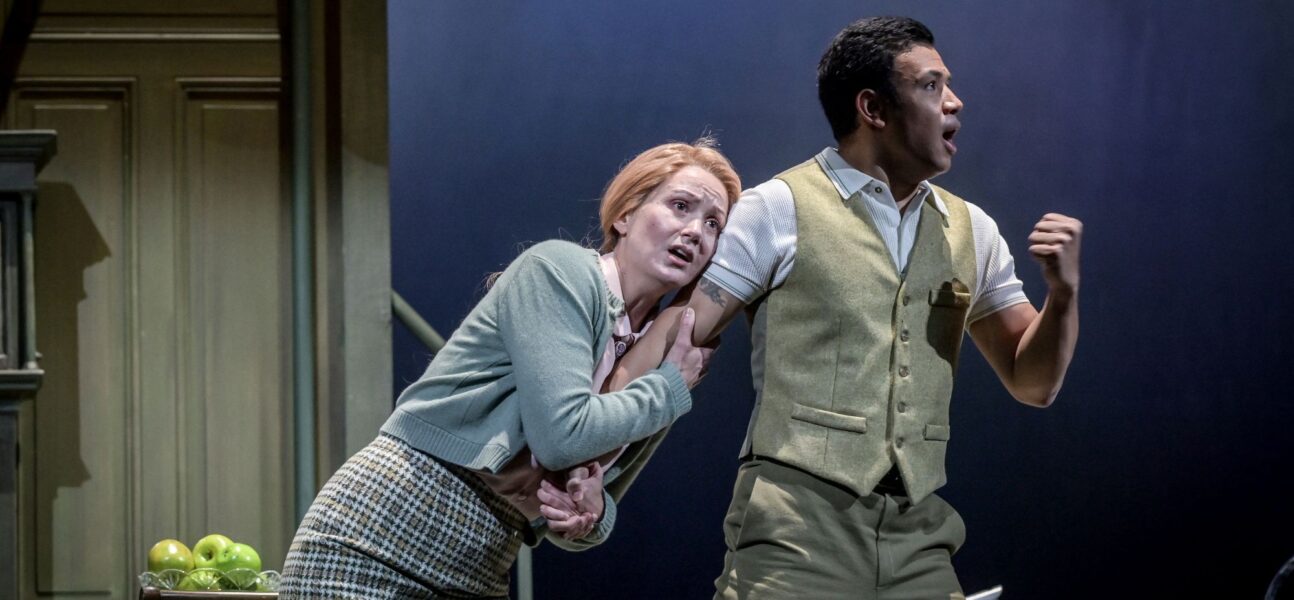
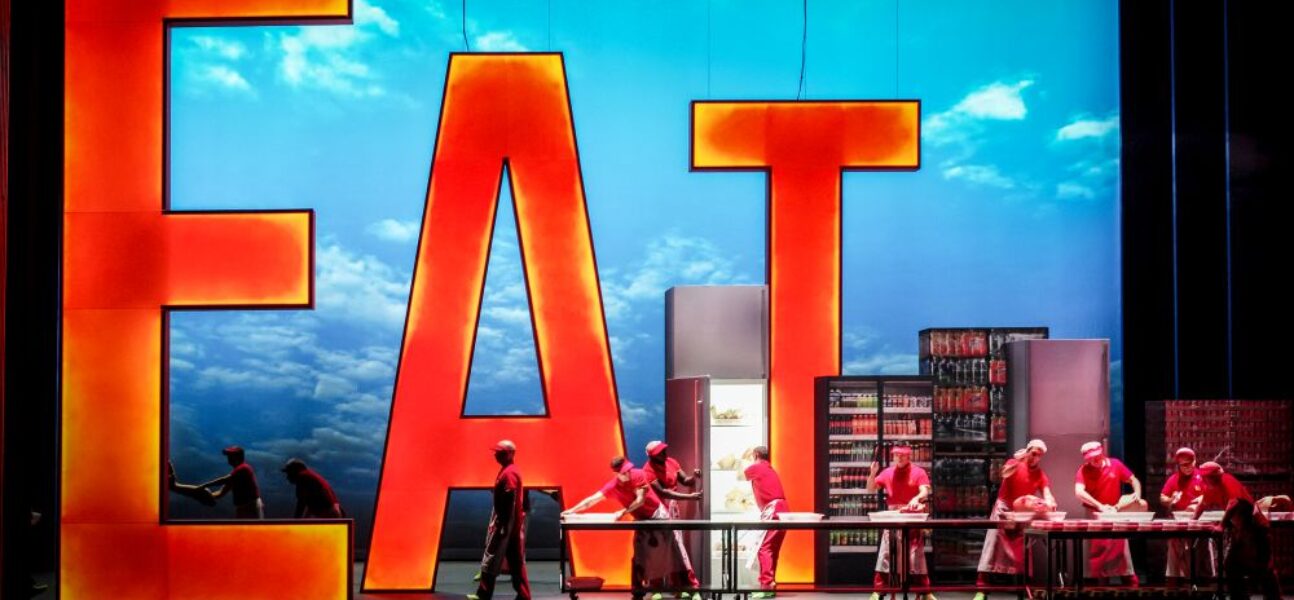
Indeed, the entire evening until that point felt like a show that was trying a little too hard. Act 1 had the cast moving around in formation, with some synchronized dance moves. In a way, the staging felt that it reflected the problematic nature of the work, unsure of whether it wanted to be serious or comic. Then, in the second half of Act 2, something happened. It took wing. When Suzanne, Toby and Edwige were captured by cannibals, these were shown to be the chorus all dressed up as Donald Trump lookalikes, something that sent the audience into fits of laughter and applause, while Suzanne and Toby were moved along a conveyor belt in a meat factory. What Pelly asks of his entire cast, including the chorus, in terms of movement is immense – the synchronized dancing must have required painstaking rehearsal and yet it was dispatched with the utmost uniformit. And yet, the final tableau of Crusoé sitting alone under a palm tree left a much more equivocal impression. Had we just spent the evening witnessing the drug-addled dream of an addict? Is Pelly attempting to make a point about drug abuse and poverty? Was the geographical and linguistic confusion between Bristol, Brazil, the United States, and Castilian Spanish deliberate or just a lack of awareness? It’s hard to tell, but I can’t deny a sense of leaving tonight with a show that didn’t quite know what it was.
Musically, it gave us so much to enjoy. Minkowski understands this music like few others and he drew out such a wealth of sonorities from his musicians. What struck me immediately was the sheer character of the wind playing, whether the mellowness of the bassoons, the penetrating oboes, the mellifluous flutes or fruity clarinets. The horns were similarly deliciously raspy. Offenbach’s score brings out so many lyrical impressions of birdsong in Act 2, and these were realized in the most beguiling way. In Act 1, there was also a moment in which the orchestra reproduced the sound of an organ and this again was utterly charming. The all-important percussion was wonderfully immediate in sound and the strings always true in intonation. This was orchestral playing of the very highest distinction. Minkowski’s tempi were terrifically springy, always pushing the action forward on a constantly-pulsing rhythmic base, one that filled the room in vibrant momentum. The chorus, provided by accentus and prepared by Thomas Tacquet, managed to maintain the integrity of the sound even with the extremely busy staging that they were asked to participate in. The tenors and basses were particularly firm in tone.
Sahy Ratia stepped in for the originally-cast Lawrence Brownlee a few months ago. The young, Madagascar-born, French-trained tenor is already enjoying a busy international career. He clearly has the kind of implicit musicality that cannot be taught, dispatching Offenbach’s writing with an elegant line and excellent clarity of diction. The voice itself isn’t the biggest, but it carries well enough, while the top does lose a little in quality and isn’t ideally integrated – but this is something that can be worked on. Ratia is also a very engaging actor, his wide-eyed optimism of Act 1 was brought to life not only through the freshness of his tone, but also in his energetic acting, while he gave a very convincing impression of a drug-induced fit in Act 2. Certainly a name to watch in the lighter tenor roles.
Julie Fuchs gave us a tremendous Edwige. Pelly’s staging had her dancing most energetically in her waltz, which she did all while dispatching reams of pearly coloratura. She offered us wonderfully poised, floated singing in her declaration of love to Crusoé in Act 1, while the bravura writing of Act 2 held no terrors for her – and she demonstrated a genuine trill. Another winning assumption from this always charming singer. Emma Fekete also demonstrated a fabulous technique as Suzanne. Her soprano is gossamer light, able to turn the corners with ease. Trained in Amsterdam, the Québécoise singer already has a burgeoning career on this side of the Atlantic. Her technique is well schooled, the runs impeccably dispatched, and she has terrific comic timing. Her sparring with Marc Mauillon’s Toby, as each decided who should be sacrificed to the cannibals first, was terrific.
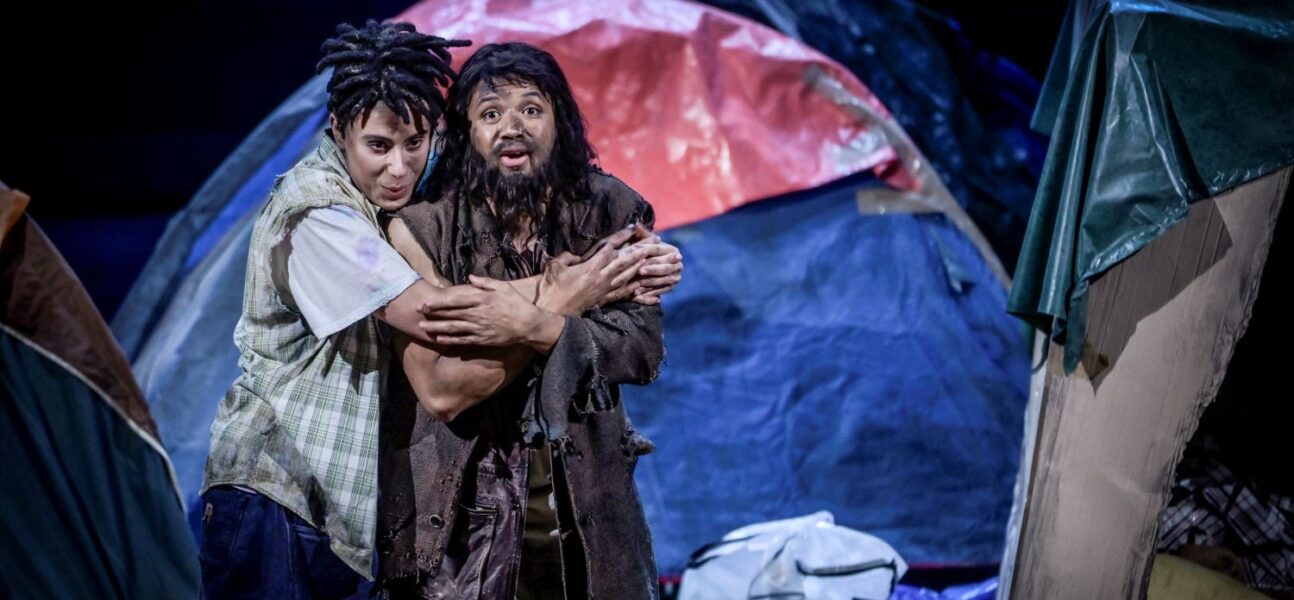
Mauillon sang his music in a focused, easily-produced tenor, bright in tone with the text always forward. Adèle Charvet sang Vendredi in a warm, sunny mezzo, with an impeccable legato. The top opened up with ease, shining into the room. Laurent Naouri was a welcome presence as Sir William Crusoé. His bass-baritone still maintains the firmness of yore and his stage presence is as imposing as ever. Julie Pasturaud sang Deborah in an even, fruity mezzo, with a warm bottom. She blended exquisitely with Fuchs and Fekete in their ensembles, the precision of their tuning and attack most impressive. As Jim-Cocks, former neighbour in Bristol and now chef to the cannibals, Rodolphe Briand, brought a penetrating tenor and verbal acuity to his assignment.
Musically, this was a terrific evening. Minkowski really gets this music and he elicited playing of sheer poetry and a wealth of engaging sonorities from his musicians. The singing was always appealing, and Fuchs and Fekete in particular gave an enormous amount of pleasure, while Ratia demonstrated himself to be an exciting talent. As for Pelly’s staging, I can’t say it convinced fully. Of course, I may be overthinking things, but it seemed to contain multiple non sequiturs and, while it did have some comic moments, also felt rather heavy handed. A mixed evening, perhaps, but one that was received at the close with genuinely warm applause, particularly for Fuchs and Minkowski.
 operatraveller.com
[…] to the pit. I also had the pleasure of seeing some rarities. Fuchs was also sensational in Robinson Crusoé at the Théâtre des Champs-Élysées, under the insightful musical direction of Marc Minkowski, […]