Puccini – Madama Butterfly
Cio-cio-san – Eleonora Buratto
BF Pinkerton – Riccardo Massi
Suzuki – Shannon Keegan
Sharpless – Lucio Gallo
Goro – Huang Ya-Chung
Lo zio Bonzo – Ivo Stanchev
Il Principe Yamadori – Christian Rieger
Kate Pinkerton – Lucy Altus
Lo zio Yakusidé – Bruno Khouri
Il commissario imperial – Armand Rabot
Bayerischer Staatsopernchor, Bayerisches Staatsorchester / Kim Eunsun.
Stage director – Wolf Busse.
Bayerische Staatsoper, Nationaltheater, Munich, Germany. Saturday, January 31st, 2026.
As is so often the case at the Bayerische Staatsoper, the repertoire performances are cast from strength. The main attraction of this evening’s revival of Wolf Busse’s 1973 staging of Madama Butterfly was the Cio-cio-san of Eleonora Buratto, a role that she has received particular acclaim for over the past few years. Furthermore, the presence of two other Italian singers, with Riccardo Massi as Pinkerton and Lucio Gallo as Sharpless, promised us an idiomatic evening from a vocal standpoint.
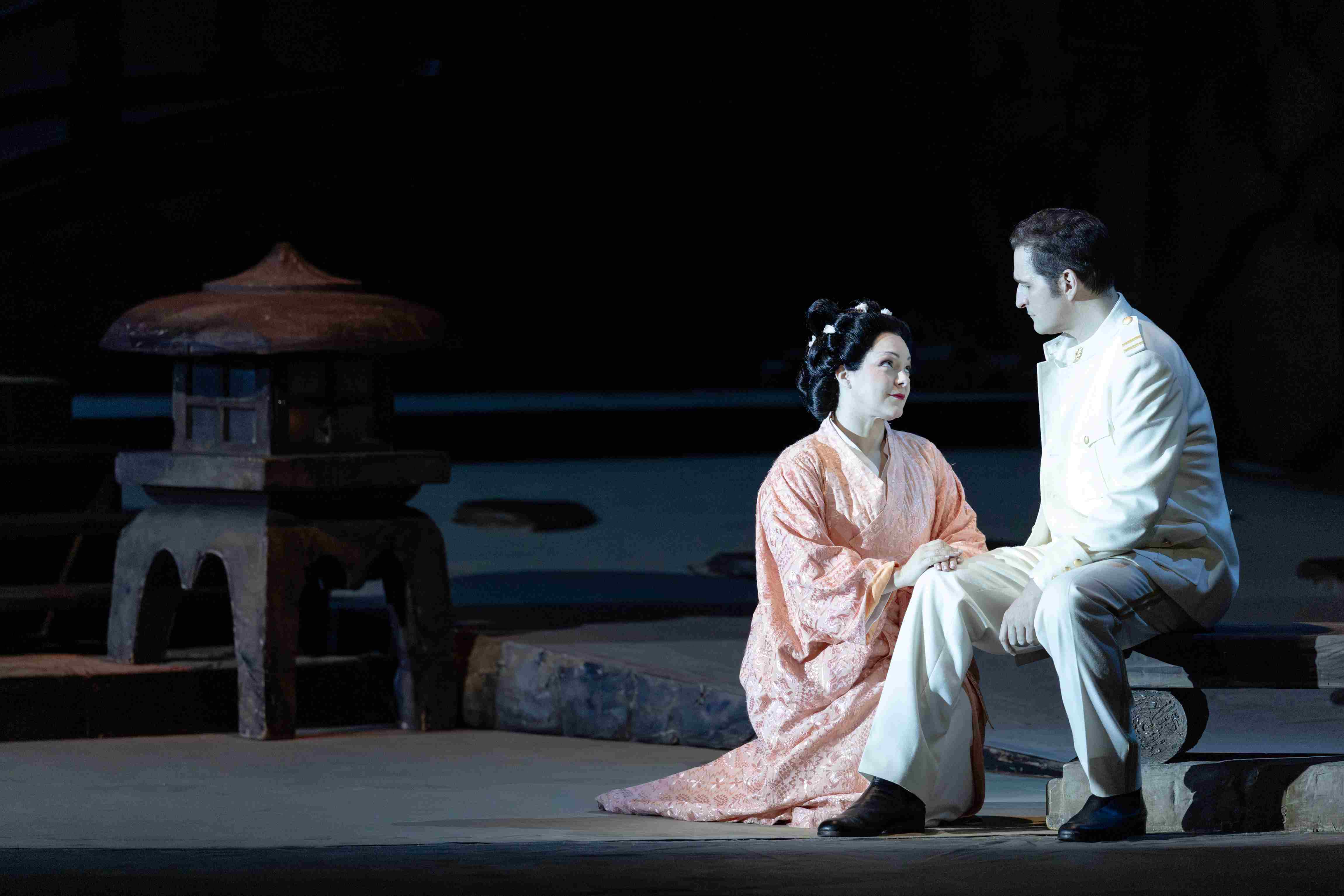
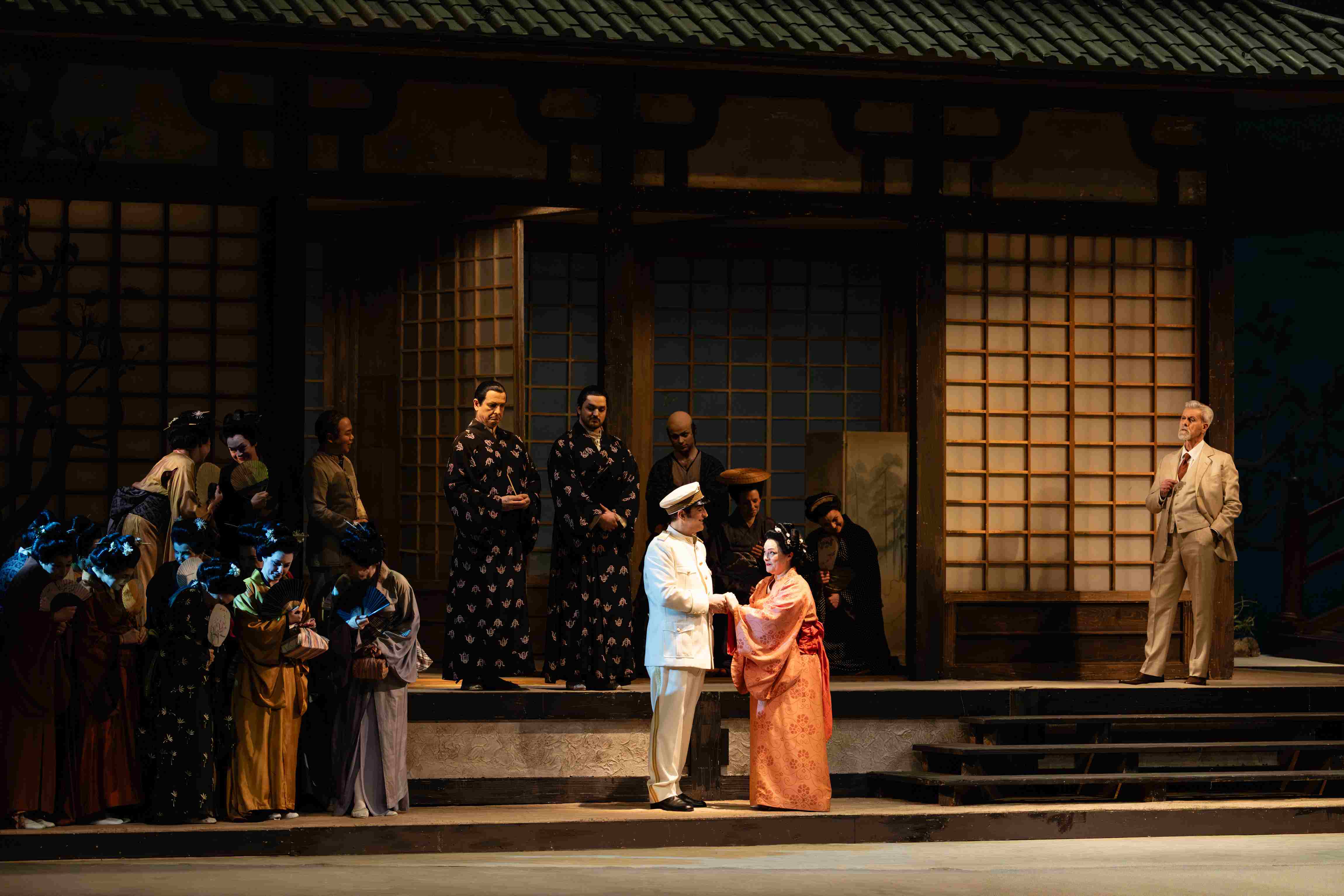
I discussed Busse’s staging at length when I saw it revived back in 2022. It hasn’t changed much in the last four years. The sets, by Otto Stich, still look quite fresh, consisting of an imposing house, with a bridge in Act 1, and the house brought to the centre of the stage for the remaining acts. The costumes, by Silvia Strahammer, are very much inspired by Japanese couture – how authentic they are would be hard for me to judge. Of course, the sight of a mainly western cast wearing these costumes and making clichéd Nipponese movements in 2026 is something that does make one uncomfortable. At the same time, this is very much a museum piece of operatic history, a look back to a former time, and should be approached in that spirit. The revival direction was confided to Anna Brunnlechner who ensured that the cast was moved around the stage with confidence.
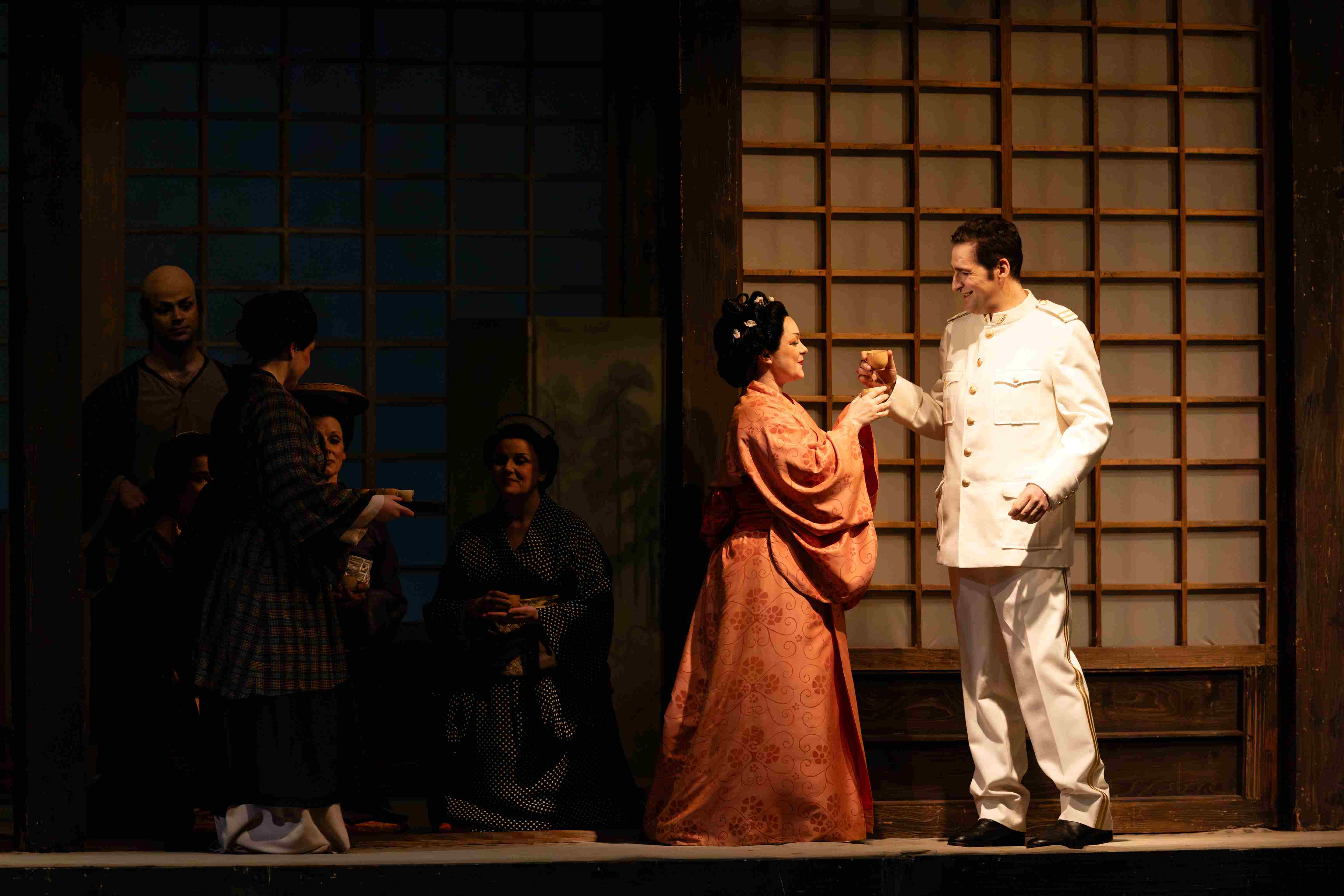
Yet even in this ancient staging, something happened with Eleonora Buratto’s Butterfly. Despite what I imagine to be limited rehearsal, she completely incarnated Cio-cio-san, transcending the heavy costumes and fully becoming her character. I can only imagine what it would be like to see Buratto’s Butterfly in a new production with a more sensitive director. Indeed, if Turin or Madrid could revive Damiano Michieletto’s staging with Buratto, I would be incredibly grateful. For Munich, it might be time to invest in a new staging of Butterfly. At the same time, the house was full, and the audience, many of who were children at this family performance, were clearly deeply engrossed by what they saw.
The musical direction of the evening was led by Kim Eunsun. I imagine that she had had very little time with the orchestra and may not have even had much opportunity to work on balance in the house itself. That would explain why the orchestra seemed to have been caught off guard by her swift tempo in the opening measures, their playing uncharacteristically scrappy. Furthermore, throughout the evening, the orchestra was simply too loud – at least from my seat in the centre of the Parkett. Buratto and the chorus’ offstage entry was barely audible underneath the orchestral contribution. Similarly, in the more passionate outbursts, the singers were frequently overwhelmed by the tumult from the pit. I can understand Kim’s desire to allow Puccini’s score to take wing, but I’d equally appreciate giving the singers space to fully register. Moreover, her reading felt very much lived from measure to measure, with little sense of the work’s larger architecture nor those long inimitably Italian Puccinian phrases, and there were several passing tempo disagreements between stage and pit. Again, given the limited rehearsal time, perhaps all we can expect is that they started and ended together. And perhaps in a regional theatre, one might have appreciated Kim’s interpretation more. But this is the Bayerische Staatsoper, one of the greatest opera houses in the world, and one can and should expect much more idiomatic conducting. That said, the orchestral playing was, apart from some momentary lapses in coordination, at the quality one could expect here, and there were also some agreeable portamenti in the strings.
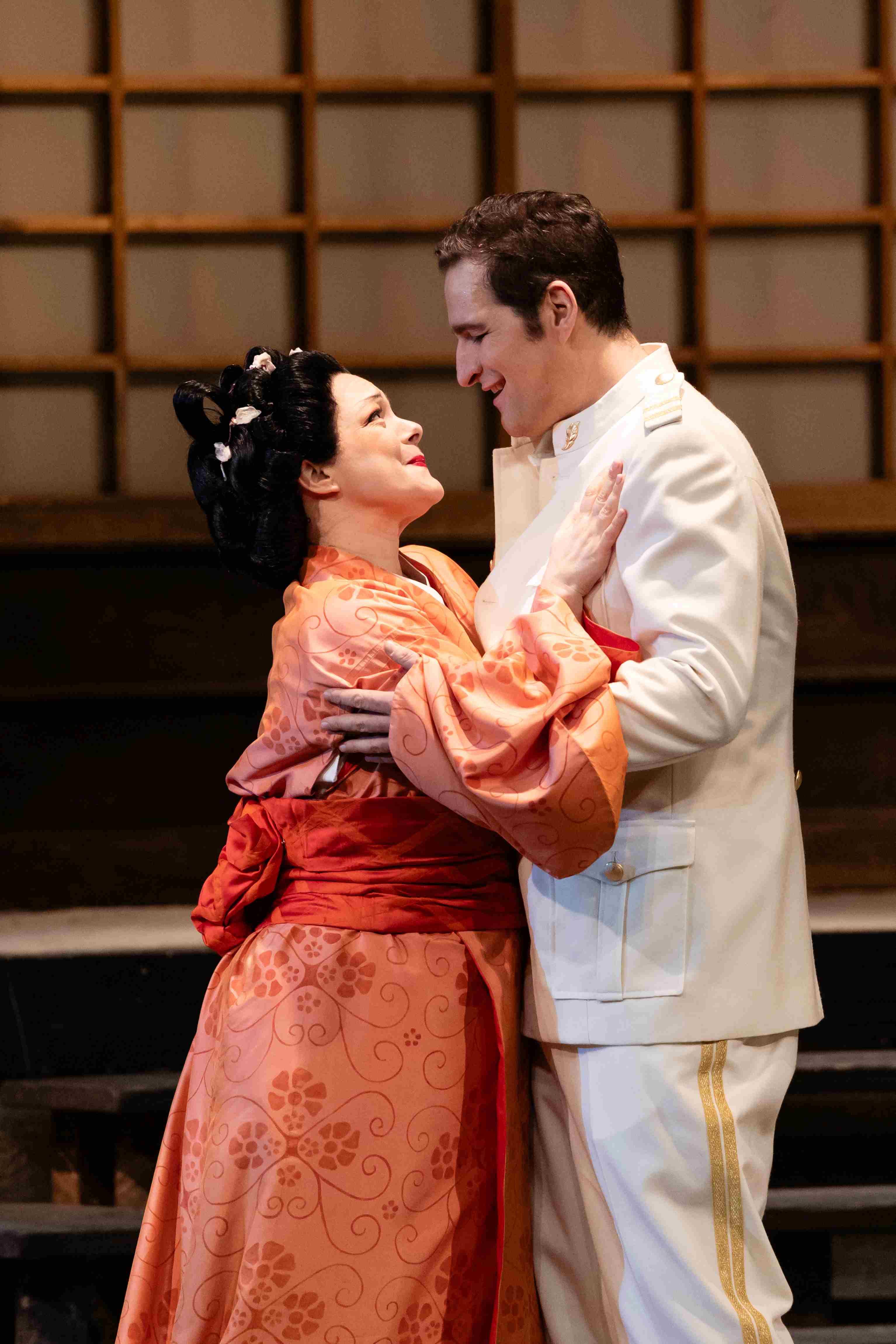
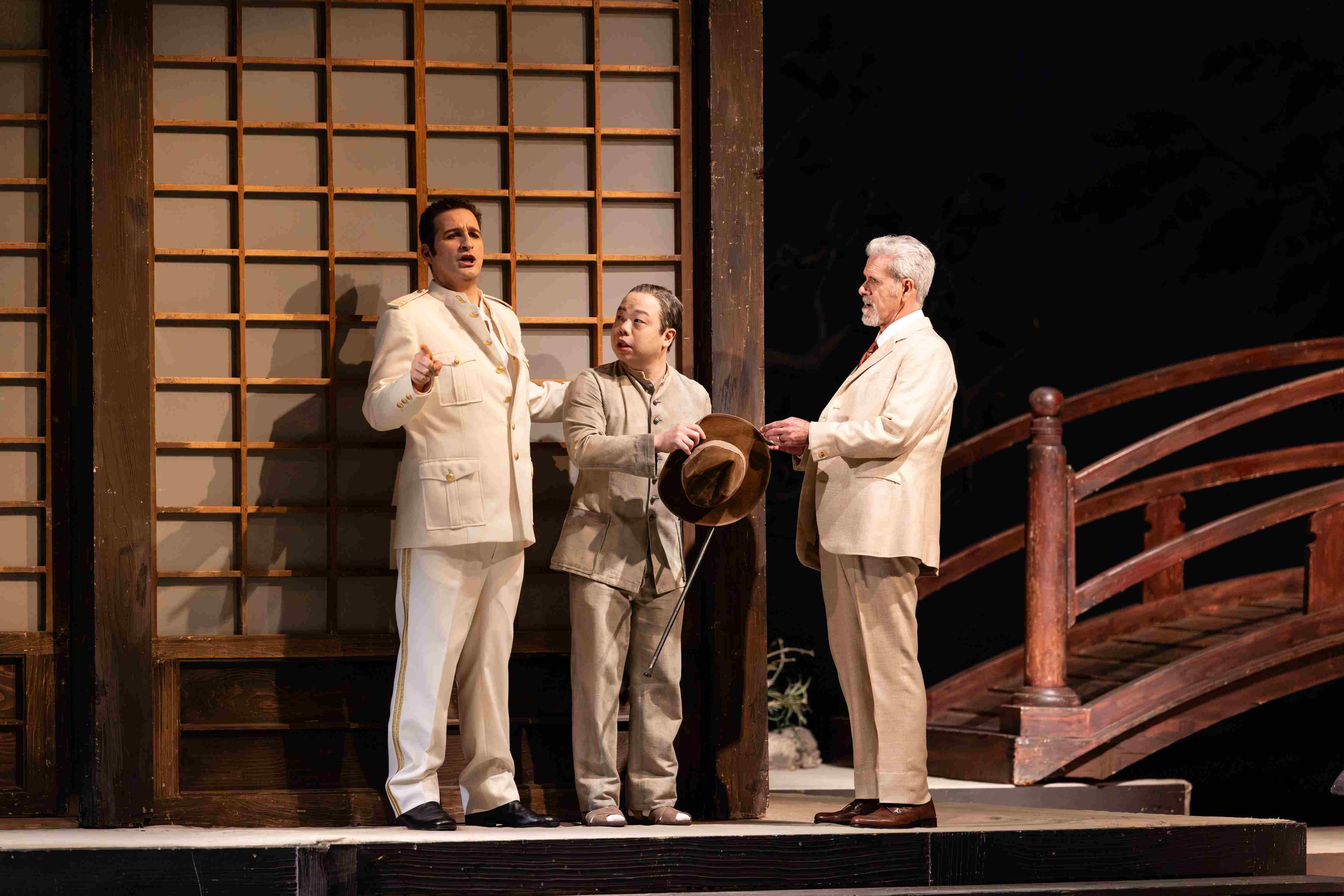
Massi gave us a handsomely-sung Pinkerton, the voice full of sunny Italianate warmth. His open, full-throated singing gave much pleasure. He used the tone intelligently, lightening it almost, to remove the heroism from the sound and illustrate Pinkerton’s relative weakness and seediness. Massi was also a sensitive partner to Buratto in the big Act 1 duet. Lucio Gallo was in much fresher voice this evening than on the previous occasions I have heard him. His Sharpless was, even in this classic staging, a complex and multifaceted character. He used his vocal and physical presence to warn Pinkerton of the consequences of the marriage, while his frustration in trying to give the news to Butterfly of her abandonment was also vividly illustrated through his use of text and physicality. Shannon Keegan sang Suzuki in a sunny mezzo with a free vibrato. Next to her colleagues, however, her diction was foggy, the lack of pointing of the words gave a more generalized reading of the role that felt vague.
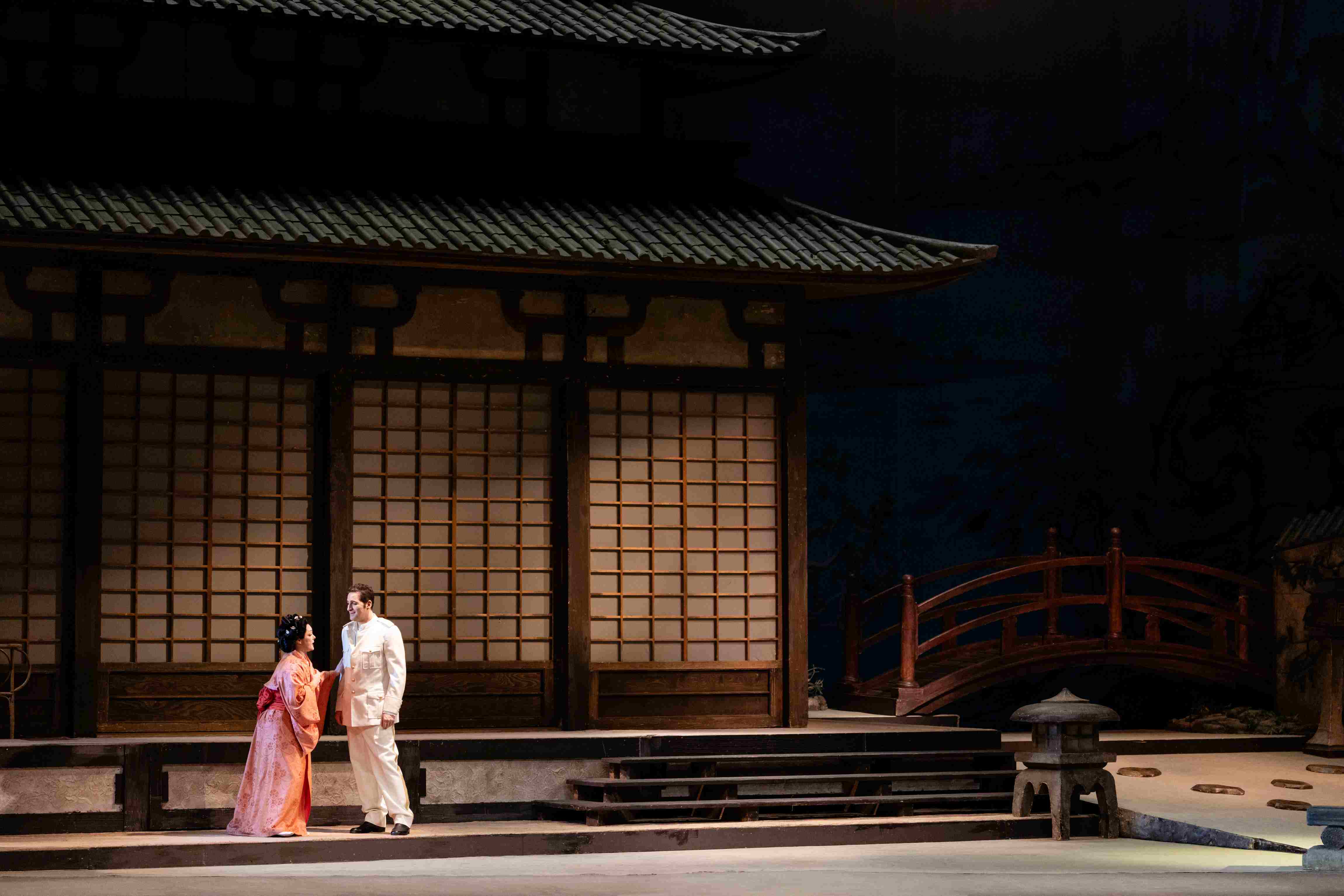
In the supporting roles, Huang Ya-Chung sang Goro in a bright, forwardly-placed tenor and excellent Italian, the words and text so vividly pointed. Ivo Stanchev boomed impressively as the Bonzo, while Armand Rabot displayed a handsome baritone as the Commissario. In his brief cameo as Yamadori, Christian Rieger sang his music in a distinctive, nutty baritone, while Lucy Altus was a confident Kate Pinkerton. The chorus, prepared by Franz Obermair, sang with tight ensemble, even if it felt that there were some disagreements on the exact nature of the pitch in the sopranos.
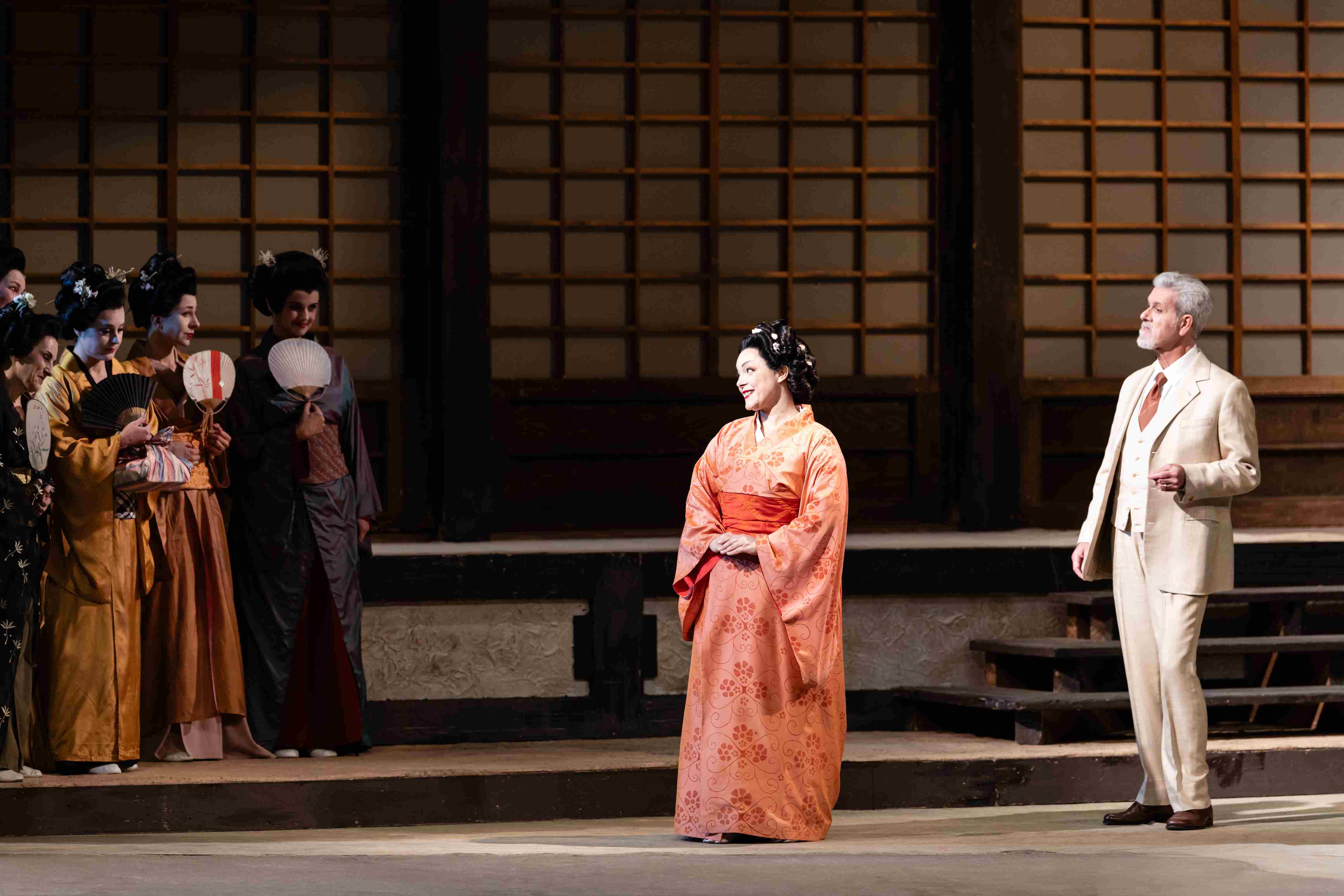
And then, there was Buratto. As soon as she appeared on stage, she sang Butterfly’s music with limpid, creamy beauty. There’s something about the way she phrased the music, she did so in the most idiomatic way, showing a deep and profound understanding of the style that simply cannot be learned, it’s lived. The combination of her soprano of great pulchritude, her generous legato, and complete and total identification with the text became something much more than someone singing a role – it touched the soul directly. Buratto cut through the ancient staging, the choppy conducting, and somehow transcended it all to take us and transport us deep into Butterfly’s optimism and subsequent despair. I could describe at length in a clinical way how she does it. The way Buratto knew how to phrase those Puccinian lines, where to open up the voice and where to pull back – but the effect is far from clinical, it’s deeply emotional. In an operagoer’s life, there are some assumptions of a role that mark one’s course of decades of sitting in a theatre. Tonight, Buratto gave us one such assumption. I watched someone truly live a role, by demonstrating a complete and total command of its physical manifestation, of its musical line, and touched us through such profound psychological understanding of the text. I very much hope I can see Buratto take on the role again soon in a new production with a great director.
This might have been a repertoire performance at this historic house but it was lifted up by a glorious assumption of the title role from a soprano who tonight hit greatness. I could dwell on the less satisfying aspects of the evening, but these were completely and utterly eclipsed by Buratto’s staggering incarnation of this iconic role. The audience response at the close was ecstatic for Buratto at her solo curtain call, and was indeed positive for the entire cast.

