Mascagni – Iris
Osaka – Samuele Simoncini
Iris – Iwona Sobotka
Kyoto – Manel Esteve Madrid
Il Cieco – Mariano Buccino
Una Guècha – Albina Tonkikh
Il cenciaiolo – Didier Pieri
Un mercialolo – Luigi Della Monica
Un cenciaiolo – Damiano Colombo
Un cenciaiolo – Alessandro Agostinacchio
Coro Teatro Regio Torino, Orchestra Teatro Regio Torino / Andrea Battistoni.
Stage directors – Daniele Menghini.
Teatro Regio Torino, Turin, Italy. Sunday, November 15th, 2026.
Following the productions of Cavalleria rusticana and I Pagliacci that opened the Teatro Regio Torino’s Verismo Festival last month, I returned to the house today to see this new staging of Mascagni’s Iris. As with Cav last month, it was confided to the directorial hands of Daniele Menghini and conducted by Andrea Battistoni. Iris is rarely performed and there’s a reason for that. The simplest explanation is that it covers similar ground to Madama Butterfly, which the latter does much better. Additionally, Mascagni’s orchestral and vocal writing lacks the fluency and sheer emotional impact of Puccini’s, while the plot of Iris is a difficult one for a twenty-first century audience to absorb, which immediately puts us at a distance from the titular protagonist.
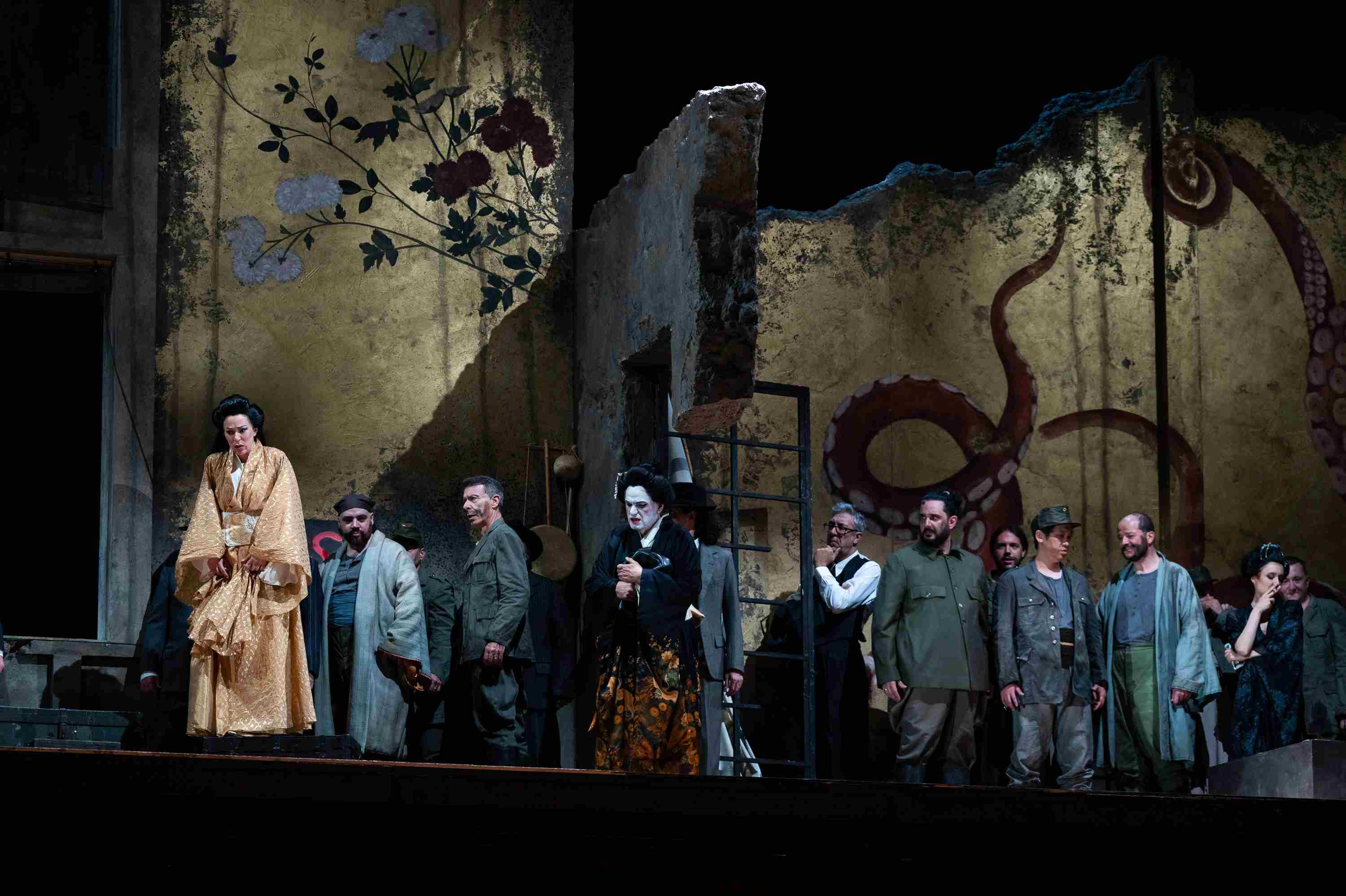
This lack of engagement with the protagonist was exemplified by Menghini’s staging, one that very much took the story at face value. It’s a simple yet harrowing tale: one of the innocent young Iris who’s abducted by the brothel owner, Kyoto, for the pleasure of the swaggering Osaka, from her home with her blind father, Il Cieco. Once she realizes her fate, she rejects Osaka’s advances and throws herself into a sewer, where she expires, eventually to be reborn as a flower. While the story is problematic and dated, primarily due to Iris’ lack of agency, and her status as an object of sexual desire for Osaka, exploitation for Kyoto, and dependency for Il Cieco, there is material here for an engaging and emotionally aware stage director to do something with. As the evening progressed, it made me reflect on Damiano Michieletto’s Madama Butterfly, which I saw in Madrid but actually originated here at the Regio. That was a superb and deeply affecting exploration of the horror of child sex tourism. Something that Menghini is not able here to achieve the emotional impact of.
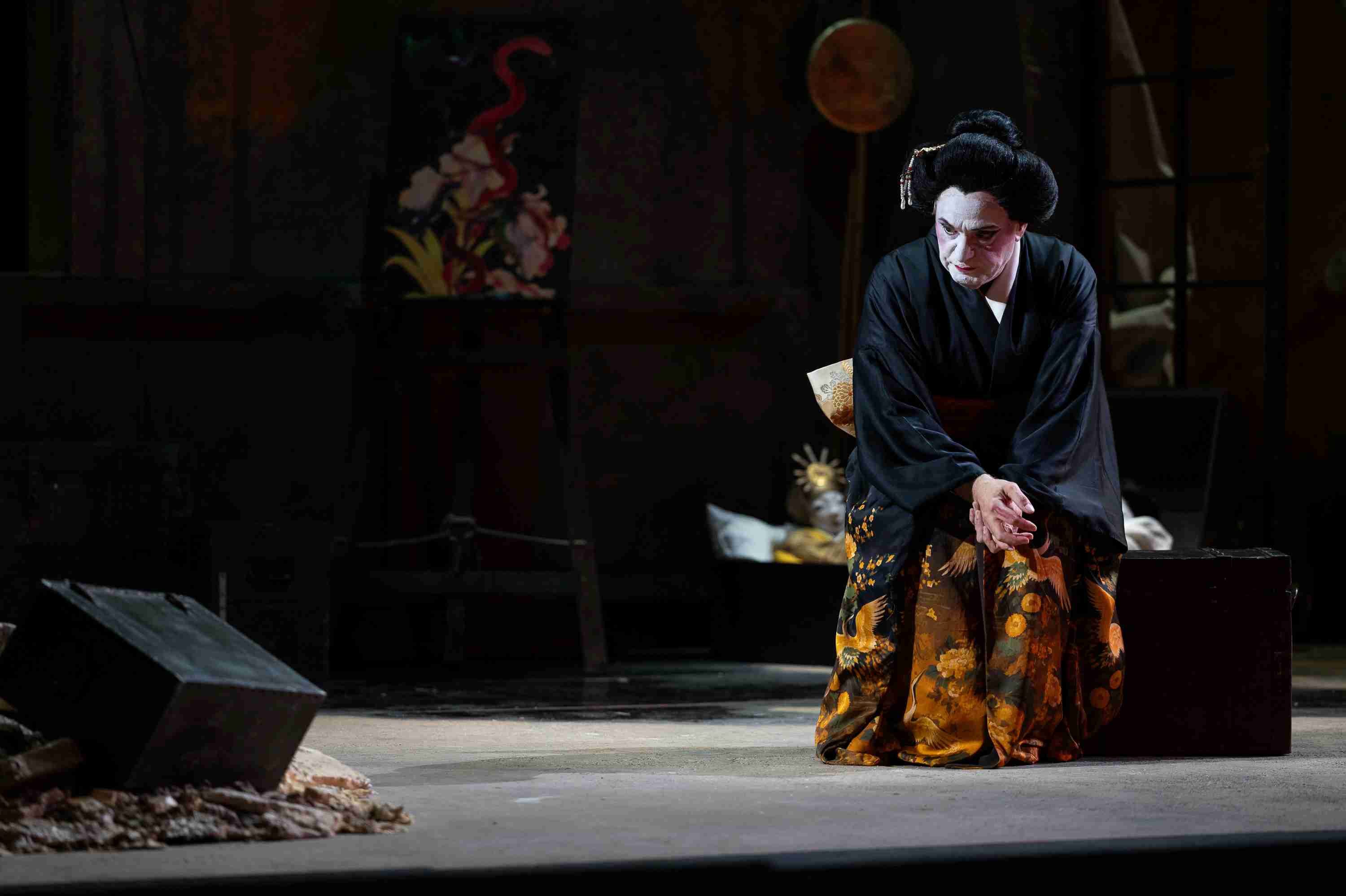
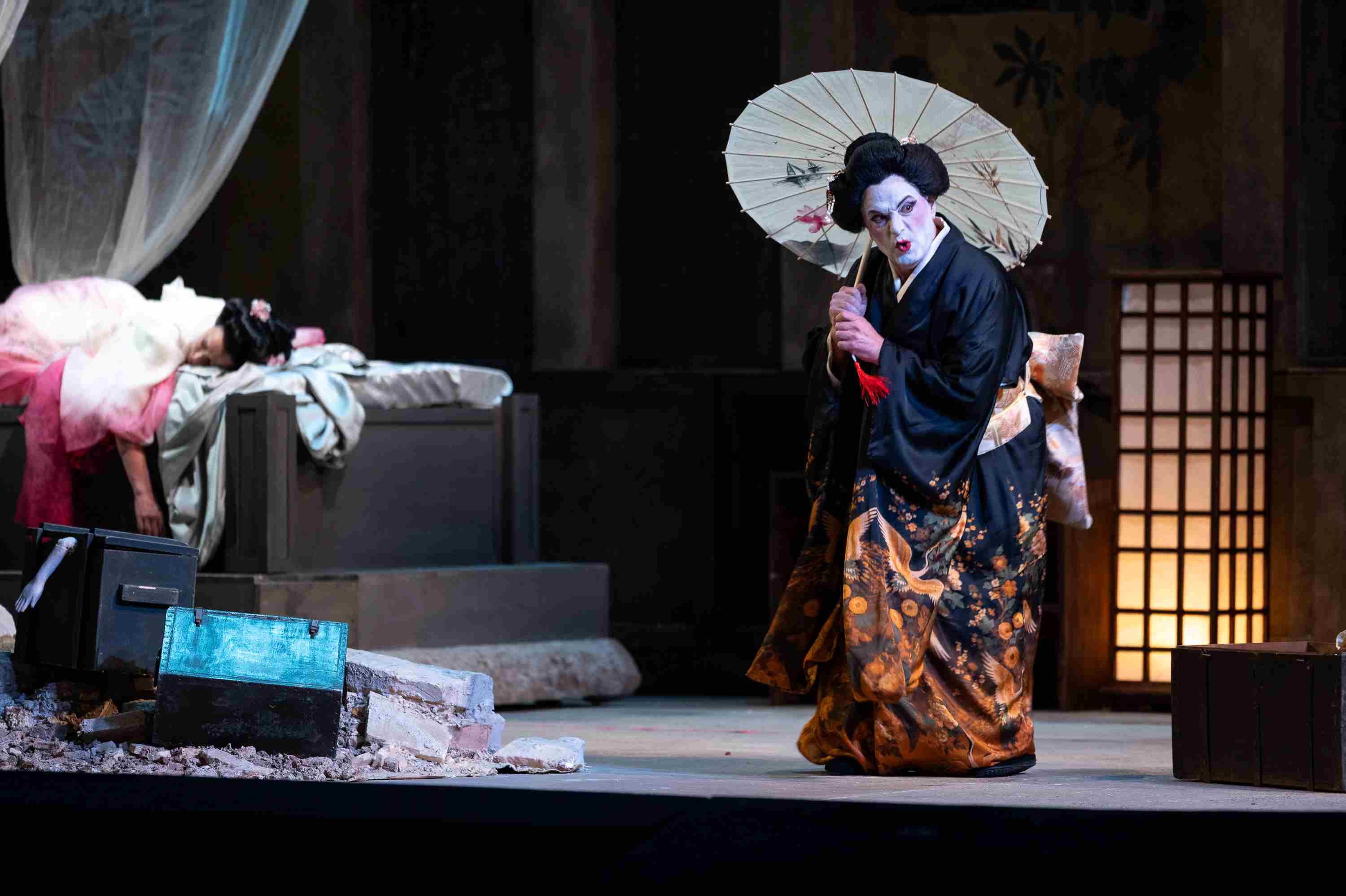
Instead, Menghini sets the action in a Japan that appears to be recovering from an atomic bomb attack. We could indeed be in Hiroshima in the ruined buildings that make up the set, by Davide Signorini. The costumes, by Nika Campisi, are a combination of Western and Nipponese dress, giving us a group of Caucasian singers dressed in Japanese garb. In addition to the principals, we see a ghostly figure who perambulates around the stage, although to what end it’s hard to know, nor is it clear who he is or what he represents. As with Cav, the chorus is simply parked on stage to emote, which does mean that the massive sound they create for both outings of the hymn of the sun, at the start and the end of the evening, is seriously impressive, although at the same time, I longed to see them as a group of vibrant individuals engaging within a collective whole. There’s a fair bit of stock operatic acting here, with arms outstretched to the front in passionate declamation. Yet despite all the effort from those on stage, the staging does make the audience feel at one remove from the story. Perhaps in so doing, Menghini is trying to echo the hieratic nature of Kabuki, for instance. The presence of Japanese-inspired marionettes certainly enhanced that element. The effect, however, at least on this spectator, is emotionally cold and keeps us at a distance from those we are watching.
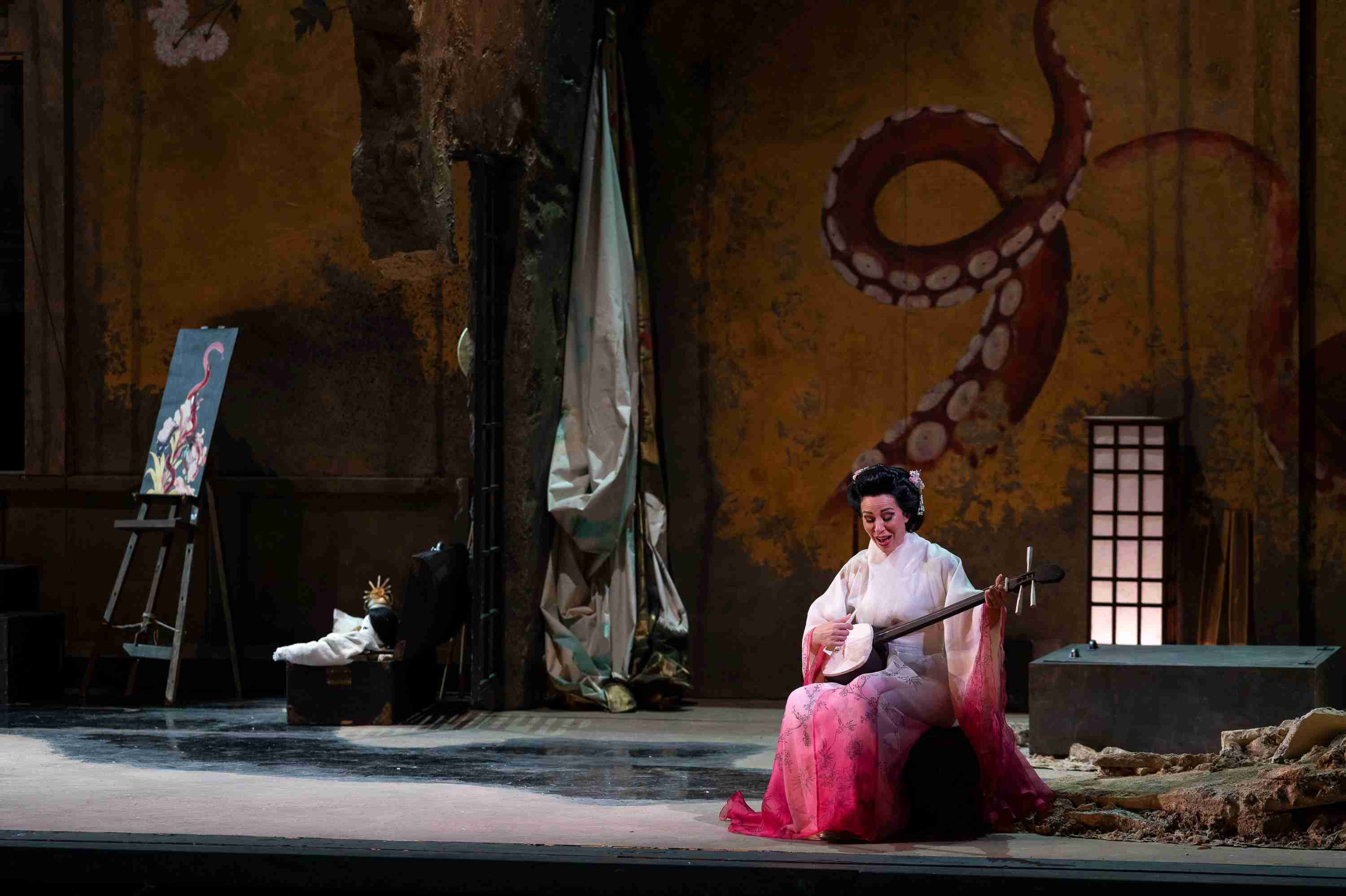
That said, there are two particularly successful moments. The first is when Iris flings herself out of the brothel window, Tosca-style. That was especially striking. The other was in the closing scene, with a single sunflower growing out of the devastation, only to be joined by countless more descending from the flies. For those few moments, one felt that the stage pictures were engaging with the music and the story – the closing scene was undoubtedly the strongest part of Menghini’s production.
Musically, the evening was in good hands under Battistoni’s direction. He clearly has the full confidence of his musicians, eliciting playing of the highest quality throughout the orchestra. Mascagni’s score alternates between big, brassy outbursts and moments of extreme delicacy. The solo strings of the Regio orchestra played with sweetness and beauty in the opening measures, while the exotic percussion and burbling winds were dispatched with a delicate attention to timbral colour. The brass didn’t put a foot wrong during the entire evening, playing with strength and focus. It’s fascinating to compare Mascagni’s orchestral writing with Puccini’s as, while Mascagni makes use of an extensive percussion section to create some sounds of the East, his music still feels profoundly European in its melodic language. The chorus, prepared by Gea Garatti Ansini, is unrecognizable from their form a year ago. They now sing with focused discipline, both in attack and in pitching – there wasn’t a single ragged entry from start to finish. They made a tremendous sound in the opening and closing hymns of the sun, filling the house in precisely the sonic blaze the music requires.
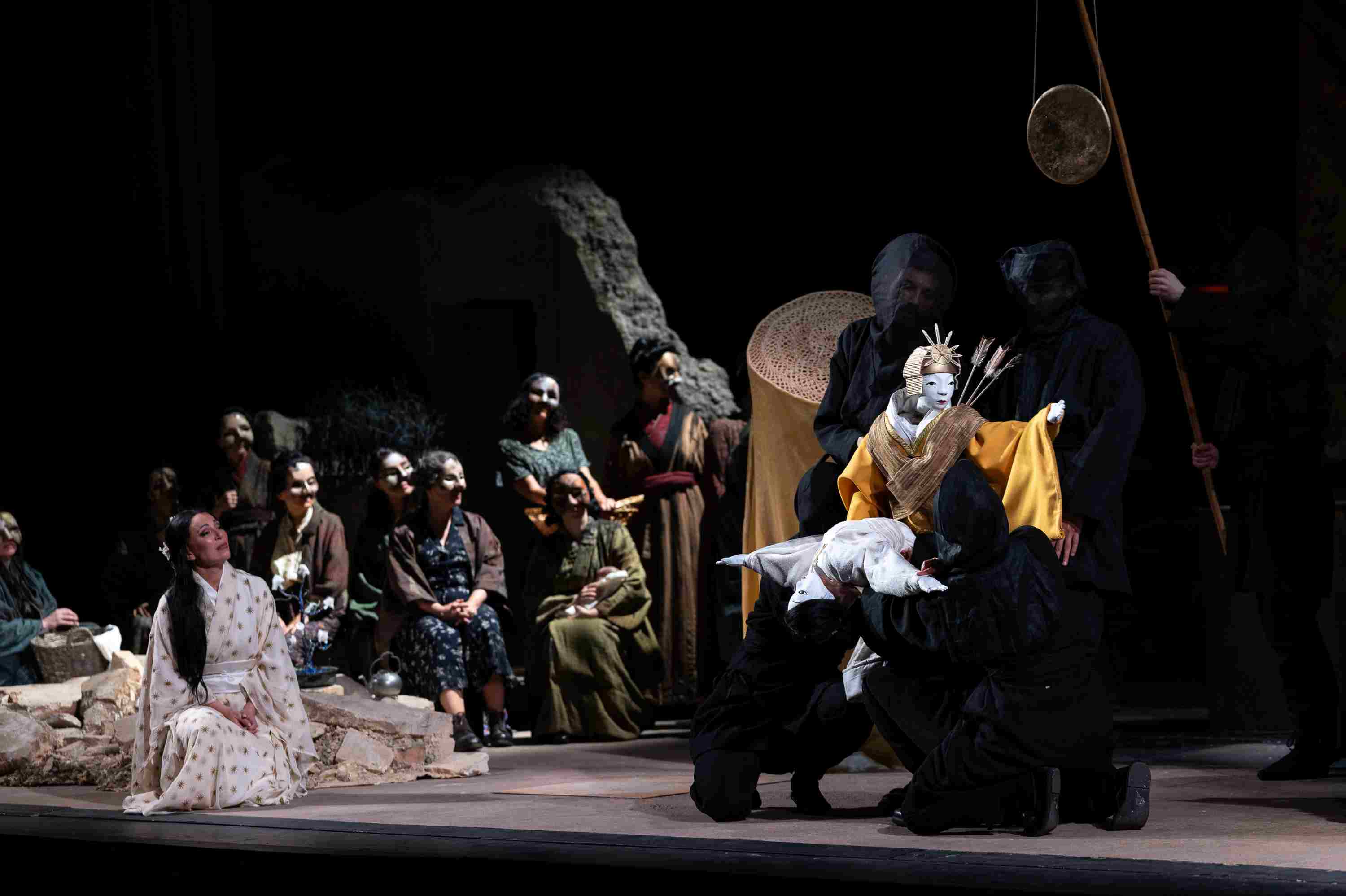
As is customary here, the principal roles were double-cast and this evening I saw the alternate cast to the one photographed. The title role was taken by Iwona Sobotka. It’s a huge sing, requiring a singer who can ride the orchestral tumult, while also being able to float on high with poise and elegance. Sobotka succeeded in both tasks with aplomb. Her soprano has easy reach, with a dusky exterior entwined around a creamy core. She has an easy top, although there were some signs of tiredness in the final act, with the spin that had some so easily earlier in the evening becoming less evident. Indeed, Act 2 is a massive sing for her, and she poured out reams of silvery tone into the house, pulling back and floating with exquisite beauty. I also appreciated how Sobotka paid full attention to the text, drawing out meaning and realizing it through the line.
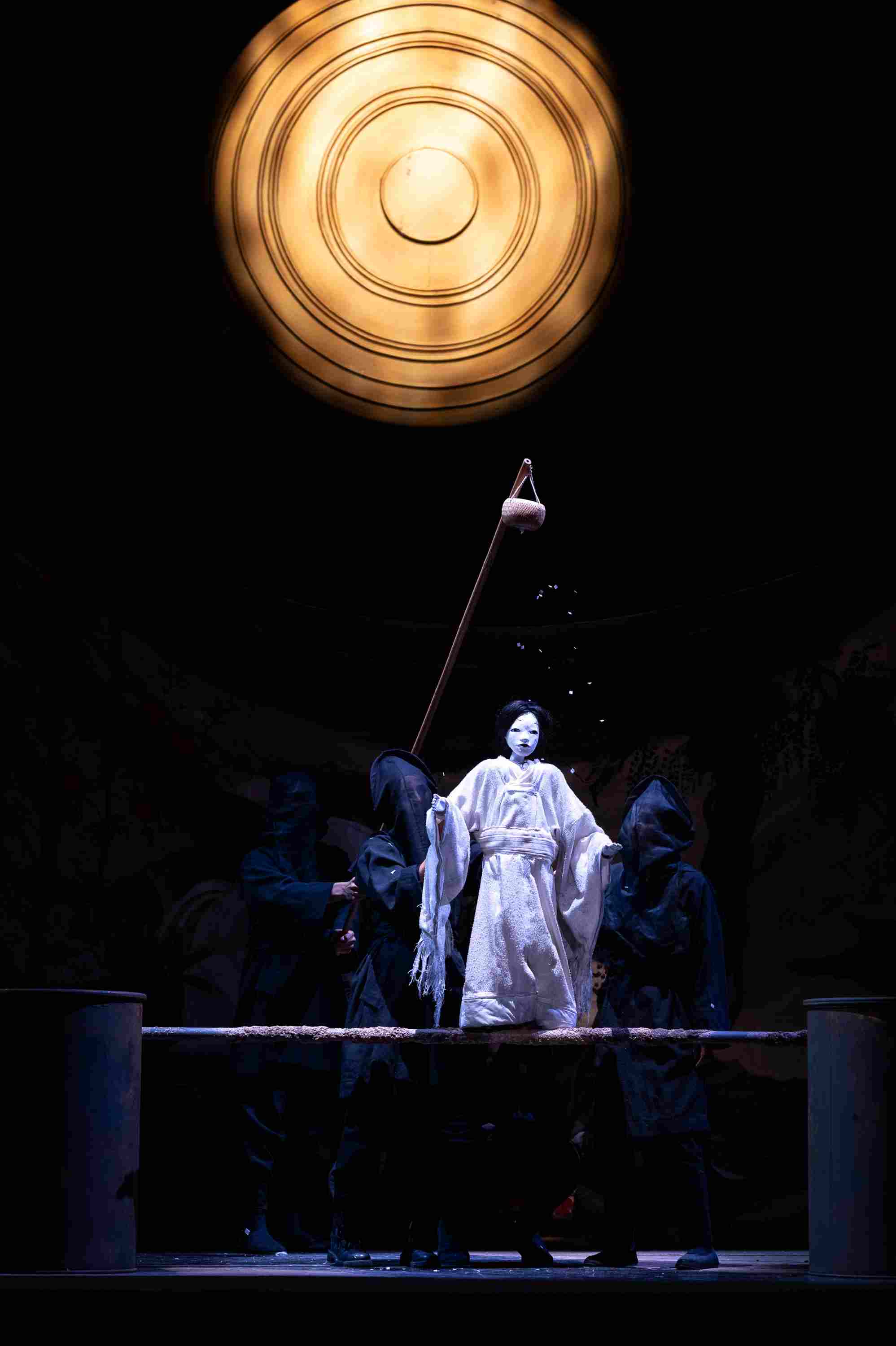
Osaka was taken by Samuele Simoncini, an experienced exponent of the role. His is a robust tenor, capable of considerable volume, which he was certainly not reluctant to deploy. It suited the role of the sexual predator well, although his tenor does have a tendency to succumb to gravity in the higher-lying lines. Manel Esteve Madrid sang Kyoto in a firm and healthy baritone. The voice lies high, almost tenorial in tone, while it’s also capable of a rich bottom when he descends down there. Esteve is a stage animal, with terrific presence, and impeccable diction, using the text to colour the tone and make it live.
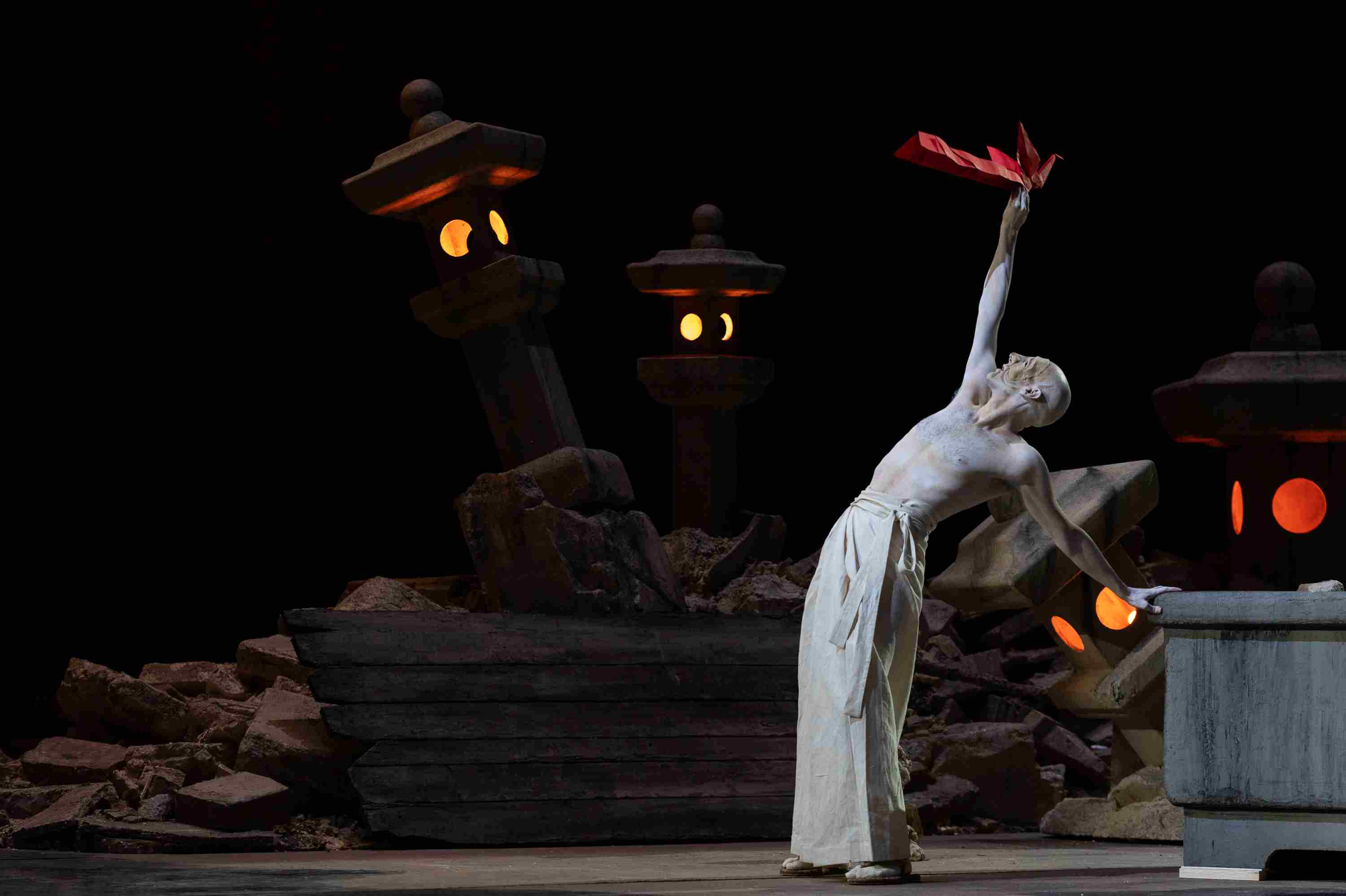
As Il Cieco, Mariano Buccino sang the role in a big, resonant bass, even of tone, and capable of genuine feeling in the way he shaded the words. Albina Tonkikh, a member of the Regio’s young artists’ program, sang the role of Una Guècha, which she did in an elegant and rosy soprano, with an admirable legato. She also had a charming vocalise at the start of Act 2, which she sang with genuine poetry. In the short, but crucial, role of Il cenciaiolo, Didier Pieri sang his music in a bright, forwardly-placed and healthy tenor, making one wish he’d been given more to do. The remaining brief roles reflected the excellent quality one has come to expect at this address.
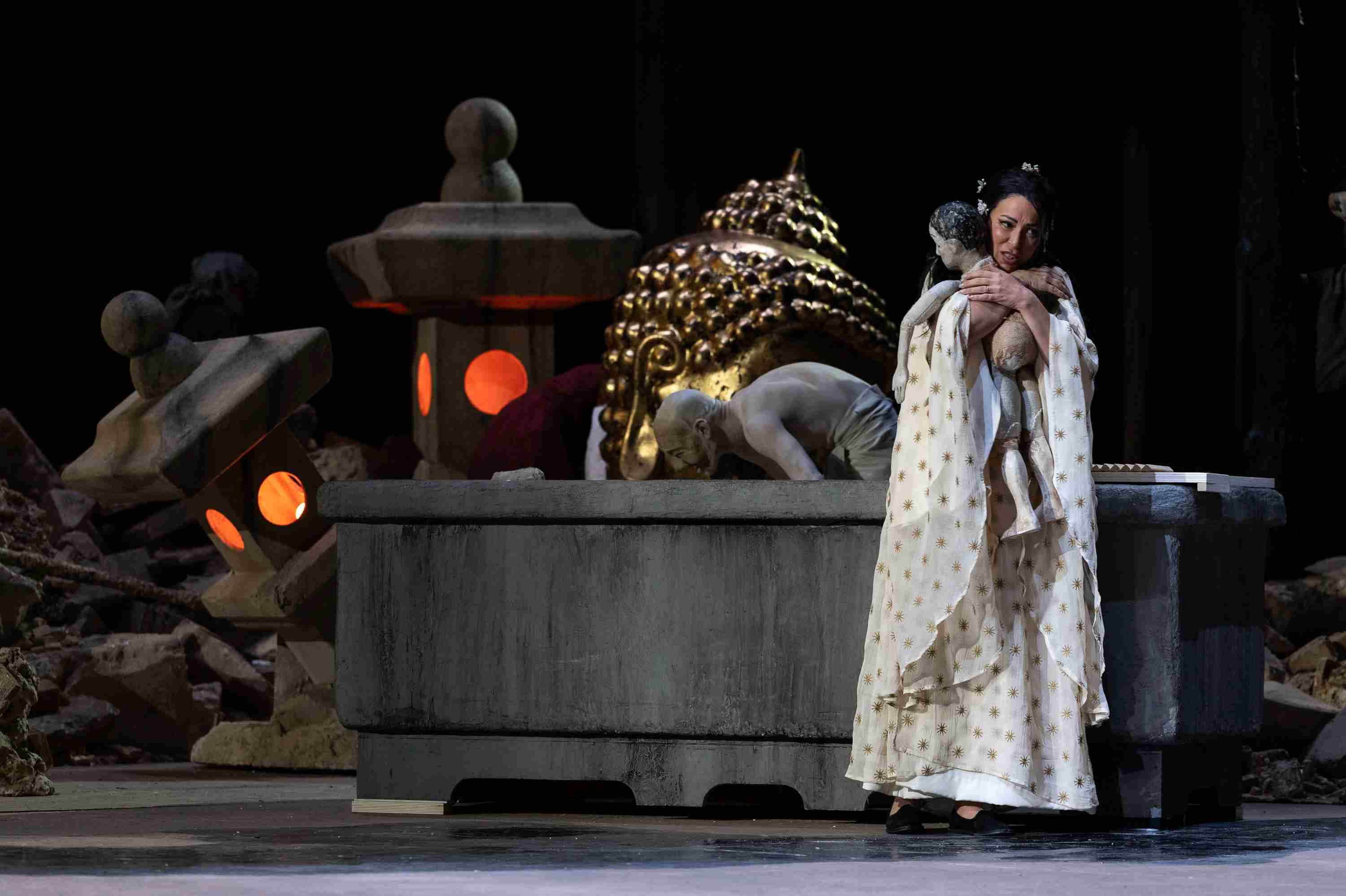
Gratitude is certainly due to the Teatro Regio for giving us the opportunity to see Mascagni’s opera as part of its Verismo Festival, particularly as it was performed at an extremely high musical level. Menghini’s staging does have some insight, but takes a difficult story at face value when one longed for him to explore it and draw out meaning and emotion. Battistoni’s orchestra was superb and the chorus sang as if renewed. The audience response both during and at the close of the performance was generous, with particularly loud cheers for Esteve and Sobotka during their curtain calls.

