Campogrande – Olympia
Olympia – Isidora Moles
Jean-Paul Dupont – Francesco Castoro
Professoressa Sherry Hope – Silvia Beltrami
Ingegnere Lamberto Spallanzani – Stefan Astakhov
Zoltan – Eugenio Di Lieto
Coro del Teatro Comunale di Bologna, Orchestra del Teatro Comunale di Bologna / Riccardo Frizza.
Stage director – Tommaso Franchin.
Teatro Comunale di Bologna – Comunale Nouveau, Bologna, Italy. Friday, May 15th, 2026.
A world premiere is always an exciting moment in the history of a theatre, particularly when the work is of a composer one had not previously come across. Tonight, the Teatro Comunale di Bologna premiered Olympia by Nicola Campogrande, one of the most notable active Italian composers. He and his librettist, Piero Bodrato, have taken the Olympia of ETA Hoffmann fame and transformed her into a twenty-first century version, focused on technological developments and artificial intelligence gaining human consciousness. The Comunale has clearly lavished considerable resources on this production, by Tommaso Franchin and conducted by Riccardo Frizza, and tonight’s premiere was the first of three shows over the next few evenings.
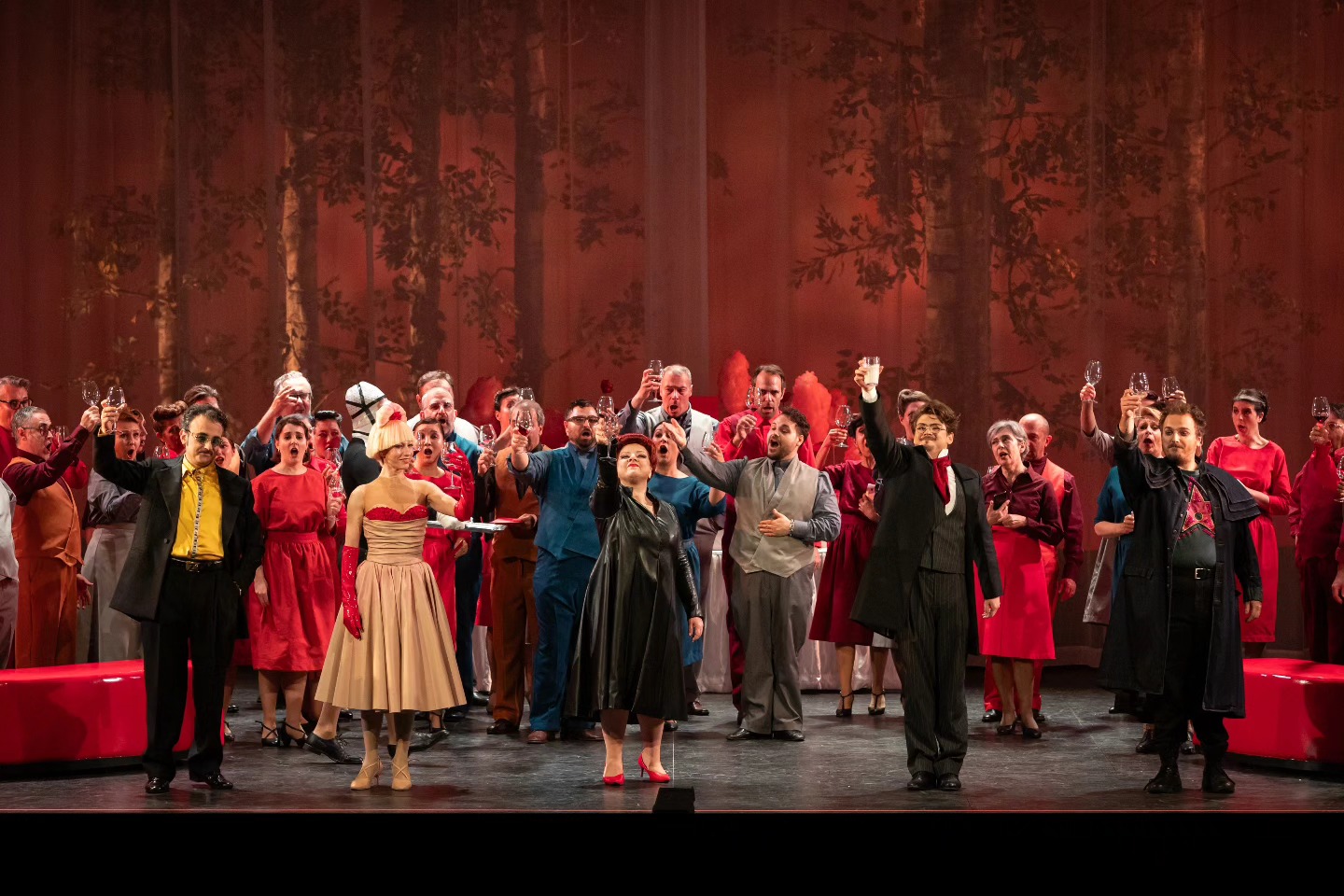
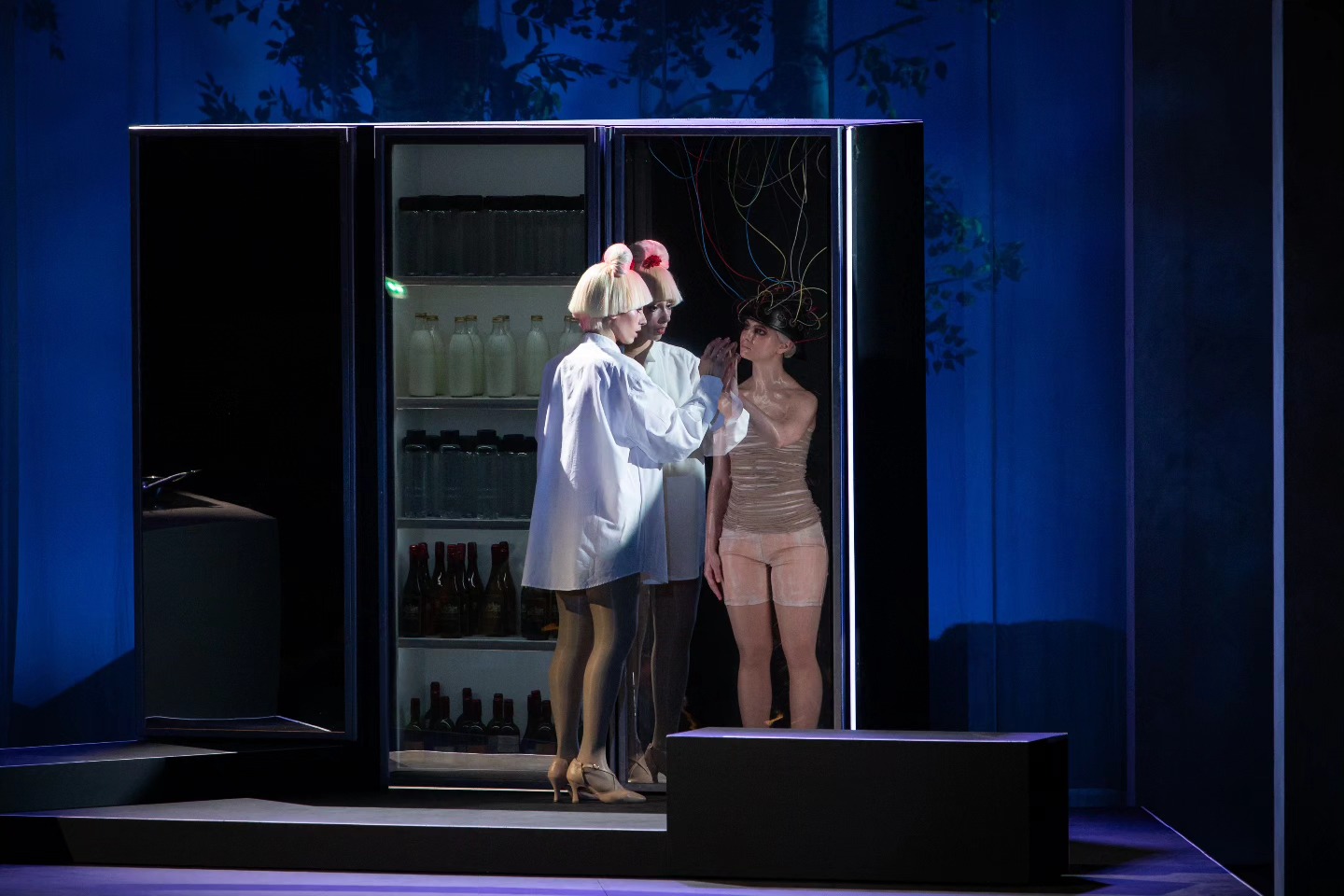
Bodrato’s libretto is an extremely well-written one. He might pepper his text with technological terms and snatches of English, yet it never feels hackneyed or clichéd. Instead, it feels utterly cogent and engaging. He shows us how the android Olympia, the creation of Spallanzani, becomes aware of her artificial existence, after a party guest compares to a smart refrigerator, and gradually rebels against her creator, finding, by the close of the evening, an entrepreneurial willingness to create further androids. Bodrato frames the action through the addition of a chorus of scientists, Spallanzani himself, and a further four other principals – Olympia, Sherry Hope, a Scottish academic who brings the philosophical considerations, her husband Jean-Paul Dupont a rather naïve Belgian who sets off the train of events by comparing Olympia to the fridge, and Zoltan an entrepreneur who represents the capital behind the Olympia project. Through the course of the ninety minutes of music, we engage with both a reflection on the nature of artificial intelligence, but also with its human implications. It sounds like a lot, but somehow Bodrato and Campogrande make it work by never hammering the point home, but instead making their characters so eloquent and believable.
Much of this is also due to the music. This isn’t an opera based on atonal noisiness and wide vocal leaps. Instead, the harmonic language sounds like the Puccini of Il trittico, meets Disney, with a dash of 1960s lounge. It’s a score that brings the listener in, one that engages as much as the libretto does. The vocal lines are also well-written, no awkward leaps here. Instead, the lines are eminently singable. That said, some of the writing for the baritone role of Spallanzani in the first act was rather punishing. Perhaps in order to illustrate Spallanzani’s optimism for the future in Act 1, Campogrande sets the lines high up in the voice with repeated high Gs. Later, as Spallanzani becomes more despondent, the tessitura sits lower. In Act 1, there’s a charming number for Olympia, written like a seductive beguine, that’s almost indecently raunchy and is one that deserves to become a party piece for coloratura sopranos everywhere.
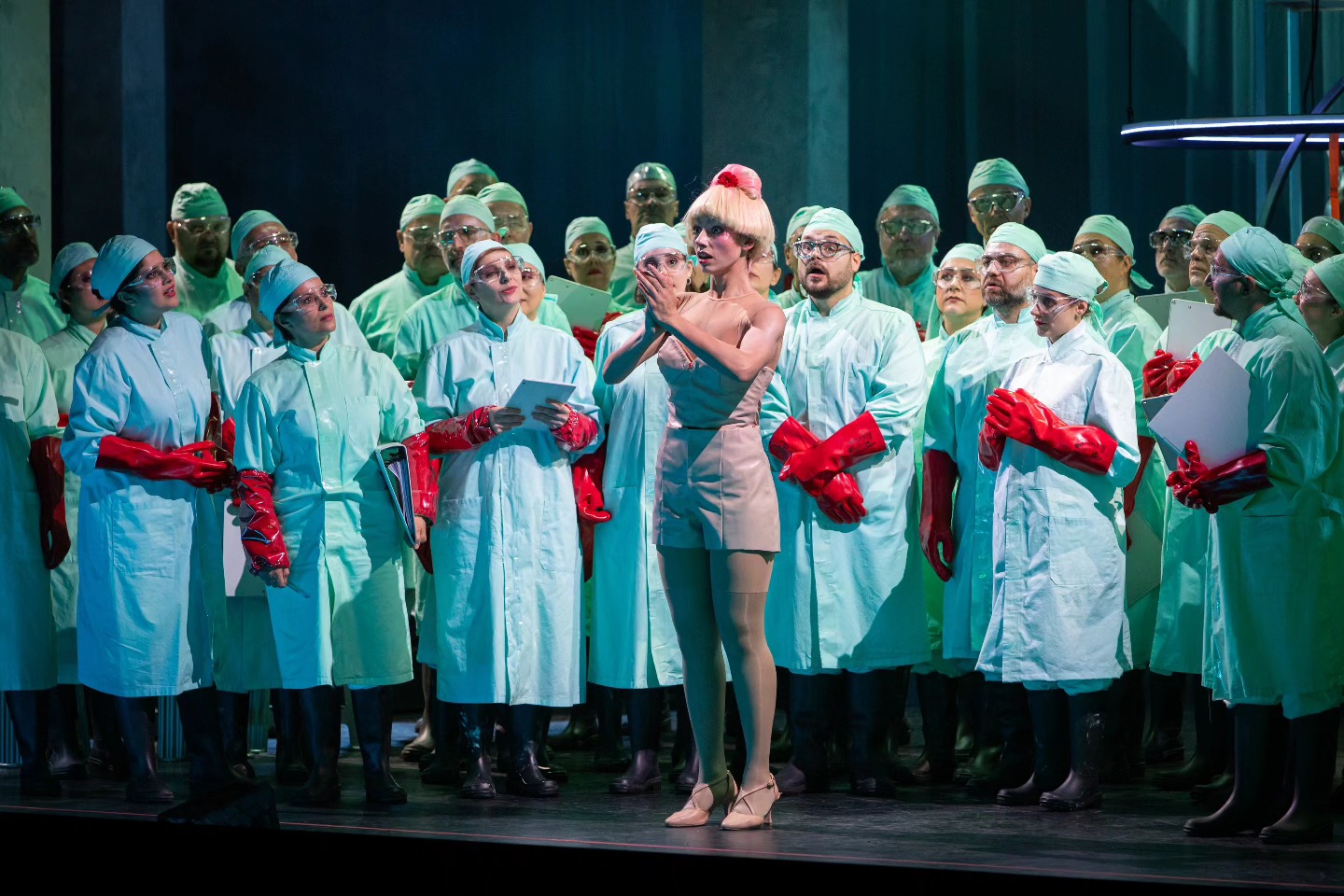
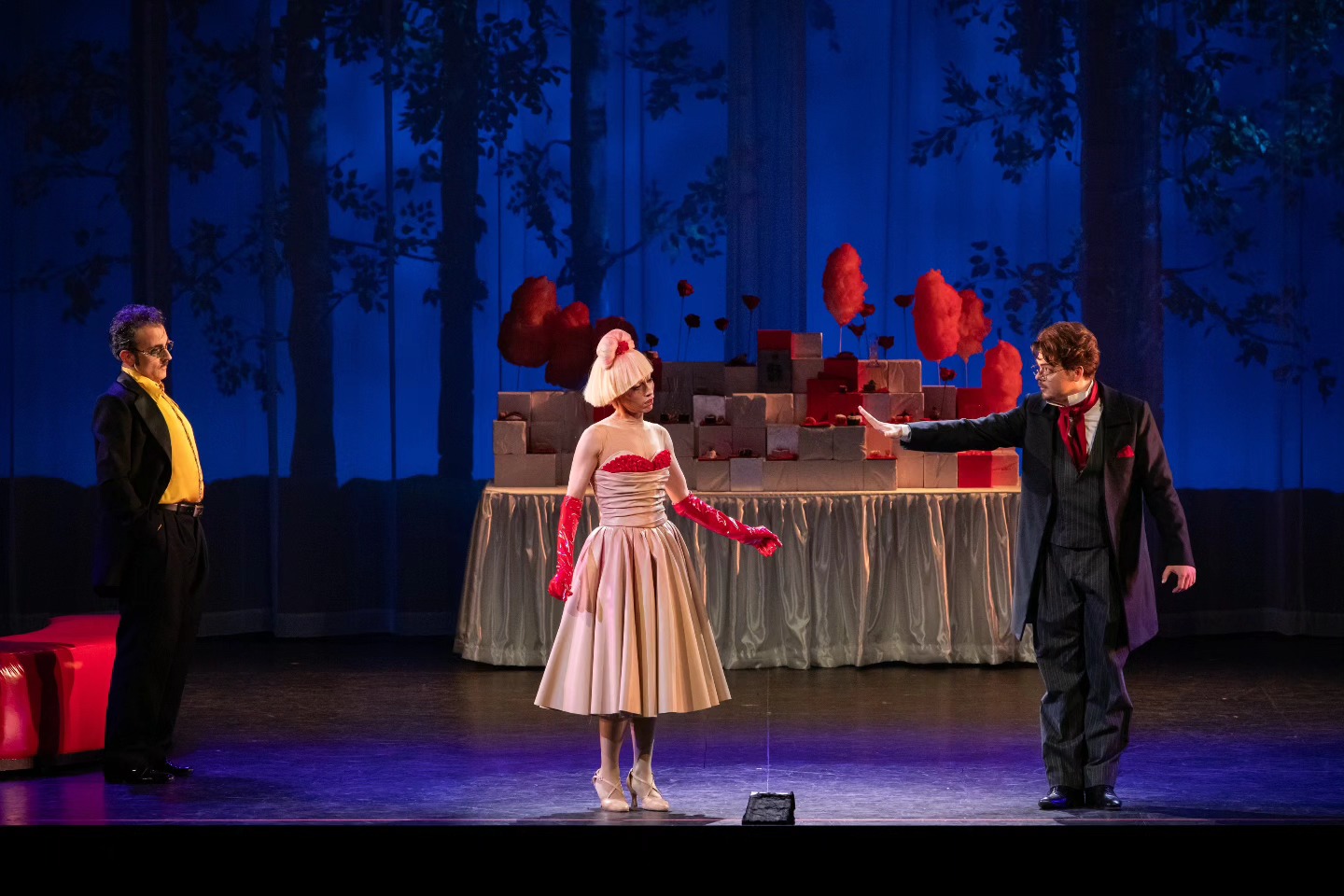
Franchin’s staging looks great, with sets by Fabio Carpene and costumes by Giovanna Fiorentini. The creative team rise to the challenge of creating this technological environment, complete with the smart fridge, setting the action in Spallanzani’s lavish apartment, while also setting the first half of Act 2 in a supercomputing centre. As with the music and libretto, Franchin’s staging focuses on creating believable relationships, so that even with a story as fantastical as this, the characters and their motivations are always clear. The chorus is also moved around the stage with assurance, never just parked on stage, instead creating a group of recognizable individuals within a corporate group.
Frizza led this superb orchestra on luminous form. Even within the difficult acoustic of the temporary theatre, which fortunately the house leaves this summer, he obtained a wide range of orchestral colour from the band. He obtained a wonderfully soupy string sound, while also allowing the large percussion section to drive the action through its rhythmic impetus. The rapid-fire writing for the winds, redolent of a computer working, was dispatched with aplomb, and the wonderfully seductive horn and wah-wah trumpets in the beguine were simply irresistible. The chorus, now under the direction of Giovanni Farina, continued to exemplify the exceptional standards set by his predecessor. I did find Campogrande’s writing for them, in close harmonies, didn’t give them the opportunity to show what they’re really capable of. It was well written, in big blocks of sound, but it was like watching a Maserati drive gingerly around a 20 kilometre per hour zone – I would just have loved to have heard some choral writing that stretched and tested these incomparable singers.
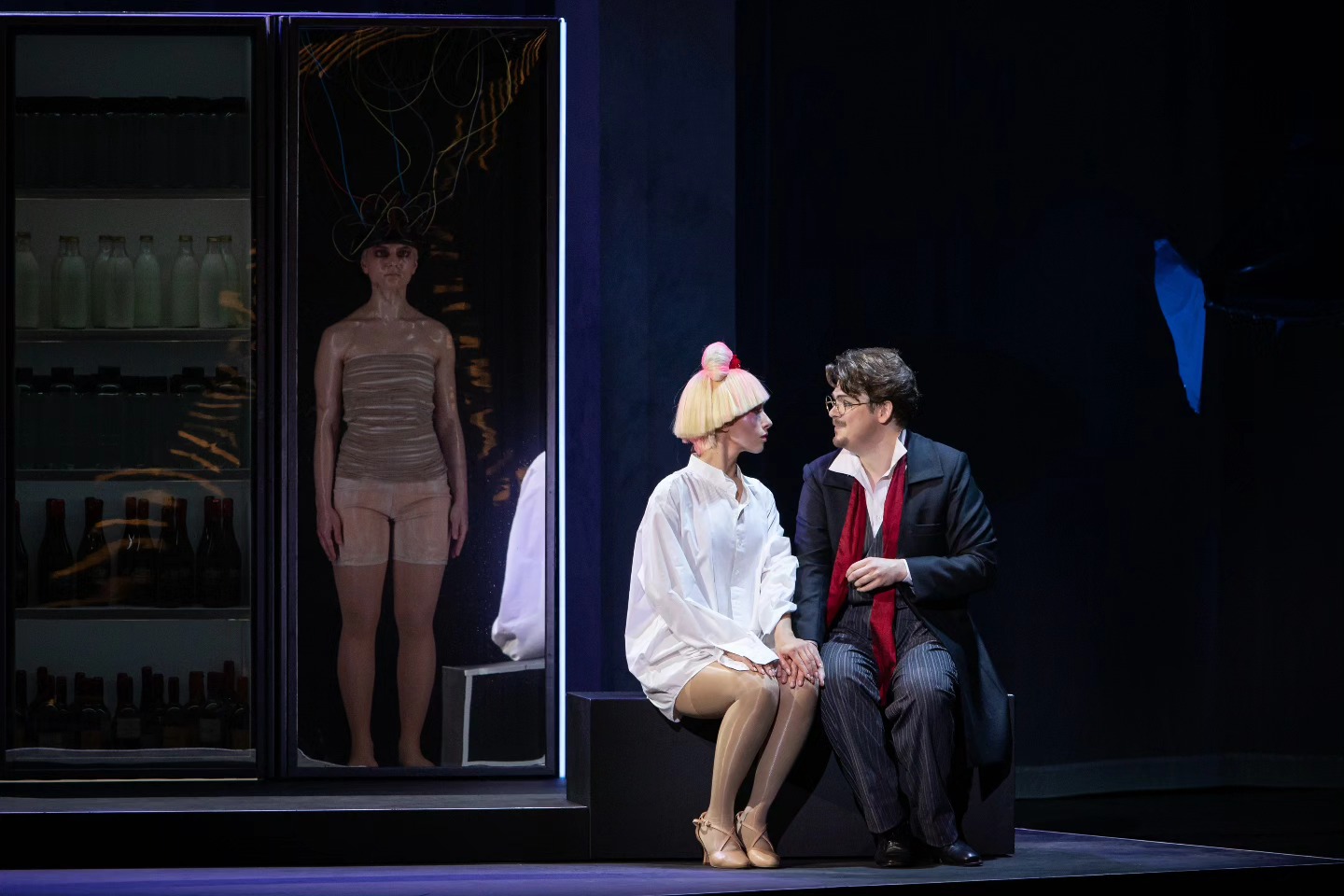
Stefan Astakhov coped extremely well with the high-lying writing for Spallanzani. He’s still exceptionally young, in his late twenties, but he has an assurance and technical command that belies his young age. His baritone is firm and focused in tone, able to reach into the theatre with ease, the text always clear and filled with meaning. Astakhov mapped Spallanzani’s journey most convincingly, using the shape of Campogrande’s lines to illustrate that change from optimism to jadedness that marked his character’s trajectory. Isidora Moles sang Olympia with a grateful line, her soprano blessed with an impeccable legato, the registers always even. Her beguine was dispatched with seductive charm, combined with an irrepressible smile to the tone made her character even more compelling. Later, as Olympia grew in authority and humanity, Moles brought further colours to the voice, filling it out from iciness to creaminess. A new name to me but one I look forward to hearing again soon.
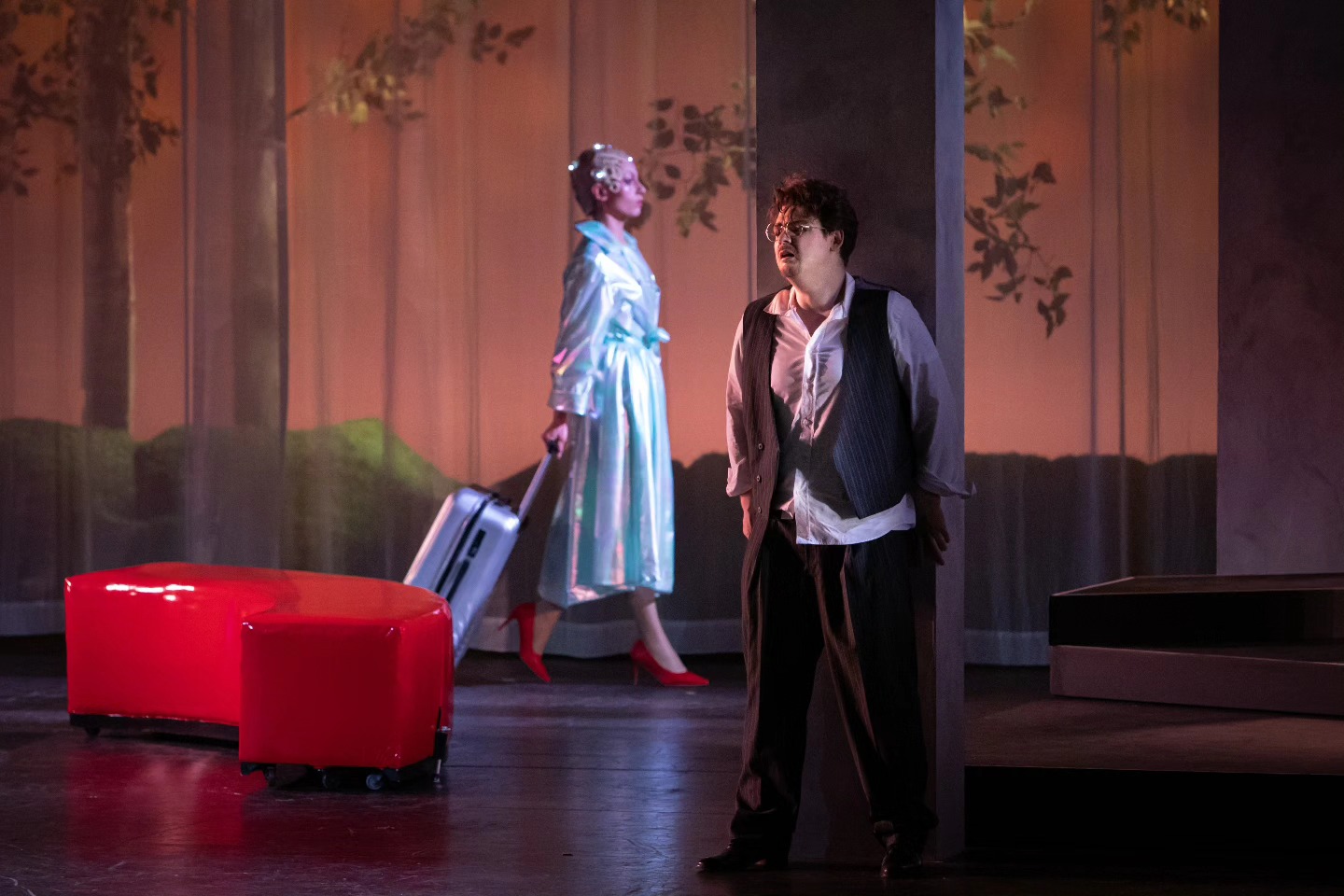
Silvia Beltrami brought her customary musicality to the role of Sherry Hope. Her trumpeting chest register was very much on display, but as is frequently the case, the middle lacked amplitude and the register break was apparent. Beltrami did however bust some impressive dance moves and her stage presence was vibrant. I was particularly impressed by Francesco Castoro’s tenor in the role of Jean-Paul Dupont. Campogrande has gifted him with some extremely grateful writing, lines which allow his bright, forward tenor to soar with ease. Castoro took the challenge in his stride, pouring out streams of silvery tone in an immaculate legato. As Zoltan, Eugenio Di Lieto sang his music in a firm, stentorian bass, as with his castmates always with the words nicely forward.
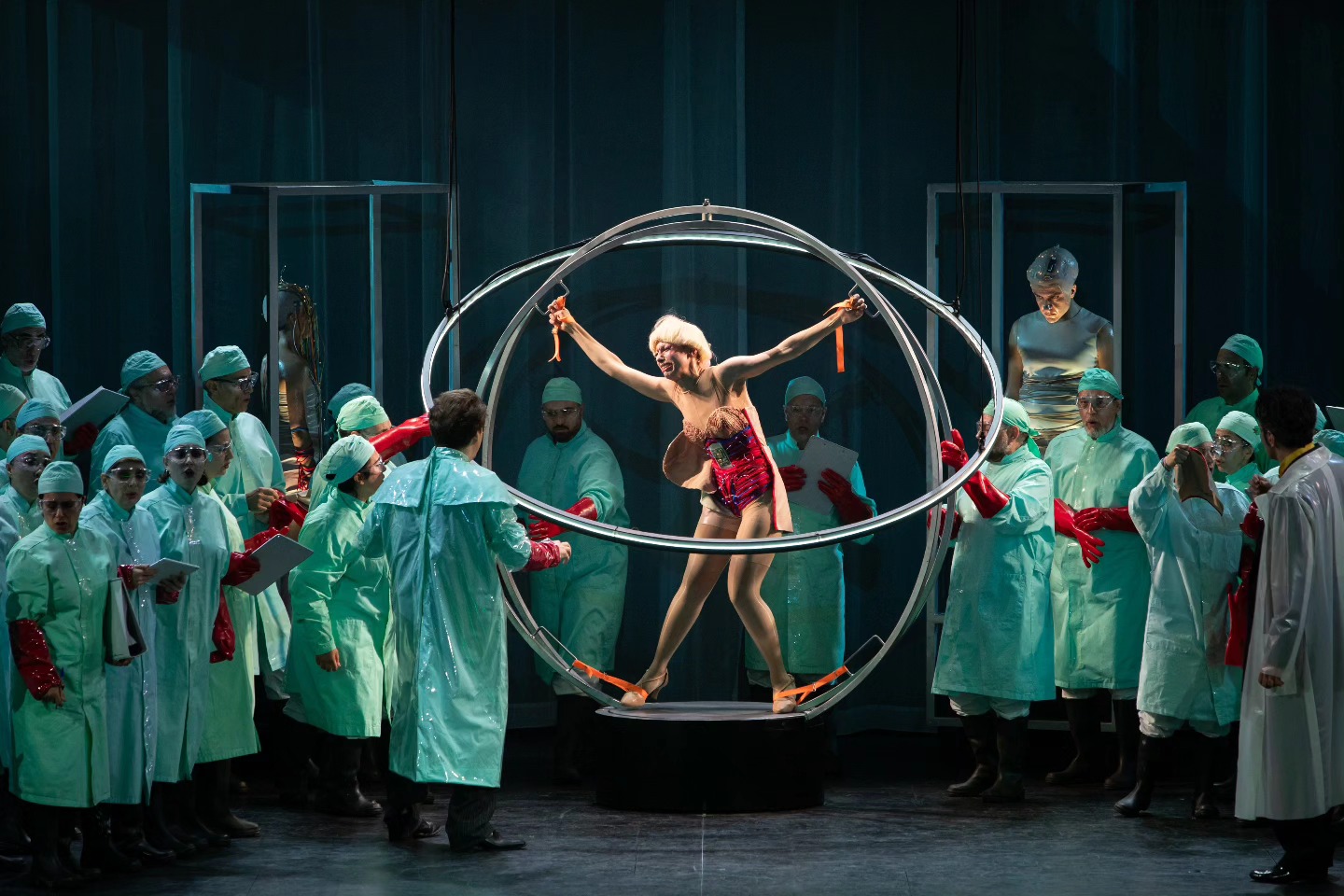
This was a highly entertaining evening in the theatre and an opera that deserves to be more widely seen. Campogrande and Bodrato have created a work that is very much of today, yet doesn’t feel gimmicky or clichéd. Instead, it’s driven by the characters, within a musical language that’s open and accessible, with a wealth of melodic influences that are put to the service of the drama. There are so many musical phrases from the work that stay in the memory – and that are likely to stay there for quite some time. It was performed at the highest level by the Comunale forces, in a staging that matched the strength of the work in its engagement. The audience reception at the close was warm for the entire cast.
 operatraveller.com