Verdi – Il trovatore
Il Conte di Luna – George Petean
Leonora – Eleonora Buratto
Azucena – Clémentine Margaine
Manrico – Yusif Eyvazov
Ferrando – Marko Mimica
Ines – Rocío Raus
Ruiz – Fabián Lara
Coro Titular del Teatro Real, Orquesta Titular del Teatro Real / Nicola Luisotti.
Stage director – Francisco Negrín.
Teatro Real, Madrid, Spain. Thursday, July 16th, 2026.
Verdi – Il trovatore
Il Conte di Luna – Artur Ruciński
Leonora – Marina Rebeka
Azucena – Ksenia Dudnikova
Manrico – Piotr Beczała
Ferrando – Krzysztof Bączyk
Ines – Rocío Raus
Ruiz – Fabián Lara
Coro Titular del Teatro Real, Orquesta Titular del Teatro Real / Nicola Luisotti.
Stage director – Francisco Negrín.
Teatro Real, Madrid, Spain. Friday, July 17th, 2026.
It was Caruso who said that for Il trovatore, one needs the four finest singers in the world. The Teatro Real has gone one better for this run of Francisco Negrín’s 2019 production. The house has assembled several casts featuring some of the most prominent Verdians in the world currently. When Eleonora Buratto was announced as a last-minute replacement for an Anna Netrebko suffering from vocal exhaustion, and with a couple of days free, I knew I had to make the trip to Madrid to see this run. Particularly, since, on consecutive evenings, one also had the possibility to see two extremely tempting casts. On Thursday, Buratto was joined by Clémentine Margaine, Yusif Eyvazov, and George Petean. Then, on the Friday evening, we were offered the magnificent technician, Marina Rebeka, joined by Ksenia Dudnikova, Piotr Beczała, and Artur Ruciński.

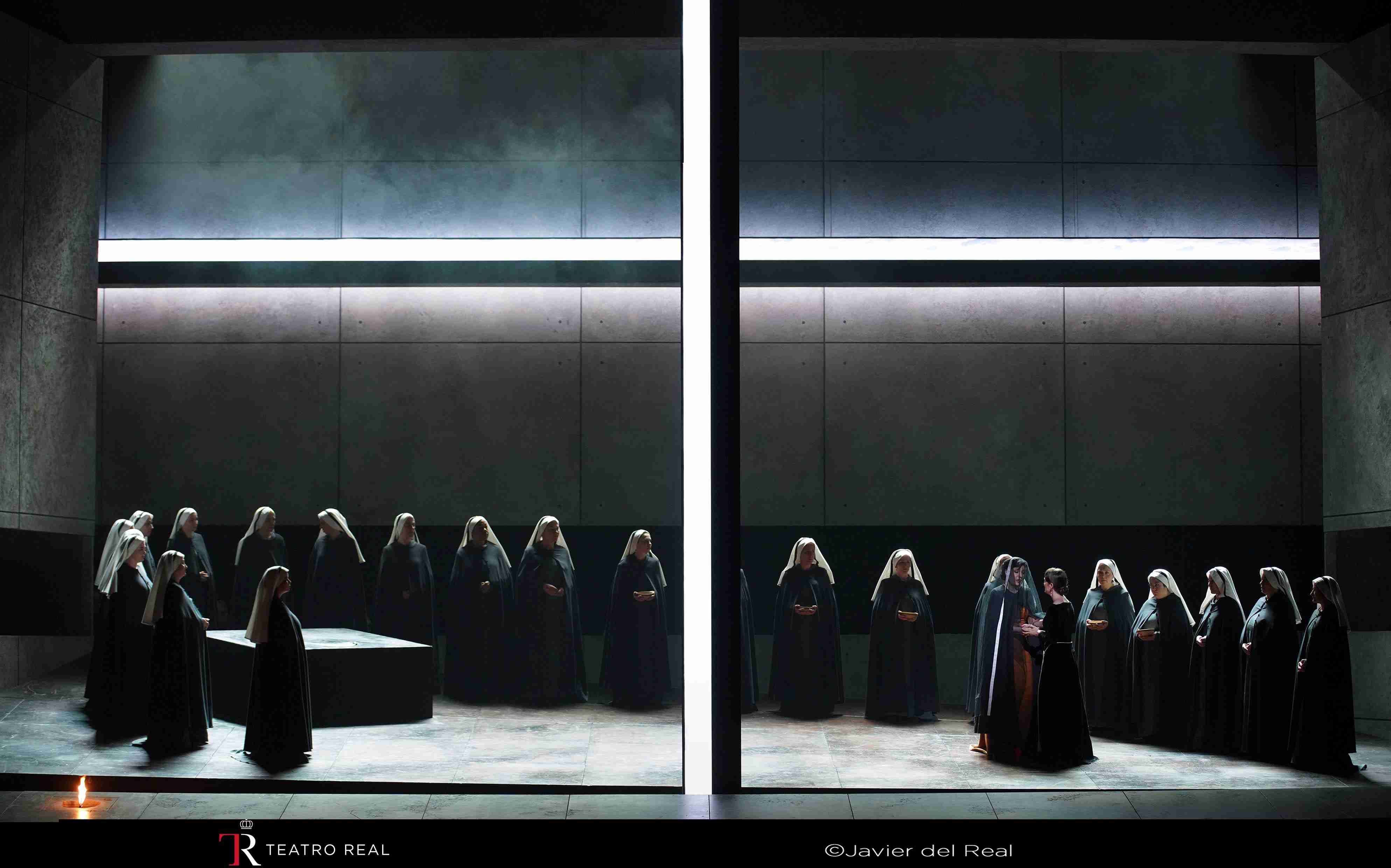
Trovatore is a complicated story, although not unduly so. Perhaps mindful of this, Negrín uses his staging to constantly attempt to explore the backstory behind the events of the plot. The set, by Louis Désiré, is relatively simple, consisting of a black-box setting, in which the chorus is generally assigned to the back when they appear, and the principals act out at the front of the stage. At the front left, a flame is a constant presence, to remind us of the blazing start of the events that were set in motion. Negrín has an actress, presumably incarnating Azucena’s mother, frequently flailing around at the back of the stage, and a child also occasionally makes an appearance to perambulate around the stage. In the second half of the evening, the actors appear less frequently. Perhaps this was Negrín’s way of indicating that the principals were taking events to the next stage. Alternatively, he could simply have run out of ideas of what to do with the actors.

Through the course of the evening, I asked myself did Negrín’s staging actually enhance our understanding of the plot and enhance the emotions amplified by the music? To be frank, I’m not convinced that it did. Rather, the action was driven, more on the first evening than on the second, through the vocal performances more than the stage action. It was a competent enough staging, and had clearly been effectively revived, by Jean-Michel Criqui, for these multiple casts. However, it did feel that the stage pictures lacked the emotional impact that the vocal performances had. That said, there was some very exciting sword fighting for the two male leads, directed by Jesús Esperanza and K Inchausti.

Both evenings were in the hands of experienced Verdian, Nicola Luisotti. He’s a regular visitor to Madrid, and indeed holds a titled position here as principal guest conductor. His was a reading that privileged beauty of sound over dramatic dynamism. This is a score that’s fired with a blazing intensity; but far too often, Luisotti’s conducting felt placid and congenial. The quality of the playing he obtained from the house orchestra was superb, there was a unanimity of attack in the strings, combined with precision in the brass, that were seriously impressive. And yet, Luisotti frequently allowed the tension to dip. The closing scene of the evening, in both performances, simply sagged. One could see Luisotti in the pit encouraging his singers to sing with beautiful lines, which they duly did, but I longed for him to push ahead dramatically, to precisely bring out that white-hot intensity the work requires. The chorus, prepared by José Luis Basso, had a good night. They gave us some terrifically lusty singing, particularly in the tenors and basses, although there were a few passages, for instance in the opening scene, on both evenings, where stage-pit coordination was not quite unanimous – although that could well have been due to the placement of the chorus at the back and sides on stage.
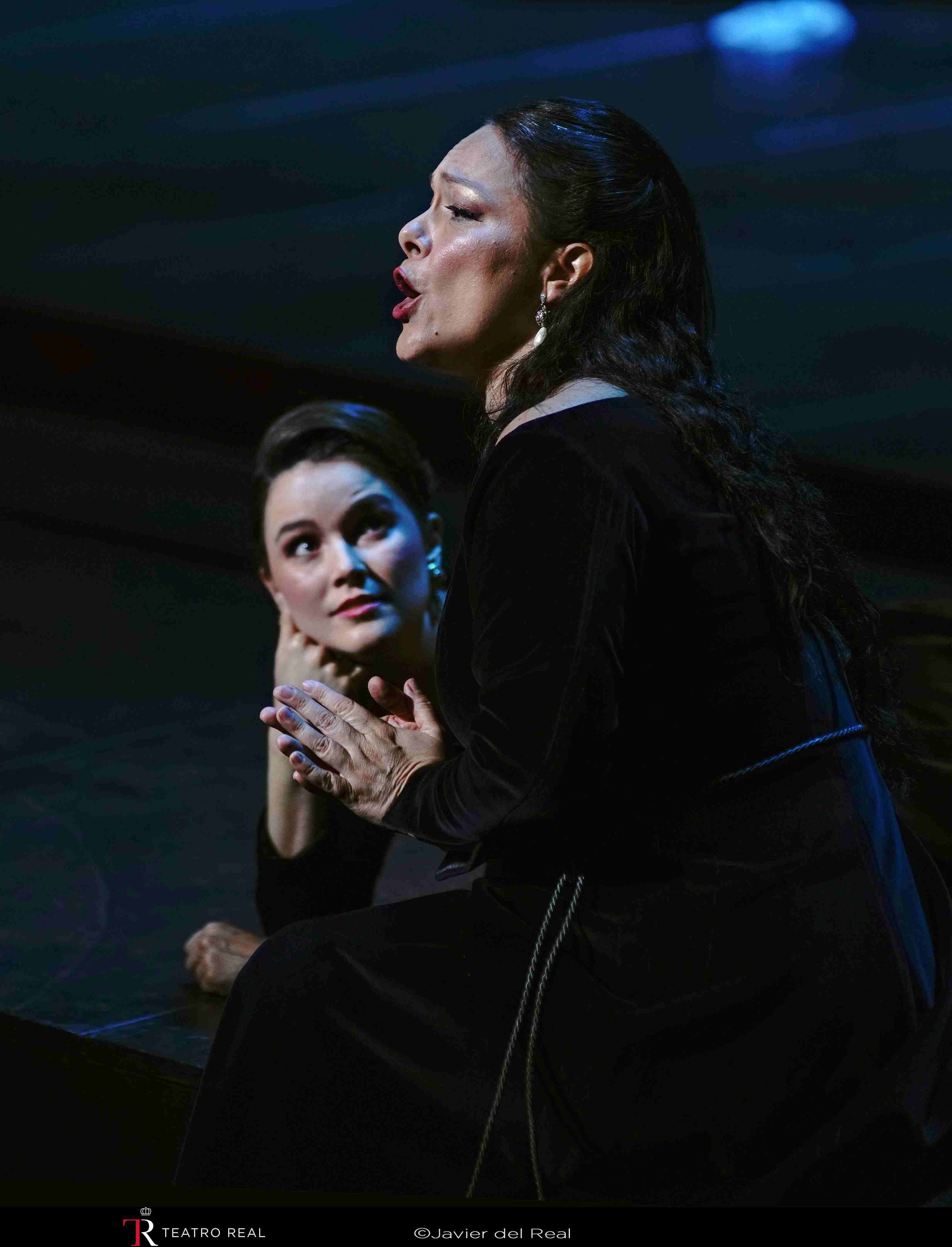
Following her triumphant debut run of the role in Hamburg earlier this year, Buratto once again gave us a singing lesson as Leonora. Her peaches and cream tone, full of generous pulchritude, combined with her exquisite sense of line, gave an enormous amount of pleasure. What I appreciate so much in Buratto’s singing is her ability to combine word and line to bring her character to life. She savoured the text, using it to colour the tone. Her ‘tacea la notte’ was spun with the smoothest of legatos, and ‘Di tale amor che dirsi’ was dispatched with effortlessly easy runs and a genuine trill. Later, she soared with radiant ease in her ‘D’amor sull’ali rosee’, while the subsequent ‘miserere’ was sung with desperate emotion. Throughout, the richness of her chest register, the total integration of the passaggio, combined with her exquisite line, were a reminder that this is an artist who incarnates the finest Italian vocal tradition.
If Buratto is peaches and cream, Rebeka is steely sheen. It was fascinating to see and compare two supreme technicians on subsequent evenings. As always, Rebeka brought her well-schooled line, impeccable legato, and exquisite portamenti to her numbers. She also added a few extra acuti for good measure, sending the audience wild. Her ‘D’amor sull’ali rosee’ was sung with effortless poise, the voice opening up on high with easy reach, while elsewhere she dispatched the florid writing with pinpoint accuracy. Her Italian is superb, it’s clear that Rebeka understands the words and aims to communicate them, and yet I found her to sing the words rather than live them in the way that Buratto did. Rebeka gave us some spectacular singing, of that there is no doubt, but I must admit to finding her Leonora slightly colder in terms of emotion.
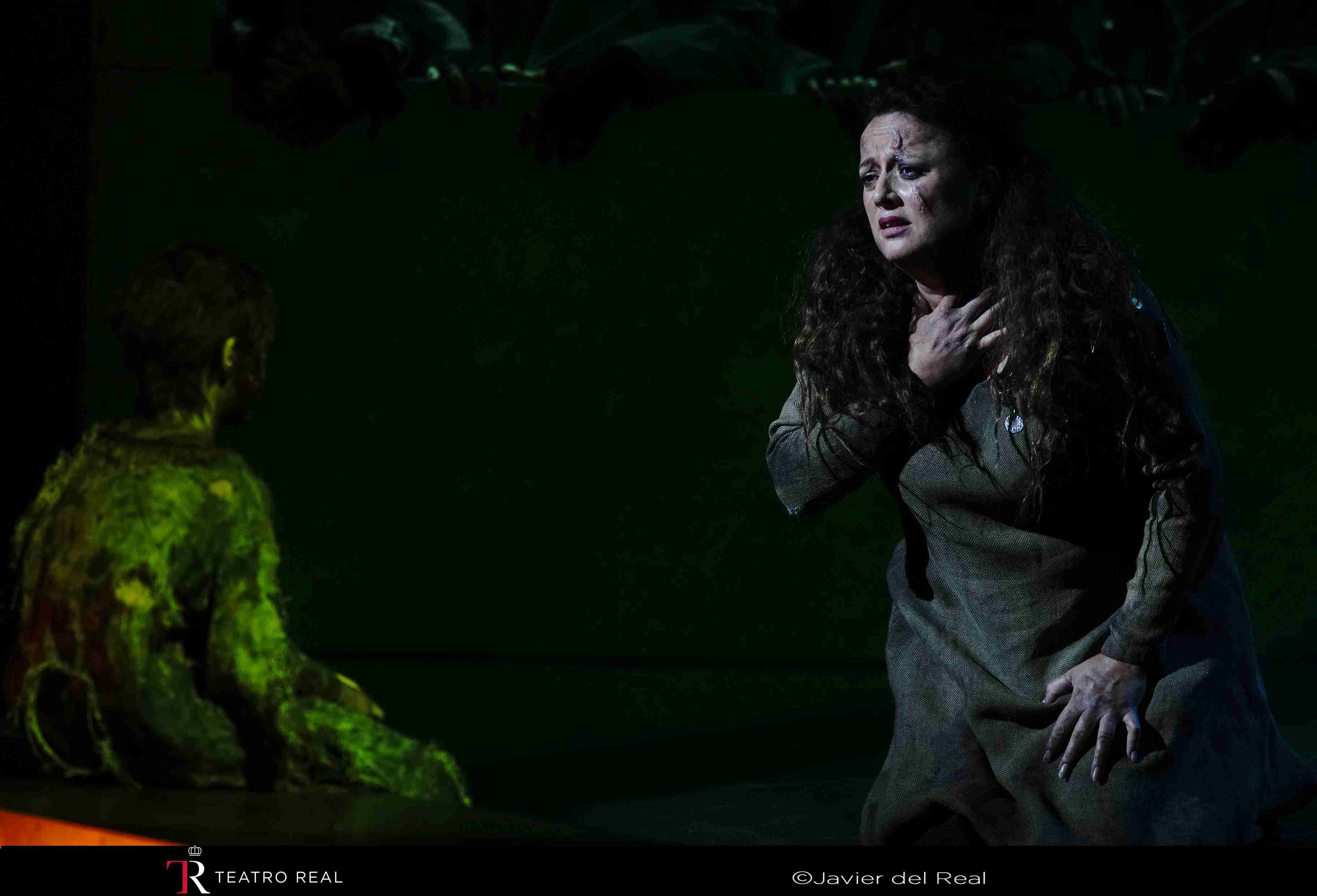
Margaine is, by now, a familiar Azucena. Her dramatic intensity is thrilling, the voice huge in its brassy reach. As with Buratto, she filled the words with desperate force, filling the theatre with the kind of intensity I wish she had been accompanied with from the pit. Her ‘Condotta ell’era in ceppi’ was gripping, the trauma absolutely perceptible in the words spat out with haunted terror. Dudnikova, on the other hand, made me grateful for the Castilian and English surtitles. Her diction was foggy and indistinct, her closing peroration lost impact simply by the fact that one could not understand what her declamation was. The voice has a very piquant chest register, one she isn’t afraid to use, but her ‘stride la vampa’ saw the voice spread, sitting around the note rather than on it. Dudnikova’s intonation did settle down after intermission and she was warmly received by the public at the close.
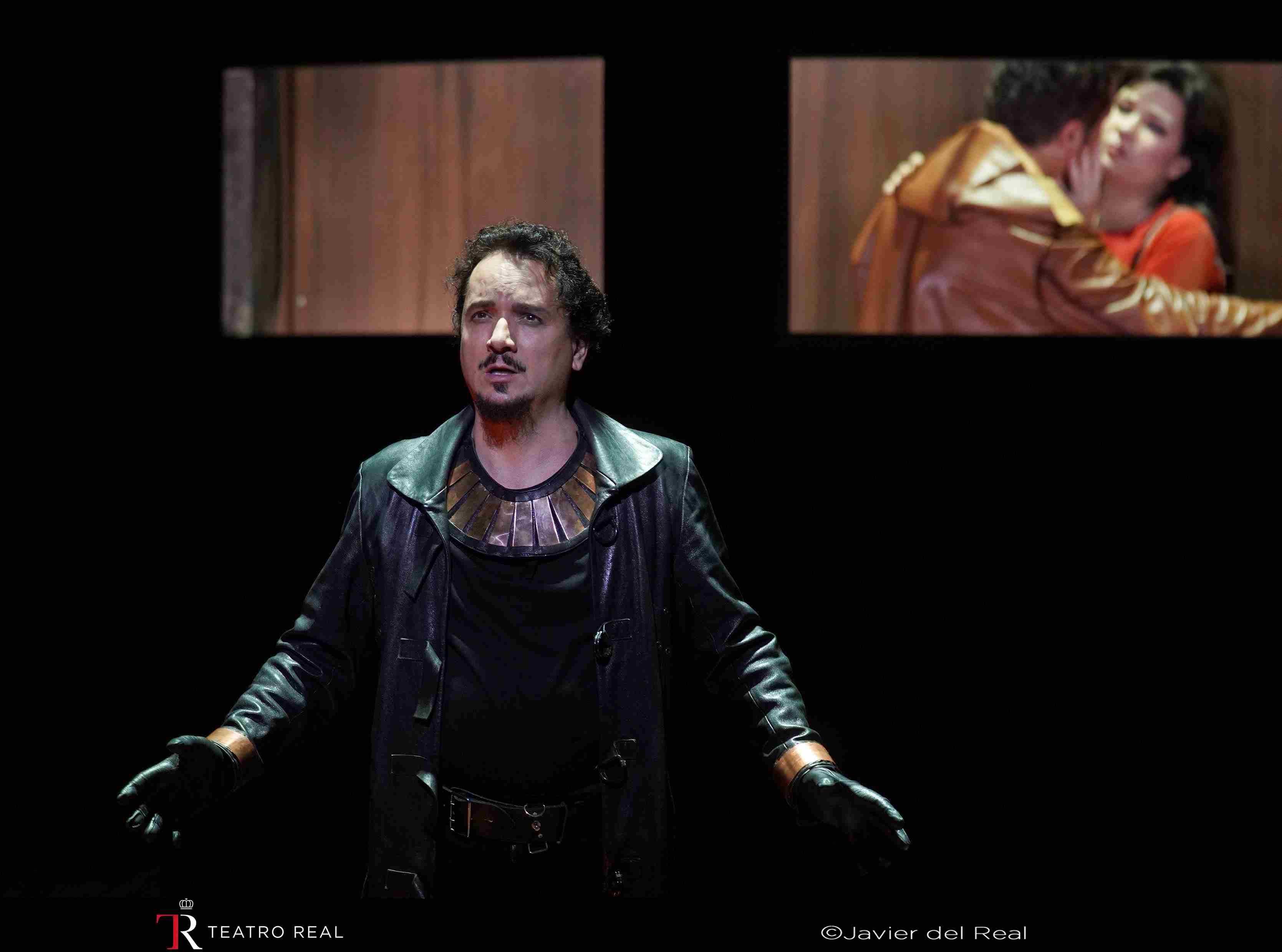
Petean sang Luna in his familiar firm and robust baritone. His ‘Il balen’ was absolutely staggering. It sounded as if he sang the entire aria on a single breath. He showed a profound understanding of the Verdian phraseology, the words full of meaning and feeling. Despite the nastiness of his character, Petean genuinely brought out a longing in his singing, one that almost made Luna sympathetic. Ruciński’s was an interesting Luna. The voice is firm and even in emission, but his ‘il balen’ was rather stiff. Yes, the breath control was seriously impressive, yet I missed the poetic introspection and feeling that Petean brought. It was technically impressive, but also felt cold, emotionally.
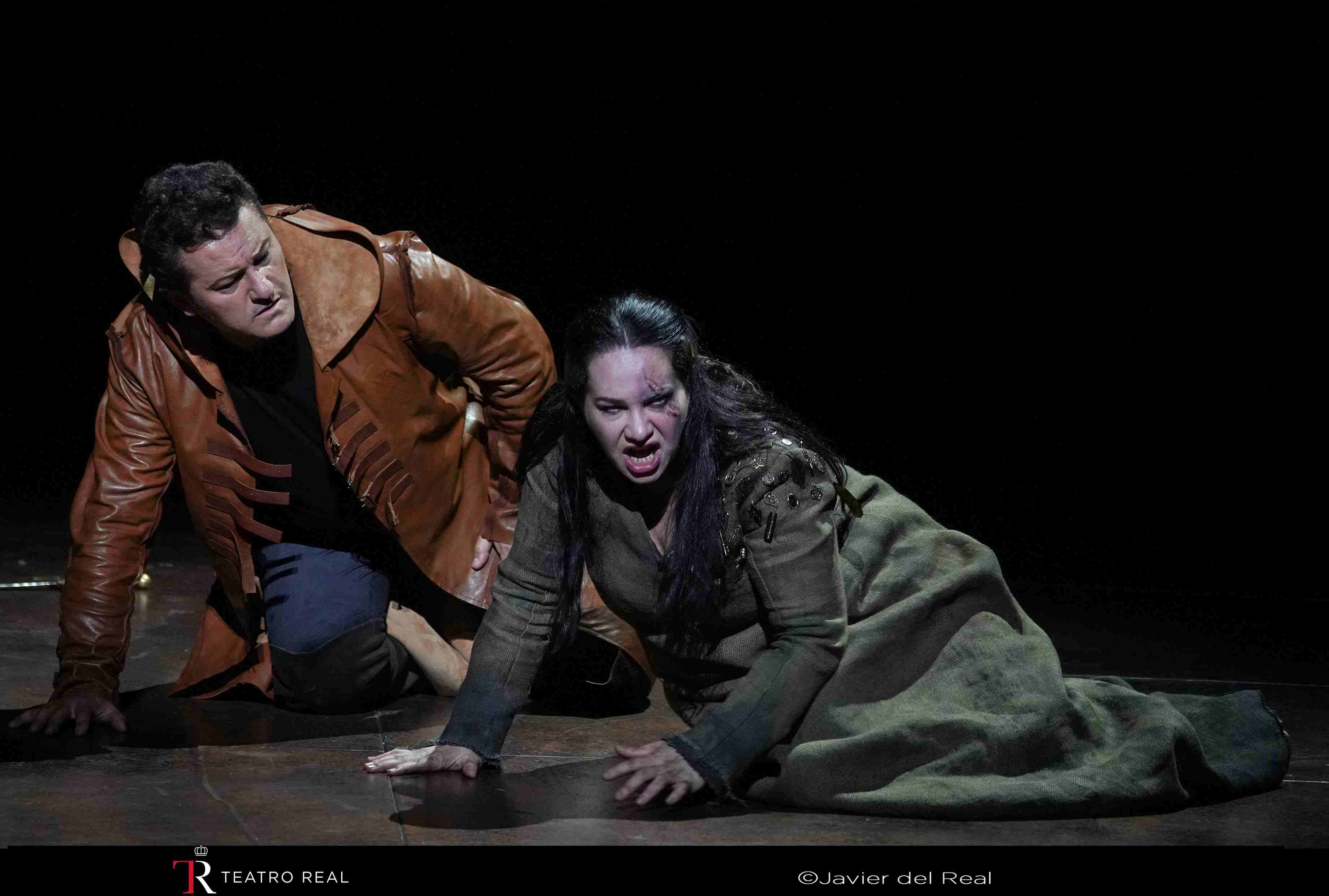
Yusif Eyvazov made a genuine attempt to shade the voice and sing with poetry as Manrico. He doesn’t have the vocal glamour or textual insight of his Thursday night colleagues – his tenor is rather sandy and tapers off on top, although he did give us a very long high C at the close of ‘di quella pira’. What I appreciated most about Eyvazov’s singing was precisely his willingness to pull back on the volume and inclination to give his troubadour a poetic edge. I do wonder if Beczała was suffering from an unannounced indisposition. He sang for most of the evening at an unremitting forte, and when he did pull back on the tone, the emission was uneven. In his ‘Ah sì, ben mio’, the support sounded effortful, which meant that he didn’t then pull back on the volume to shade the tone, in the way one might have expected him to. That said, he rose to a tremendously clarion, and very long, high C at the end of ‘di quella pira’, and from there on in, the voice settled down and his emission became much more even.
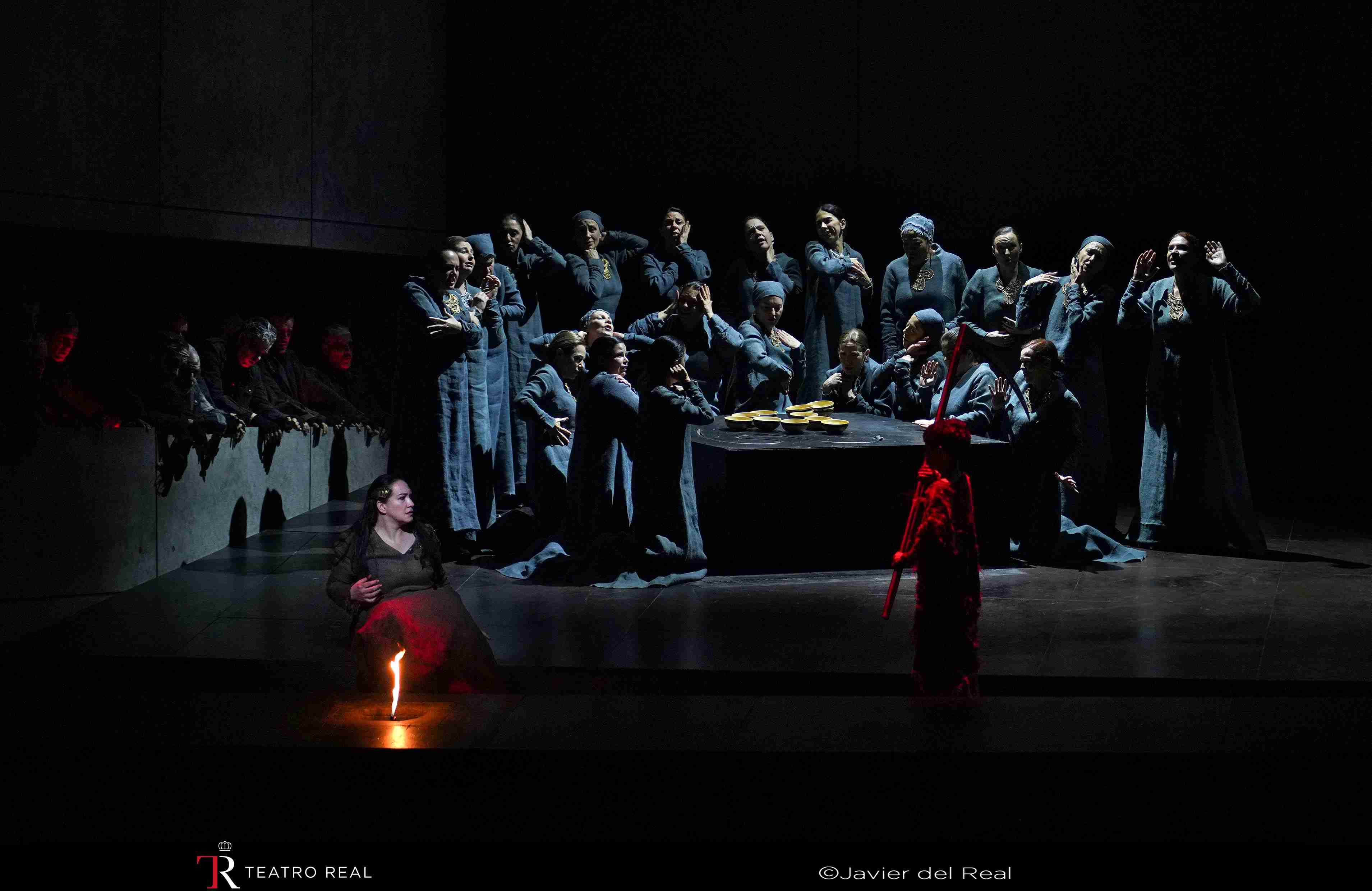
As Ferrando, Marko Mimica sang with lyricism and warmth. His isn’t the largest voice to have essayed the role; instead, he made his narration compelling through keeping the words forward and singing it with introspective thoughtfulness. Krzysztof Bączyk used his smoky bass to add menace to his assumption of Ferrando, while still keeping the words nicely forward. The remaining roles reflected the excellent quality of the house, in particular Rocío Faus’ sunny-toned Ines.
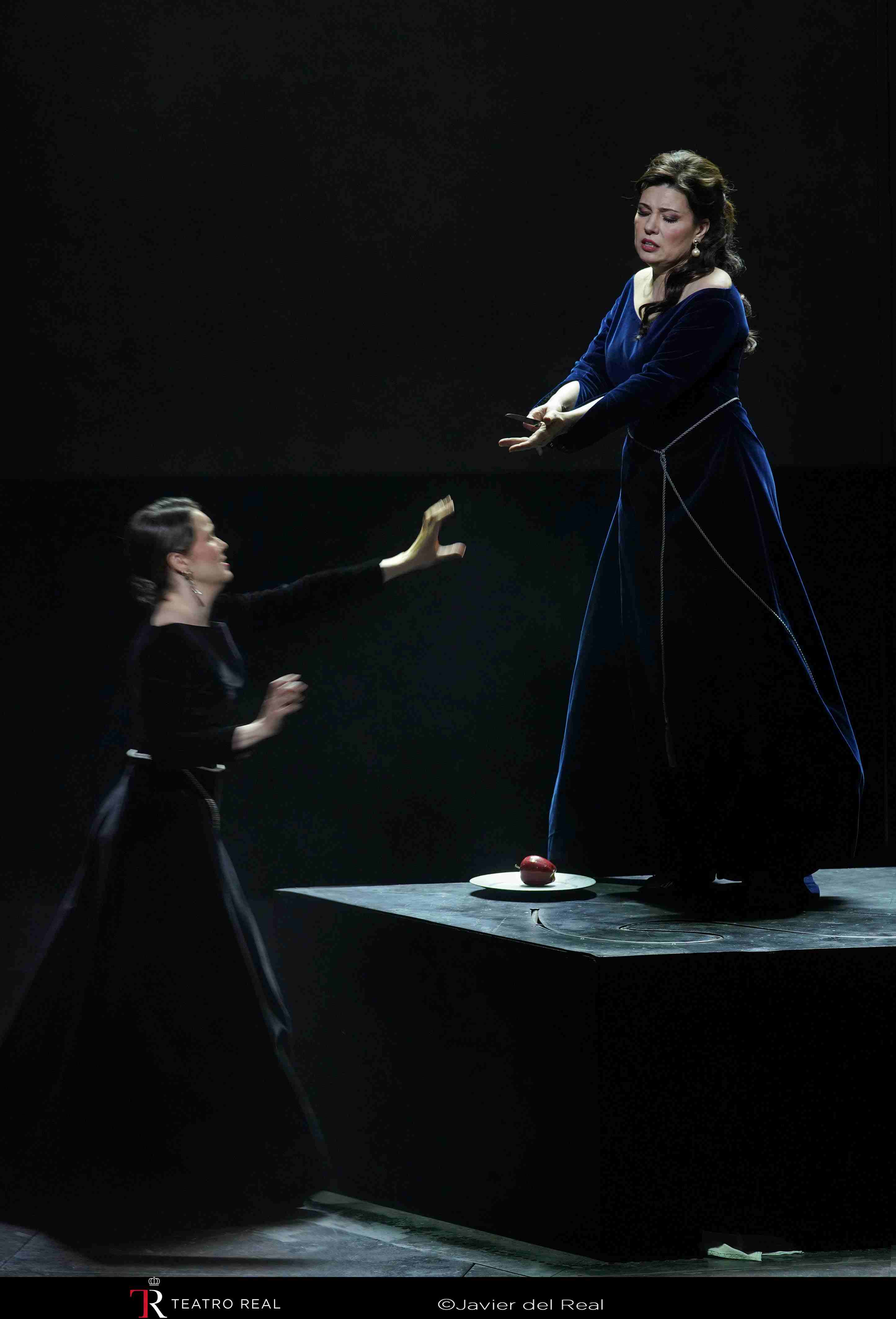
What a treat it was to hear two such renowned casts on consecutive evenings, and a fascinating opportunity to compare and contrast these distinguished artists. It’s hard to think of any other theatre in the world that could put on multiple casts in the way that Madrid does. Rebeka was technically superb, while Beczała found his best form in the final act. And yet, it was the previous evening that I found most compelling, since that was a performance that lived so much more through the text from Burrato, Margaine and Petean, to the extent that it felt that one was watching a thriller. Negrín’s staging was serviceable and not too distracting, and while Luisotti’s conducting had its moments, it let the tension dip more than one would optimally appreciate. The audience, on both evenings, responded with warm applause for both casts.
 operatraveller.com