Puccini – Manon Lescaut
Manon Lescaut – Sondra Radvanovsky
Il Cavaliere Renato Des Grieux – Michael Fabiano
Lescaut – Lucas Meachem
Geronte di Ravoir – Pietro Spagnoli
Edmondo – Alejandro del Cerro
Un lampionaio – Mikeldi Atxalandabaso
Un musico – Mercedes Gancedo
Un oste – Javier Castañeda
Il maestro di ballo – Mikeldi Atxalandabaso
Sergente degli Arceri – Javier Franco
Il Comandante di Marina – Javier Castañeda
Coro Titular del Teatro Real, Orquesta Titular del Teatro Real / Nicola Luisotti.
Stage director – Carlos Wagner.
Teatro Real, Madrid, Spain. Saturday, September 26th, 2026.
To open its 2026 – 27 season, the Teatro Real has chosen to produce Carlos Wagner’s new staging of Manon Lescaut, a coproduction with the Oper Köln. As is so often the case here, the house has cast this run from strength, who two casts featuring some of the notable Puccini singers of our time, all under the direction of house favourite, Nicola Luisotti.
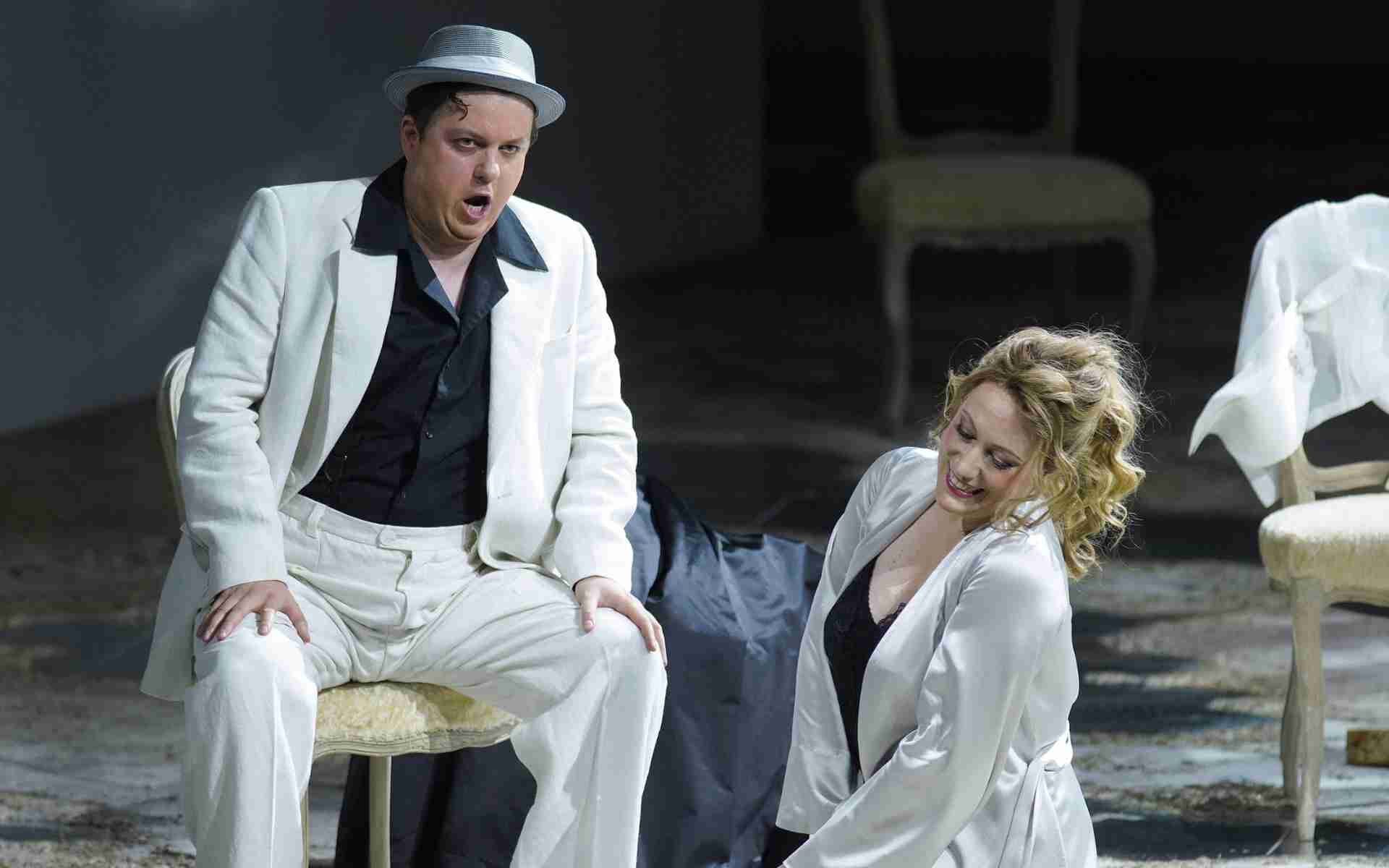
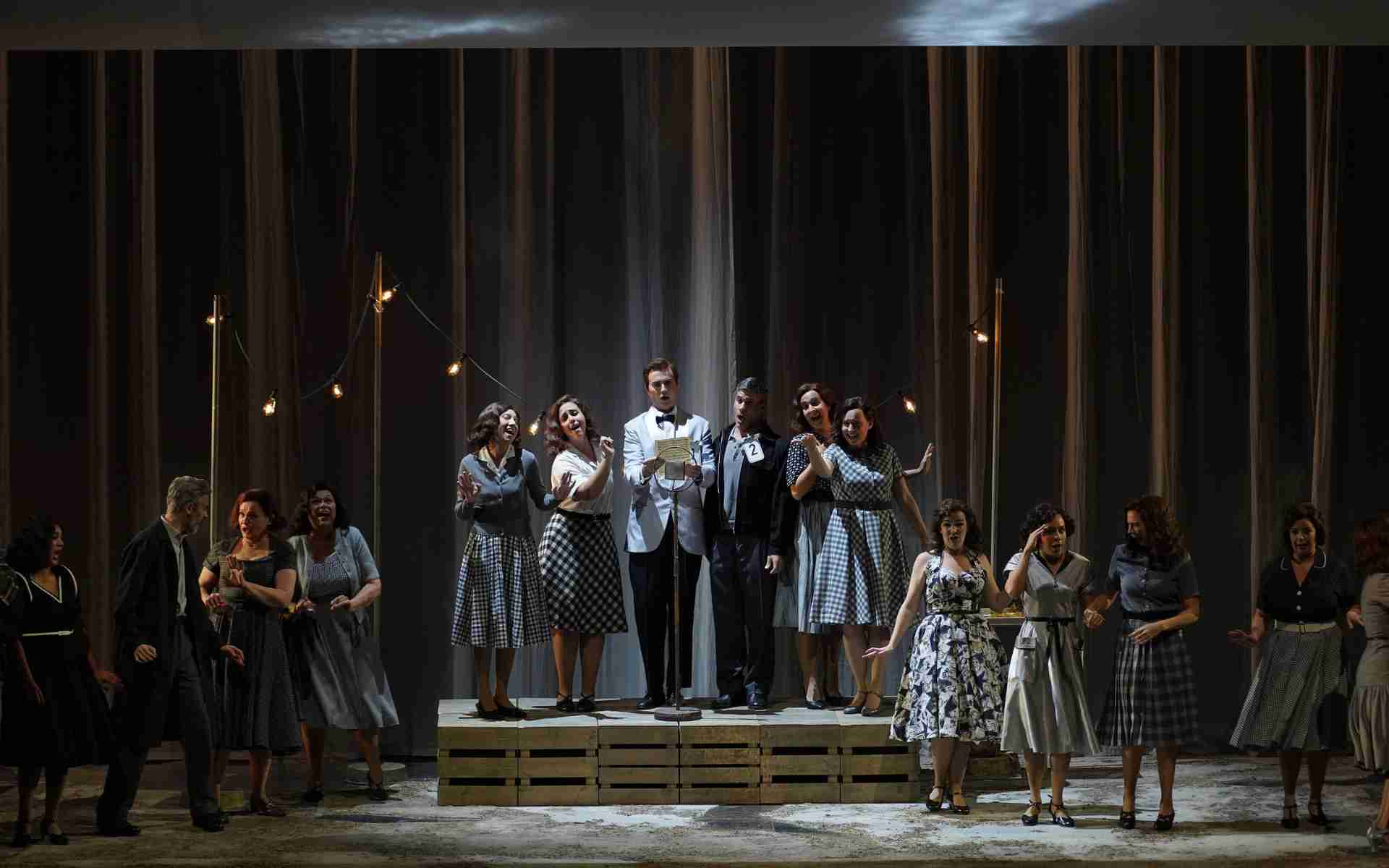
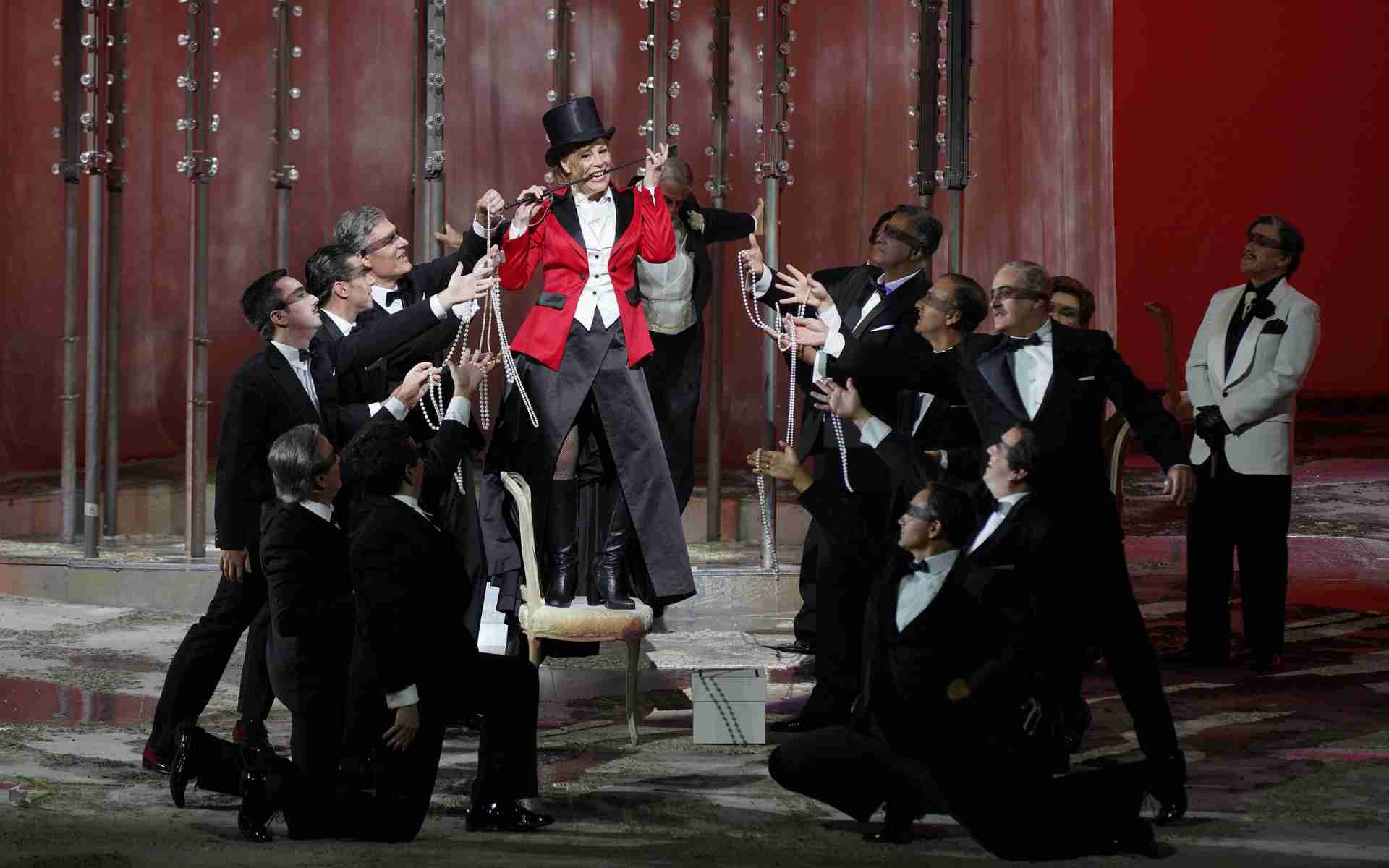
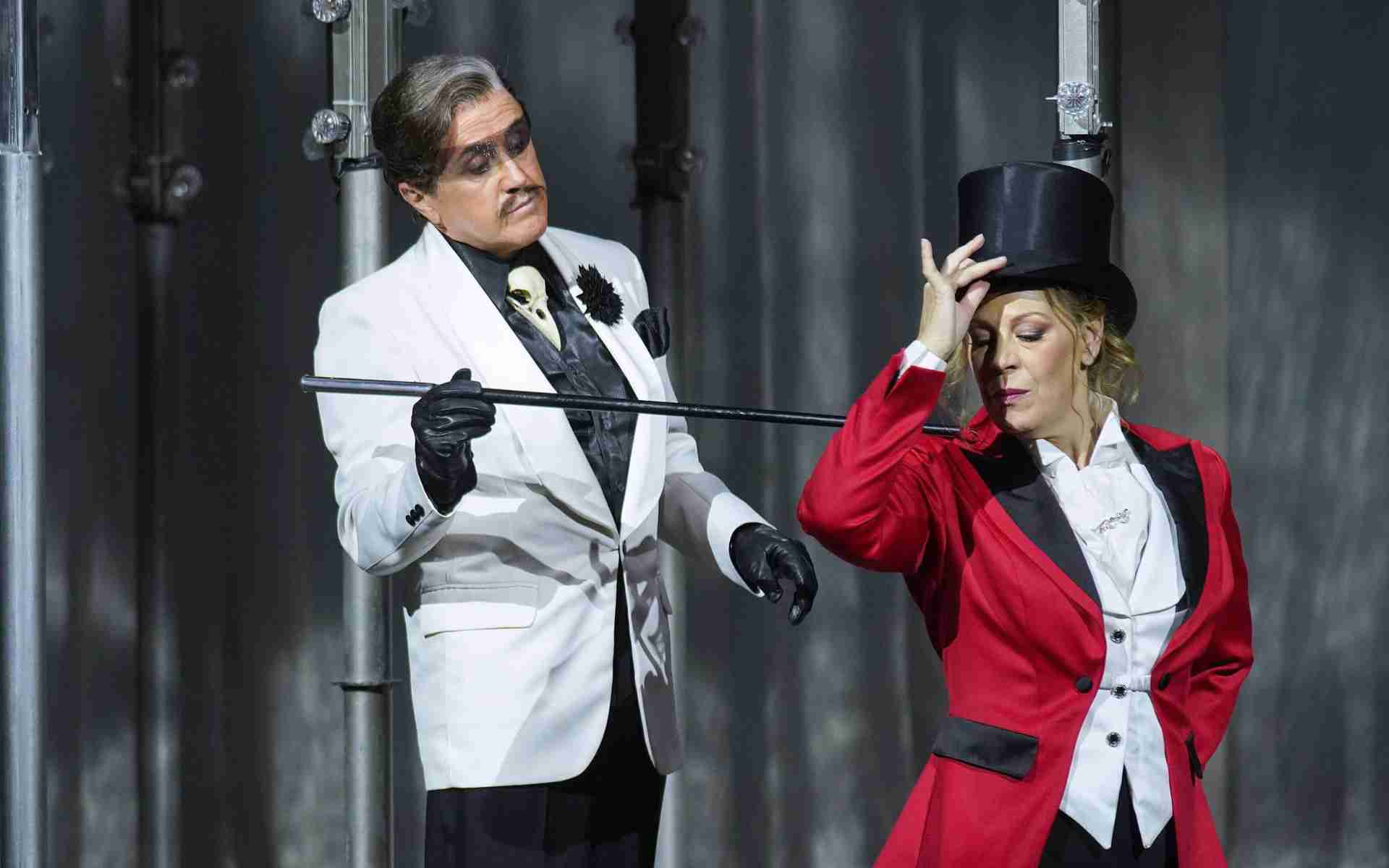
Wagner’s staging is a very visual one. He sets the action in what appears to be the 1930s or 1950s, with Edmondo singing his opening number into a microphone, while the chorus daintily gyrates around him. The coach from Arras becomes a merry-go-round that Manon makes her first entrance on and it’s clear that right from the very start, she brings a glamour to the proceedings that lights up the stage. As the evening evolves, we see Manon indulging in a spot of pole dancing with two male danseurs. Indeed, there was a sense here in Act 2 of a much stronger sense of exploitation than we normally see, with Lescaut portrayed as a seedy photographer who exploited his sister’s sexuality.
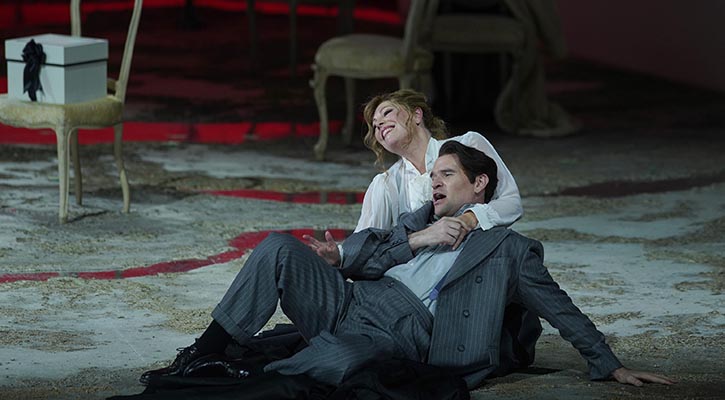
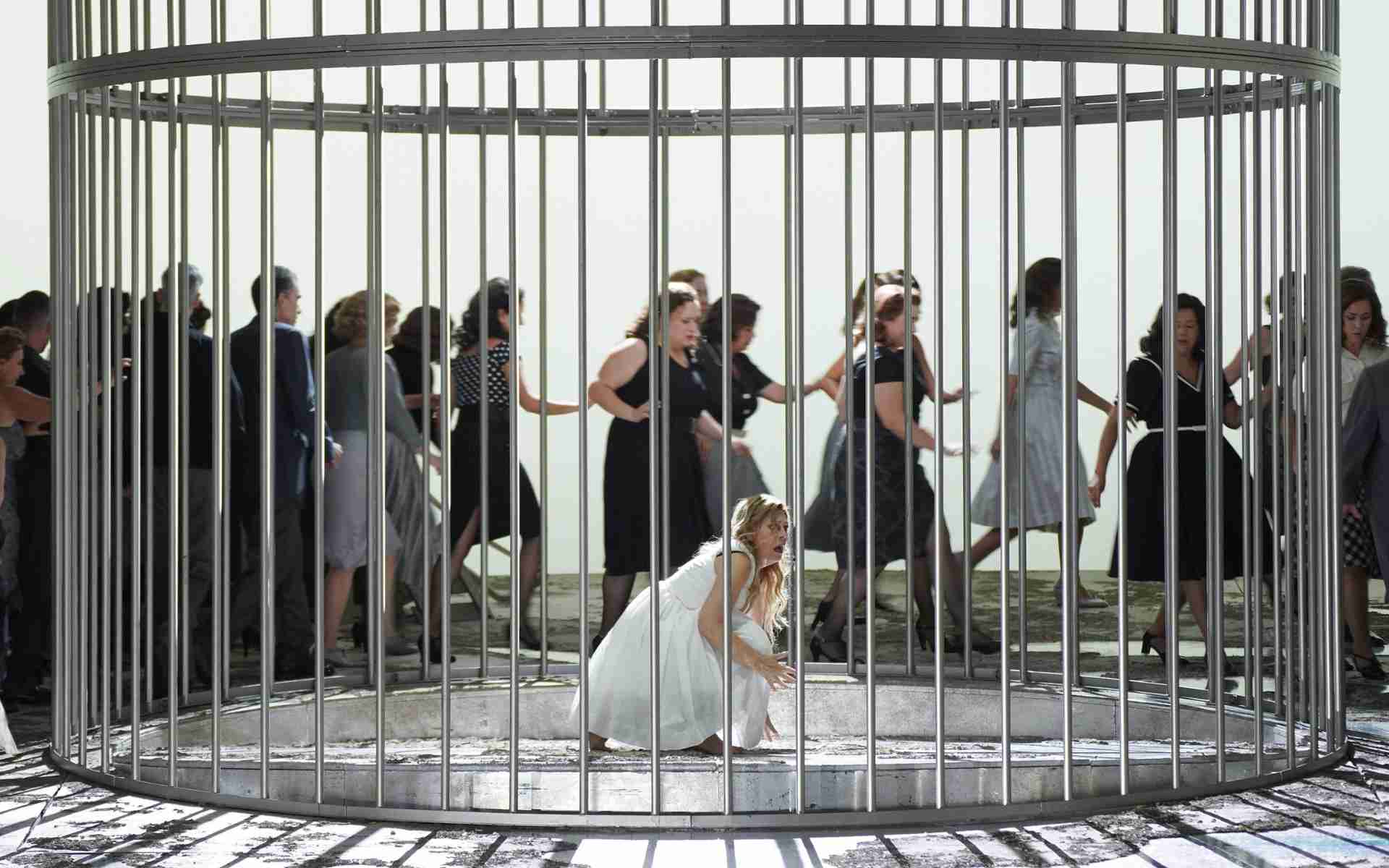
Much of what Wagner portrays is illustrated through the set, by Frank Philipp Schlößmann, as much as it is through the personenregie. In Act 3, Manon was imprisoned within the merry-go-round, which now had lost its lights and glitz, to become a spartan enclosed space. It very much felt that Wagner wanted us to reflect on the fact that what once gave Manon her power, now imprisoned her in her downfall. In the closing act, the merry-go-round disappeared completely, the bare stage now occupied by a small group of danseuses, each dressed in the same way as Manon, each falling to the floor as the walk through the desert took its toll. And yet, there in the desert, Des Grieux sang his expressions of love not only to Manon but also to the others. It made me reflect on whether Manon was indeed just one other woman of many for him, although such an approach would not quite line up with Des Grieux’s single-minded pursuit of Manon. There’s a darkness to Wagner’s final tableau that was extremely thoughtful, particularly as a large void above the set gradually came to absorb it, showing us the emptiness of Manon’s fate.
Wagner’s staging is certainly one that was sincere and had been deeply considered. I did find some of the personenregie perfunctory, particularly in the use of the chorus, which was frequently brought on, parked, asked to gyrate a bit, and then walked off. Similarly, the expiring danseuses in the final scene also added visual interest, but felt as if they were used as an accessory to the set rather than as individual characters in their own right. That said, I did very much have a feeling that we knew who the principals were and what story they needed to tell, with Lucas Meachem’s Lescaut particularly vivid. As a staging, it did the job and was an efficient framework for the action.
One of the pleasures of visiting this house is the sheer clarity of its acoustic. The orchestral sound blooms here, offering exciting immediacy, particularly with a conductor as dynamic as Luisotti who really allows the orchestra to ring out into the house. He built the orchestral sound on a big, thick string sound, abounding in soupy portamenti. There was a precision of rhythm that was seriously impressive; the unanimity of attack in the brass was extremely striking. Luisotti drove the work through, pushing ahead, yet gave his singers the time and space they needed to work their magic, not least in ‘Donna non vidi mai’ with the dusky strings,played with loving lyricism. The quality of the playing he secured for the orchestra was outstanding across the board. The chorus, prepared by José Luis Basso, had a good night, singing with firm tone and good blend. I was particularly impressed by the small group of madrigalists who offered nicely shaded singing in their interjections.
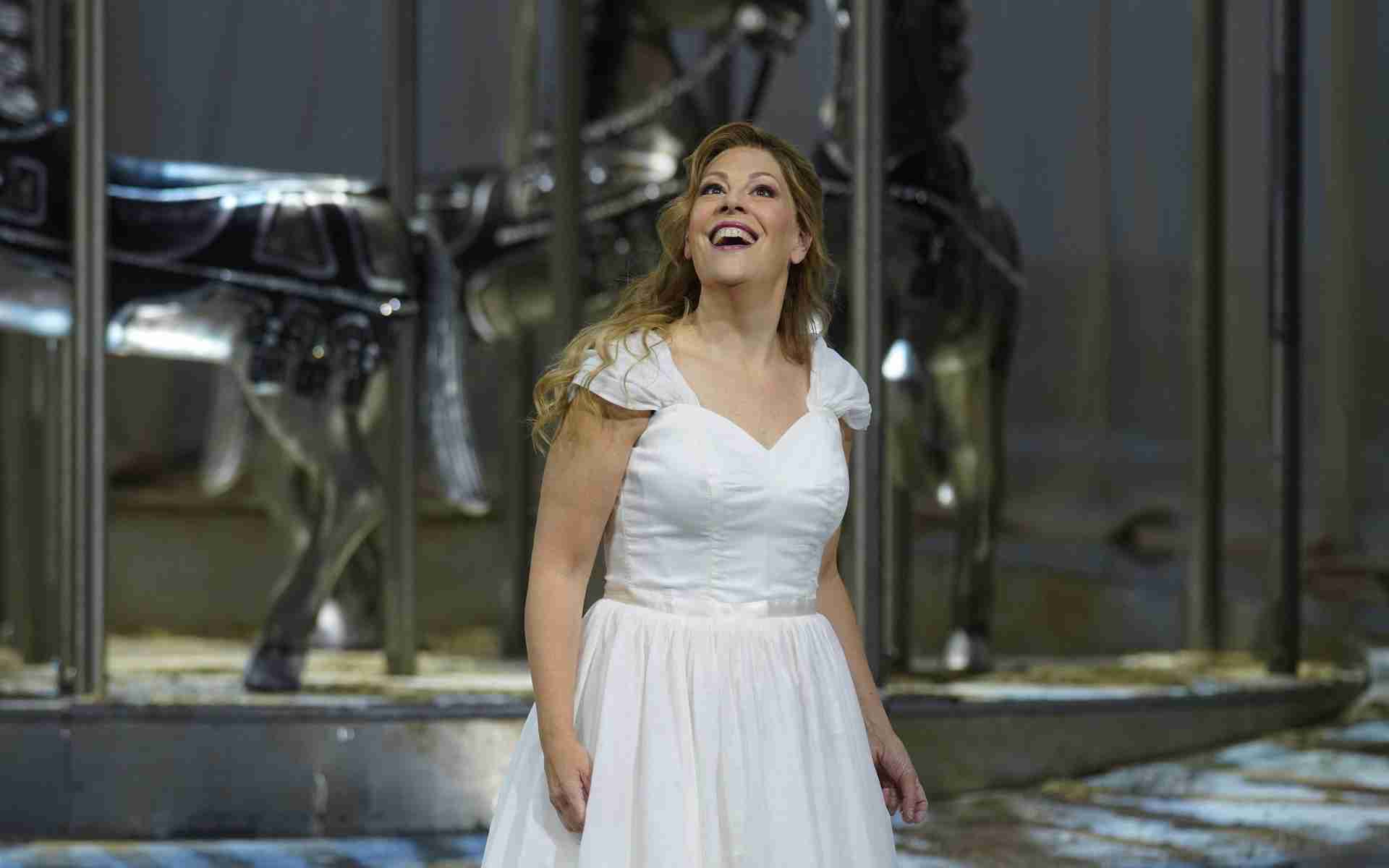
Radvanovsky has a long affinity with Puccini’s music and this was clear in her ‘In quelle trine morbide’, where she gave us a singing lesson in this celebrated number. She sang it with the utmost poise, spinning seemingly endless phrases on a single breath, shading the tone, using the dynamics to really colour the line. This was hearing a voice under the total and utter control of its owner, Radvanovsky’s technique allowing her to do whatever she wanted with it. Elsewhere, she threw herself gamely into Wagner’s staging, including the pole dancing, and, prior to that, bringing out the optimistic innocence of the eighteen-year-old girl about to head onto her lifelong love affair with Des Grieux. Radvanovsky also had no trouble being heard over the huge orchestral waves from the pit, the voice soaring with glorious ease, opening up thrillingly into the house.
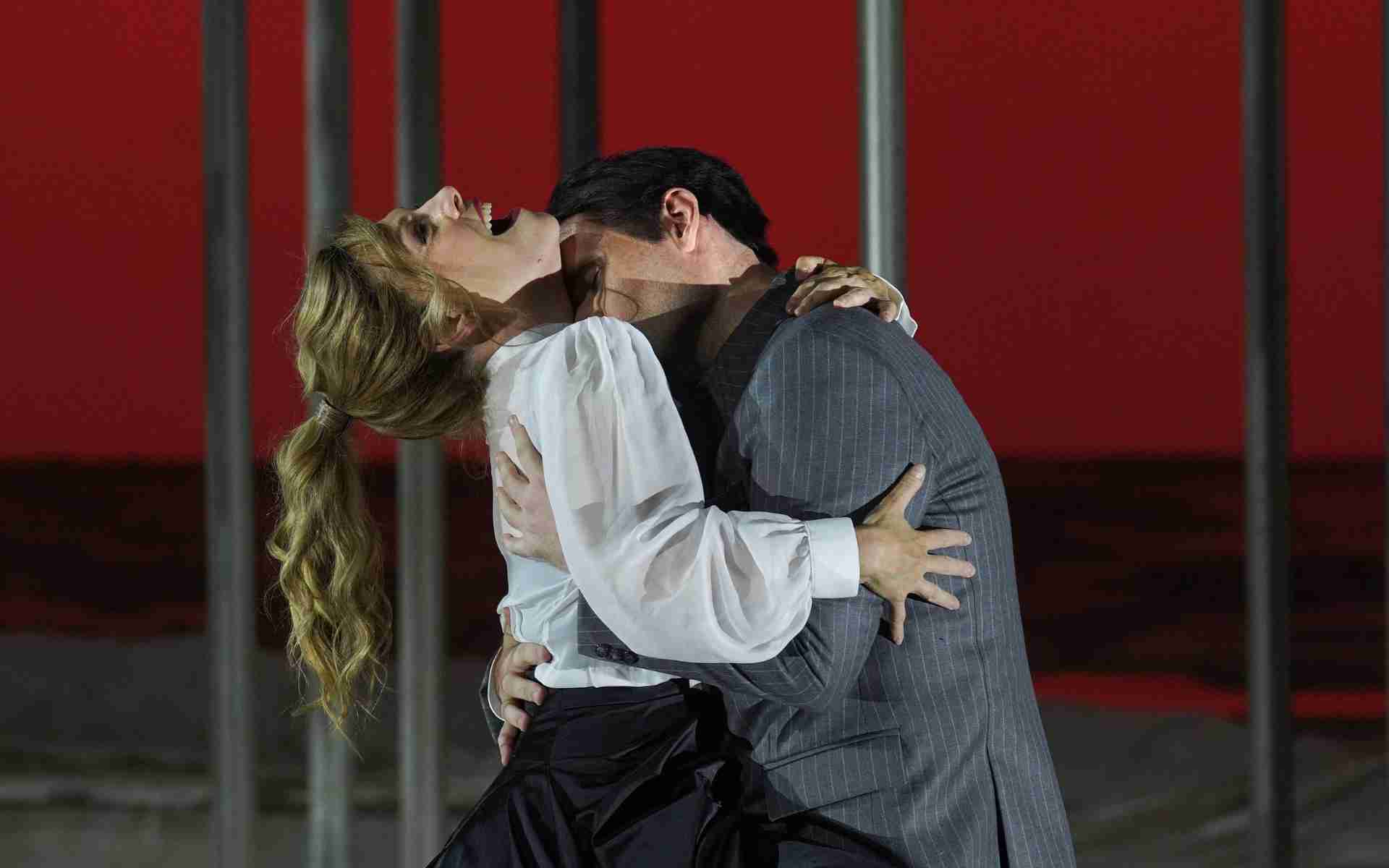
It’s been several years since I’ve had the opportunity to hear Michael Fabiano’s tenor. I’ve always found him to engage closely with the text and look for meaning, and that was certainly the case tonight. He sang an ardent, full-blooded Des Grieux, while also giving us a dreamy ‘Donna non vidi mai’. I did find his singing to be a bit inconsistent, however. There were a few moments where he gave us some exciting high notes, the voice spinning nicely. And yet, elsewhere, the top tended to lose a little in quality, tapering just where one would hope it would bloom. Fabiano was definitely committed and threw himself fully into the assignment.
Meachem brought his familiar firmness of vocalism and equally committed acting to the role of Lescaut. The voice is impressive in size, even from top to bottom, emitted in a firm column of sound. He never succumbed to the urge to hector in order to demonstrate Lescaut’s dominance, everything was sung healthily and with freshness of tone. Pietro Spagnoli brought his customary verbal acuity to the role of Geronte, singing the role in a steady baritone, the words always nicely forward. Alejandro del Cerro was a welcome presence as Edmondo. His ringing tenor had a characterful piquancy to the tone, and he was an extrovert stage presence. The remaining roles represented the quality one has come to expect at this address. Particularly notable were Mercedes Gancedo, who sang the role of the Musico in a sunny soprano, with agreeable evenness of line, and Javier Castañeda’s Comandante, sung in a big, resonant bass.
This was an evening that offered much to enjoy. Wagner’s staging was cerebral but also brought some insight, achieved through the symbolism of the set design and placement of characters on stage. Luisotti and his orchestra offered a big-boned Puccini sound, filling the house with the fragrance of the master from Lucca’s orchestration, giving us playing of striking rhythmic unanimity and focus. Tonight, Radvanovsky gave us a singing lesson, both in the way that the voice soared over the sound from the pit and in the sheer poise of her singing, with a technique under the total command of its owner. The audience responded with warm cheers for the entire cast, with particularly loud acclaim for Luisotti and his orchestra.

