Mascagni – Cavalleria rusticana
Santuzza – Ekaterina Semenchuk
Turiddu – Angelo Villari
Lucia – Elena Zilio
Alfio – Simone Piazzola
Lola – Veta Pilipenko
Leoncavallo – Pagliacci
Canio – Martin Muehle
Nedda – Carolina López Moreno
Tonio – Fabián Veloz
Beppe – Matteo Falcier
Silvio – Joshua Hopkins
Coro di voci bianche Teatro Regio Torino, Coro Teatro Regio Torino, Orchestra Teatro Regio Torino / Andrea Battistoni.
Stage directors – Daniele Menghini & Francesco Micheli.
Teatro Regio Torino, Turin, Italy. Saturday, October 24th, 2026.
To open its 2026-27 season, the Teatro Regio Torino is presenting a Festival Verismo, featuring the work of two key masters of the style – Mascagni and Leoncavallo. This opening production of Cavalleria rusticana and Pagliacci has been confided to two separate stage directors, Daniele Menghini for the former and Francesco Micheli for the latter. In the next few weeks, the house will also be mounting new productions of Leoncavallo’s La bohème and Mascagni’s Iris, also with stage direction by Micheli and Menghini, all conducted by house music director Andrea Battistoni. The theatre has assembled a variety of singers for this run of Cav and Pag, performing in varying combinations reflected in the photos here, although there was undoubtedly a unanimity of approach across the casts.
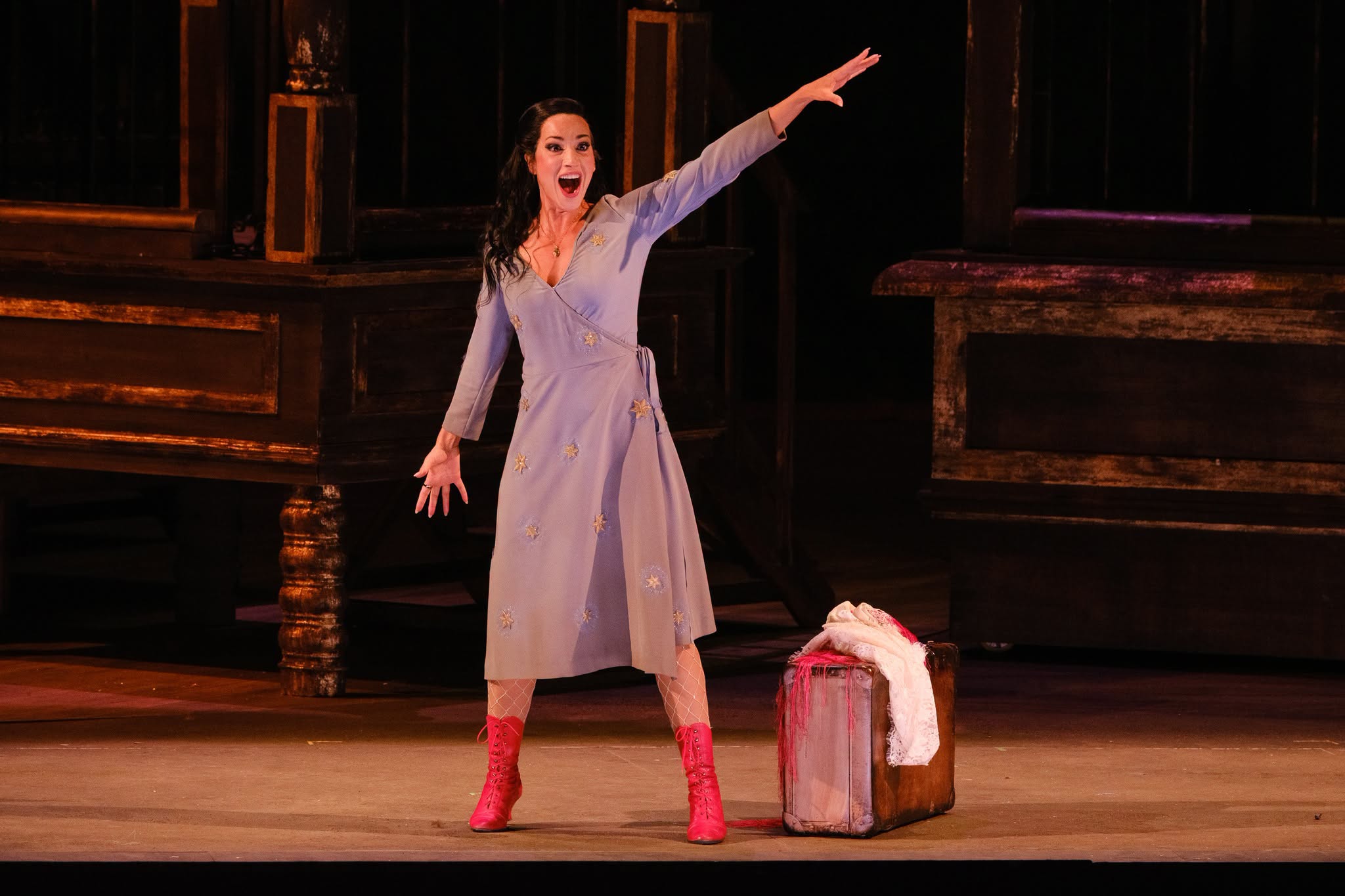
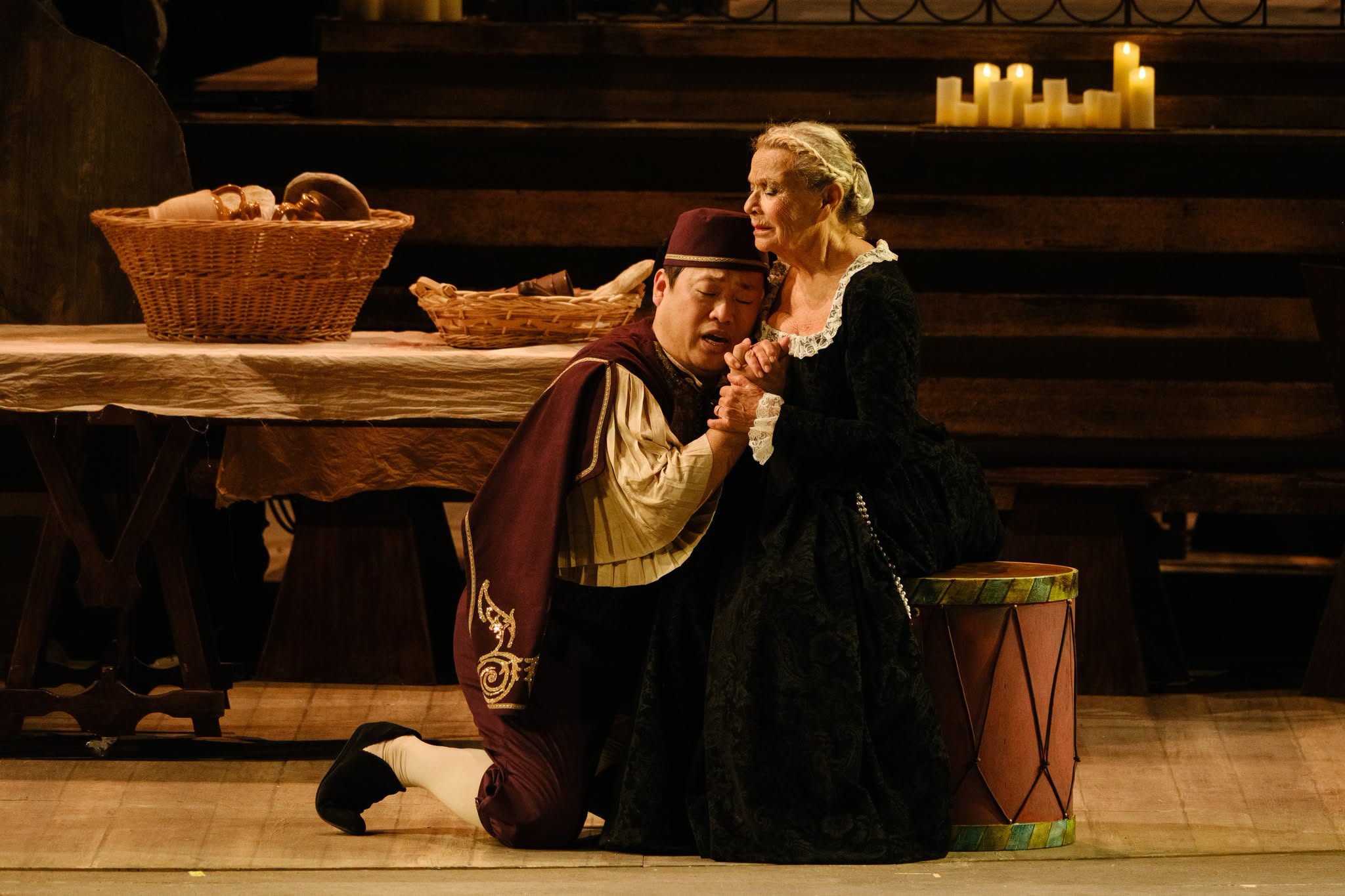
Interestingly, both operas share the same stage designer, Davide Signorini, and the action takes place in a single set, which forms the background for each work. I’ve seen several productions by Menghini now and I’ve always found his work to consist of more misses than hits, although the strongest has been the Ballo in Bologna. Here, it was hard to see what precisely he wanted to do with Cav. Of course, for a twenty-first century audience, it’s difficult to take the religious sentimentalism seriously, and perhaps with that in mind, he sets the action in a very traditional Sicilian setting with historical costumes for the entire cast, other than Santuzza, who wears a simple dress and heels. Were we watching Santuzza’s dream? Or was the staging showing us a village getting dressed up for Easter? It felt that neither was the case, but instead Menghini’s approach seemed quite facetious, with the dainty dance that accompanied Alfio’s song, accompanied by a group of actors pretending to be horses. Additionally, the climax of the Easter hymn coincided with some pyrotechnics being set off around a statue of a lamb. Perhaps it was a way of preparing the lamb as lunch for the village later on. It felt that, through Menghini’s eyes, we were watching the work one step removed. This was a staging that didn’t make us feel in the way that Damiano Michieletto’s staging, seen in Brussels, did, for example. Menghini certainly moved people around the stage, but the emotional impact was strangely muted, despite the fact that the singers were clearly working hard to realize his vision.
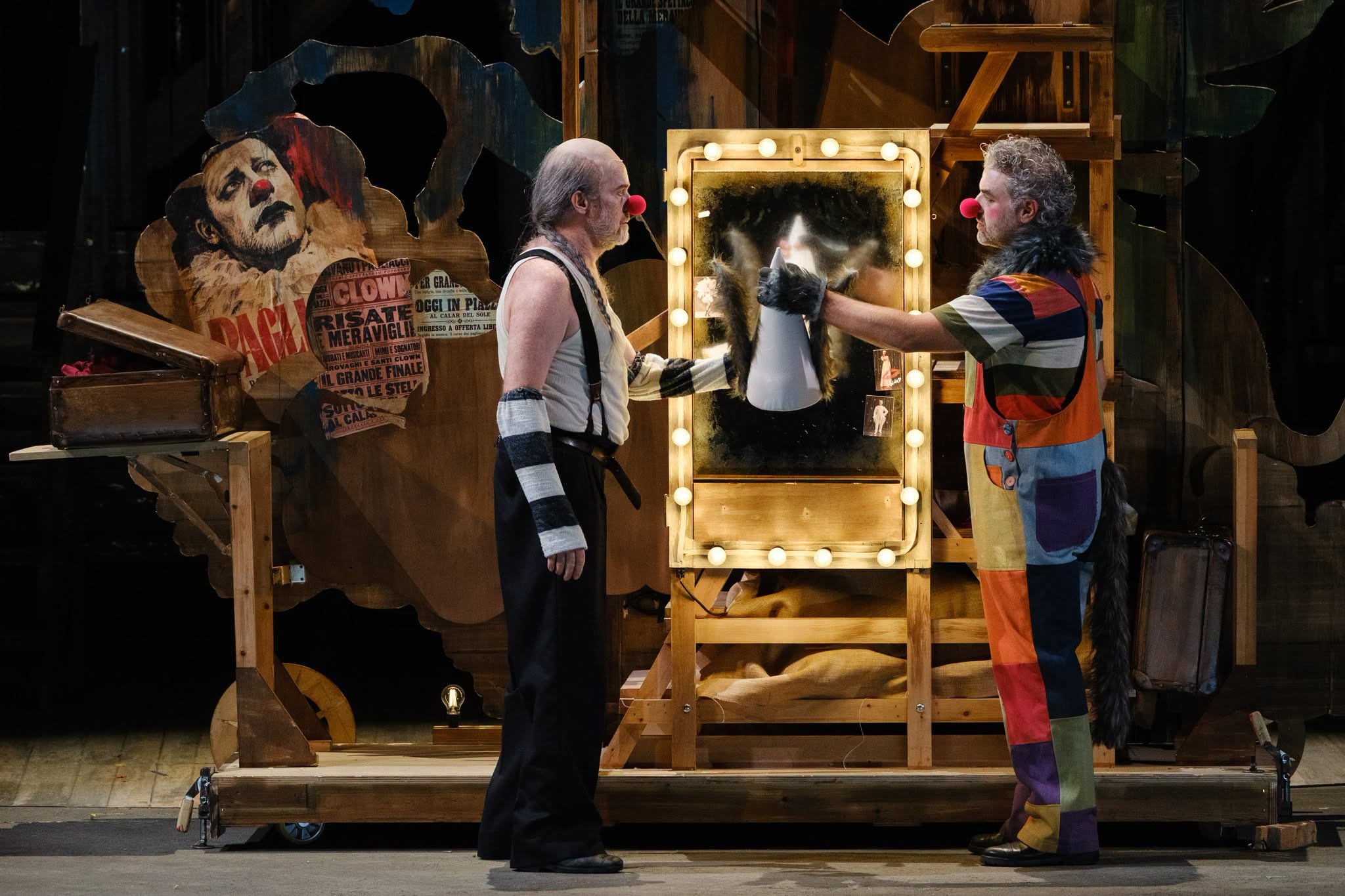
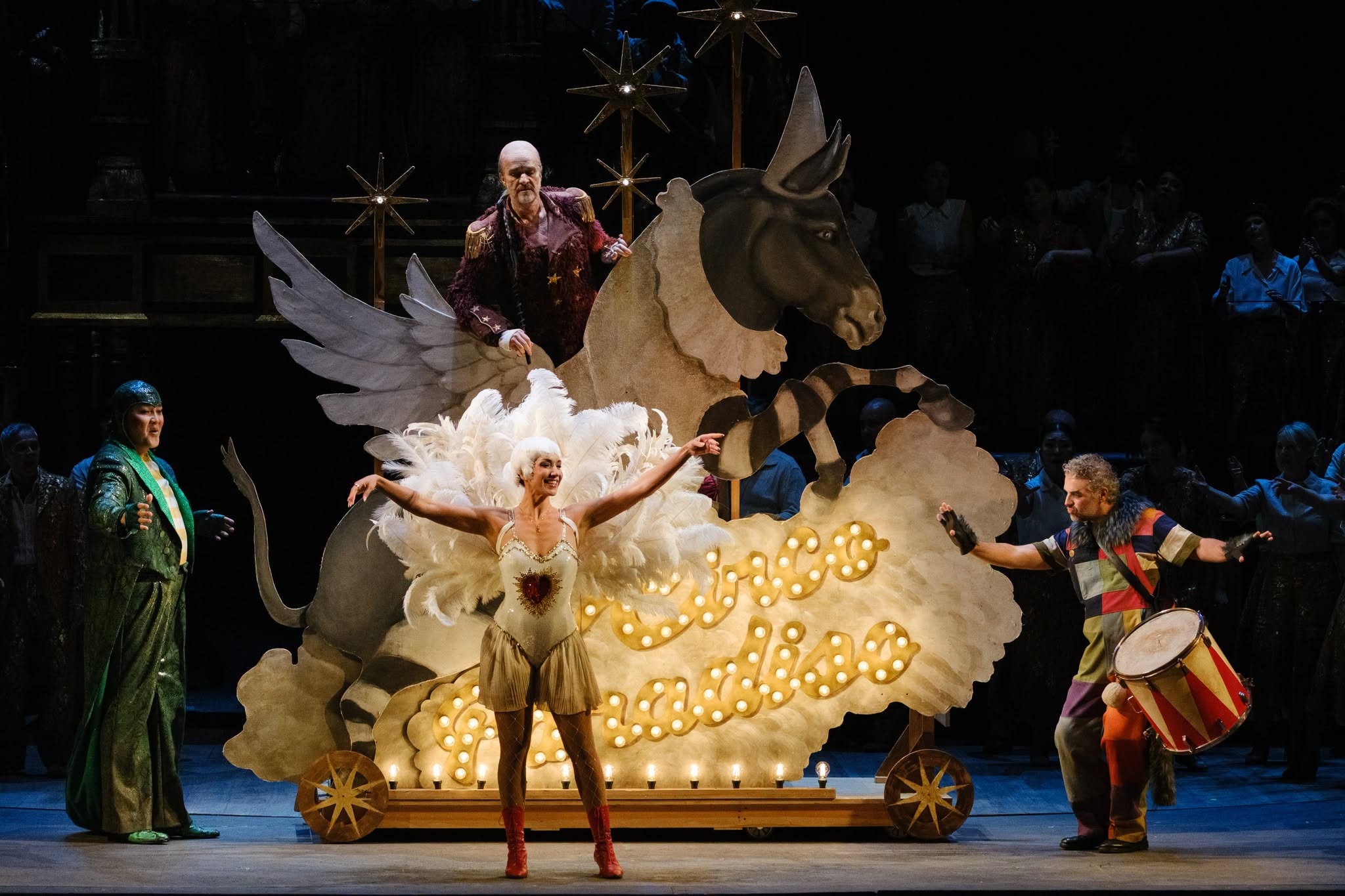
Menghini also simply parked the chorus on stage, which worked well to allow us to bathe in the sound of the Easter hymn, until it was hijacked by the barbecued lamb, but the rudimentary handling of the chorus reduced the impact of his staging. This was especially apparent in the second half of the evening, with Micheli’s Pag, which took the entire show to a different level. I’ve long thought Pag the stronger work of the two, and this was mirrored in a staging that seemed to energize all on stage. Partly this was due to the fact that the chorus was used much more imaginatively. Micheli seemed to set the work in a fantasy world, where the villagers danced to their jaunty numbers, with a group of jugglers adding a further festive air. Yet within this idyllic fantasy land, there was horrific violence, which took the story to its gruesome end. Micheli seemed able to obtain particularly effective characterizations from his principals; we felt their pain and their dreams much more immediately and fully than we did in Cav. It helped that he had two superb storytellers in Martin Muehle and Fabián Veloz, who really put the text front and centre. In the closing tableau, Micheli added a particularly sensitive touch. Throughout, Nedda wore red shoes and, in the final moments, Tonio picked them up and held them aloft, placing them at the front of the stage as the curtain came down. This was clearly a nod to the zapatos rojos, a symbol of violence against women. I found it particularly touching as it felt that Micheli was saying ‘yes, we’ve just watched a woman being murdered on our night out, but we have a duty to remember the fates of countless others every day’. This felt of a piece with the whole of Micheli’s staging, one that made us feel and reflect, just as good opera should.
The house orchestra was on terrific form under Battistoni. There’s nothing like hearing an Italian orchestra play this music; they bring a lyricism and beauty that few others do. This was particularly apparent in the Cav intermezzo, where the swooping portamenti in the strings, far from feeling gratuitous, added a deeply emotional effect. There was a sweetness to the string tone that I found particularly beguiling, and Battistoni clearly has a good ear for orchestral sonorities, bringing out the wealth of colour in the orchestration of Pag. His pacing was sensible in Cav, a work that can drag in places, but it seemed as though he’d had an espresso at intermission, because somehow Pag felt considerably more dynamic in pacing and force. The chorus is now under its new director Gea Garatti Ansini. She transformed Bologna’s into the finest chorus in Italy, and is surely on track to do the same here. The discipline and focus she has instilled in just a few short months is nothing short of remarkable. I must admit to having goosebumps at the start of the Easter hymn. In the unaccompanied opening, the clarity of the tuning, the pristine balance with wonderfully resonant basses, all seemed to speak immediately to the soul – even for someone like me who doesn’t share the Christian beliefs. Her singers sang with big, bold tone, yet the discipline was always impeccable, no ragged entries here, just a single, focused wall of sound that projected into the room. This was seriously impressive choral singing.
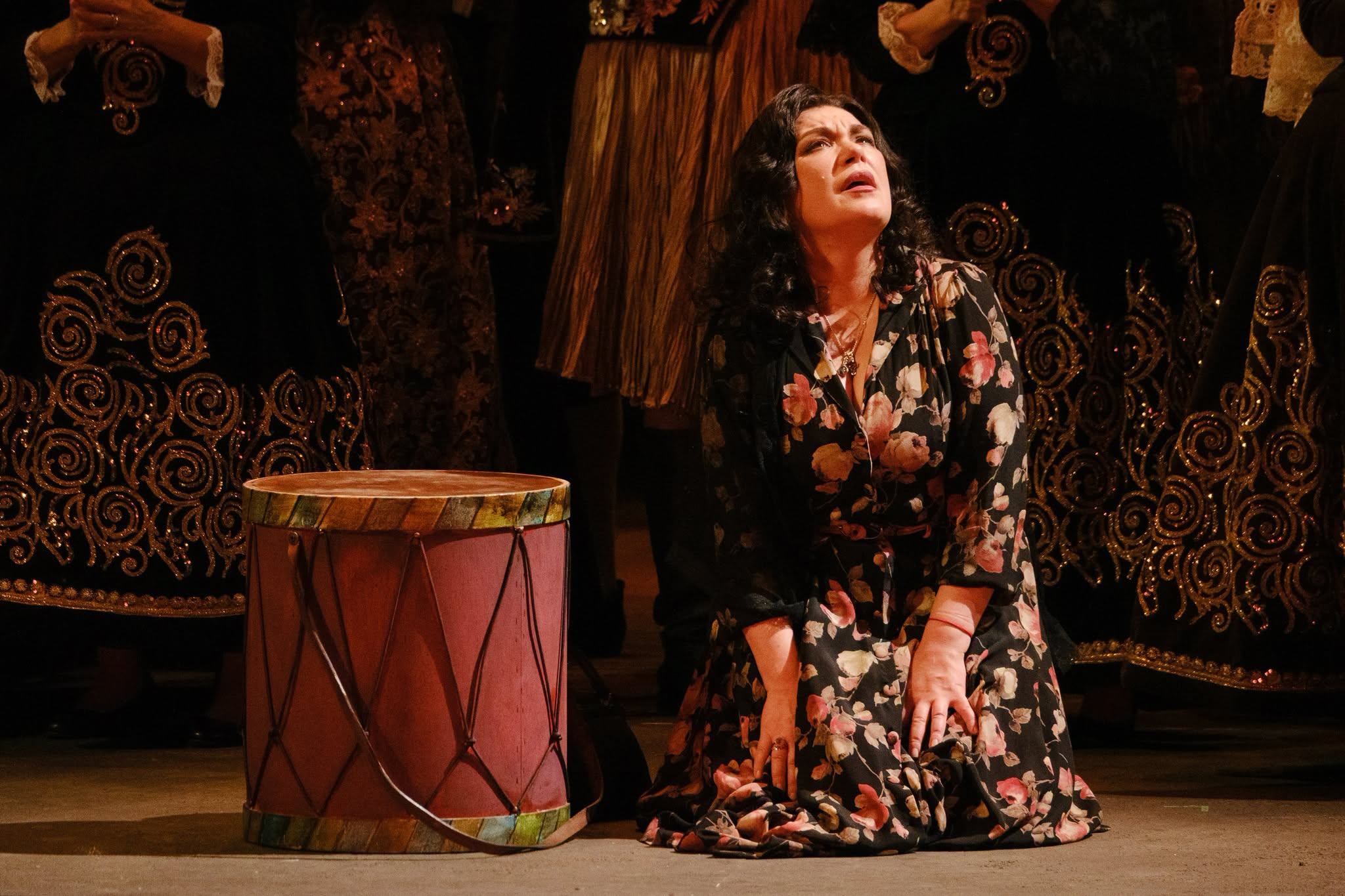
Just sixteen hours after singing the mezzo-soprano solo in the Verdi Requiem in Parma last night, Ekaterina Semenchuk was back on stage this afternoon as Santuzza. Any apparent tiredness in the tone was perfectly forgivable given the circumstances, which might explain why her tuning at times had a tendency to head south. She had clearly made an effort to enunciate the text, but the words tended to disappear in ‘voi lo sapete, o mamma’, even though she sang it with passion and dedication. Angelo Villari, himself Sicilian, gave us a virile Turiddu. His tenor has easy squillo, ringing out into the room, opening up on top with ease. The robust yet sunny tone was ideally matched to the role, and he sang his opening romance to Lola, in the Sicilian language, with a textual understanding that few could match. Simone Piazzola was an energetic Alfio, singing with generous force although the very top had a tendency to discolour. Veta Pilipenko sang Lola in a sunny, focused mezzo. Elena Zilio, now 85 years young, is nothing short of miraculous. Having heard her sing Lucia many times over the years, it’s simply incredible how she sounds even fresher now than she did earlier this year in Bologna. The stage presence is undimmed, while the voice still carries with ease into the house.
In Pag, the prologue was sung by Fabián Veloz from the front of the platea. Veloz is a born storyteller. He made the text so clear and so compelling that one could not help but be drawn in. He phrased his opening number in long, even lines, the voice soaring with ease up to the high A-flat, the registers fully integrated. Carolina López Moreno sang Nedda in a focused soprano, with easy reach on high. López is German of Bolivian and Albanian heritage, and while her Hispanophone and Lusophone colleagues really made the text live, it did feel that López was singing over the text rather than with it, which meant that her excellent vocalism just lacked the ultimate in impact alongside her colleagues. She most definitely has a glamorous instrument with a crystalline top and is a singer I’d be keen to hear again. Her Silvio was Joshua Hopkins, who sang with a firm, similarly focused baritone, though here again, the top had a tendency to taper off. Matteo Falcier sang Beppe in a bright, forwardly-placed tenor with an easy line.
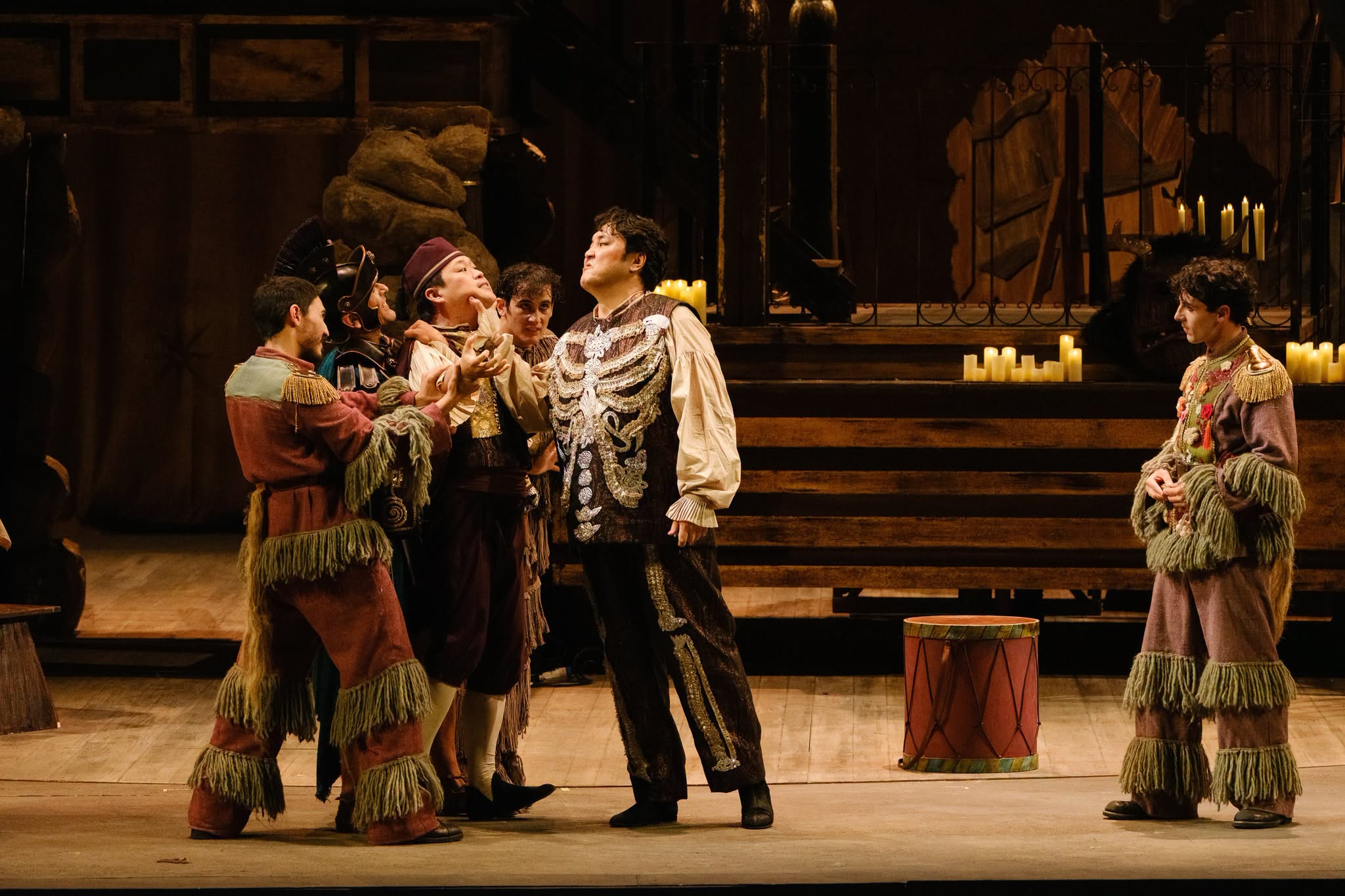
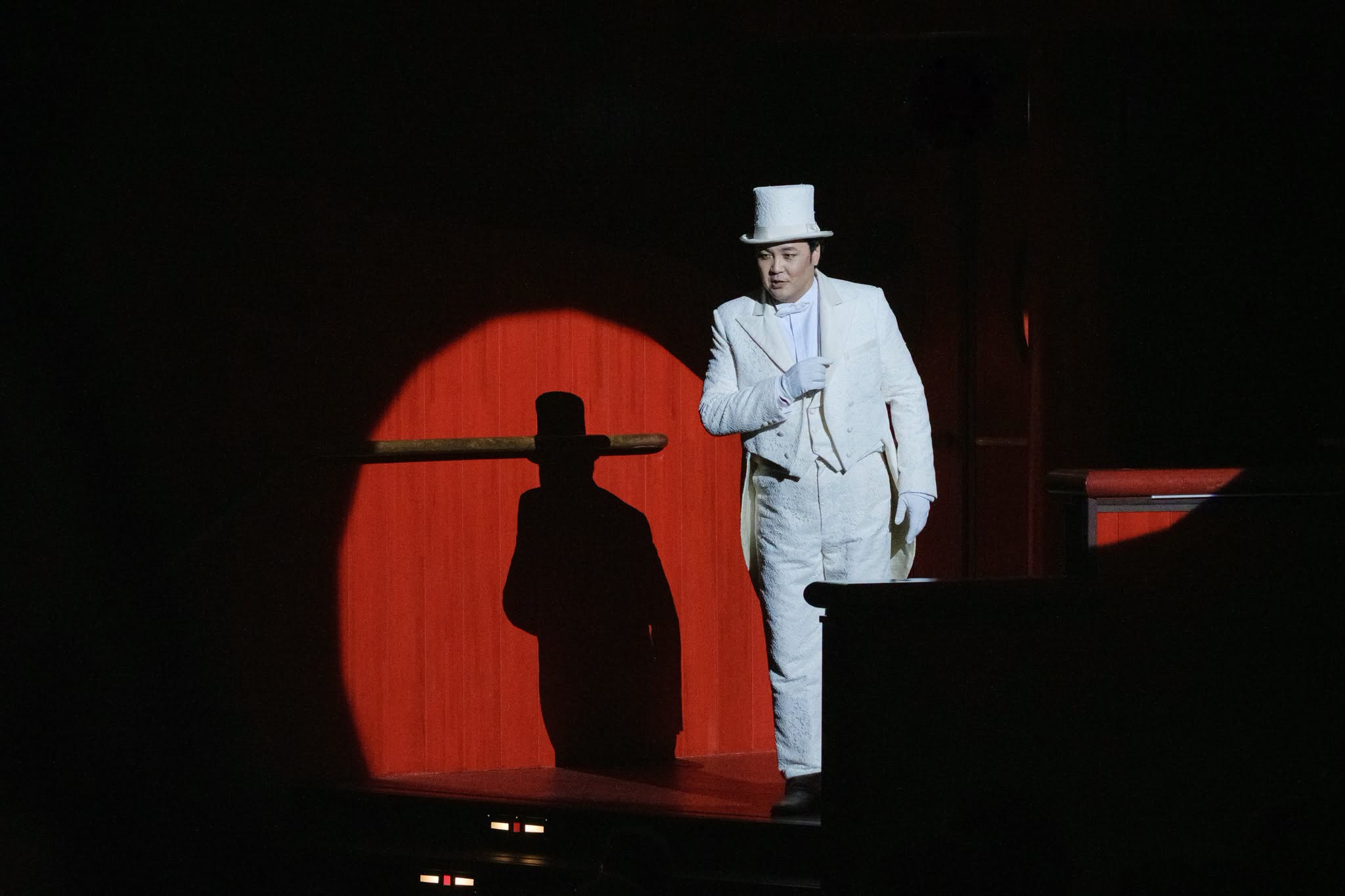
Martin Muehle sang Canio as if his life depended on it. It’s been a while since I’ve heard the Brazilian tenor live, but his account of this role was simply devastating. The voice is huge, with focused cutting power that opens up most thrillingly. Yet Muehle kept the volume until he really needed it. His ‘vesti la giubba’ was utterly devastating. The elemental force he brought to Canio’s outburst was simply harrowing and the goosebumps I experienced earlier with the Easter hymn returned here. The laser-focused amplitude of the voice seemed to reach deep into the listener’s soul. Throughout, Muehle’s verbal acuity really made the text live and, in turn, heightened the impact of his singing even further.
As the opening production of the Regio’s Festival Verismo, this Cav and Pag made for a fitting start. It felt very much like an evening of two halves, with a Cav that had some positive aspects – the sound of the Easter hymn and choral singing, Villari’s idiomatic Turiddu, and Zilio’s timeless Lucia – but which was also let down by Menghini’s staging which lacked emotional impact. Instead, the emotional impact came in Pag, with Battistoni bringing crackling energy in the pit, while Veloz and Muehle made the text truly live. There were curtain calls after both works, and the audience received both casts with warm generosity.

