Strauss – Elektra
Klytämnestra – Evelyn Herlitzius
Elektra – Ricarda Merbeth
Chrysothemis – Elisabeth Teige
Aegisth – John Daszak
Orest – Łukasz Goliński
Der Pfleger des Orest – Giuseppe Esposito
Die Aufseherin – Valeria Attianese
1. Magd – Antonella Colaianni
2. Magd – Valentina Pluzhnikova
3. Magd – Arianna Manganello
4. Magd – Regine Hangler
5. Magd – Miriam Clark
Die Vertraute – Chiara Polese
Die Schleppträgerin – Anna Paola De Angelis
Ein junger Diener – Andrea Schifaudo
Ein alter Diener – Simonas Strazdas
Coro del Teatro San Carlo, Orchestra del Teatro San Carlo / Mark Elder.
Stage director – Klaus Michael Grüber.
Teatro San Carlo, Naples, Italy. Friday, September 27th, 2024.
When I had the privilege of seeing Evelyn Herlitzius sing Elektra in Zurich in July 2019, little did I suspect that would be her last. But Herlitzius is one of the most intelligent singers out there and knows when to leave us wanting more. At the Teatro San Carlo tonight, she made her debut in the role of Klytämnestra, alongside Ricarda Merbeth in the title role and Elisabeth Teige as Chrysothemis, all in Klaus Michael Grüber’s staging, under the direction of Mark Elder. It was a bit of a coup for Naples to be the venue for Herlitzius’ prise de rôle, in this beautiful historic house, and it was certainly an attractive cast on paper.
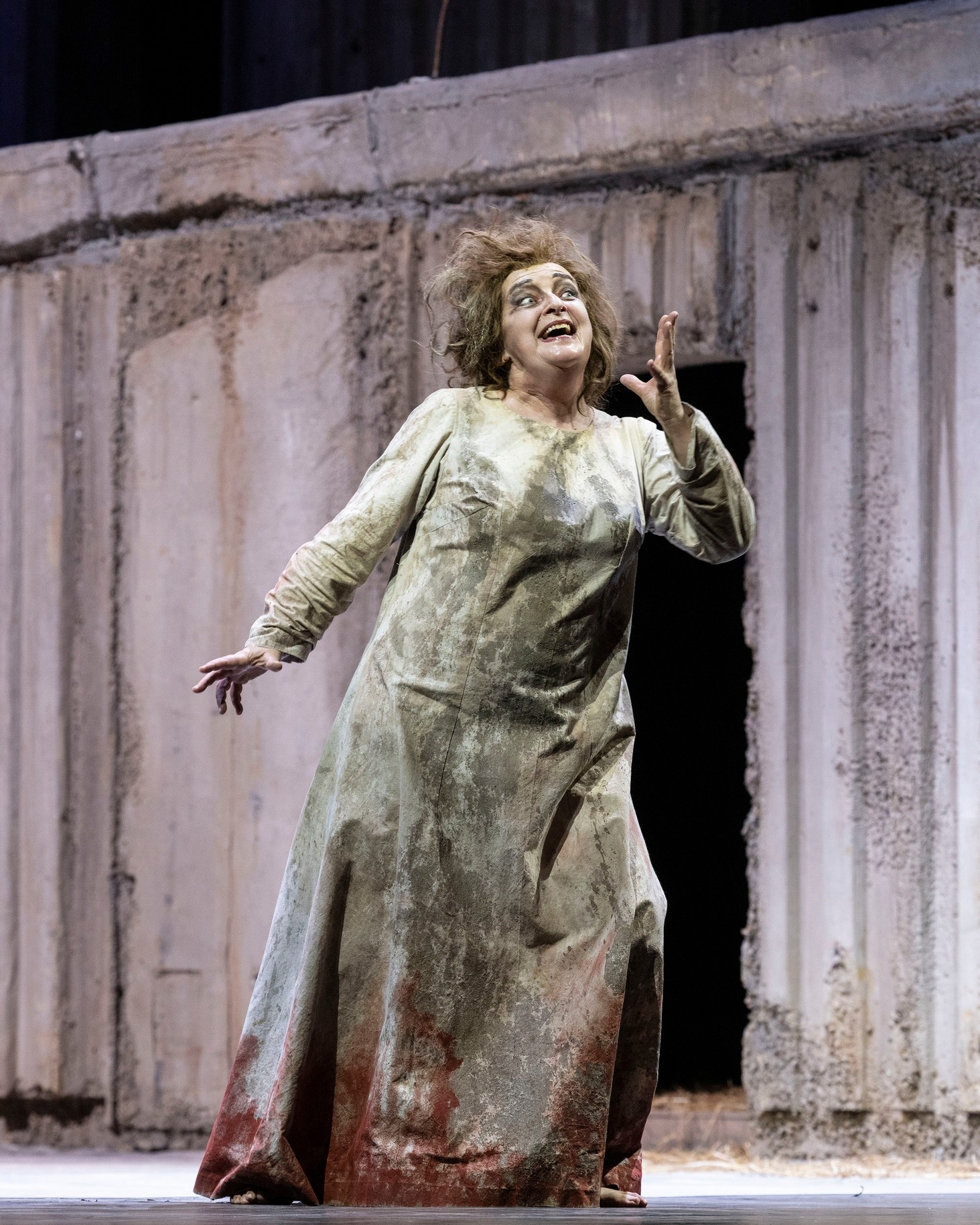
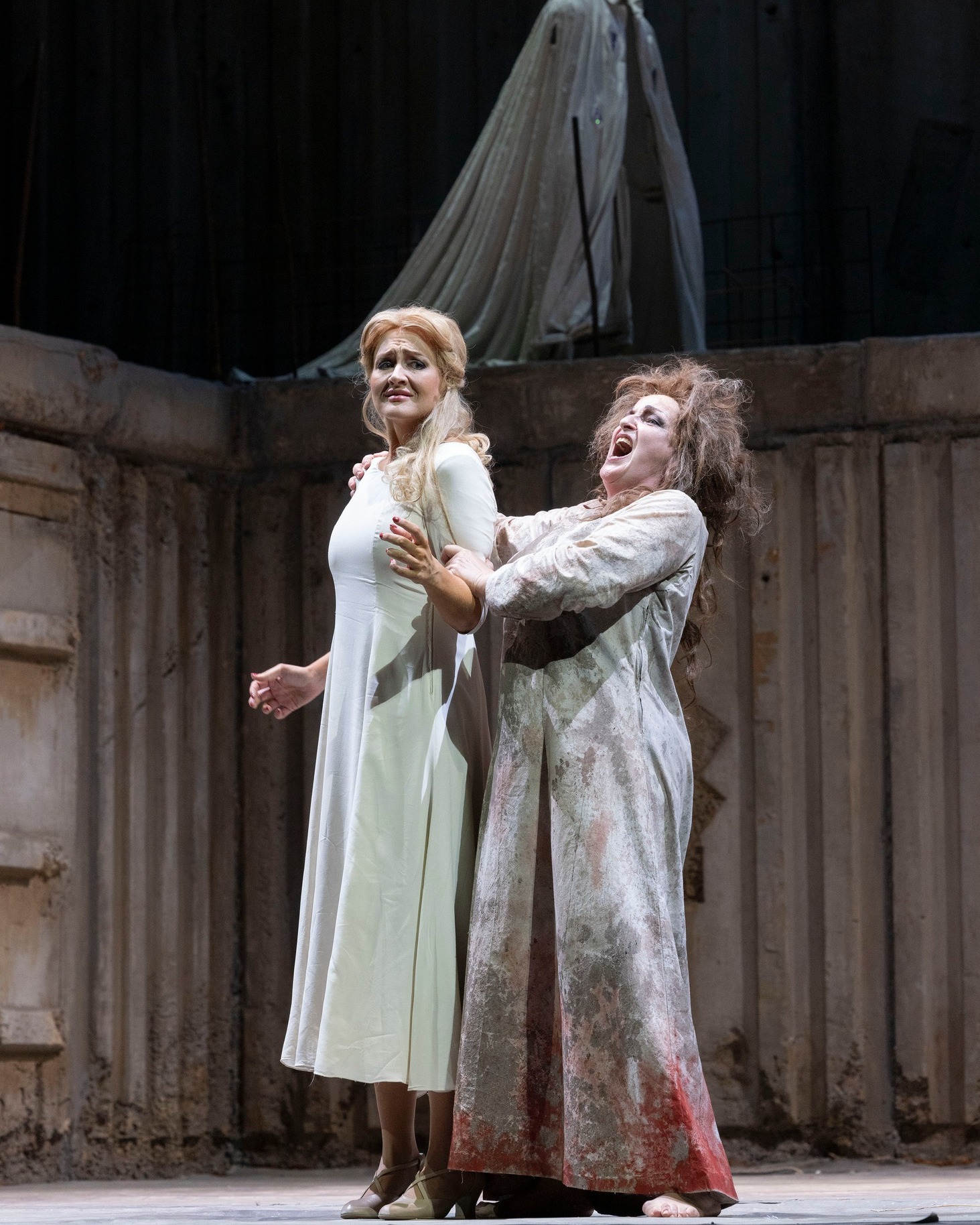
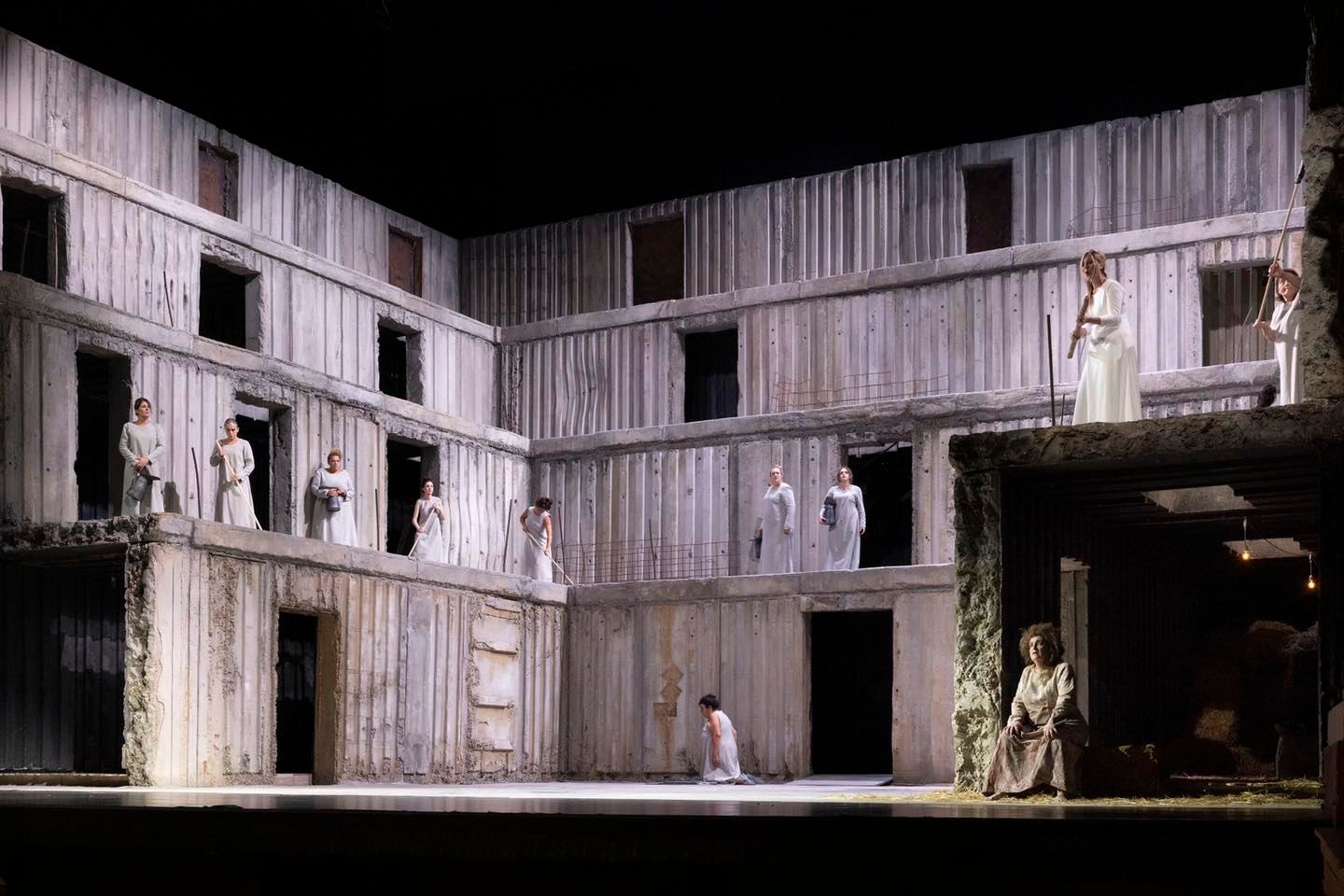
Grüber’s staging sets the action in an imposing three-storey set. The curtain opens on the maids cleaning the upper layers, while Elektra appears on the ground level where she spends the entirety of the evening. Other characters appear from the upper levels and descend to engage with Elektra. It seems that the palace was suffering a fair bit with the recent cost of living increases, as the cast made frequent use of hand-held electronic torches to light the scene, leading to a striking closing tableau of the maids shining torches on Elektra’s lifeless body. It did feel that the presence of male servants running around the palace just before Klytämnestra’s entrance, distracted from the fact that the first half of this score is entirely focused on women. The costumes are vaguely Hellenic in flavour with long, flowing white dresses for the females, with the exception of Elektra who wears a long flowing dress covered in dirt. Personenregie felt relatively rudimentary, in that frequently cast members were simply left to gesticulate to the front, but thanks to the sheer clarity of text that Merbeth and Herlitizus injected into the evening, the drama was a lot more vivid than it could otherwise have been.
Naples is one of the world’s great coffee cities, so it was particularly frustrating that the house engaged a conductor who took such a lethargic, pedestrian approach to the work. The evening came in at just under two hours – and this with the usual theatre cuts – when usually the work would last around one-hundred minutes when performed cut. Even from the opening scene, it was clear that Elder was in no way inclined to actually add any perceptible dramatic tension to his conducting. To his credit, he did obtain some excellent playing from the San Carlo orchestra – the brass in particular was impressive in its precision, although the strings lacked something in corresponding precision in the rapid figures around the entrance of Aegisth. He made a real effort to obtain a thick string sound, with soupy portamenti, and voiced the orchestral parts in the Klytämnestra scene to really bring out the exoticism of the Straussian harmonies. And yet, the dramatic tension throughout the evening frequently drooped, the hammering following the murder of Aegisth lacking any kind of violence. Merbeth and Herlitzius in particular worked really hard to inject life into the evening, but it was clear more than once that they wanted Elder to take his foot off the brake. It’s a real shame that Elder’s conducting was such a impediment to the evening.
This was my second encounter with Merbeth’s Elektra, having seen her take on the role in Berlin back in early 2019 – coincidentally replacing Herlitzius who was indisposed that night. She has grown so much in authority in the role in the intervening years. Yes, the role sits slightly low for her, but the registers are so much more integrated now then they were previously. The voice is a very good size, ringing out with ease on high. Her Elektra clearly had a very tenuous grasp of sanity right from the start, constantly threatening to burst into dance in her opening monologue – if only the orchestra had responded with much more rhythmic impetus. Given Merbeth’s ease on high, the two high Cs rang out with thrilling abandon into the house.
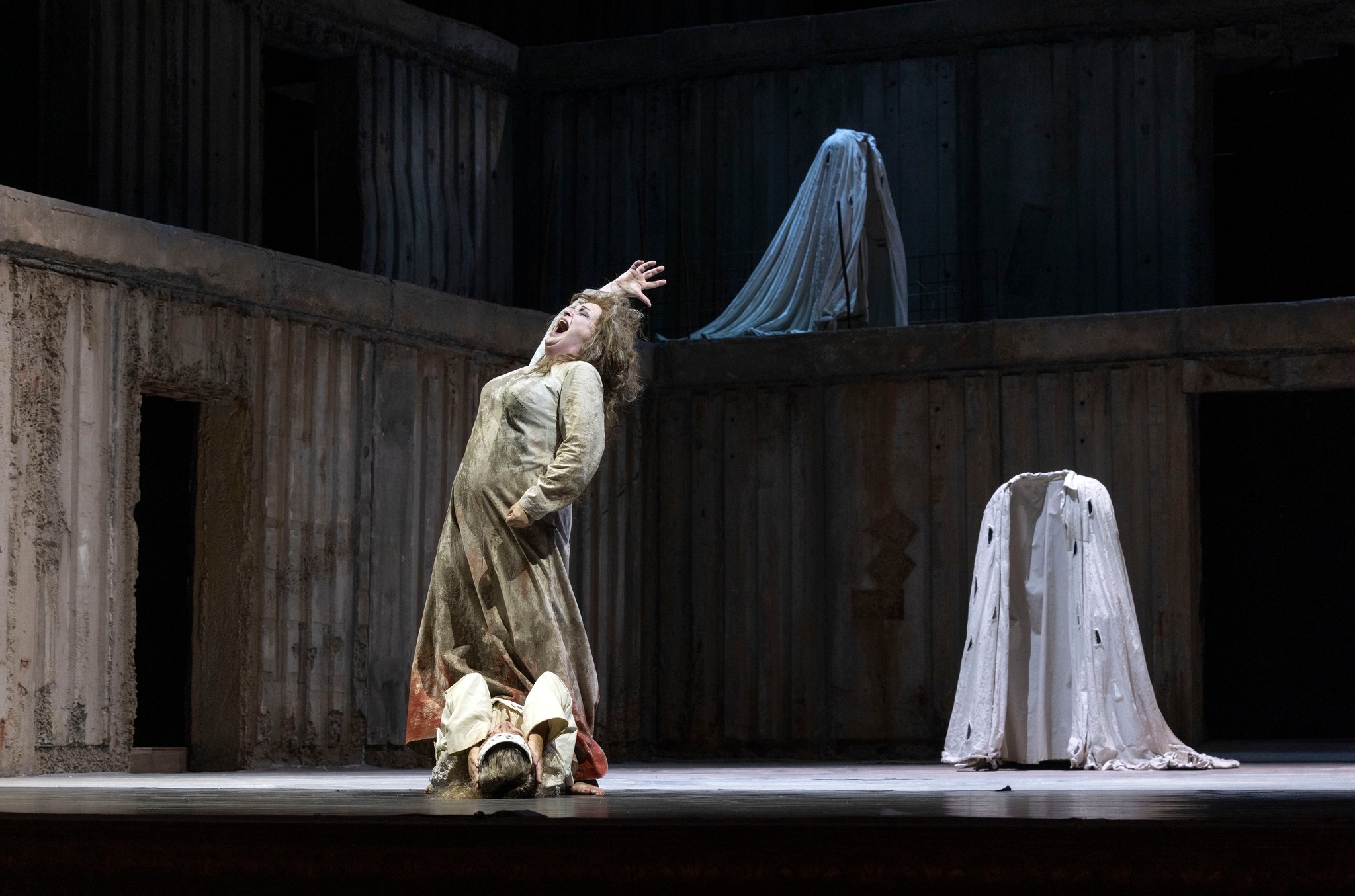
Herlitzius’ Klytämnestra was imperiously sung, with regal magnificence. She truly sang the role, not just chesting it, instead crossing the registers with ease, always fully integrated. The middle of the voice was so focused in sound that it penetrated into the house with laser-like focus. Just as with Merbeth, hers was a Klytämnestra genuinely sung through the text, the two injecting the drama that was so sorely lacking from the pit. Herlitzius brought out a genuine horror, pulling back on the tone, colouring it to make her bad nights feel so realistic. This was a most exciting role debut and I look forward to Herlitzius growing even further in the role in the upcoming seasons.
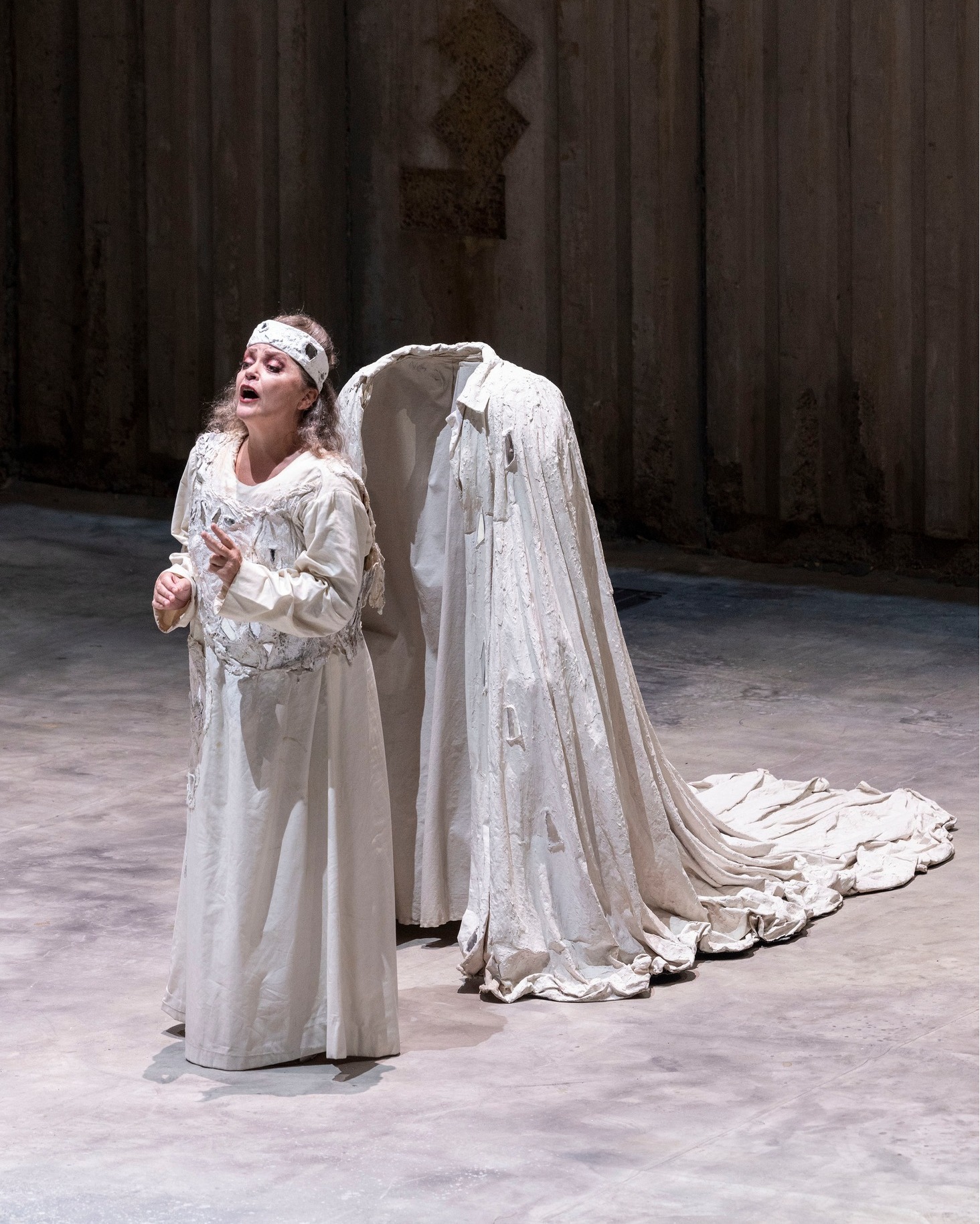
Elisabeth Teige sang Chryosthemis with radiant, youthful tone. Just as with Merbeth, the voice sits high, so that she can negotiated those high-lying Straussian outpourings of sound with ease and beauty of tone. Indeed, on her final high B of the evening, dispatched with bright, steely tone, ringing thrillingly into the house, the Nonna in the row in front of me exclaimed ‘mamma mia!!!’. The voice, as of yet, doesn’t quite have the ultimate in cutting power, with the result that Teige’s account of her ode to childbirth lost a little bit of impact, with her being placed far back on the stage. But make no mistake, Teige is a very exciting Straussian talent.
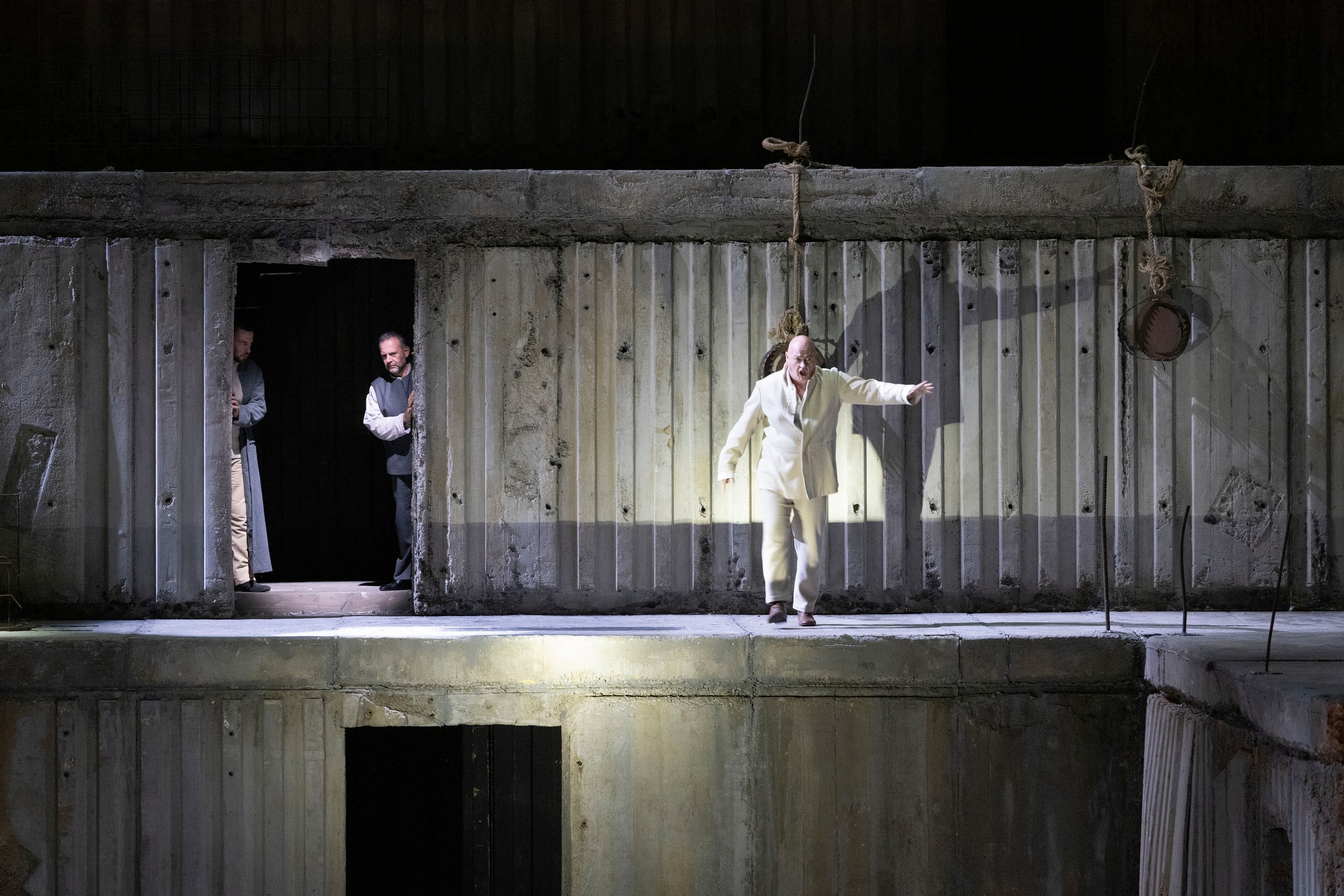
John Daszak sang Aegisth with his customary textual acuity and focused tone. Łukasz Goliński gave us a very well sung Orest. Yes, the role sits slightly low for him, the bottom reaches lacking in the ultimate degree of resonance, but the voice itself is undeniably handsome in tone, with good amplitude. The remaining roles were effectively taken. Antonella Colaianni sang the first maid in a warm, resonant contralto. Regine Hangler sang the fourth in a focused, if rather shallow soprano, while Miriam Clark, who I had the pleasure of seeing as Aida in Copenhagen, sang the fifth with long, radiant lines. Some of the other supporting characters could have benefitted from a few more consonants in their sung German. Andrea Schifaudo sang the young servant in a handsome, focused tenor, while Giuseppe Esposito sang the tutor similarly to how Neapolitan drivers approach traffic lights – with the notes and rhythms on the page seen as suggestions.
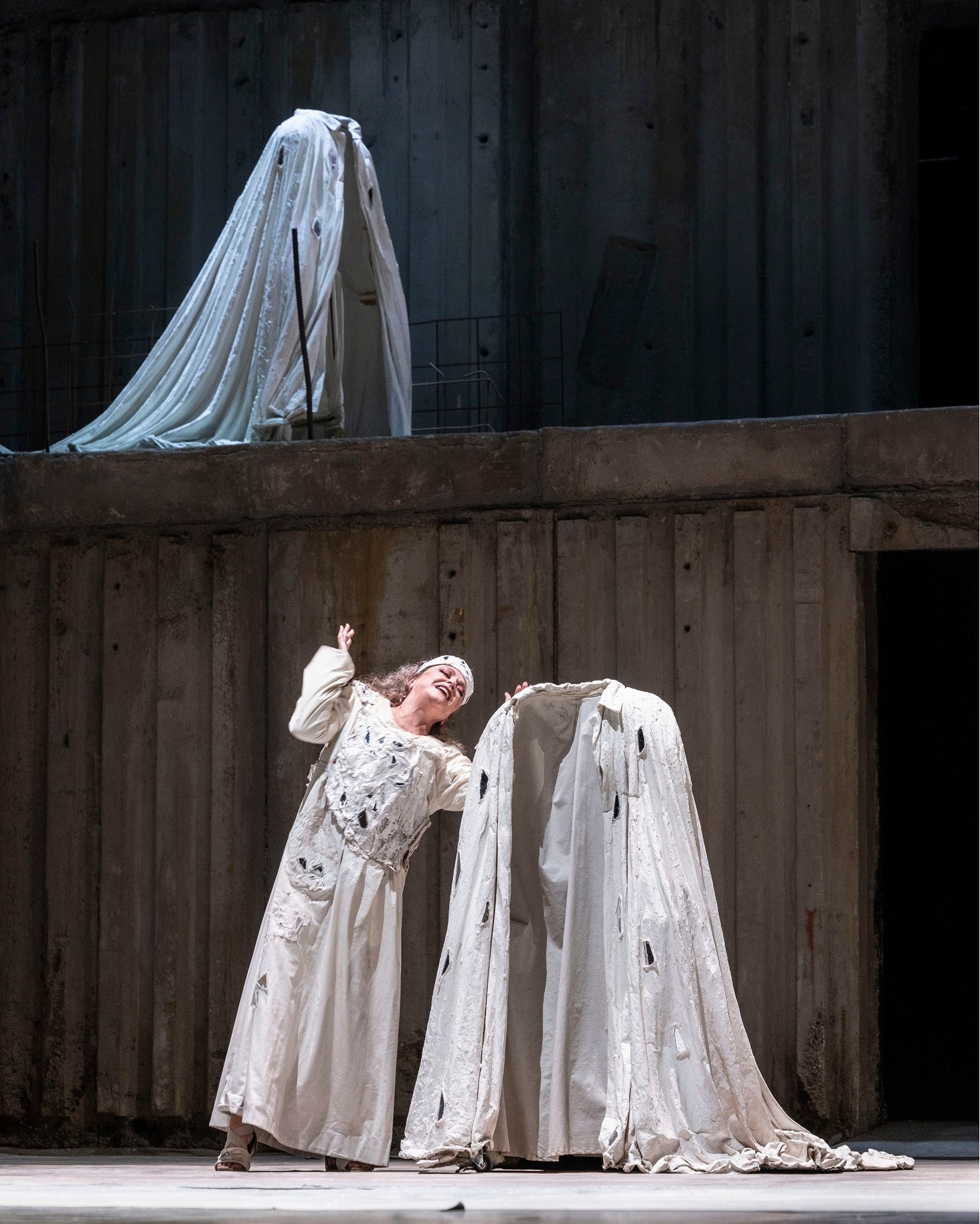
Tonight was an evening I did not want to miss, and the leading ladies most certainly made it worth the journey. Grüber’s staging did the job, even if it felt rather statuesque, while Elder’s conducting was pedestrian and lacking in any kind of dramatic tension. Fortunately, with great singers like Merbeth and Herlitzius on stage, the cast was able to transcend the torpor from the pit and give us a compelling evening through the text. The audience response at the close felt rather cool, but there were cheers for the three leading ladies, particularly generous for Merbeth.
 operatraveller.com
[…] and audible. Indeed, I wish Schwab and Bender had been responsible for the Elektra I saw in Naples last month, since Bender’s conducting was absolutely superb. Bender was so alive to the rhythm […]
[…] role, while Felix Bender’s conducting was some of the best I’ve heard in this score. In Naples, the evening was hampered by Mark Elder’s pedestrian conducting (1 hour and 50 minutes with […]
[…] house has appointed Mark Elder to be his successor, a conductor who managed to suck the life out of Elektra in Naples last year, and whose performances have rarely, if ever, filled me with excitement. […]