And so, we come to the end of another calendar year. It’s hard to believe that we’re now at the end of 2025. The year seems to have raced by at ever-increasing velocity. As is customary at this time of year, I’ll take a moment to reflect on the operatic year gone by. This year saw me visit theatres from Helsinki to Buenos Aires, São Paulo to Munich and many others in between. This year, I visited the Opéra de Monte-Carlo, Teatro Filarmonico in Verona, the Teatro Comunale Pavarotti-Freni in Modena, the Kungliga Opera in Stockholm, and the Musiktheater im Revier in Gelsenkirchen, all for the first time. This year was also a special year because it marked the 15th anniversary of operatraveller.com. The site is very much a troubled teenager now, takes a lot of work to maintain, but hopefully gives you as readers as much pleasure as it gives me to produce it.
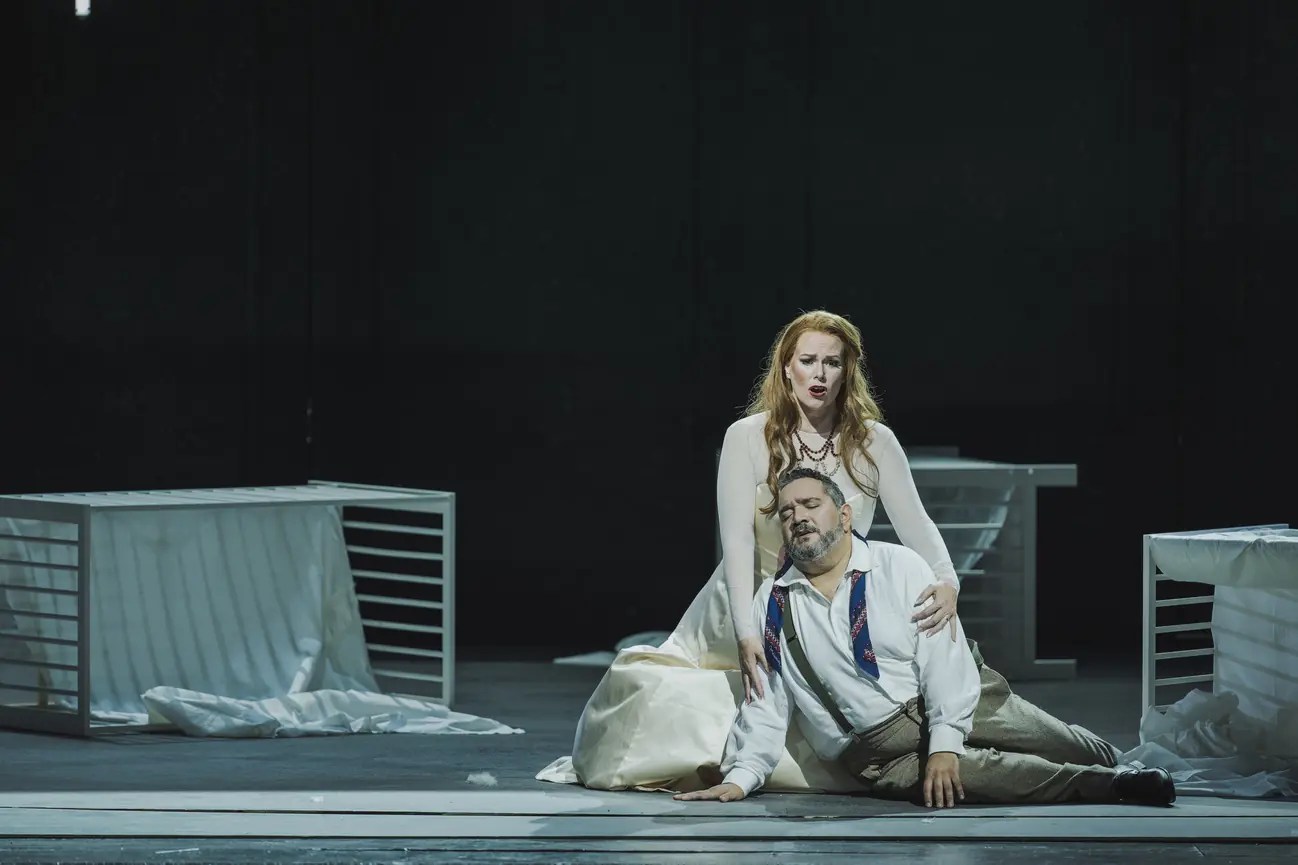
So often, things in life seem to come in threes; operatically, this year was no exception. It was wonderful to be able to see a trio of Bohèmes this year, led by young conductors. In Cologne, Mino Marani led an idiomatic reading with a youthful cast, sadly hampered by the poor acoustic of the temporary theatre. In Stockholm, Vincenzo Milletarì once again proved that he’s a Puccini conductor of the very first rank, transforming a Scandinavian orchestra into the most Italian-sounding band one could imagine, in a reading of sheer emotional power. If the singing wasn’t at the highest level, Milletarì’s conducting more than compensated. There was also a trio of Lucrezia Borgias. Getting to see three of today’s leading bel canto specialists over the course of the year was a real treat. In Rome, Lidia Fridman showed poise and well-schooled singing. In Florence, Jessica Pratt invested the role with so much emotion, giving so generously of herself. She also had the benefit of a superb staging by Andrea Bernard. In Seville, Marina Rebeka gave us a singing lesson, demonstrating a fabulous technique always at the service of the music and the drama. There was more Donizetti, with two Roberto Devereuxs in the same production, a month apart. In València, Eleonora Buratto swept all before her with her total command of text, music and technique, accompanied by Silvia Tro Santafé who was unflinching. Roberta Mantegna sang with generosity in Naples, accompanied by a solid cast. In Turin, an Elisir d’amore reminded us what a superb talent Valerio Borgioni is singing Nemorino, the voice full of Italian sunshine. Sadly, he was let down by a production by Daniele Menghini that just sucked the life out of the work.
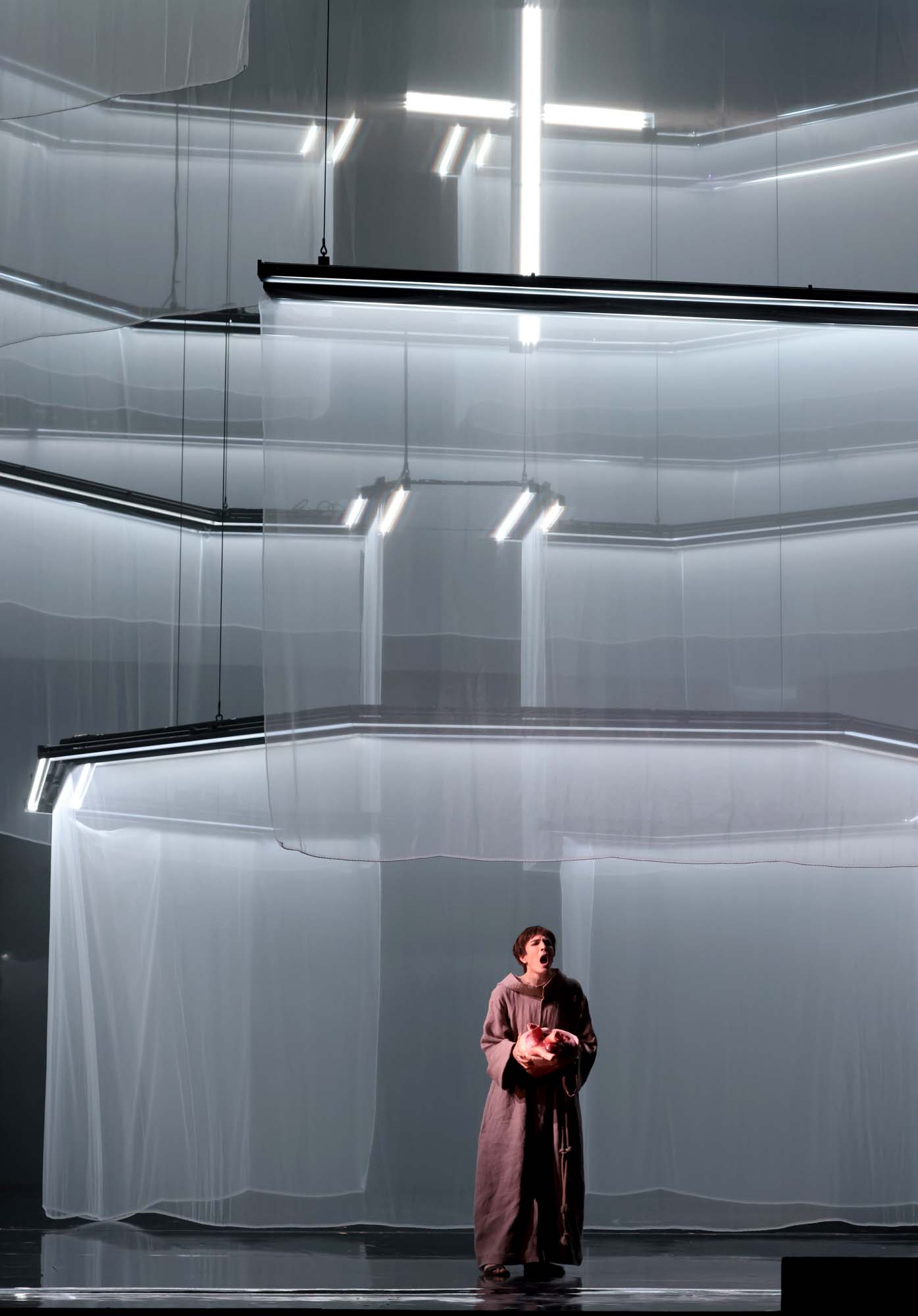
There was some new music this year. Francesco Filidei’s Il nome della rosa premiered at the Scala to a sold-out run. Based on the novel by Umberto Eco, it’s a work of immense ambition, full of references to the glories of past Italian operas, but also resolutely looking forward to the future. One opera that has clearly become a repertoire piece in just four years is the late Kaija Saariaho’s Innocence. I saw its German premiere production in Gelsenkirchen, in a staging by Elisabeth Stöppler. The work has lost nothing of the sheer impact it had in Aix-en-Provence back in 2021, and was given a performance of the highest musical standards by the local cast. On the other end of musical history, the Liceu presented Calixto Bieito’s staging of Giulio Cesare. Bieito gave us a thoughtful and cerebral staging, if perhaps one lacking the sheer emotional punch of his earlier work. It was also performed at the highest level with Julie Fuchs a captivating Cleopatra and the eminent William Christie bringing a lifetime of experience to the pit. I also had the pleasure of seeing some rarities. Fuchs was also sensational in Robinson Crusoé at the Théâtre des Champs-Élysées, under the insightful musical direction of Marc Minkowski, even if Laurent Pelly’s staging didn’t quite cohere. In Munich, Barrie Kosky directed Christmas Eve, with a terrific ensemble cast, conducted with real insight by Vladimir Jurowski, the highlight of which was the sight of the great Violeta Urmana descending from the flies on a silver throne. In Turin, we got to hear Thomas’ Hamlet in its original version for tenor, very different to the customary baritone version. One could not hope for a better guide to the work that John Osborn in the title role, led by the ever-insightful Jérémie Rhorer. Sara Blanch was a fabulous Ophélie, while Clémentine Margaine was utterly regal as Gertrude, despite being hamstrung by an ugly wig. In Bergamo, the Festival Donizetti Opera, always a highlight of November, presented Caterina Cornaro. Sadly, Francesco Micheli’s staging was a bit of a mess, but the musical standards were, as always there, excellent.

Verdi was a constant thread throughout the year, as he always is. In Helsinki, I saw a Don Carlo that has to be the best production I’ve seen by Davide Livermore. The choral singing was outstanding. I must admit to having had some trepidation before going to see Nabucco in Modena, since the region of Emilia-Romagna is the epicentre of antisemitism in Italy, currently. Fortunately, Federico Grazzini’s staging was intelligent and full of nods to recent and ancient Jewish history, while Massimo Zanetti’s conducting was terrific – if only he’d encouraged his cast to ornament the lines. In Bologna, Daniele Menghini redeemed himself with a cogent staging of Un ballo in maschera, with the Comunale chorus and orchestra on magnificent form. In Monte-Carlo, Zanetti led a more restrained account of Aida in a risible staging by Livermore. Fortunately, Marie-Nicole Lemieux and Ludovic Tézier were both sensational as Amneris and Amonasro, while Aleksandra Kurzak’s Aida had moments of insight, but also significant dryness in the tone. Brian Jagde gave us a thrilling debut as Otello in Madrid, while Asmik Grigorian brought dramatic charge to Desdemona. Gabriele Viviani made Jago utterly quotidian in his evil. In Naples, Anna Pirozzi swept all before her in Attila, conducted with real verve by Vincenzo Milletarì.
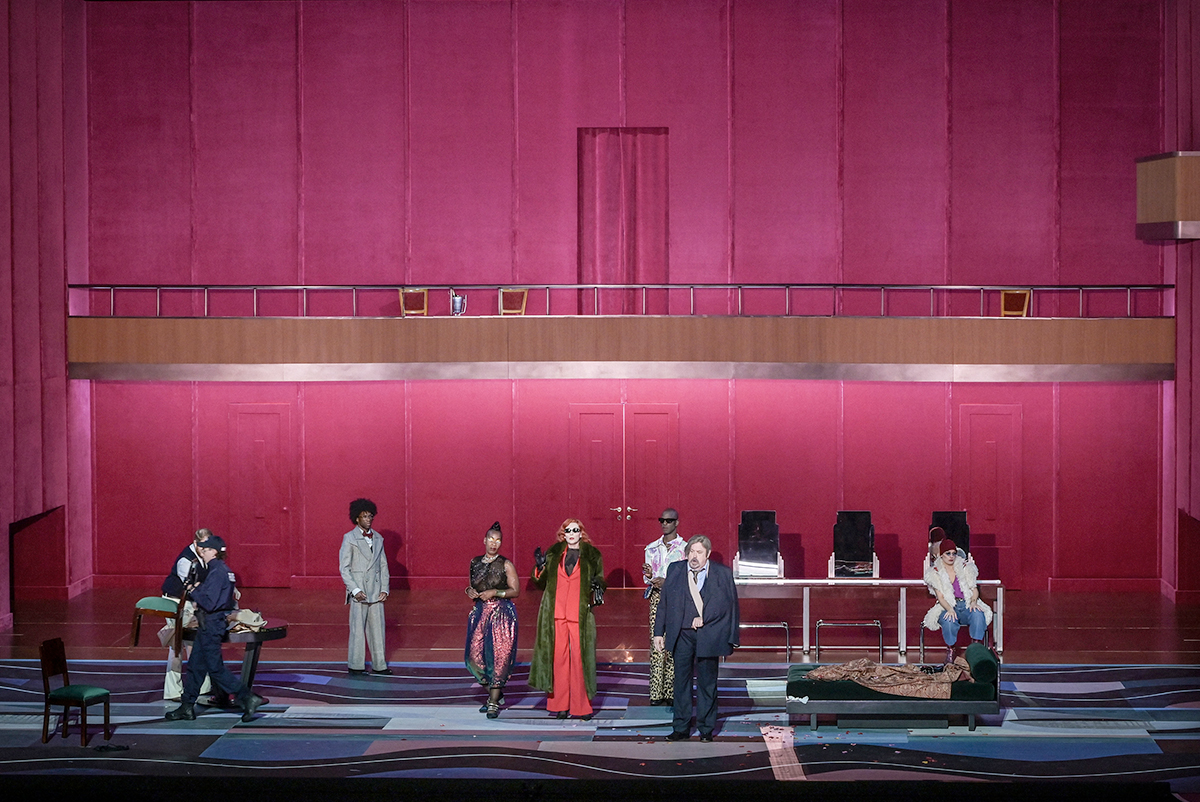
Strauss was present, if not in great quantity this year. At Opera Ballet Vlaanderen, Ersan Mondtag directed a visually adventurous Salome, with Alejo Pérez leading the house orchestra on coruscating form. Unfortunately, Allison Cook’s account of the title role was wayward in pitching, but she was extremely engaged dramatically. At the Théâtre des Champs-Élysées, the great Véronique Gens finally made her debut as the Marschallin in a deeply moving staging of Der Rosenkavalier by Krzysztof Warlikowski. Something happened in the trio. As Gens sang her final high B of the night, we heard something much more sublime than just a note or a word, she seemed to interpret life itself, the passing of the torch and the acceptance of maturity. It’s a sound I’ll never forget. The Brussels Ring cycle concluded with Götterdämmerung. Once again, Alain Altinoglu and his orchestra proved themselves to be one of the very finest in the world. They gave the score Latin lyricism and Germanic precision. In short, a very Belgian approach. Kent Nagano and Concerto Köln continued their cycle with Siegfried, the period instruments bringing a revelation in orchestral sound. The Bologna Ring also continued with Siegfried. I’m writing these words a few days after learning of the passing of Thomas Johannes Mayer, who sang the Wanderer. His account of the role was so insightful. His final scene of the cycle gave us the unbearable sense of the god giving up and accepting his loss of power. The memory of that performance has taken on added poignancy knowing that I heard the penultimate time he had sung those notes.

Puccini might have been represented primarily with Bohème this year, but I did see a Suor Angelica and Gianni Schicchi in Lisbon. Silvia Sequeira gave us a heartfelt Angelica, pouring her soul out for us, while in Schicchi an ensemble cast had the time of their lives in Carmine De Amicis’s vibrant staging. Also in Lisbon, the São Carlos imported Robert Carsen’s staging of Jenůfa from Flanders in which Ángeles Blancas gave us an electrifying Kostelnička. The São Carlos also presented the Britten War Requiem, with Sequeira radiant as the soprano soloist, and Marco Alves dos Santos and André Baleiro bringing so much feeling to their parts as the tenor and baritone. Graeme Jenkins’ conducting seemed better suited to a more resonant venue than the Teatro Camões. At the Teatro Real, they produced Dmitri Tcherniakov’s glorious staging of The Tale of Tsar Saltan. This is one of those stagings that feels lifechanging and Bogdan Volkov once again gave the performance of his career as Gvidon. There was more Britten in Buenos Aires, where I saw the first-ever run in the Argentine Republic of Billy Budd, with the superb Sean Michael Plumb so fresh and handsome of tone in the title role.
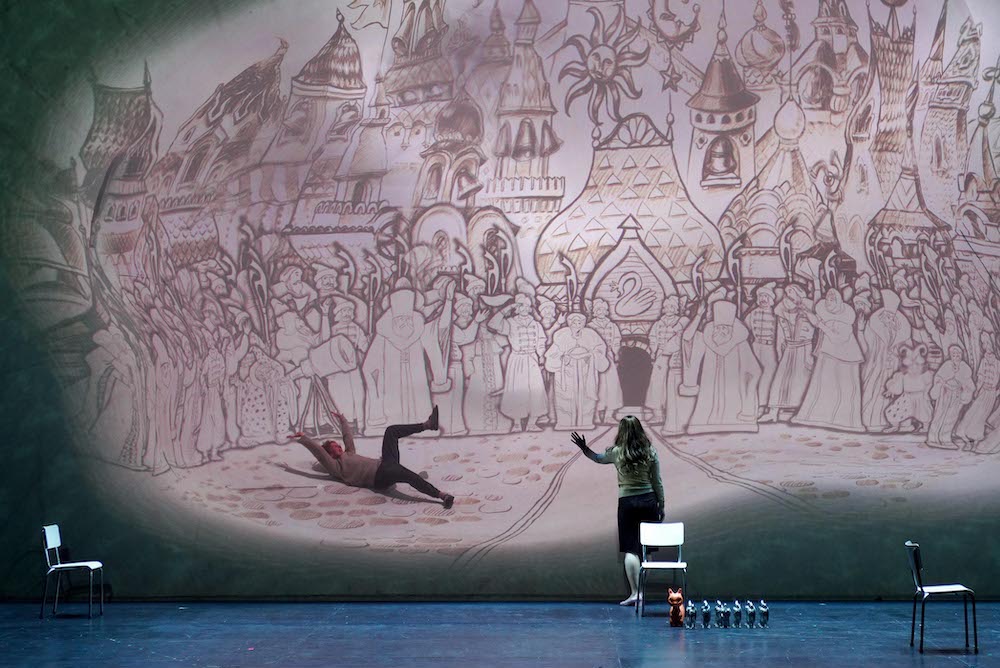
Mozart was represented by a trio of works this year. In Bologna, Martijn Dendievel and Alessandro Talevi reached the end of their Da Ponte trilogy with Così fan tutte. Dendievel’s conducting here was absolutely terrific, using swift tempi, with period-informed articulation and ornamentation to give us an evening that took grip, and then didn’t let go. In Turin, I got to see a youthful cast in Die Entführung aus dem Serail, in a picturesque staging by Michel Fau. At the Caracalla Festival, the Rome Opera performed Don Giovanni in a fascinating production by Vasily Barkhatov. Another child genius was Korngold, and his Die tote Stadt was performed in Zurich in a similarly fascinating production by Dmitri Tcherniakov. Eric Cutler gave us a thrilling performance as Paul, taking us deep into his psyche, while we even had the luxury of a cameo from the great Evelyn Herlitzius as Brigitta.

I was delighted to return to the Opéra Comique after a number of years, to see Les Contes d’Hoffmann in the theatre where it first saw the world. Michael Spyres was perhaps suffering from an unannounced indisposition the evening I went, as I felt particularly conscious that he was keeping a fair bit in reserve for this massive sing. The highlight of that performance was Pierre Dumoussaud’s superb conducting. Over in Madrid, I got to see Damiano Michieletto’s production of Carmen. It was a more cerebral staging and less emotional than one has come to expect of him. That said, Charles Castronovo as José and Adriana González as Micaëla were riveting in their roles, Castronovo in particular making José a much more complex and enigmatic character than we often see. In València, a Faust was saved by a glorious Ruth Iniesta as Marguerite and that house’s superlative orchestra and chorus, despite Johannes Erath’s rather wayward production.
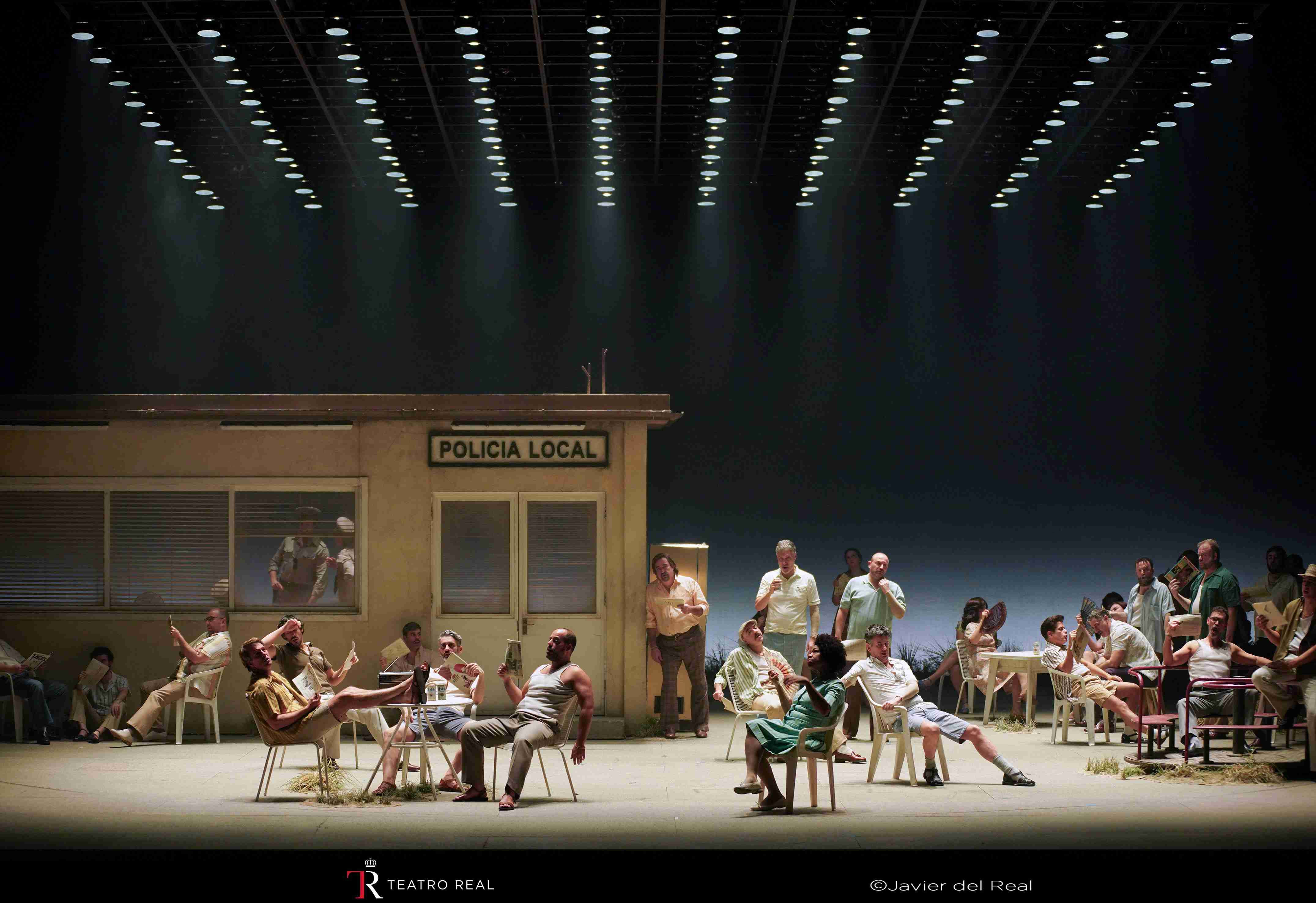
As every year, I’d like to take a moment to highlight some evenings that gave particular satisfaction. Before doing so, I’d like to highlight what was the turkey of 2025. The Ernani I saw in Verona, was something of a mess. Musically, it was decent enough, but Stefano Poda’s staging seriously hampered the evening. This is a complicated opera at the best of times, but to outfit the characters in similar costumes, to have them sing at the back of the stage where they couldn’t be heard, and to focus on the visual to the detriment of the narrative – all made for a frustrating and deflating experience. While Poda’s Aida in the Arena worked well, this, it pains me to write, was not at all what one might have hoped.

Again, as every year, I’d like to highlight three shows that represent the very best of the year. That said, I’m going to be rather cheeky and add another. It’s a show I didn’t review, but one that was simply out of this world. In June, I visited the Teatro Municipal in São Paulo and saw the Orquestra Sinfónica Municipal play Mahler’s Third Symphony under the direction of Roberto Minczuk. It was unlike any Mahler I had heard before. They made the score sound utterly Brazilian – there was rhythmic vivaciousness, a wealth of orchestral colour, but more importantly a big-hearted love to the way they played. The final movement was absolutely magical. They phrased it with such genuine affection and warmth that I don’t think I’ll ever hear this music in the same way again.
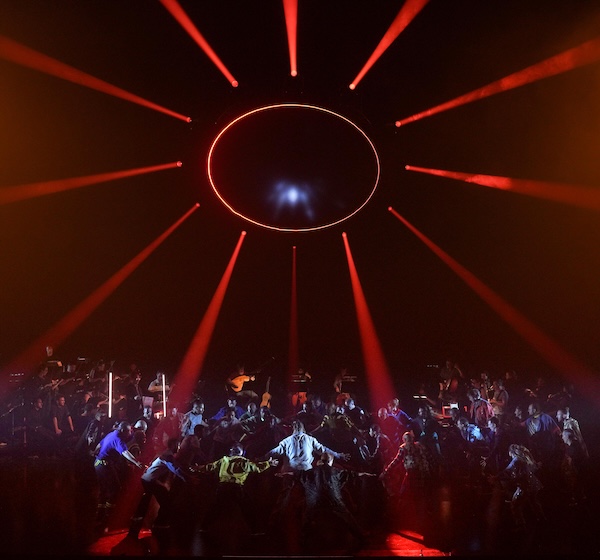
The collaboration between Leonardo García-Alarcón and Bintou Dembélé in Rameau’s Les Indes galantes has led a peripatetic existence since being first seen in Paris, France, back in 2019. I got to see it his year in Madrid. Musically, it was sensational in the orchestral playing and choral singing. The solo singing was also fabulous, not least the glorious Ana Quintans giving us singing of unblemished beauty. Yet it was the combination of the music and musicians with Dembélé’s dancers, that made it so special. Bringing together two such disparate artforms as the French baroque and street dance was a reminder, in these difficult times, that there’s so much more that unites us. It was utterly timeless, performed at the very highest level, and the Madrid audience gave it a massive ovation. It was much more than an evening of music and dance – it was a declaration of humanism and universality.
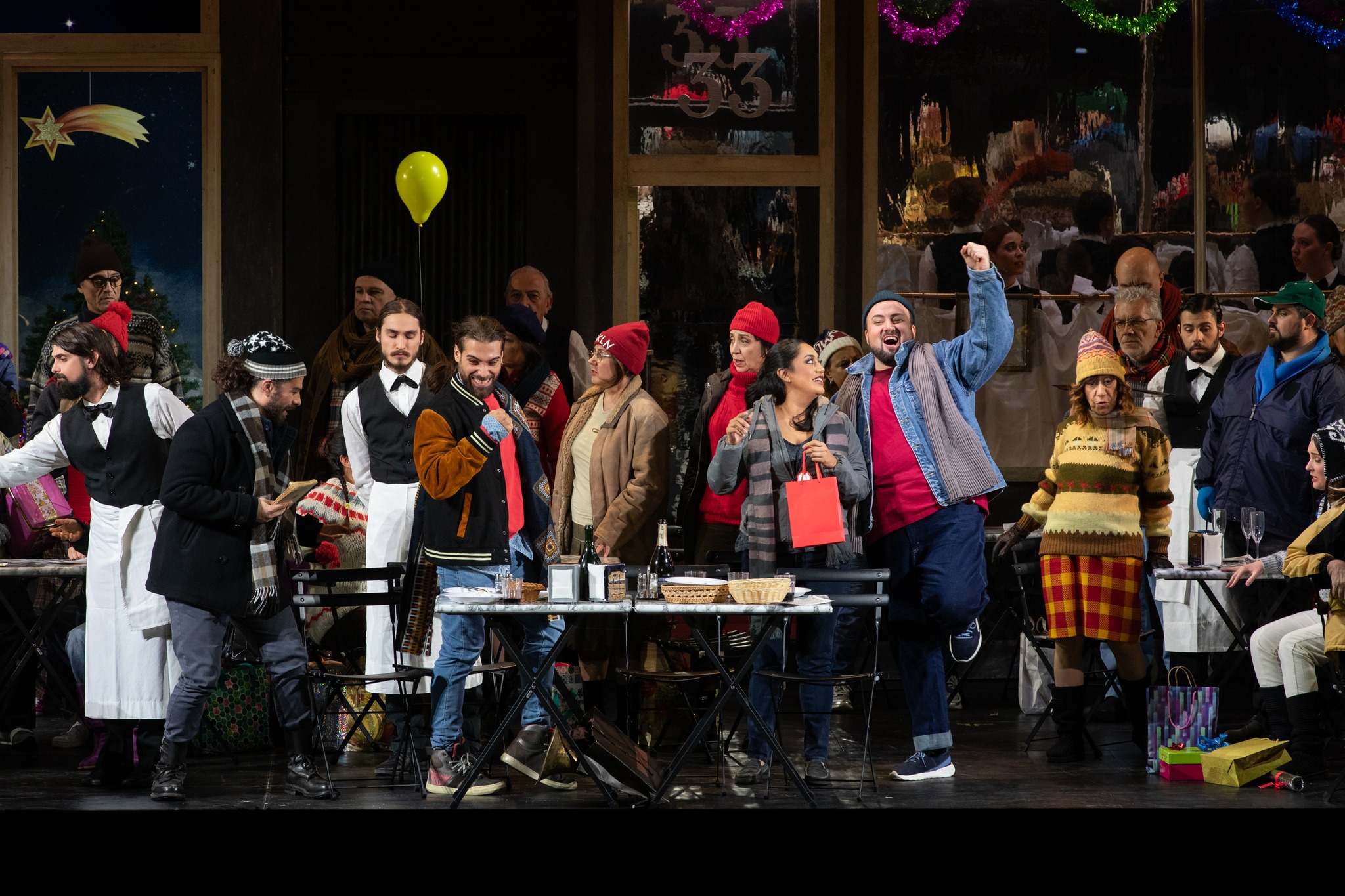
The other top two shows for me of this year happen to have taken place in the same city. The Teatro Comunale in Bologna may have been performing its staged opera this year in its temporary theatre, but they gave us a Bohème that made this well-performed work seem utterly fresh and new. Martijn Dendievel led that magnificent orchestra in a reading that was full of life and youthful ardour. His tempi were living, constantly able to move with the changing moods, and the orchestra responded to him with total unanimity. The singing across the cast was splendid, with Karen Gardeazabal’s Mimì in particular giving us a performance of such heartfelt beauty and lyricism. Graham Vick’s production was particularly successful in the first two acts. It was one of those evenings where right from the opening measures, one just knew it was going to be special. Even in that difficult acoustic, the sound of that orchestra, the way they phrased, and how the singers responded to it and Dendievel’s direction, it was very special indeed.
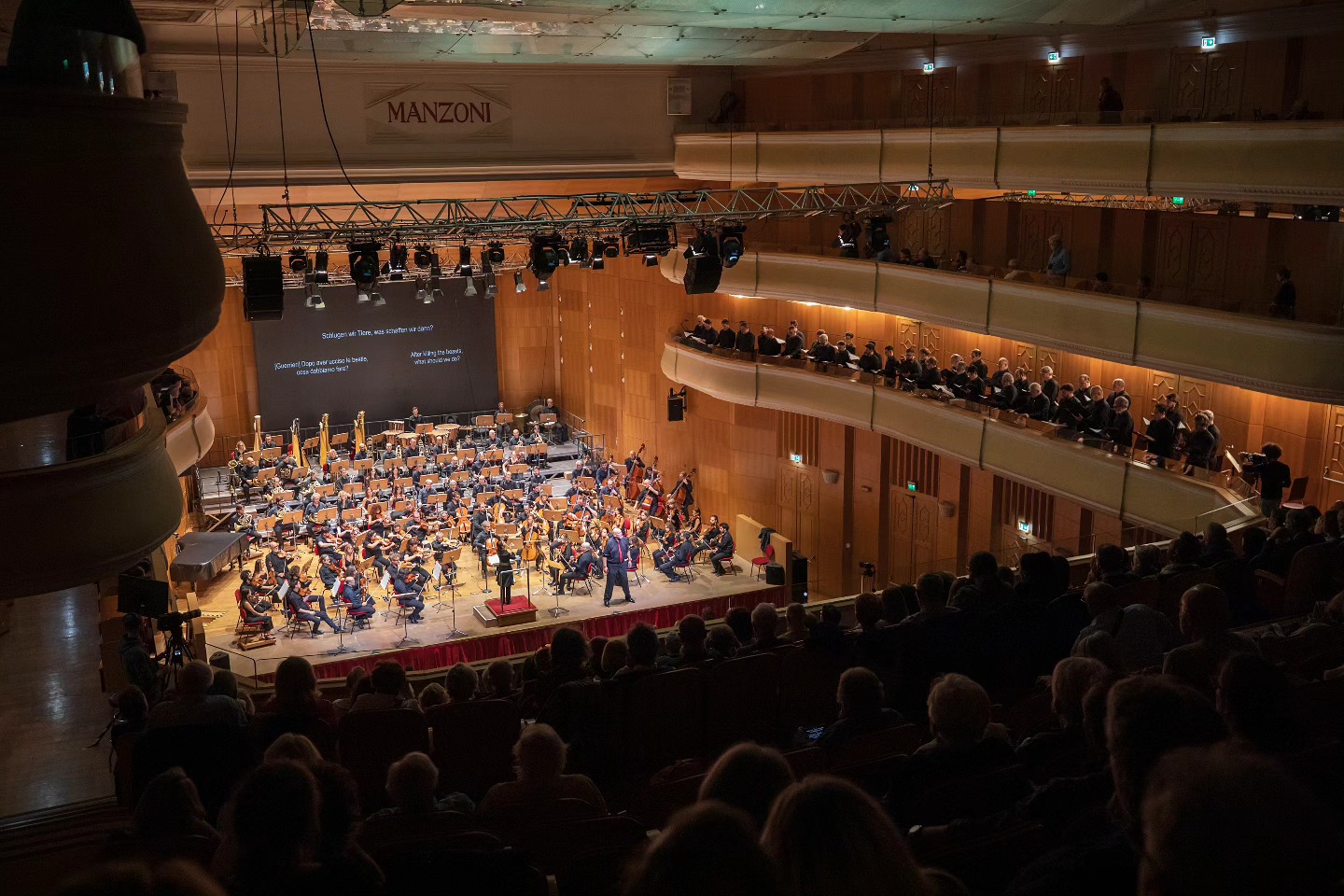
The Comunale also reached the end of their Ring cycle with Götterdämmerung. Oksana Lyniv led a reading that was full of strength, yet also delightfully fleet of foot. The orchestral playing, as with the previous instalments in the cycle, was a revelation. They filled the score with cantabile lyricism, while also giving thrilling power in the big moments. I was fortunate enough to see it twice and the second of the two performances, was even more satisfying. The cast throughout was excellent, with Sonja Šarić taking it to the next level as Brünnhilde. She’s the owner of a genuine high C, ringing out thrillingly over the band in the opening duet. At the second evening, her immolation scene just went into the next gear, singing with exhilarating freedom, pouring out reams of silvery tone into the auditorium. It was one of those moments that defines a career. And then, there was the Comunale chorus. I don’t think I’ve ever heard Act 2 so electrifyingly sung. To hear Italian voices sing this music, making the most tremendous noise, while also singing with discipline and immaculate tuning, this I have to admit was one of the most special things I’ve had the privilege of hearing. What a tragedy that Rai wasn’t available to record this performance.
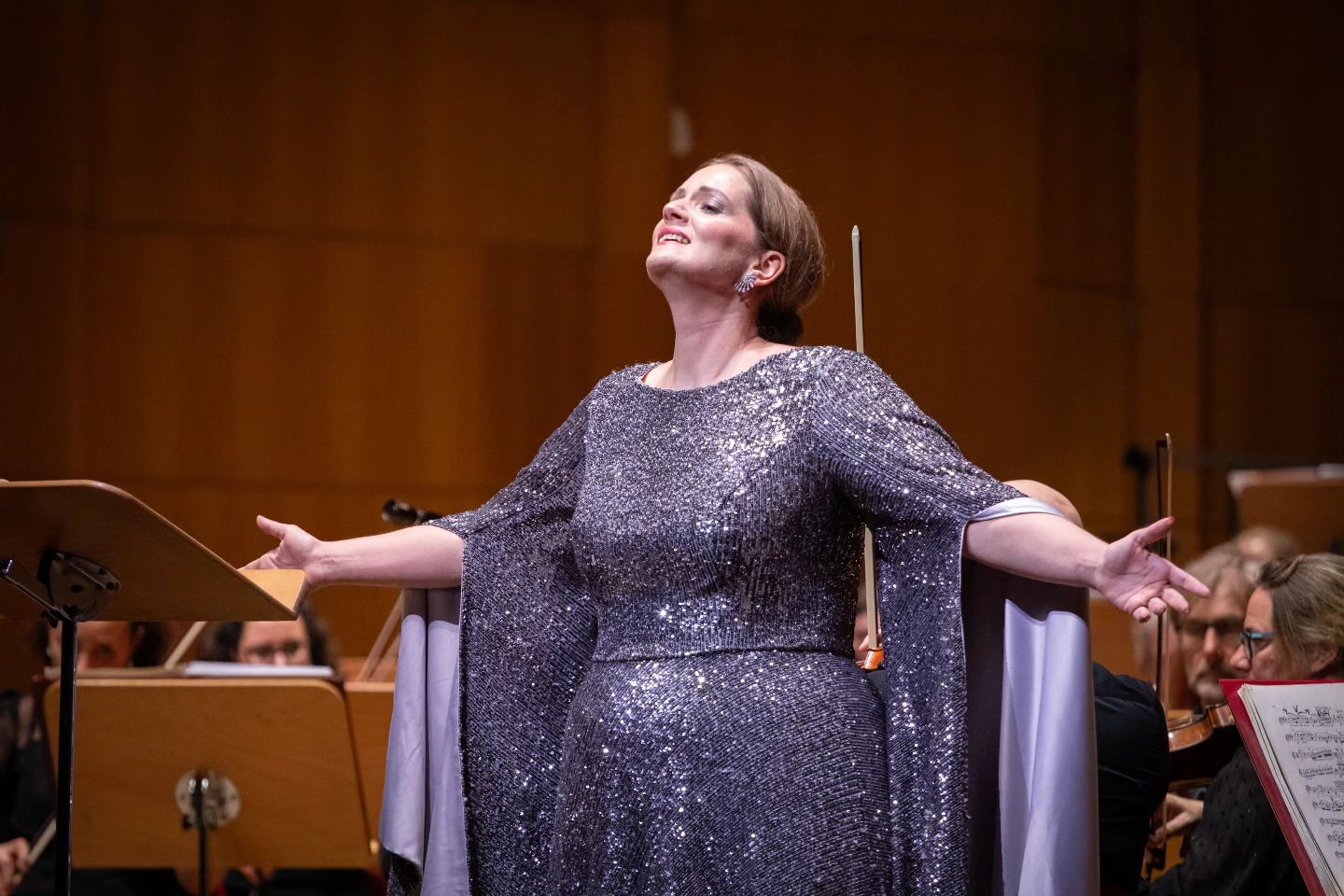
And there you have it, that was the musical year in review. In retrospect it’s been a pretty good one, with so many highlights, so many memories of fantastic performances, and the pleasure of visiting great venues. It’s been a delight having you along for the ride. All that remains for me is to wish you all the very best for 2026, with many happy operatic adventures to come. Bonne année!
 operatraveller.com
love your highly qualified reviews. Looking forward to to your operatic tips for 2026.
Jens Winther Copenhagen
Monsieur, thank you for your kind message. I’m most certainly overdue a visit to København. With all best wishes for 2026