Strauss – Elektra
Klytämnestra – Okka von der Damerau
Elektra – Elena Batoukova-Kerl
Chrysothemis – Simone Schneider
Aegisth – Alexander Schulz
Orest – Lars Fosser
Der Pfleger des Orest – Andrea Pellegrini
Die Aufseherin – Valentina Bilancione
1. Magd – Sophie Haagen
2. Magd – Benedetta Marchesi
3. Magd – Marta Lotti
4. Magd – Veronica Prando
5. Magd – Mandy Fredrich
Die Vertraute – Vida Matičič Malnaršič
Die Schleppträgerin – Francesca Palmentieri
Ein junger Diener – Saverio Fiore
Ein alter Diener – Andrea Pellegrini
Coro della Fondazione Teatro Lirico Giuseppe Verdi di Trieste, Orchestra della Fondazione Teatro Lirico Giuseppe Verdi di Trieste / Enrico Calesso.
Stage director – Marco Filiberti.
Teatro Verdi, Trieste, Italy. Friday, June 26th, 2026.
This new production of Elektra, which opened last week, is only my second-ever visit to the beautiful Teatro Verdi in Trieste. It’s a place I really should come to more often. The city itself is absolutely stunning, located on the Adriatic, the welcome everywhere is most cordial, and Trieste doesn’t, at least not yet, seem to be suffering from the overtourism that plagues so many other Italian cities. The theatre is wonderfully intimate and the performance standards, as I’ll outline shortly, are very high. This is most certainly a city that deserves to be on every opera lover’s itinerary.
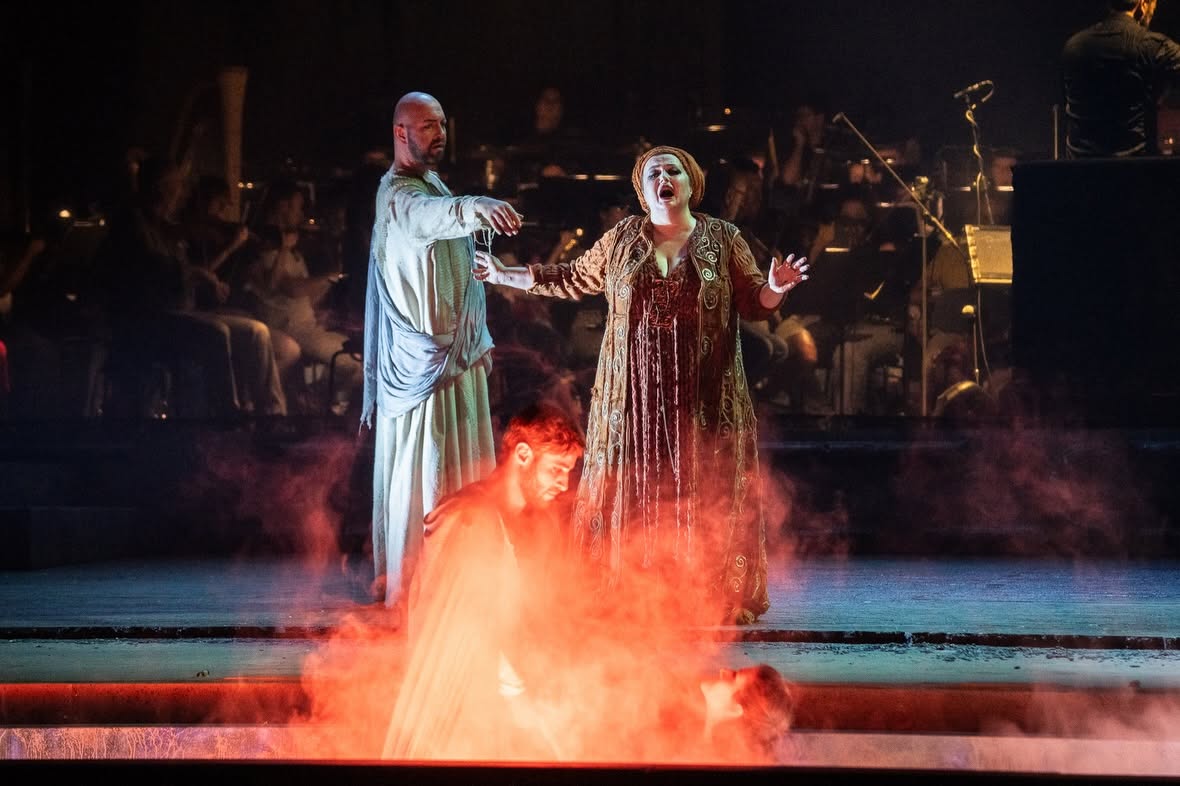
This Elektra was confided to the musical direction of house Music Director, Enrico Calesso, and staged by Marco Filiberti. Given the large Straussian orchestra and the smaller size of the Teatro Verdi’s pit, the orchestra was placed at the rear of the stage, with the action taking place in front of it. Upon entering the theatre, the entirety of the stage area was covered in a gold drape, which was pulled down as that opening Agammemnon motif was heard. The choice of the gold drape might actually have been deliberate, since this is the first Elektra I’ve seen that was comically camp from start to finish. I don’t think that was Filiberti’s intention, but it was certainly the way I read it. This is a piece that focuses so much on the feminine – we don’t hear a single male voice until over half-way through. Yet, Filiberti populates the stage with shirtless men who perambulate the stage right from the very start, caressing some of the maids’ faces, and offering some striking visual interest. Moreover, it felt that Filiberti was reluctant to allow his singers to drive the action forward. During Elektra’s opening monologue, some extras were raised up from the pit in a puff of smoke, to act out Agamemnon’s murder at the hands of Klytämnestra and Aegisth. The effect, I regret to write, was both risible, because the overacting was rather amusing, and also that it distracted from Elena Batoukova-Kerl’s Elektra and the orchestra in the moment where she starts to impose herself for the evening ahead. Rather than accentuating the effect of the music, it made the score and the vocal performance feel like an accessory.
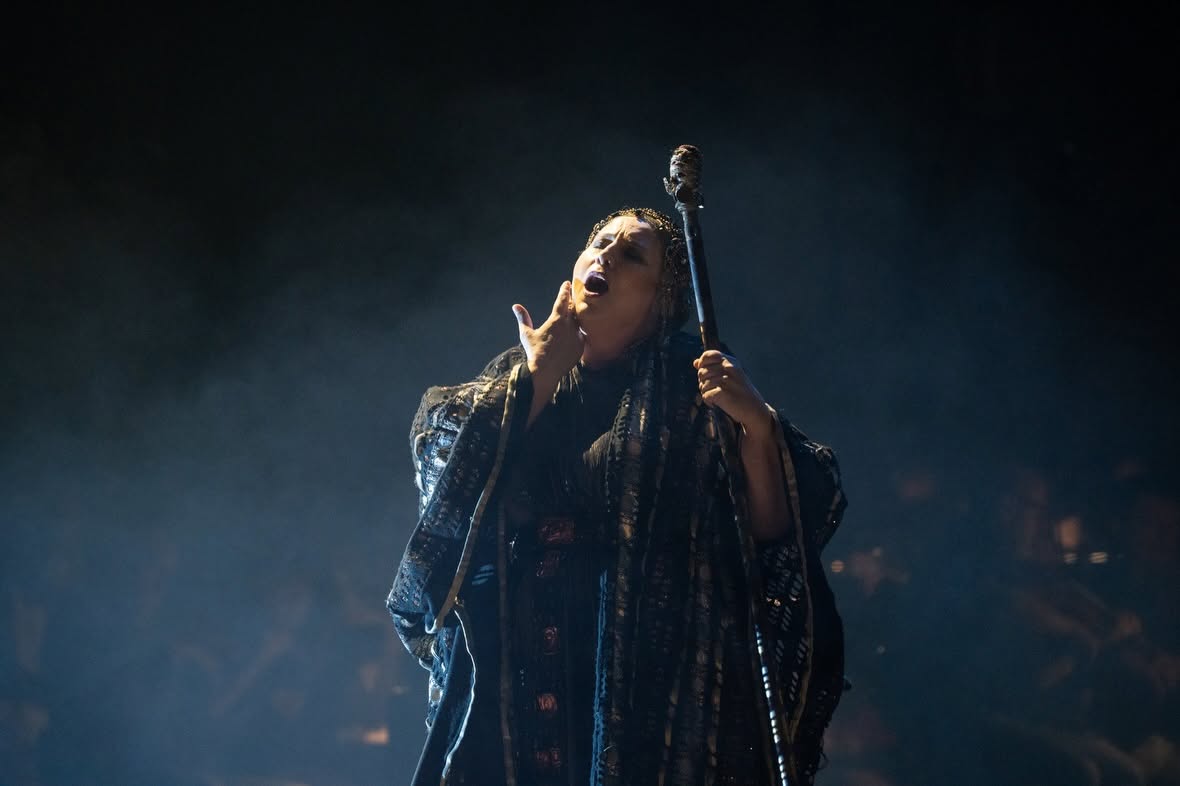
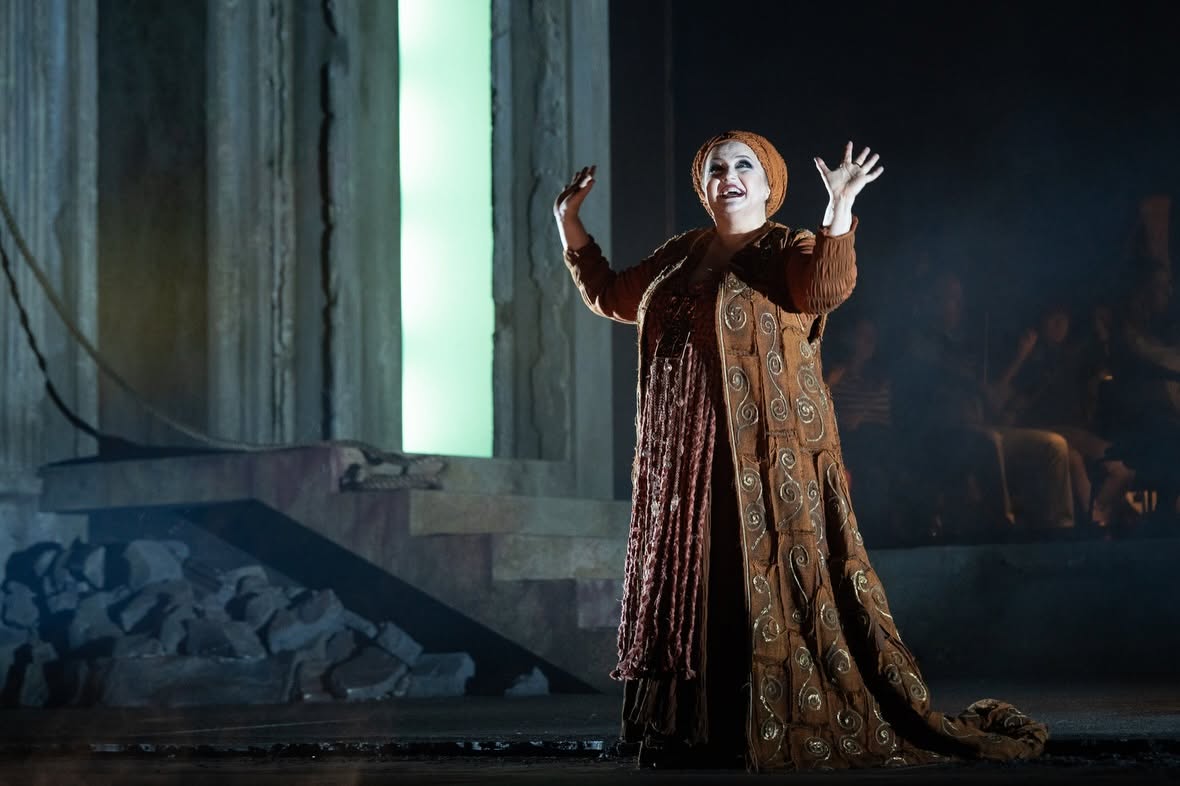
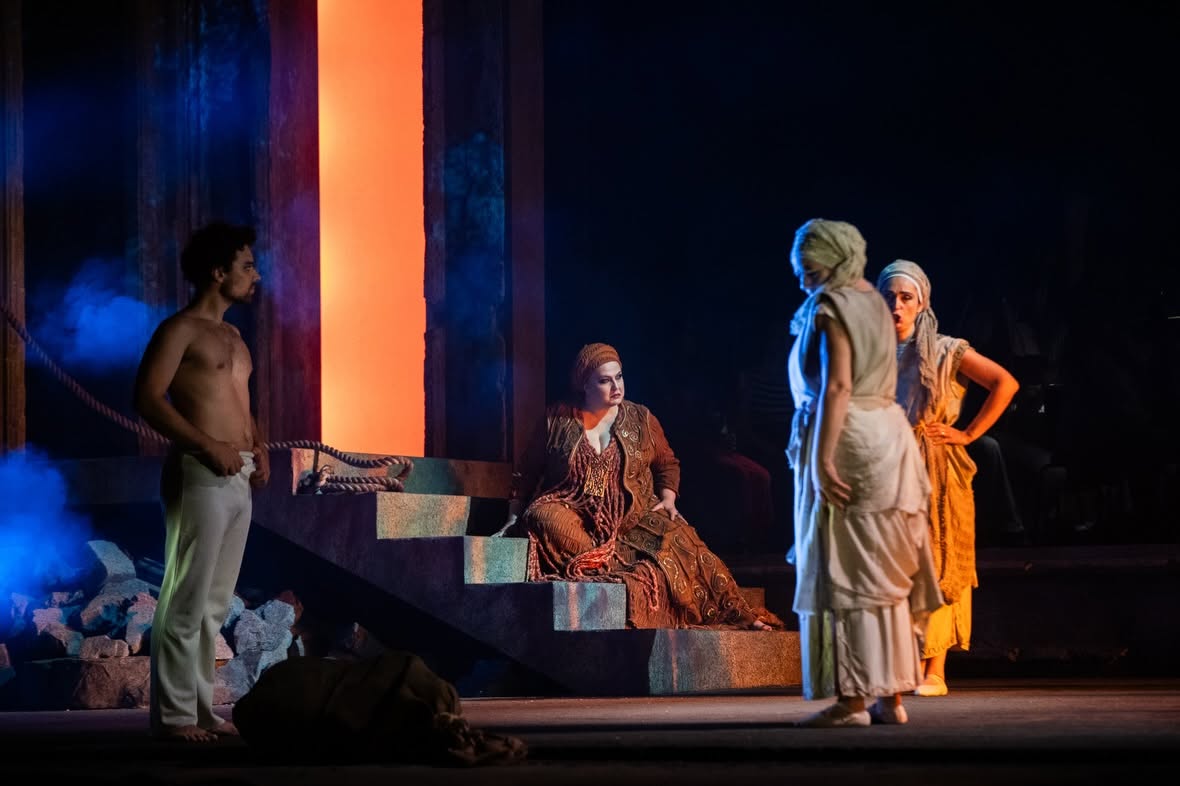
As the evening progressed, the extras weren’t quite as present, almost as if Filiberti had run out of ideas of what to do with them. That said, those on the far right-hand side of the auditorium got more of a show than the rest of us, since they got to see naked extras of Agamemnon and Elektra in a full frontal. It must have been quite something for Batoukova-Kerl to dispatch that monologue with a naked man standing right in front of her. Perhaps, Filiberti wanted to give a nod to the idea of the ‘Elektra complex’, although the outcome was that the staging distracted much more than it gave insight. There was, however, one moment where the staging did work particularly well. That was in the entrance of Klytämnestra, who walked through the Platea, accompanied by some shirtless men and her attendants carrying torches. This brought an immediacy that was lacking compared to when the extras emerged from the pit, drawing attention from the stage, during the remainder of the evening. The set, by Benito Leonori, consisted of a large frame within which the orchestra played, and upon which video, by Marco Spinaci, was projected. The video was rather underused, consisting simply of graphics that would make a very nice screensaver for an office computer. The costumes, by Daniele Gelsi, were generic Hellenic, with togas and long flowing capes.
Calesso’s orchestra sounded somewhat recessed for much of the evening. At first, I thought this was due to the acoustic set-up of the set, since they were further back. It did mean that I missed that sense of the super-human voices ringing out over the surging orchestra. Then, during the chorus and closing duet, something happened. Calesso let his orchestra loose, allowing them to ring out in fuller volumes, with Batoukova-Kerl and Simone Schneider’s Chrysothemis filling the theatre in a wall of sound. Perhaps the earlier impression was as a result of the distractions of Filiberti’s staging. I also found Calesso’s reading to be somewhat slow at first – perhaps suffering from the thirty-degree heat outside. Then, at the half-way point, after the interjection of the Junger Diener, his tempi grew in urgency, the sisterly duet and recognition scene taking on a dramatic impetus that had hitherto been lacking. The quality of the orchestral playing was not in question. The sheer beauty of their playing, the way they caressed those inimitably Straussian melodies, contrasting the violence with the lyricism, was really special. The constant presence of the dance, the way that Calesso made the final repetitions of the Agamemnon motif feel horrifically violent after the previous uplifting duet, these are elements that will stay in the memory. I also appreciated the fabulous brass playing – the trumpets were wonderfully bright and distinct, while the horns gave us a full and satisfying richness of tone. The chorus, prepared by Paolo Longo, confidently dispatched their very brief assignment.
Batoukova-Kerl is an experienced exponent of the title role, with a career focused mainly on the Germanophone world. She started out as a mezzo but has broadened into the soprano repertoire, taking on Turandot and Senta, in addition to Elektra. She also has significant experience as a vocal pedagogue. I mention this because it’s clear that Batoukova-Kerl has worked hard at integrating this demanding role into her voice and her technique. The voice is big and exciting, with a rich, full bottom that reflects her experience in the mezzo-soprano repertoire. We got one of the two Cs, the second wasn’t attempted, but the voice is able to ring out with ease up to around a B-flat. Batoukova-Kerl has also worked extremely hard at the text, with every word absolutely clear throughout. She occasionally had a tendency to occasionally resort to sprechgesang, her declaration of ‘Triff noch einmal!’ after the first murder, was spoken rather than sung. Batoukova-Kerl made it to the end, the voice had significant amplitude, and she was dramatically engaged.
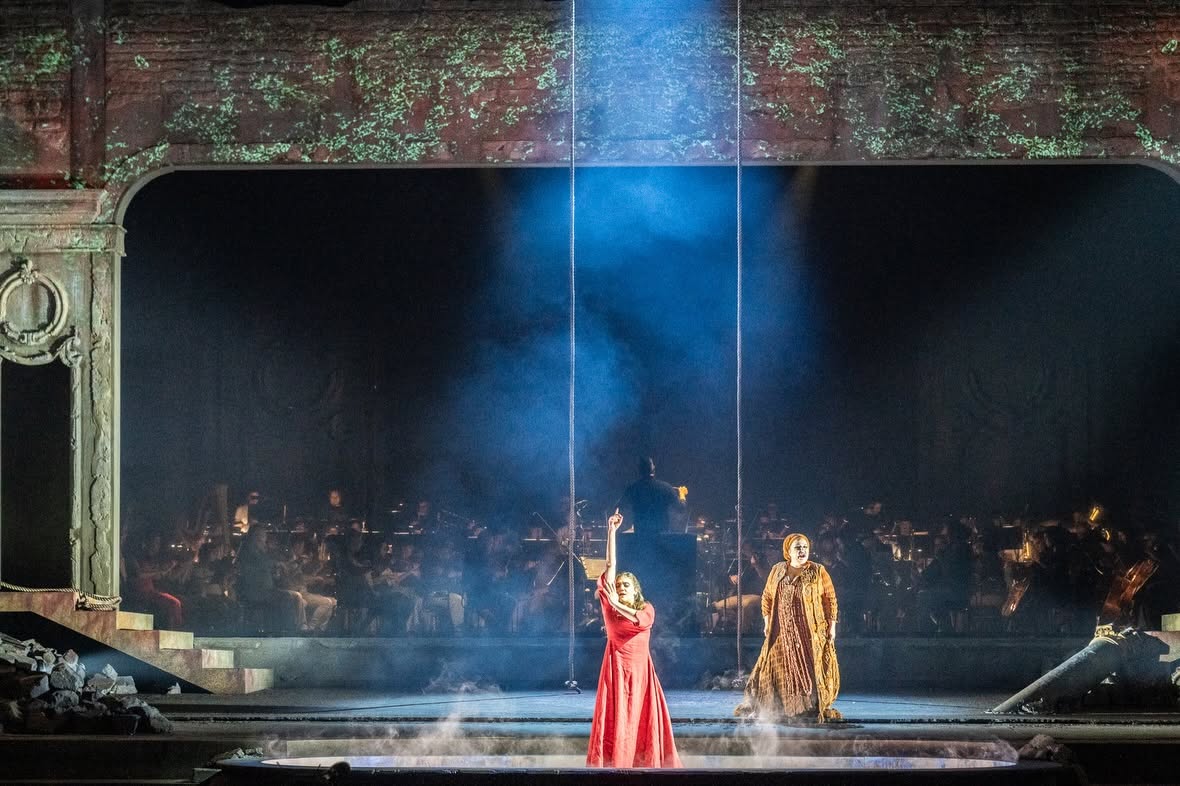
Schneider brought her significant experience in the Straussian repertoire to Chrysothemis. The voice is of a wonderful size, pealing out with ecstatic ease on high, soaring over the orchestral tumult in the closing duet with almost nonchalant ease. Schneider really does have the ideal instrument for this role and, combined with her verbal acuity, she gave so generously of herself to us. Okka von der Damerau may well be the most regal Klytämnestra I’ve heard. No tired harridan here, she sang her music in her glamorous, silky mezzo, the voice full and even from top to bottom. The beauty of tone was most impressive and yet, I did feel there was a slight detachment to her interpretation, even if it was quite superbly sung. For instance, her desperate cry of ‘zerfressen von den Motten?’ was much more impassive than distressed, as if accepting the inevitability of her nightmares. Still, it was certainly one of the most glamorously sung interpretations of this role that I’ve heard.
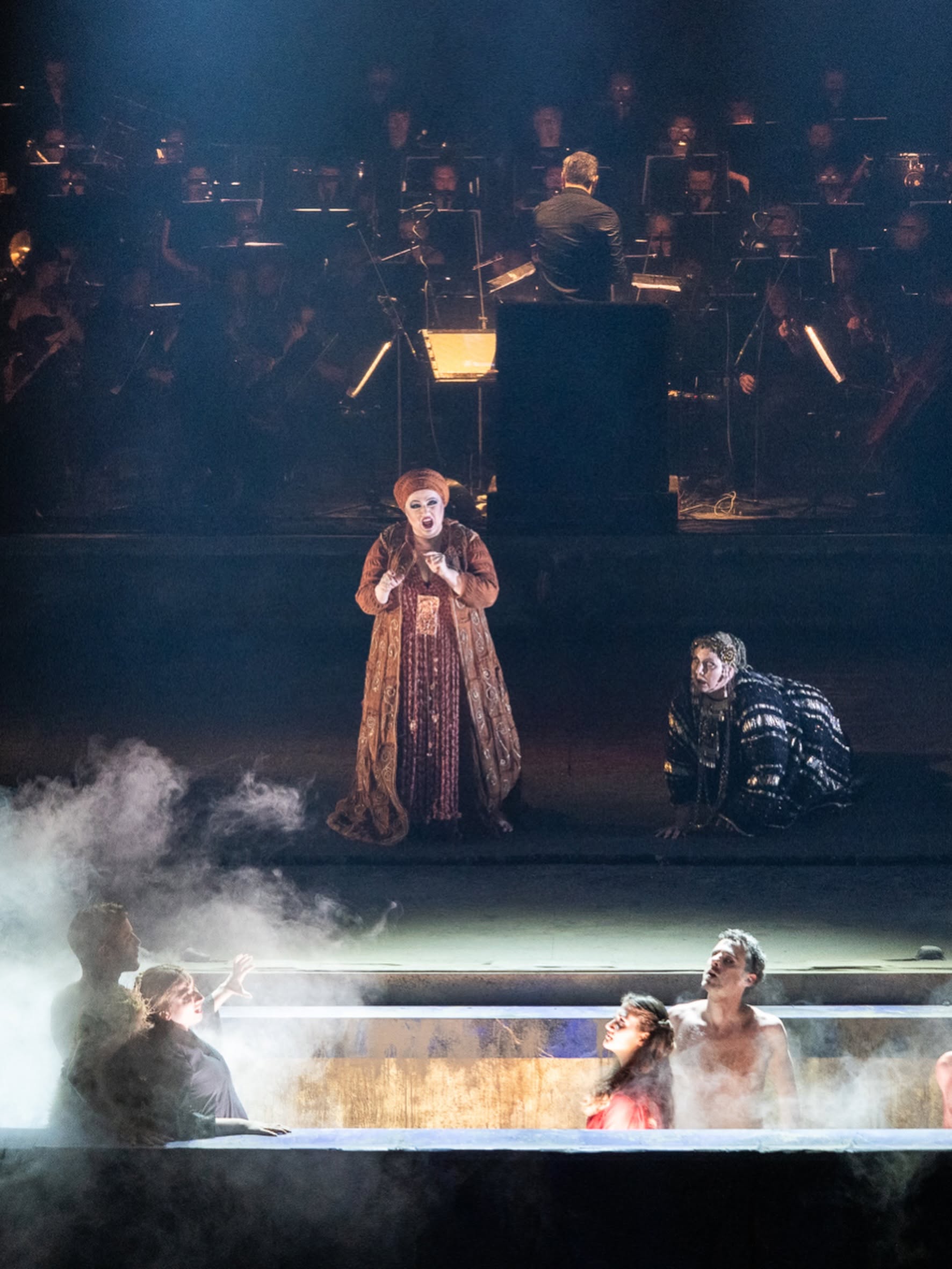
In the remainder of the cast, Mikhail Petrenko sang Orest in a healthy bass-baritone, the voice carved from granite and the words nicely forward. Alexander Schulz sang Aegisth in a bright, forwardly-placed tenor, nicely sardonic in his use of text. We also had an efficient group of maids, with Sophie Haagen’s distinctively nutty contralto an agreeable presence in the ensembles, while Valentina Bilancione sang the Aufseherin with confidence in a dimantine soprano. Mandy Fredrich sang the Fifth Maid with easy reach on top. The remaining roles reflected the very positive standards one can expect here.
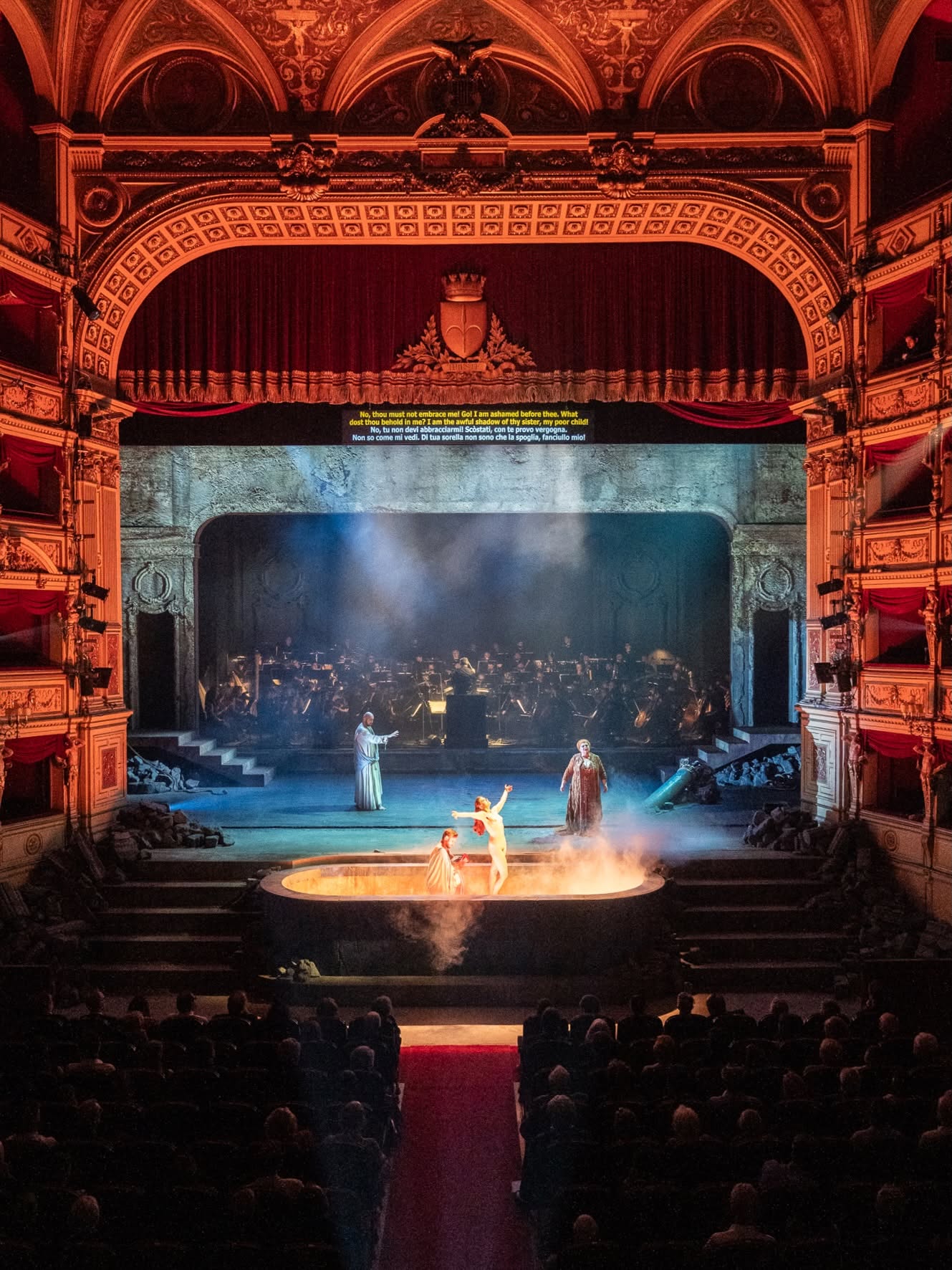
Musically, this was a really satisfying Elektra. Calesso and his orchestra played with multifaceted ease and his interpretation grew in stature and extroversion as the evening progressed. This was a performance that lived through the text, the clarity of the words throughout meant that the surtitles were utterly superfluous. Filiberti’s staging was comically camp, but clearly sincerely conceived. The audience responded at the close with generous applause for the entire cast, particularly for the central female trio, and also for Filiberti who took a curtain call at the end. An evening that was undoubtedly worth the trip.

