Bates – The (R)evolution of Steve Jobs
Steve Jobs – John Moore
Laurene Powell Jobs – Sarah Zieba
Chrisann Brennan – Hanna Rantala
Kobun Chino Otogawa – Wu Wei
Steve ‘Woz’ Wozniak – Mika Pohjonen
Paul Jobs – Ville Rusanen
Teacher – Anu Ontronen
Finlands nationaloperas kör, Suomen kansallisoopperan orkesteri / Michael Christie.
Stage director – Kevin Newbury.
Suomen kansallisooppera ja -baletti – Finlands nationalopera och -balett, Helsinki, Finland. Friday, September 18th, 2026.
To open its 2026 – 27 season, the Finnish National Opera is offering us the European premiere of Mason Bates’ opera The (R)evolution of Steve Jobs. Since its premiere in Santa Fe in 2017, the work has already received seven revivals throughout North America, in places as diverse as San Francisco, Salt Lake City, and Calgary. Almost a decade later, this always enterprising house has invited the conductor of that premiere run, Michael Christie, to lead Kevin Newbury’s original Santa Fe staging. In the title role is John Moore who has already sung Jobs in several of those North American productions, while Wu Wei appears in the role of Kobun Chino Otogawa, as he did in Santa Fe, with the remainder of the cast made up of members of the house’s regular roster.
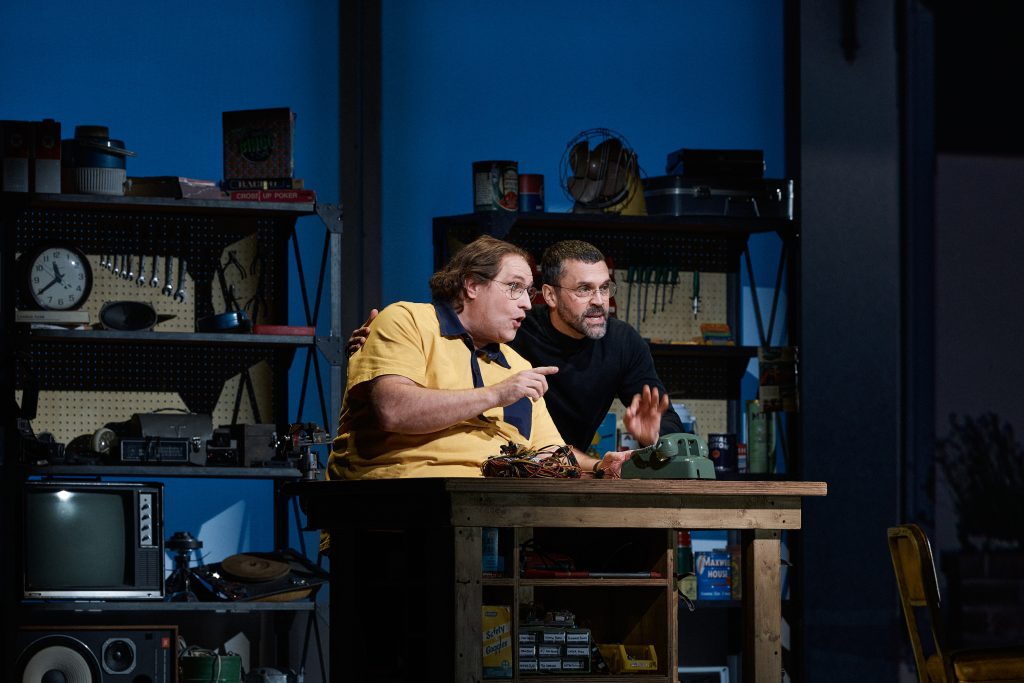
With a libretto by Mark Campbell, Bates’ first opera covers the life of Steve Jobs, from his childhood, when his father created a workbench for him, to his brutal management style and humiliation of his former partner, Chrisann Brennan, with whom he had a daughter, to his later marriage to Laurene Powell. Campbell’s libretto doesn’t follow a linear path. Instead, he juxtaposes episodes from Jobs’ final years with those early periods, displaying the complexity of a man who embraced the meditation of Buddhism, while also capturing the breakdown of Jobs’ relationship with his old friend, Steve ‘Woz’ Wozniak, with whom he made his first technological breakthroughs. Far from lionizing Jobs, Campbell’s libretto, and by extension Bates’ music, show both the visionary and the ugly in the life of someone who led a transformation in how we relate to ourselves and to others. While the libretto is realistically written and has a few moments of rather fruity language, it never seems clichéd or hackneyed, but feels an utterly genuine representation of a complex figure and those around him.
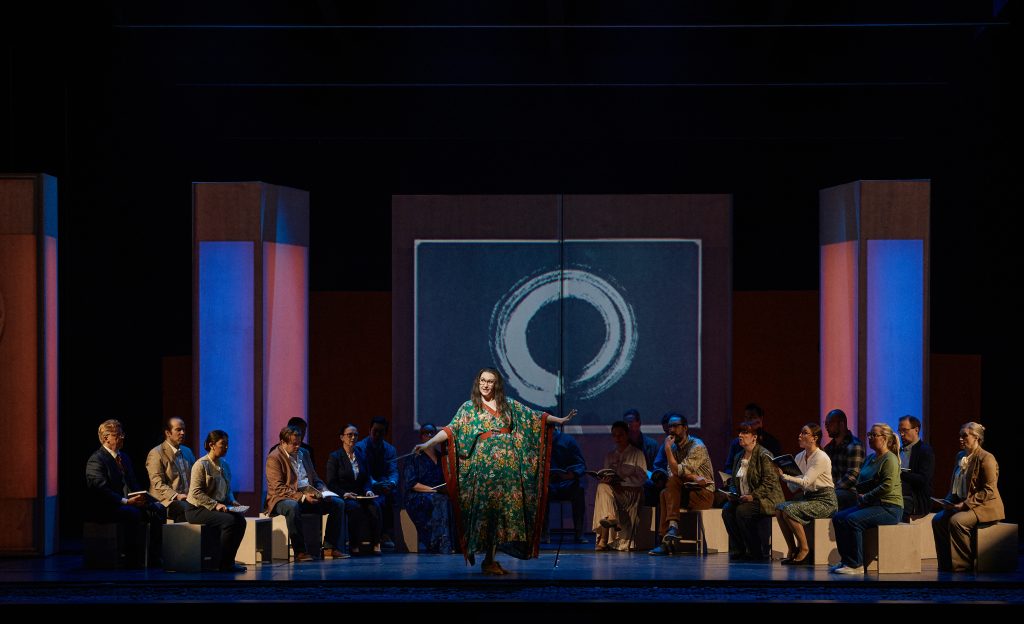
Bates’ score sits very much in a kind of middle-of-the-road Americana. There are echoes of Copland and Gershwin, but also echoes of Wagner and, in an LSD-fuelled episode, also of Bach. There are some really big brassy outbursts that required John Moore’s Jobs to ride a tumult from the pit, but there are several passages of complicated syncopation that demanded a lot from the house chorus. Bates makes use of electronics to enhance the orchestral sound at times – the opening seemed to combine both electronics redolent of computers with woozy strings that seemed to come from Hollywood. Bates is clearly a confident orchestrator, giving us a range of orchestral textures that run from the big optimistic brass-fuelled outbursts that characterize Jobs’ views of the future of technology, with simple, guitar-accompanied intimacy that characterized Jobs and Powell’s love for each other. His word-setting is also confident. While he certainly pushed the title role in some big heroic writing, Bates’ writing for the voices didn’t consist of awkward leaps, but remained generally singable – the exception being a long, sustained passage of high writing for Wozniak as he broke with Jobs.
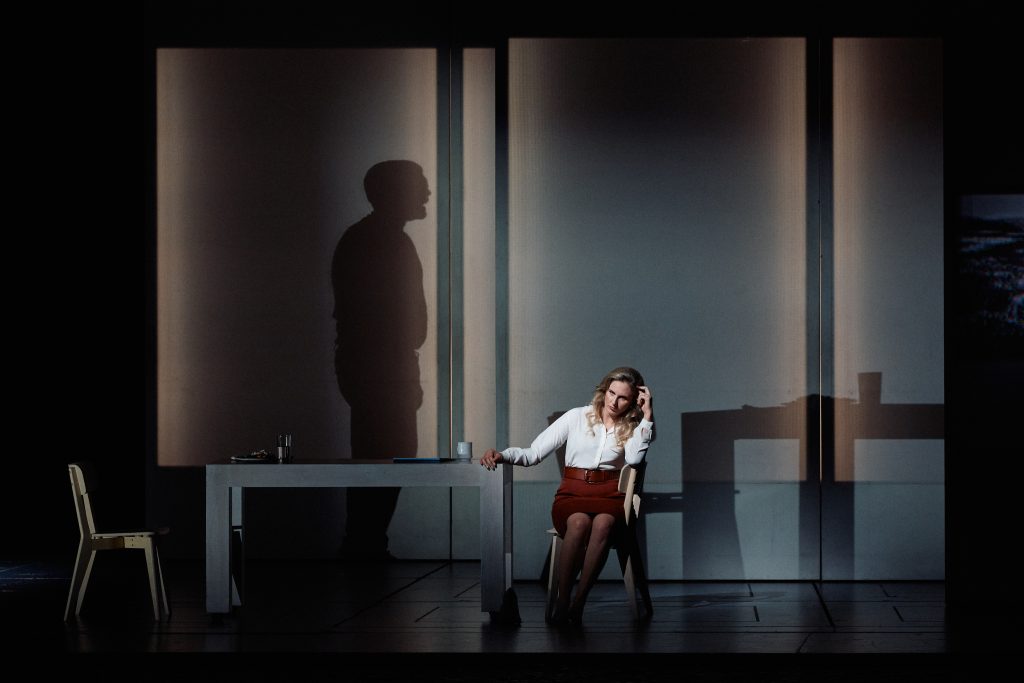
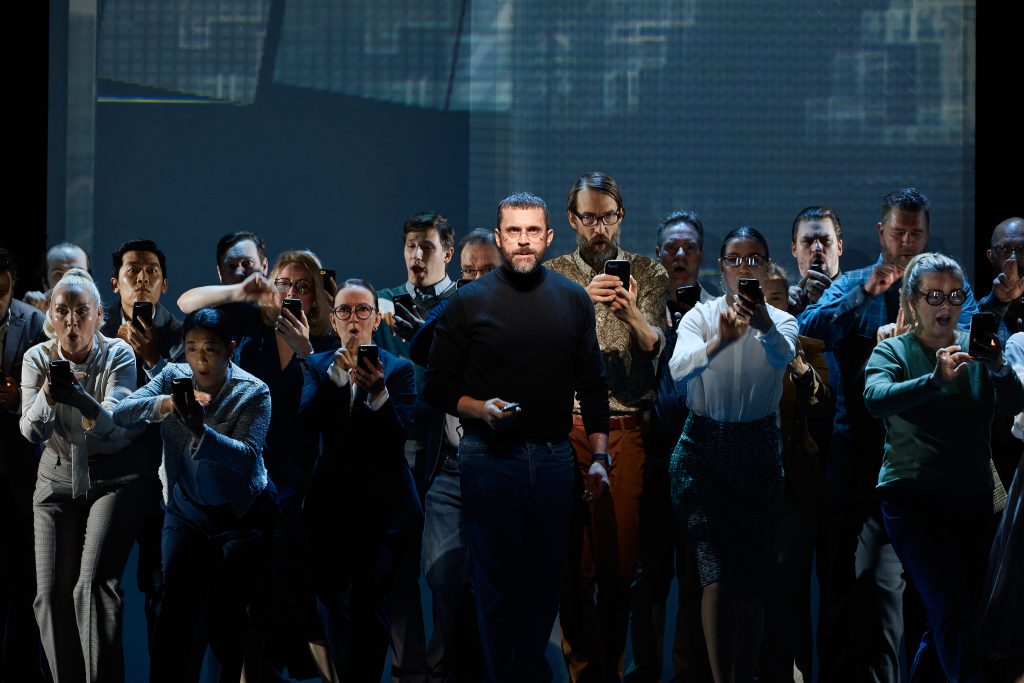
Newbury’s staging was efficient. It was relatively utilitarian in scope, with five large panels that were moved around on stage, to provide constantly-changing visuals. The panels themselves were used as video screens, upon which were projected images, by 59 Studio, to set the scene. Whether vistas of sunset or a forest, as Jobs and Brennan experienced their LSD trip, or projections of Jobs’ face during his closing memorial, they managed to set the scene for a narrative that could, in other hands, have become rather confusing. Newbury moved the chorus around efficiently, assisted by choreographer Chloe Treat, with their movements around the stage providing an additional visual layer to that constructed by the blocks. The relationships between the characters were also realistic and organic – no gesturing to the front here; instead, the characters clearly related to each other, making their relationships utterly believable.
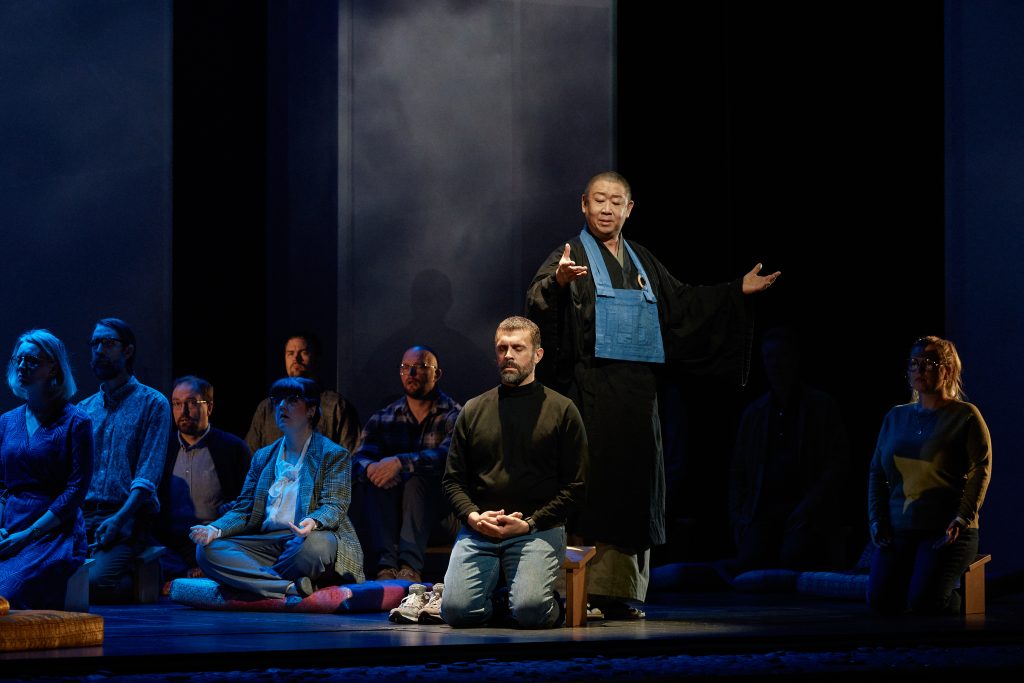
Christie led the house orchestra in a challenging assignment for them. This will have been the first time they’d played a production of this score, but they played it with the utmost confidence, remarkably so given the demands on them in terms of tone colour, rhythm, and articulation. They approached this demanding score with a clarity of approach, rewarding Christie with playing that reflected exceptionally detailed rehearsal work. Of course, Christie is, by now, intimately familiar with the work given his long history with it, and he led the evening in a logical, organic way, with no sense of dragging or lack of forward momentum. The singing of the chorus, prepared by Marge Mehilane, was quite simply exceptional. There are very few choruses in the world who can sing with this kind of discipline of tone, total unanimity of approach in dynamics, and absolutely impeccable rhythmic attack. To do that and execute the complex stage movements while offering singing of staggering accuracy of pitching is truly remarkable. They have a new Peter Grimes planned in November, I simply cannot wait to hear them in that score.
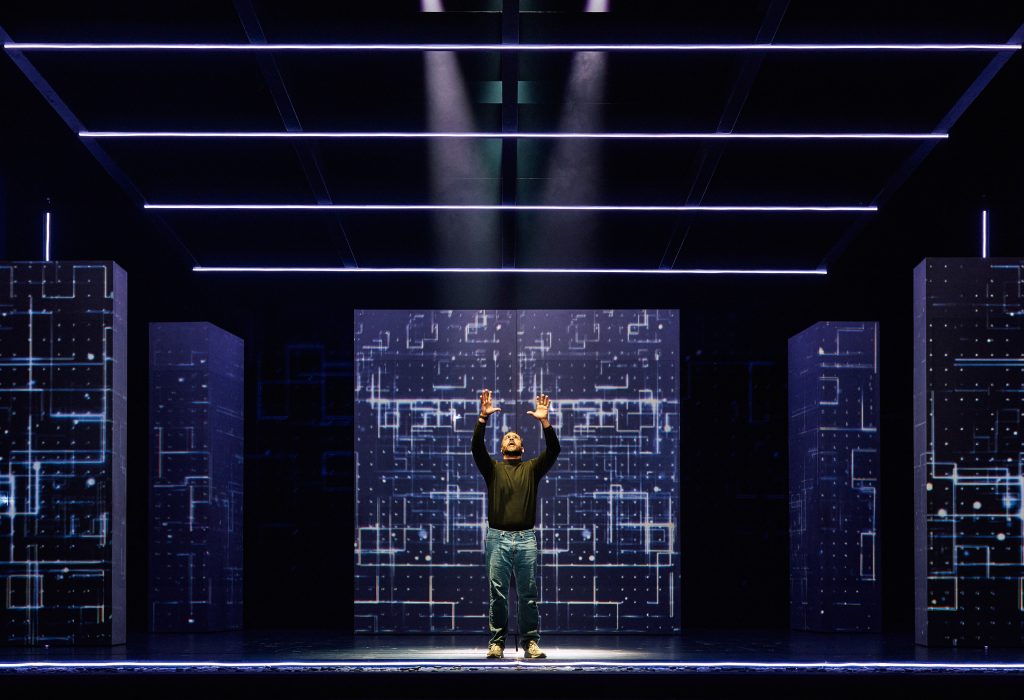
The role of Jobs is present on stage for virtually the entirety of the evening. This is a massive assignment for the baritone who sings him and Moore most certainly rose to the occasion. He’s required to come out and sing big, soaring phrases over roaring brass almost immediately. He wasn’t helped by being initially placed so far back on stage, but once he came to the front, Moore carried over the band with ease. His somewhat soft-grained baritone has easy reach on top and he was able to pull back on the tone charmingly in his romantic declarations to Powell. She was taken by Sarah Zieba, a member of the house’s young singers’ program. Zieba is the owner of a charming, peaches-and-cream-toned soprano. She obviously has a well-schooled technique and an elegant line, dipping with poise into a generous chestiness. Perhaps it was first-night nerves, but I did have a sense that intonation wasn’t quite optimal in the closing scene, but I have no doubt this will settle as the run proceeds.
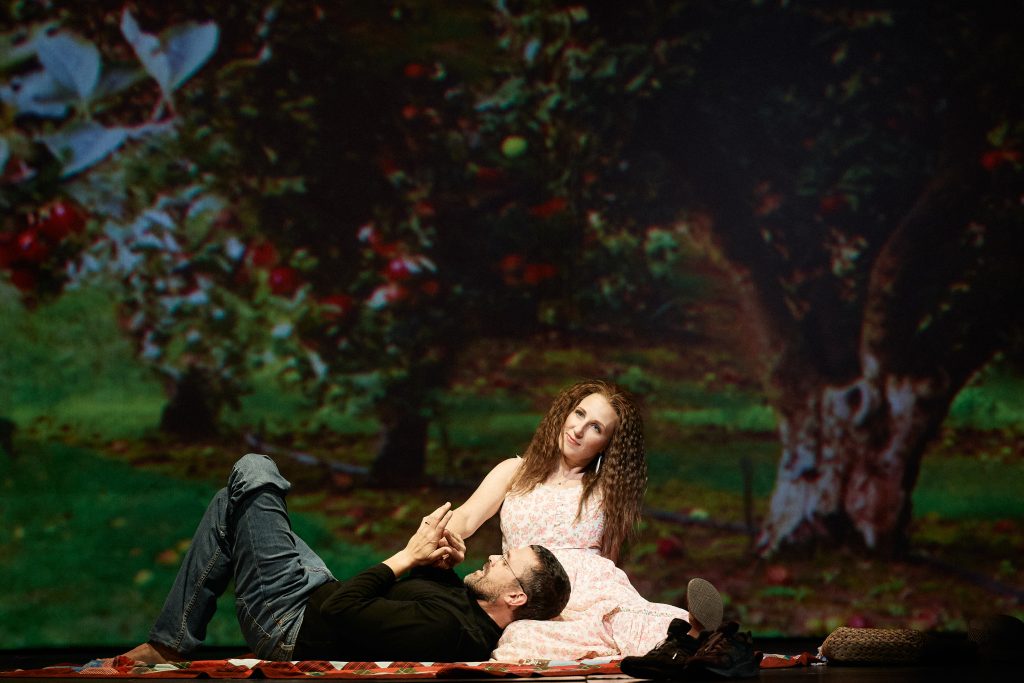
Mika Pohjonen sang Wozniak’s music in his robust, bulky tenor. I must admit hearing him made me very much want to hear his Herodes – a role I have no doubt he’d excel in. Pohjonen confidently dispatched the full range of the part, from a rich baritonal bottom; while he sustained the long high passages as his relationship with Jobs collapsed with confidence. Wu returned to the role of Kobun Chino Otogawa which he sang in a warm, resonant bass, encapsulating the character’s inner serenity. As Brennan, Hanna Rantala found an optimistic sincerity at first, singing in an auburn-toned, lyric mezzo. As Brennan faced more desperation, Rantala responded by opening up the tone, offering a crystalline brightness on top. Ville Rusanen sang Paul Jobs in a firm, healthy baritone, while Anu Ontronen brought a vibrant, fruity mezzo to the role of the Teacher.
This was an engaging evening in the theatre. Having listened to a recording in preparation for this evening, I found the work much more satisfactory in the house than listening at home. It’s certainly an opera that benefits from being seen in a staged production, particularly one as sensitive as Newbury’s that makes a genuine effort to amplify the score and offer simplicity of storytelling. The house has given us a performance on the highest level. The quality of the orchestral playing and choral singing was exceptional and Christie led the evening with focused attention. The cast acquitted themselves very well, bringing their roles to life with dramatic insight and attentive musicality. The audience responded at the close with generous applause for the cast, conductor, and production team.


[…] addition to last night’s The (R)evolution of Steve Jobs, the Finnish National Opera is also opening its fall season with this new production of Aida, a […]