Verdi – Aida
Aida – Liana Aleksanyan
Il Re – Koit Soasepp
Amneris – Tujia Knihtilä
Radamès – Milen Bozhkov
Amonasro – Tuomas Pursio
Ramfis – Park Young-Doo
Un Messaggero – Otso Sipilä
Sacerdotessa – Marianne Montonen
Finlands nationaloperas kör, Suomen kansallisoopperan orkesteri / Dan Ettinger.
Stage director – Noa Naamat.
Suomen kansallisooppera ja -baletti – Finlands nationalopera och -balett, Helsinki, Finland. Saturday, September 19th, 2026.
In addition to last night’s The (R)evolution of Steve Jobs, the Finnish National Opera is also opening its fall season with this new production of Aida, a coproduction with the Staatstheater Darmstadt. In these dark days, when antisemitism has exploded all over Europe, it’s a credit to the house that it has invited two Israelis to mount this staging, in stage director Noa Naamat, and conductor, Dan Ettinger. Aida is a work where war is always present, whether in the invocations to conflict in Act 1, or the nature of the star-crossed lovers on opposite sides as incarnated by Aida and Radamès. Yet, what usually happens is that the ugly side of war is never seen in stagings of this work, particularly those of the Zeffirelli style, although Damiano Michieletto already explored the darker aspect of war in his staging in Munich.
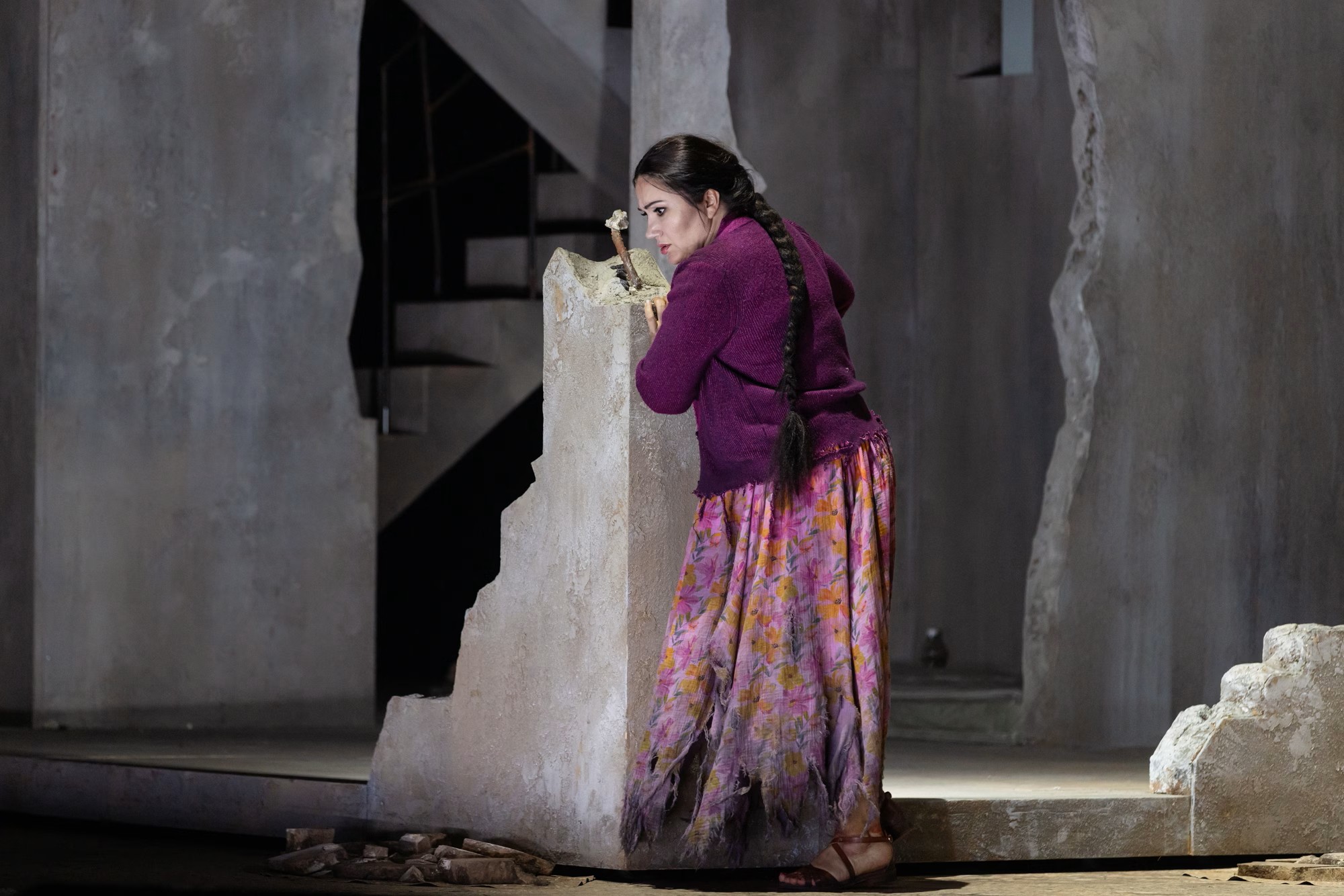
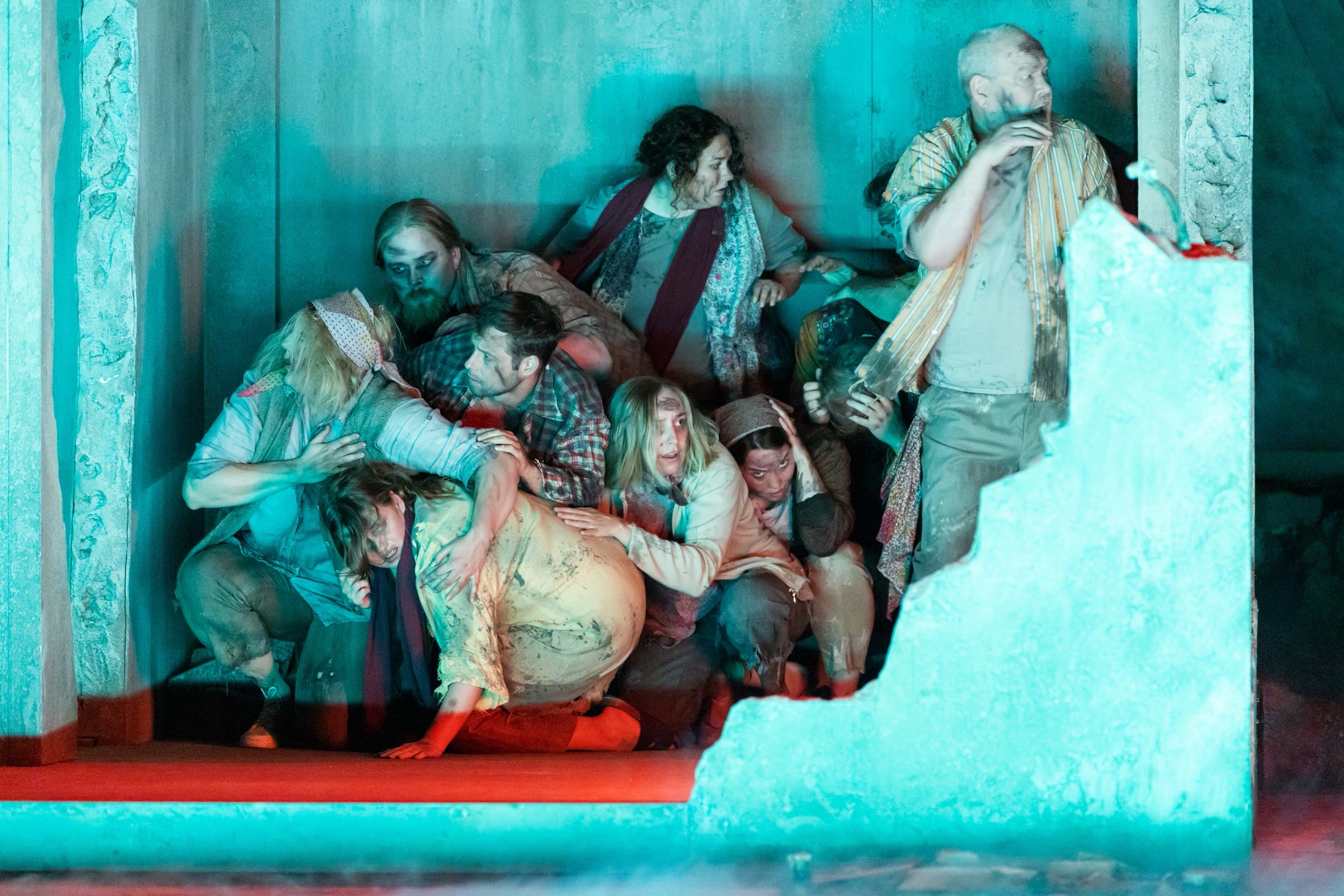
Naamat puts the conflict front and centre in her staging. She sets the action in a place of destruction, with a collapsed water tower and bombed-out building – sets by Naamat herself with Bettina John. Although Naamat places the action in an unnamed place, for those of us with family and friends in Israel, there was an immediacy to Naamat’s staging that was quite haunting. During the of Act 2, Radamès was welcomed back with crowds around his car who cheered some prisoners. I couldn’t help but think of those horrific images of October 2023 when the Israeli hostages were taken to Gaza by the terrorists, to be cheered by the crowds as they arrived. Indeed, the sight of a lady wearing a colourful costume during the prelude, made me think of one of the kibbutznikim who were slaughtered on that fateful October day. Given that we are just a few days away from the anniversary of the largest, single-day mass murder of Jews since the Shoah, Naamat’s staging does have an extremely powerful and raw edge.
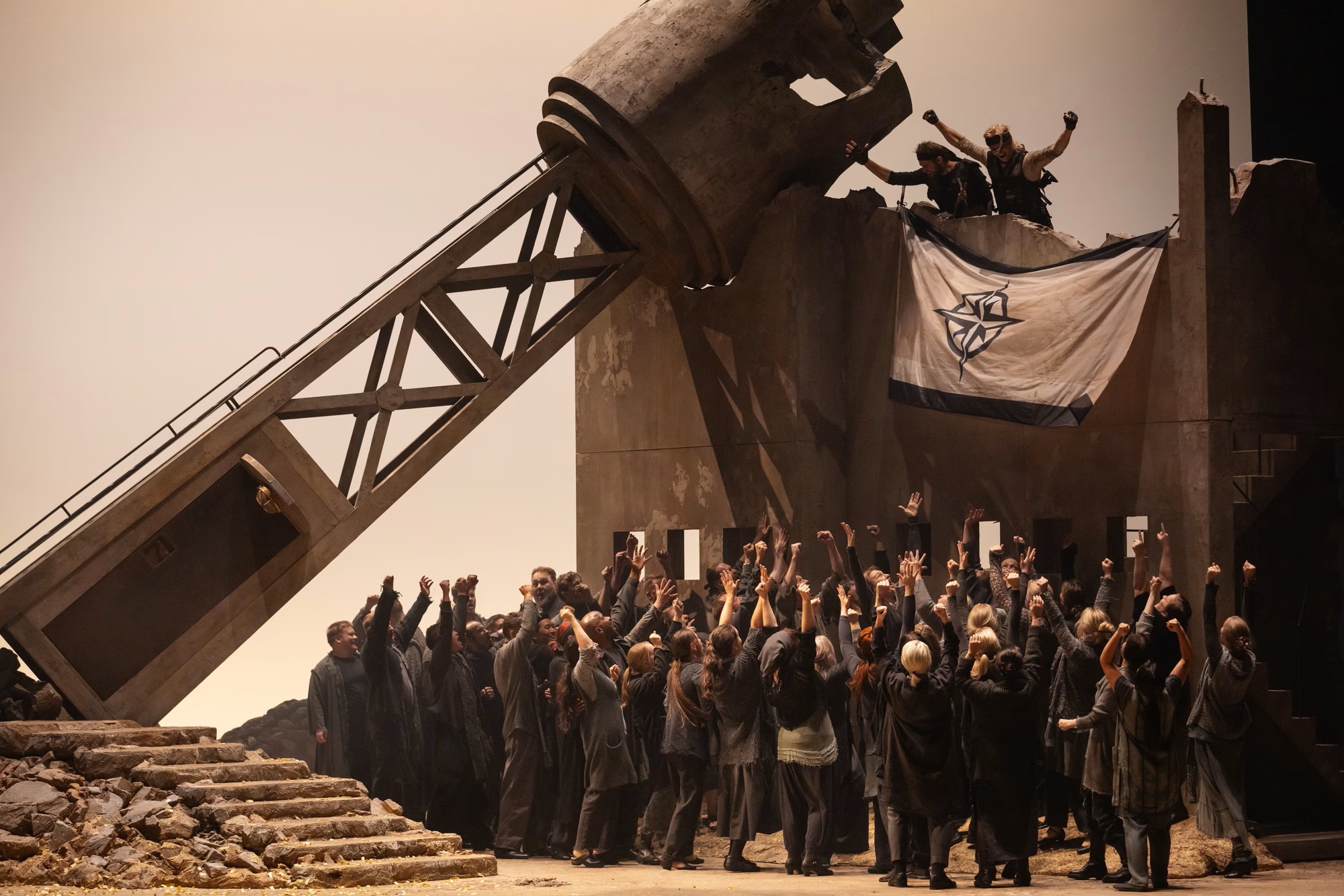
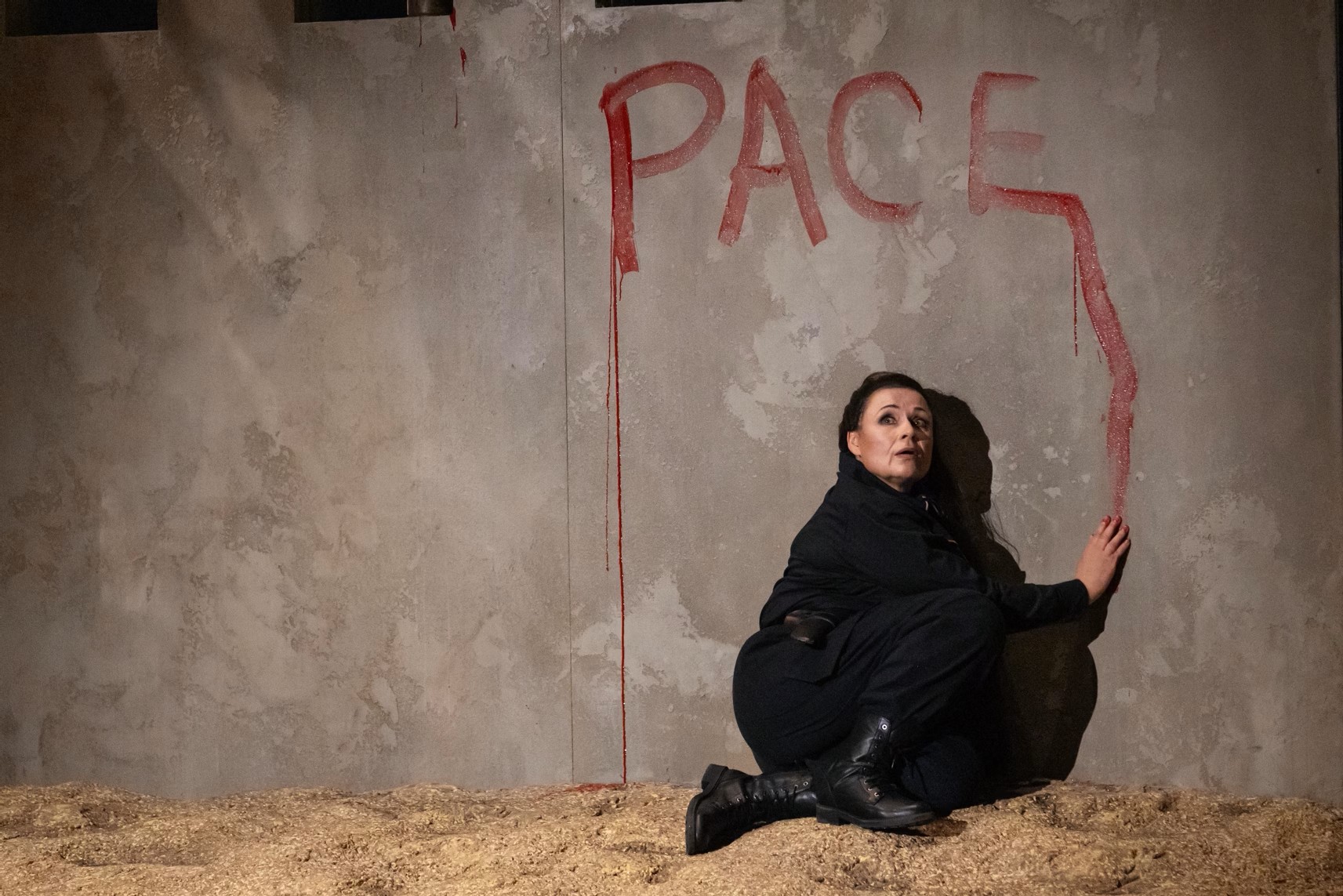
And yet, despite the clear sincerity of her feelings and the thoughtfulness that she brings to it, so much didn’t quite work for me. Worse, much came across as unmusical, preventing Verdi’s score to register in the way that it should. For instance, the prelude was interrupted by a bomb and gun attack on the aforementioned lady. The effect, juxtaposed on top of Verdi’s soft string writing, distracted from the beauty and reflection of the moment. Perhaps that was the point, but it simply felt gratuitous. During the short break between Acts 1 and 2, the auditorium was plunged into darkness with the sounds of gunfire played loudly across the room. Again, it seemed to serve no musical or emotional effect other than to bludgeon us across the head with noise. Worse, during the triumphal scene, the celebrated trumpet melody was interrupted by dissonant electronic noises, as if to suggest Radamès suffering from PTSD. It was striking, certainly, but again felt unmusical. Michieletto managed the same idea in Munich much more successfully, by showing a video of Radamès falling apart that accompanied the music. That was a much more satisfactory and emotional solution than what we had here. It also didn’t help that Naamat’s placing of the singers on stage did them no favours. The chorus was lined up against the side in the triumphal scene, robbing us of the full impact of the fabulous sound they created. Similarly, at the end of the judgment scene, Tujia Knihtilä’s Amneris ended up singing her big high A into the side of the stage – again robbing us of the full impact of her crowning moment. That said, Naamat did give us a moment of insight in the closing measures. As the music faded away, Amneris wrote the word ‘pace’ on the set, while two children played together. It was a poignant moment, a reminder that we have more in common than divides us. And yet, the journey to get there wasn’t as convincing as one might have hoped it would be.
Ettinger’s conducting displayed his usual qualities, although it was certainly more satisfactory than the Tosca I heard him conduct in Naples last year. The sound he elicited from the orchestra was incredibly rich, based on a thick string sound, yet with a transparency that brought each of the individual string lines out with striking lyricism. The wind playing was similarly full of poetry, as cantabile as anything we heard on stage. The brass was superb with not a split note during the entire evening. The violins played with gossamer beauty in the higher reaches. While the quality of the orchestral playing Ettinger obtained was superb, his conducting frequently sagged in tension, something not even the gunfire could pep up. His tempi seemed to alternate between swift and stasis. Given the sheer precision of ensemble the chorus gave us last night in incredibly rhythmically complicated music, there were a couple of passages where they fell behind the beat most noticeably – although that could also have been due to their placement on stage.
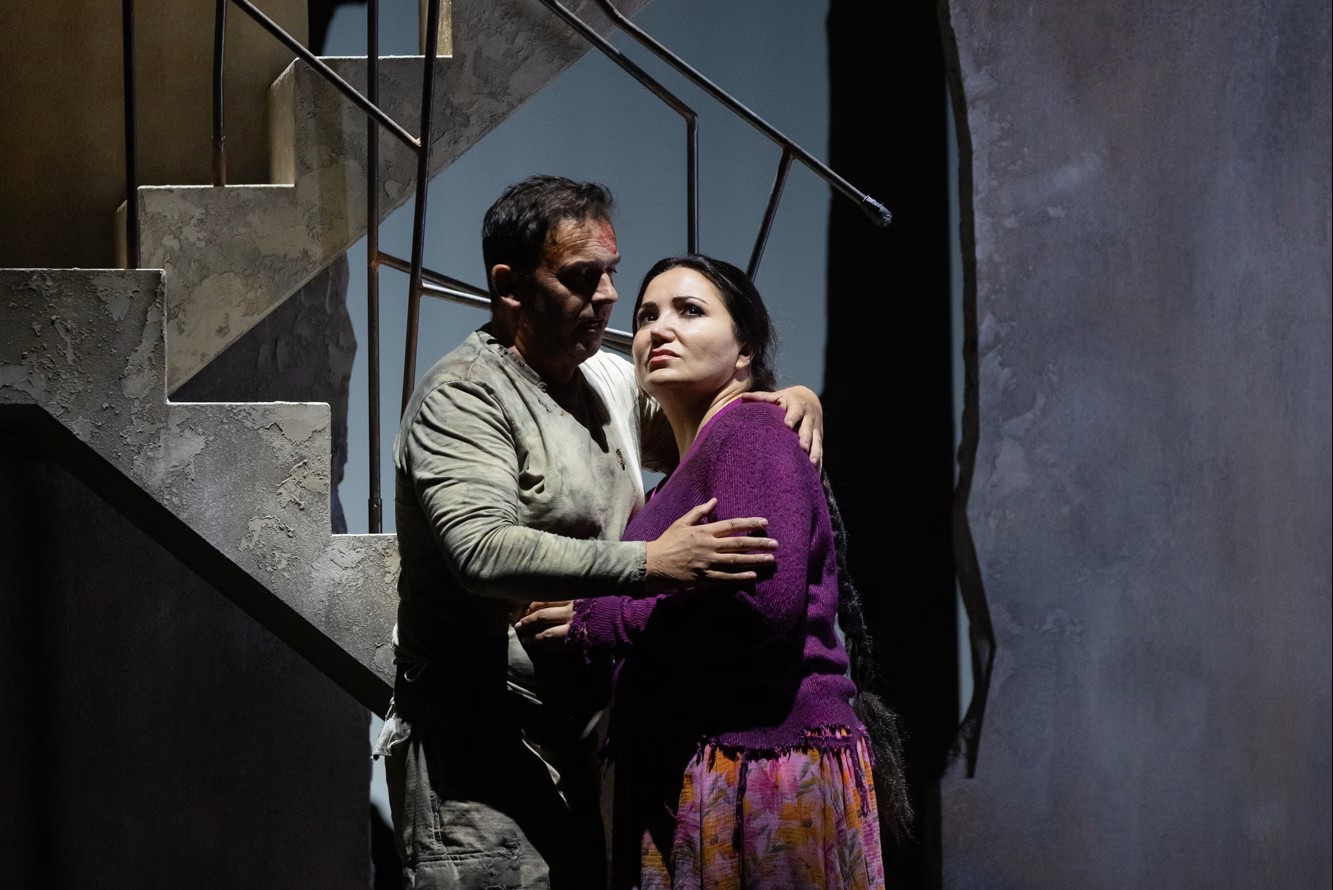
The title role was taken by Liana Aleksanyan. She’s the owner of an attractive, dusky soprano with an instinctive musicality. I did find her to have a tendency to sing slightly sharp, however, although this didn’t distract from the sincerity of her singing. She sang her ‘patria mia’ with long lines and an admirable legato, although the ascent to the high C was sung out in full voice. That said, it was an impressively full and healthy high C. Aleksanyan also capped the ensembles with ease, despite not always being optimally placed on stage. Her Radamès was Milen Bozhkov. His is a robust, dark tenor, with admirable evenness of emission and registers fully integrated. Again, the high B-flat in ‘celeste Aida’ was trumpeted out, but he did make an effort to give that aria a sense of loving phrasing and beauty. Throughout, Bozhkov’s singing was always genuine, the tone healthy and carried well into the house. Undoubtedly a useful singer.
Knihtilä sang Amneris in an extremely glamorous mezzo. She’s the owner of a formidable chest register and isn’t afraid to use it. She displayed confident handling of the passaggio, the registers always smooth and fully integrated. The voice isn’t the biggest, and combined with the placement on stage, Knihtilä would certainly have benefitted from being placed at the front more often. It’s an impressive voice, so healthy in tone and a singer I would be keen to hear again. Tuomas Pursio’s Amonasro displayed genuine textual insight and understanding. His baritone is firm and healthy and he sang with the text, making the king’s anger and power most apparent. I wondered if Park Youngdoo’s Ramfis and Koit Soasepp’s Re might have been more optimally cast the other way around. Soasepp sang his role in a massive bass, rich and resonant, but with a striking piquant edge to the tone which had seemingly unlimited depth. Park’s more baritonal bass was certainly healthy in sound, but also more compact and focused. The remaining roles were confidently taken with Otso Sipilä’s Messaggero sung with a lieder singer’s attention to text and Marianne Montonen’s Sacerdotessa sung with haunting lyricism.
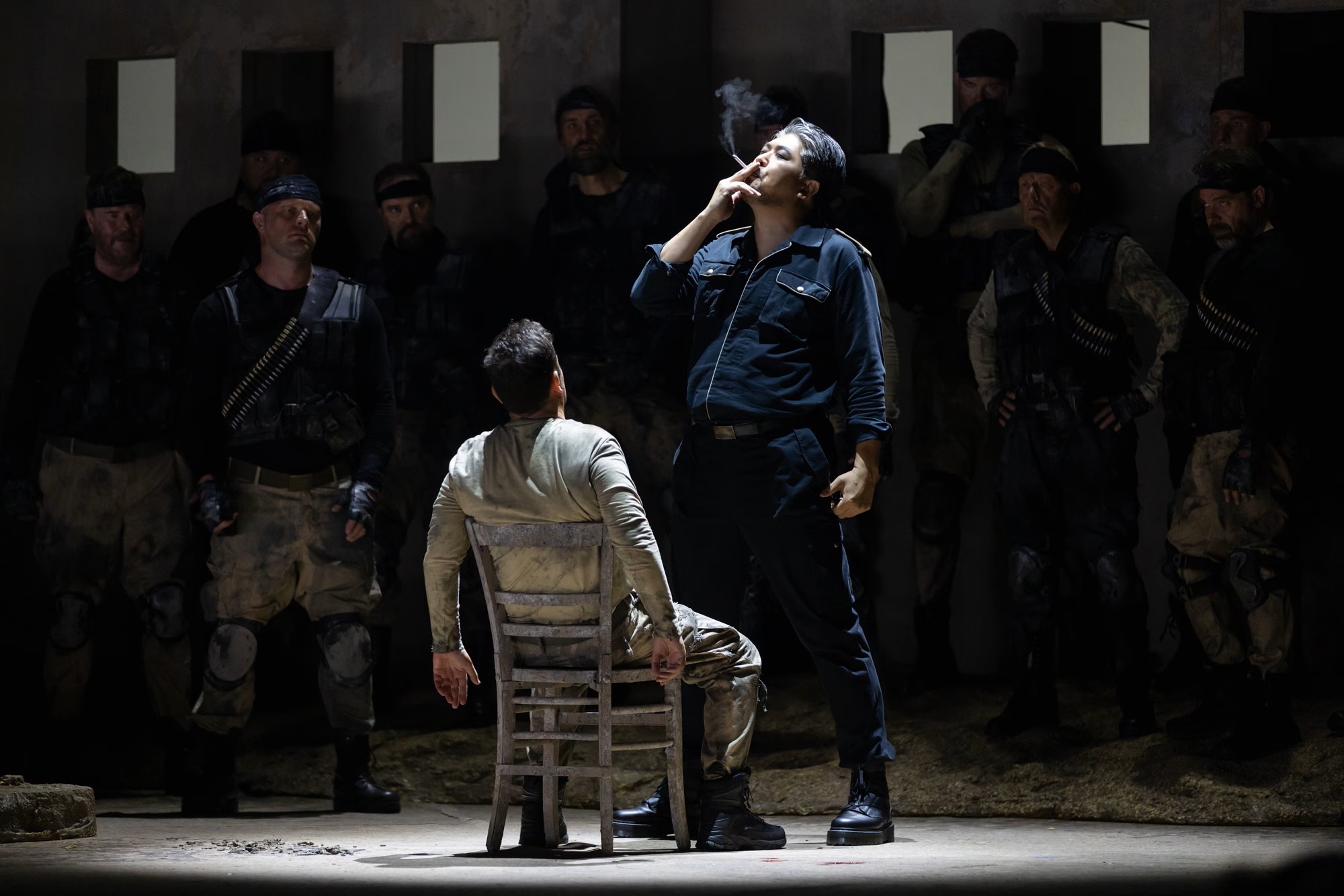
The choral singing was, once again, exceptional. Yes, there were a few passing moments of stage-pit coordination going slightly awry, but this is choral singing that one would travel a long way to hear. The tone was impressively balanced, the tuning impeccable. The sopranos and mezzos sang with excellent blend while maintaining a delicate fizz of vibrato. The tenors and basses brought impressive clarity of tone to their singing, the unaccompanied passages at the end of Act 1 sung with even balance and rich depths. They had clearly been prepared to the highest level by Marge Mehilane and Mauro Fabbri.
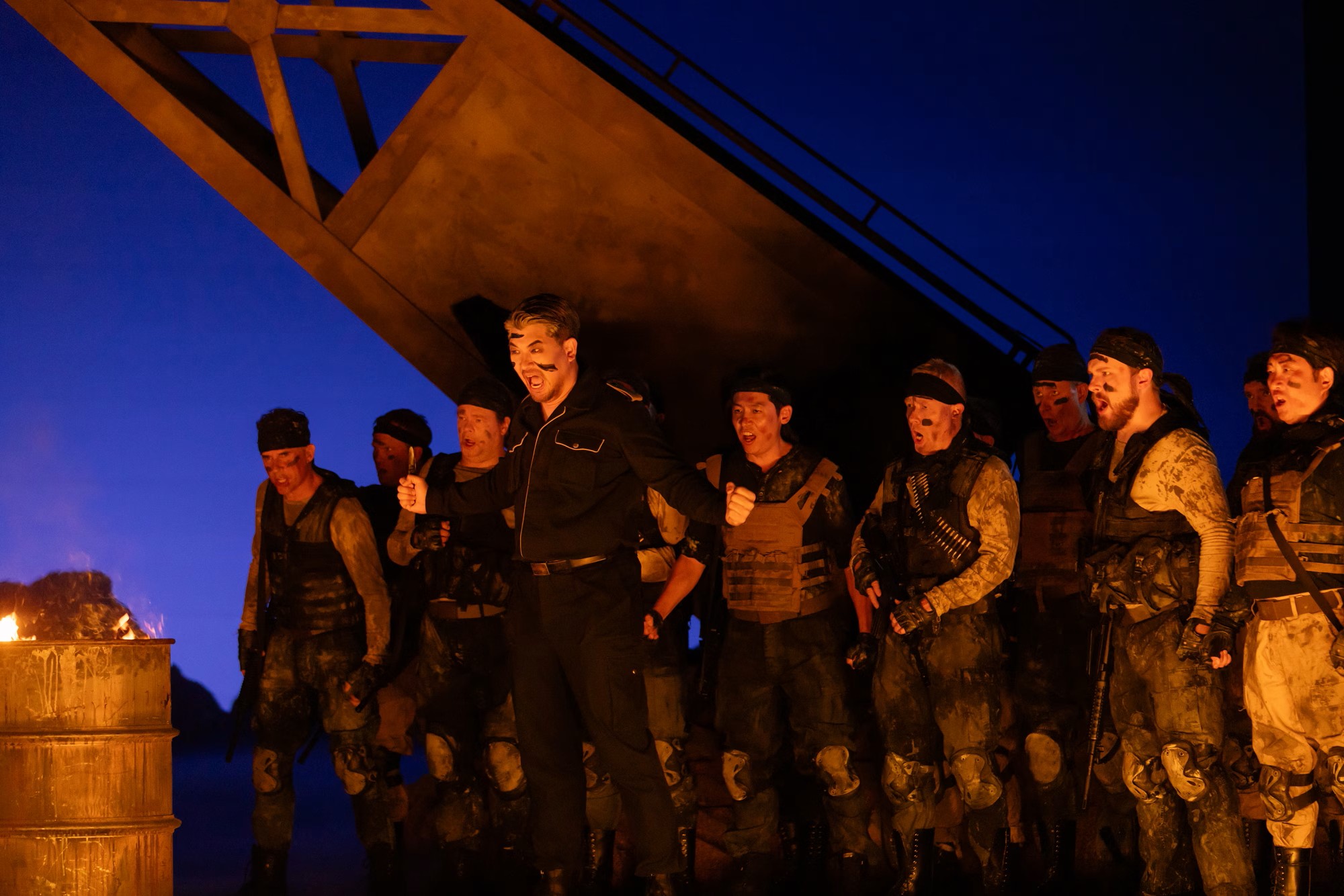
This Aida is one of those evenings where there were multiple elements that gave pleasure, but also others that were less than convincing. Naamat’s staging is well intentioned and culminates in a hauntingly beautiful final tableau. And yet, the journey to get there is problematic due to the extraneous noises and the awkward placement of singers on stage. Ettinger secured playing of the highest level from the orchestra, but his pacing was also rather slow and missing the ultimate in drama. The solo singing was always robust and decent. The biggest pleasures today were the playing of the orchestra and the magnificent chorus. A reminder that November’s Peter Grimes here is a very hot ticket. The audience response at the close was warm for the entire cast.

