Verdi – Il trovatore
Il Conte di Luna – Amartuvshin Enkhbat
Leonora – Alessia Panza
Azucena – Silvia Beltrami
Manrico – Ivan Magrì
Ferrando – Alessio Cacciamani
Ines – Rossella Vingiani
Ruiz – Murat Can Guvem
Vecchio zingaro – Pasquale Arcamone
Messo – Raffaele Pastore
Coro del Teatro Petruzzelli, Orchestra del Teatro Petruzzelli / Vincenzo Milletarì.
Stage director – Davide Livermore.
Teatro Petruzzelli, Bari, Italy. Sunday, October 25th, 2026.
I saw Davide Livermore’s production of Il trovatore in Parma back in 2023. I discussed it at length in the previous review and I must admit that my impressions of it have not materially changed in the intervening three years. The main attraction of this revival in Bari was the opportunity to hear the superb Verdian, Vincenzo Milletarì, lead the house forces at the head of a mostly Italian cast. It was also an opportunity to hear the extremely exciting young soprano, Alessia Panza, only 28 years old and already a notable talent. Tonight’s cast was not quite as planned since Fabio Sartori, due to sing Manrico, was unwell and was replaced by Ivan Magrì who was singing the role in the alternate cast.
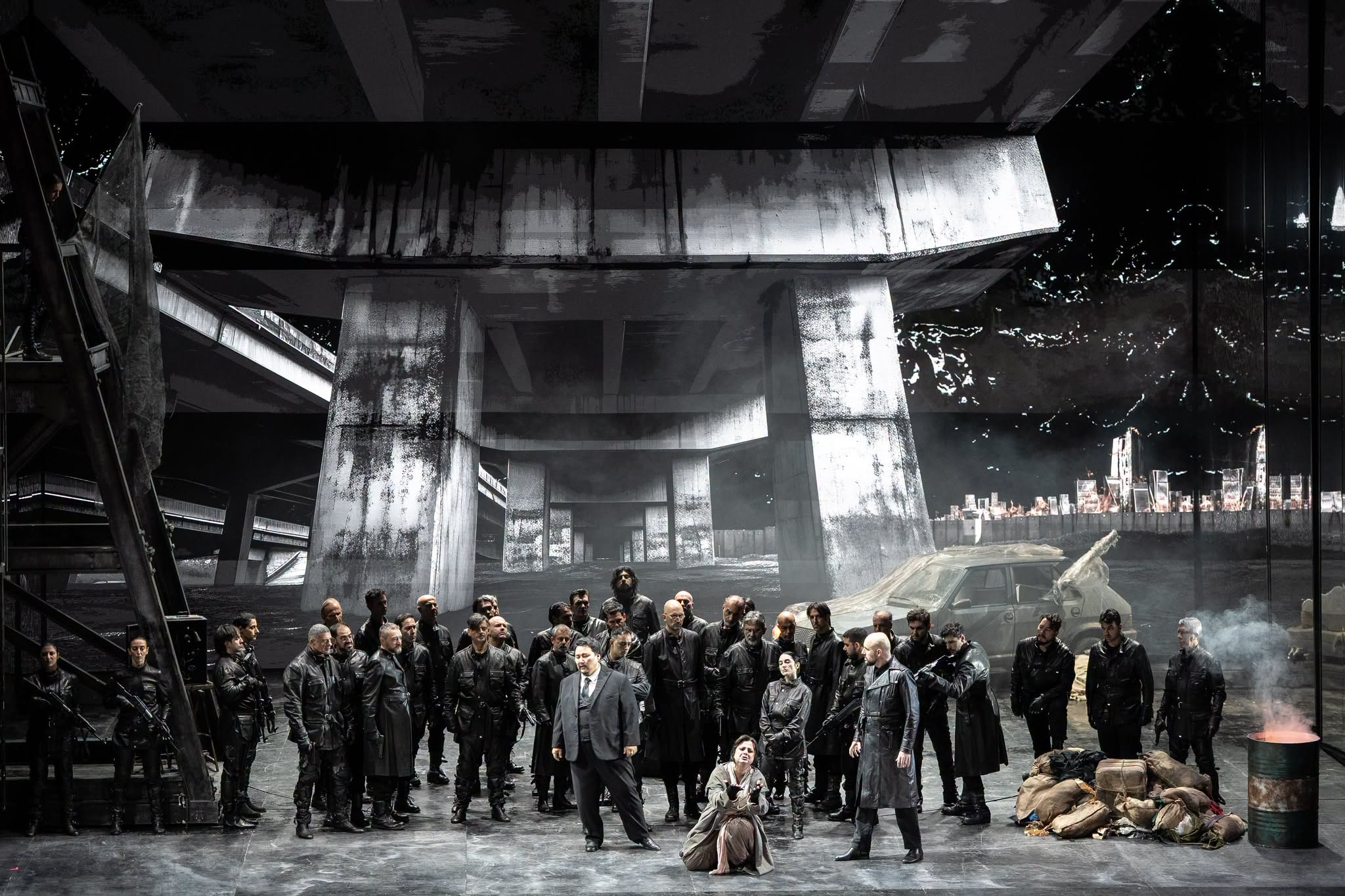
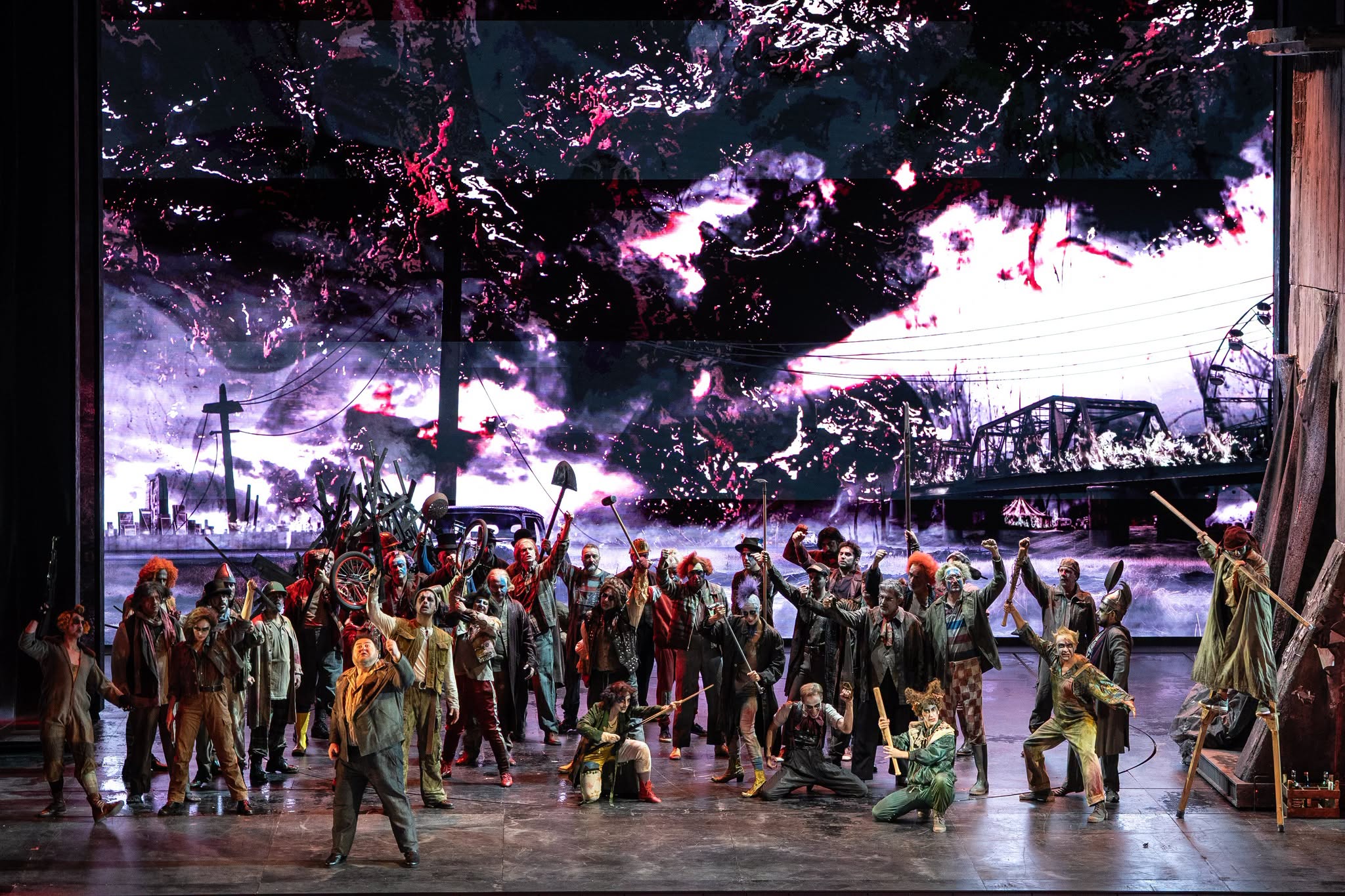
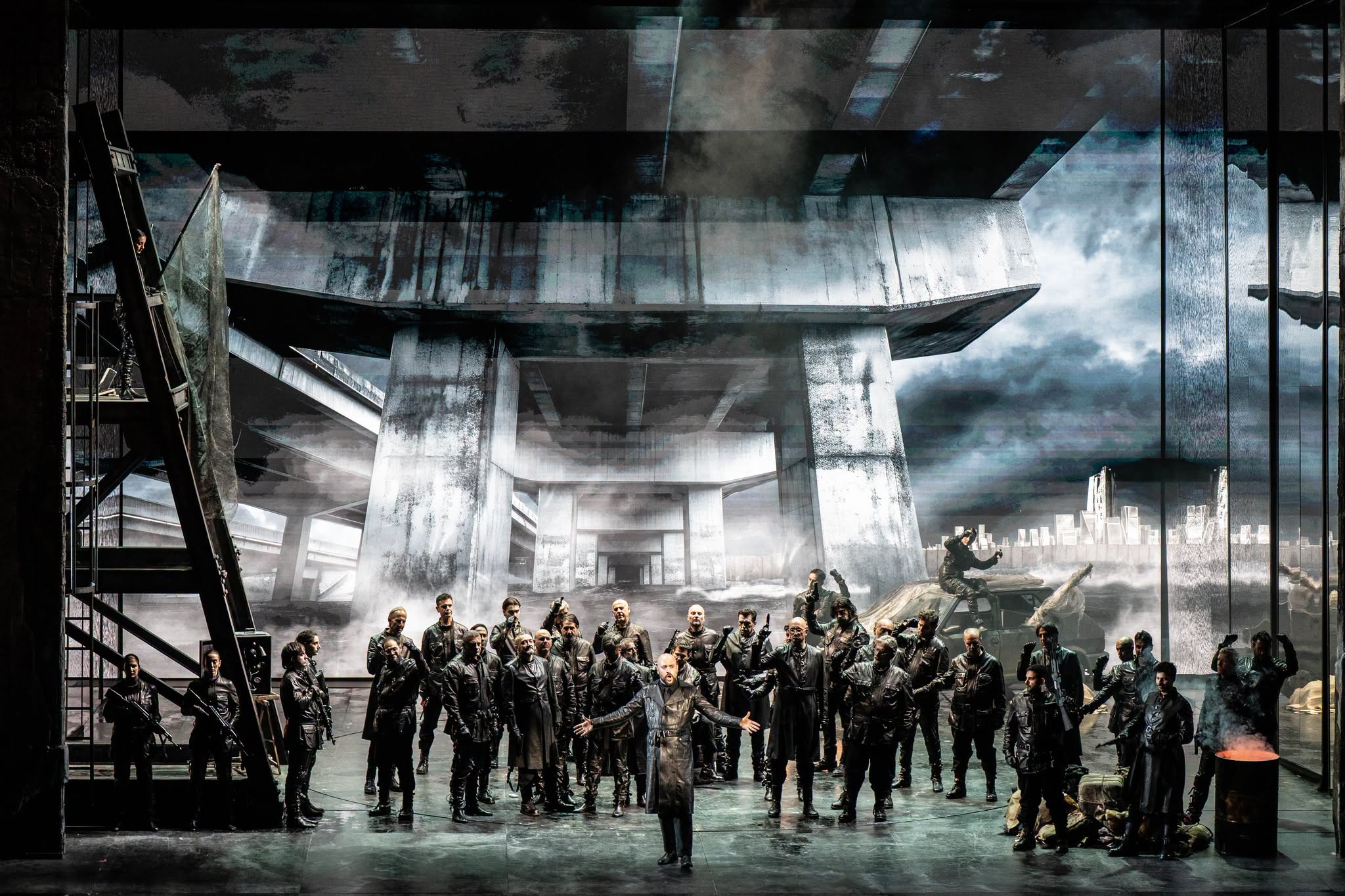
Livermore’s staging is one of those that looks extremely simple, but must have been very expensive to mount. Alongside minimal sets, by Giò Forma, the action is illustrated through video projections, by D-WOK, a frequent Livermore collaborator, that display changing vistas. While the video is fluently done, I’m not convinced it particularly does much to enhance the story and storytelling. One of the features of attending opera in this part of the world is the presence of the local Nonne in the audience who aren’t shy about commenting during the show if something is unclear. I’ve written before how stage directors should run their concepts by a group of Puglian Nonne to ensure comprehensibility, and that was certainly the case tonight, given how much animated conversation and questioning there was during the show. Livermore does establish the dichotomy between Luna’s military forces and Manrico’s circus troupe rebels, however. After all, nothing spells out ‘rebellion’ quite like a man on stilts striding across the stage.
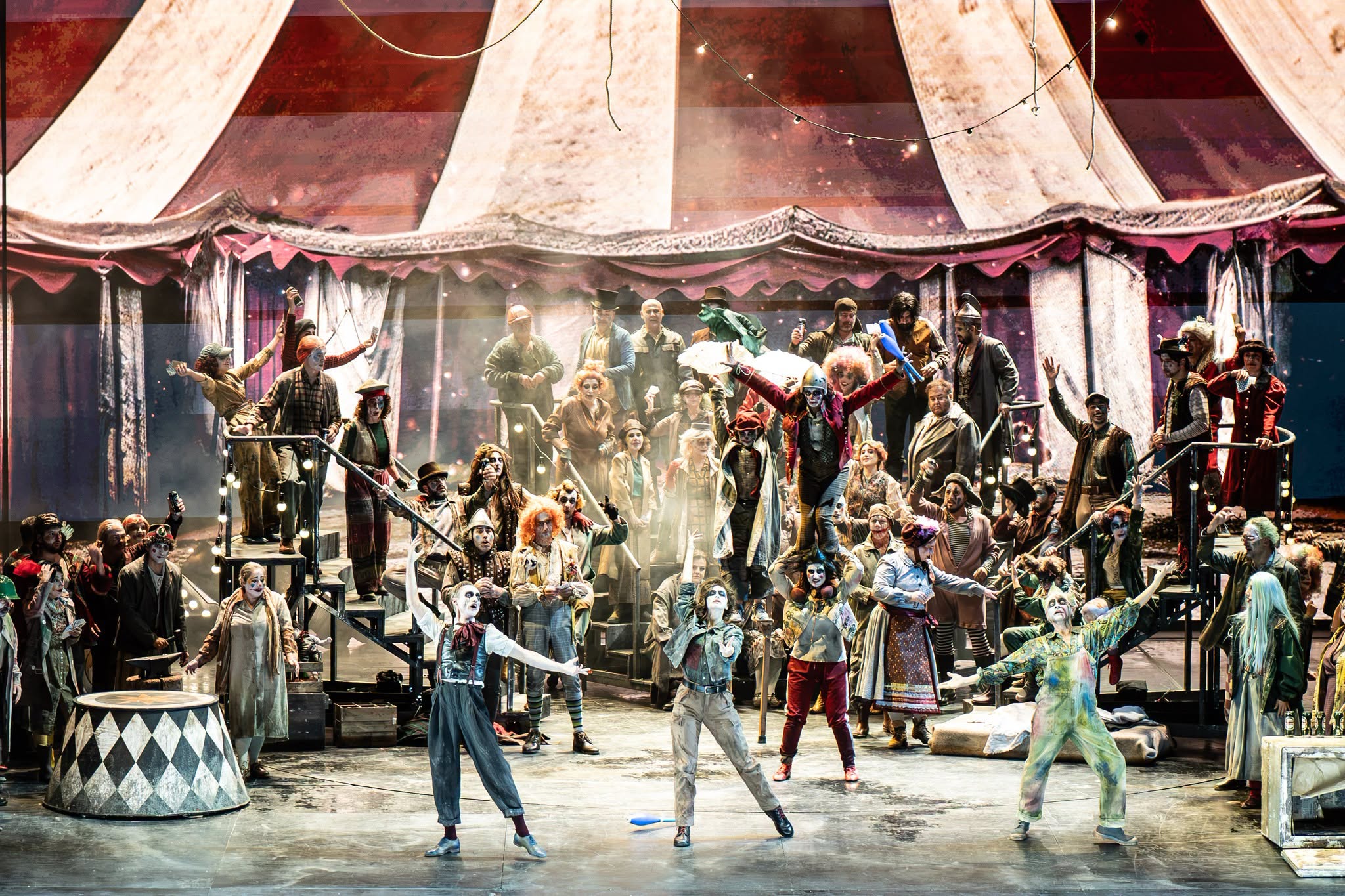
There’s much here that is rather risible – the nuns fighting Luna’s forces were hysterically overacted. Moreover, the direction of the principals consists simply of asking them to stand at the front and emote. The overwhelming gloom on stage and lack of interpersonal dynamics between the characters also make it difficult to distinguish between them, if one isn’t immediately familiar with this relatively complicated opera. This Trovatore is far from being Livermore’s best work. Although, having seen it in Parma, I knew what to expect. The evening isn’t helped by the extremely lengthy set changes for what is a minimal set. Yes, the video is fluently done and matches the shape of the music, but otherwise the staging feels like a drag on the entire evening.
This was particularly evident thanks to Milletarì’s invigorating conducting. He gave us a terrifically dynamic reading, pushing forward and bringing the drama out in the most stimulating way. Milletarì has a profound understanding of how this music should go, knowing where to drive the rhythms but also giving his singers precisely the space they needed to phrase their music. He took the Act 3 soldiers’ chorus at a fantastic lick, making it sound so wonderfully vibrant, while his tempo for ‘di quella pira’ filled it with uninhabited swagger. Milletarì clearly breathes with his singers and understands their needs, supporting them and allowing them to spin those long Verdian lines without ever sacrificing the drama. He secured playing of excellent quality from his Barese forces, the orchestra providing pulsating rhythmic drive under long cantabile lines. The all-important clarinets drew out the score’s nocturnal tinta, here also enhanced by the gloom on stage, and the brass playing was admirable throughout. The precision of the string playing was also particularly striking, alternating between that propulsive drive and the long, lyrical lines.
Panza is a bright talent. She has an extremely rare gift, a warm, voluptuous, and creamy soprano with easy amplitude. She’s also a very fine musician who phrases with the utmost musicality and understands implicitly how this music should go. She sang her ‘tacea la notte placida’ with an impeccable legato and dispatched the florid lines of ‘di tale amor che dirsi’ with admirable clarity and a decent trill – we had both verses but sadly the second wasn’t ornamented. In her ‘D’amor sull’ali rosee’ she sang with real poise, floating some ravishing soft singing on high. The technique does sound somewhat unfinished to my ears, the support not quite lined up and the top, while easily produced, isn’t fully connected. There was also a tendency for the voice to spread a little on high at the fullest volumes, with the vibrato widening. And yet, these are things that with the right guidance and support can absolutely be overcome and Panza is still extremely young. I very much hope she has the right people around her to guide her as she has a remarkable instrument.
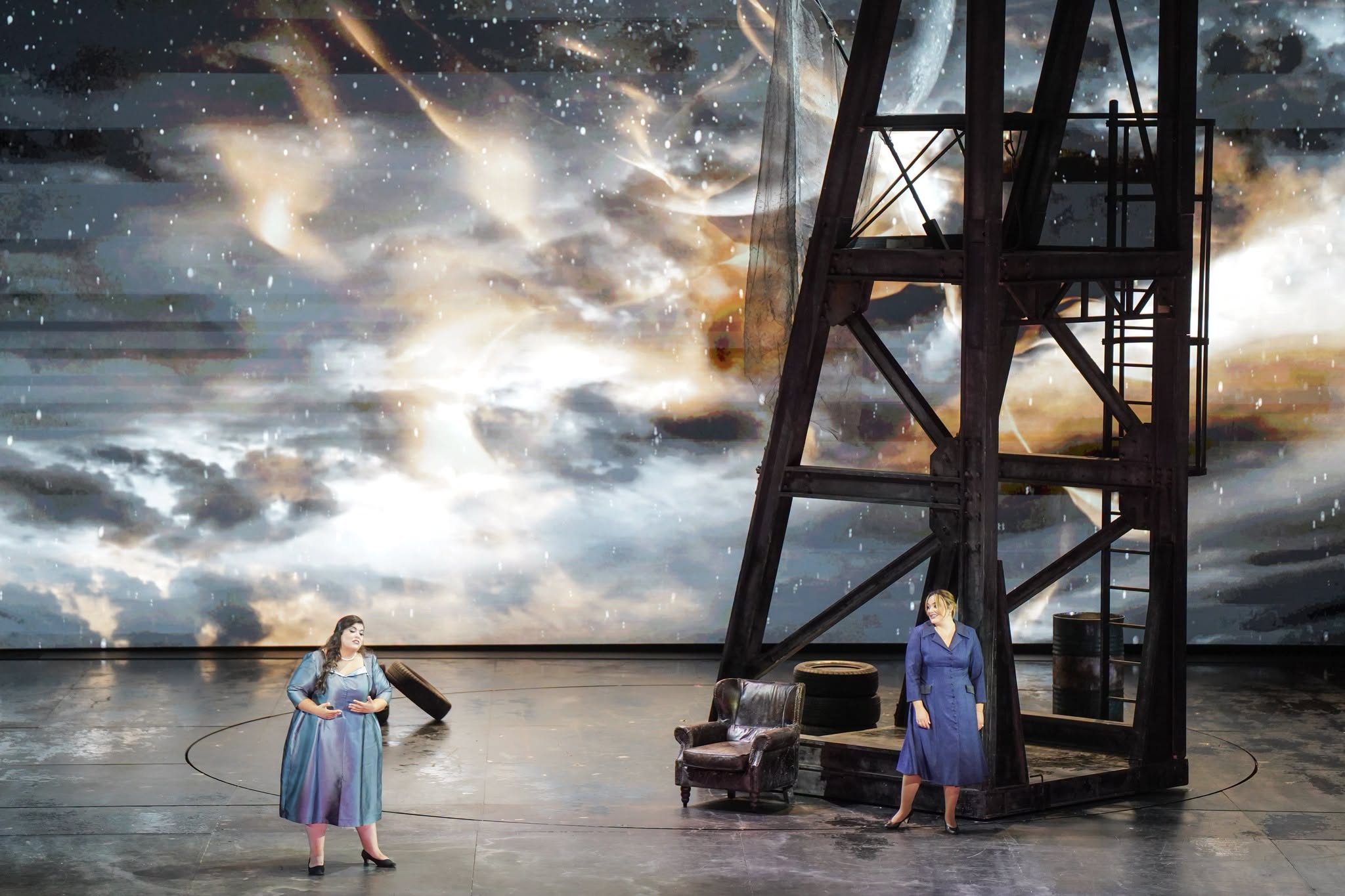
Magrì sang Manrico in a bright, clarion tenor. His ‘Ah sì, ben mio’ was sung with long, easy lines and an impeccable legato. His ‘di quella pira’ was terrific, the two high Cs ringing out with ease – with the final one held for a considerable amount of time, which sent the audience wild. It was a bit of a missed opportunity, then, that he only gave us one verse. Elsewhere, his impeccable diction and textual awareness fully brought his character to life, combining both swagger and loving concern for his mother. She was taken by Silvia Beltrami. Beltrami’s mezzo has a generous chest register, but the middle and top lack amplitude and the registers are not fully integrated. She also struggled on top, not quite making it to the desired target with intonation up there frequently flat. And yet, I found Beltrami utterly gripping because she made so much of the text. The clarity of her diction made one sit up and listen, so much so that whenever she sang, the Nonne stopped talking and listened intently. Yes, it was vocally rough, but Beltrami transcended that to make her Azucena a true theatrical animal.
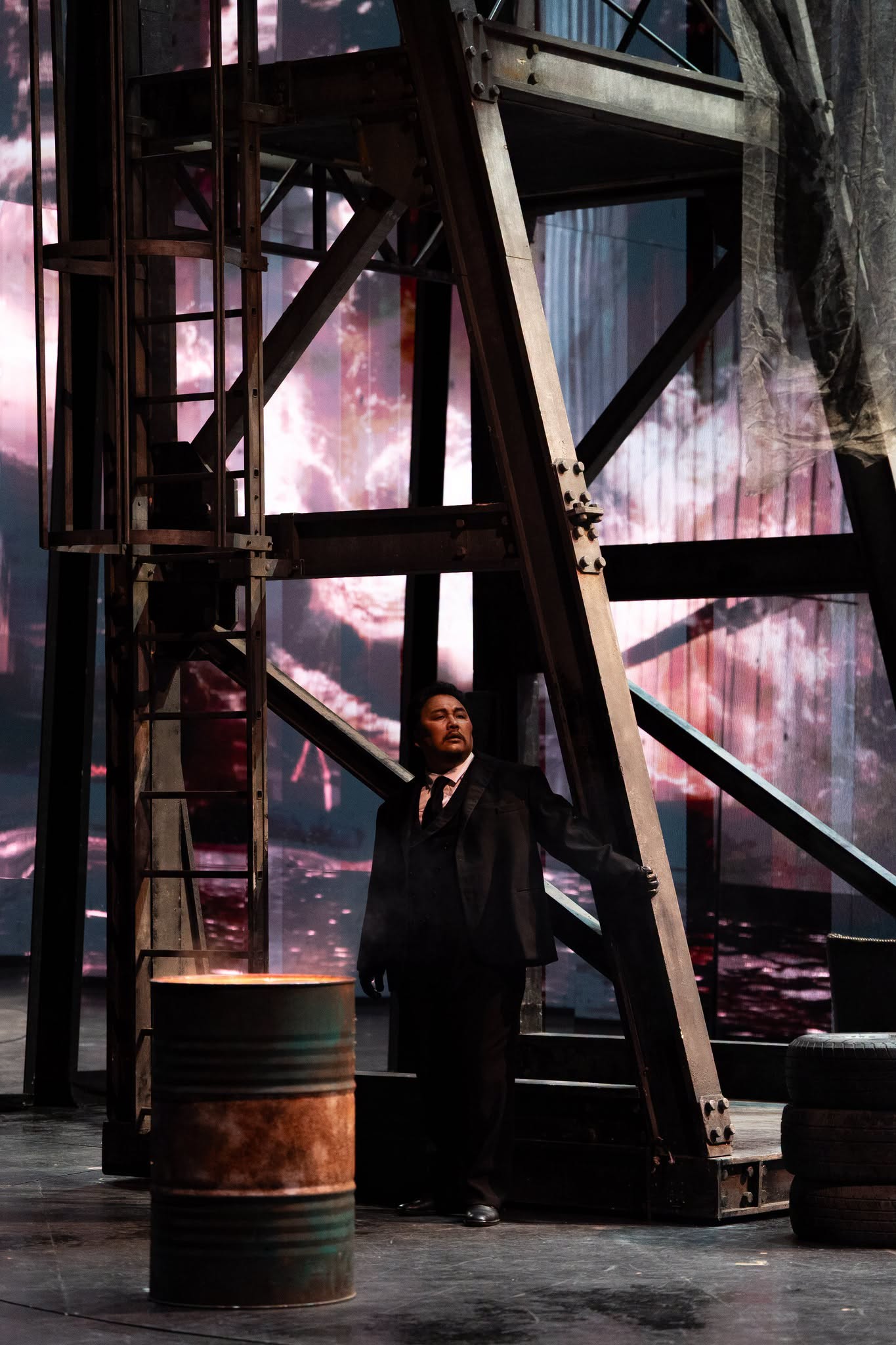
Amartuvshin Enkhbat’s Luna was solidly sung throughout. The tone did tend a bit to greyness but the voice is wonderfully large and ample. The highlight was his ‘il balen’, which earned the longest and most enthusiastic ovation of the evening. He sang this celebrated number with long, generous lines, the occasional aspirate notwithstanding, the tone big and broad, filling the house with ease. Even in a staging that was so statuesque, in his aria Amartuvshin held the stage and the public’s attention through his instrument and his musicality. Alessio Cacciamani sang Ferrando in a smoky bass, the words always nicely forward.
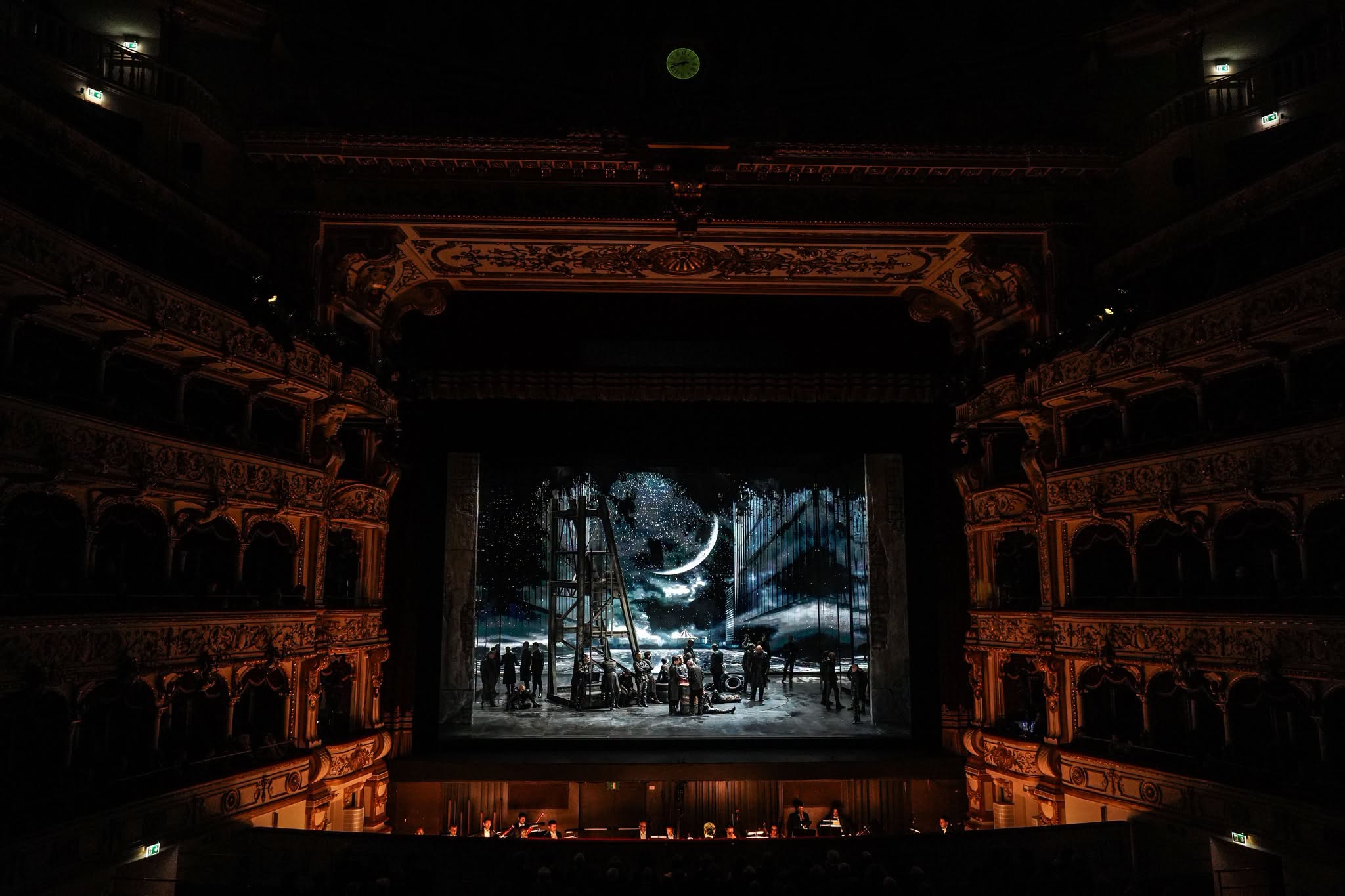
The remaining roles were ably taken, with Murat Can Guvem’s bright, forwardly placed tenor an asset to the cast as Ruiz, while Rossella Vingiani’s sunny soprano was a welcome presence as Ines. The chorus, now under the direction of Alfonso Caiani, offered some terrifically lusty singing. They did drop behind the beat slightly in the faster section of the opening scene, but they recovered quickly enough, and they coped extremely well with Milletarì’s lively tempi. The sopranos and mezzos offered some well-tuned singing of focused tone in the nuns’ chorus, the blend suitably mellifluous. They also made a tremendous noise in the anvil chorus, bathing the audience in a wall of sound.
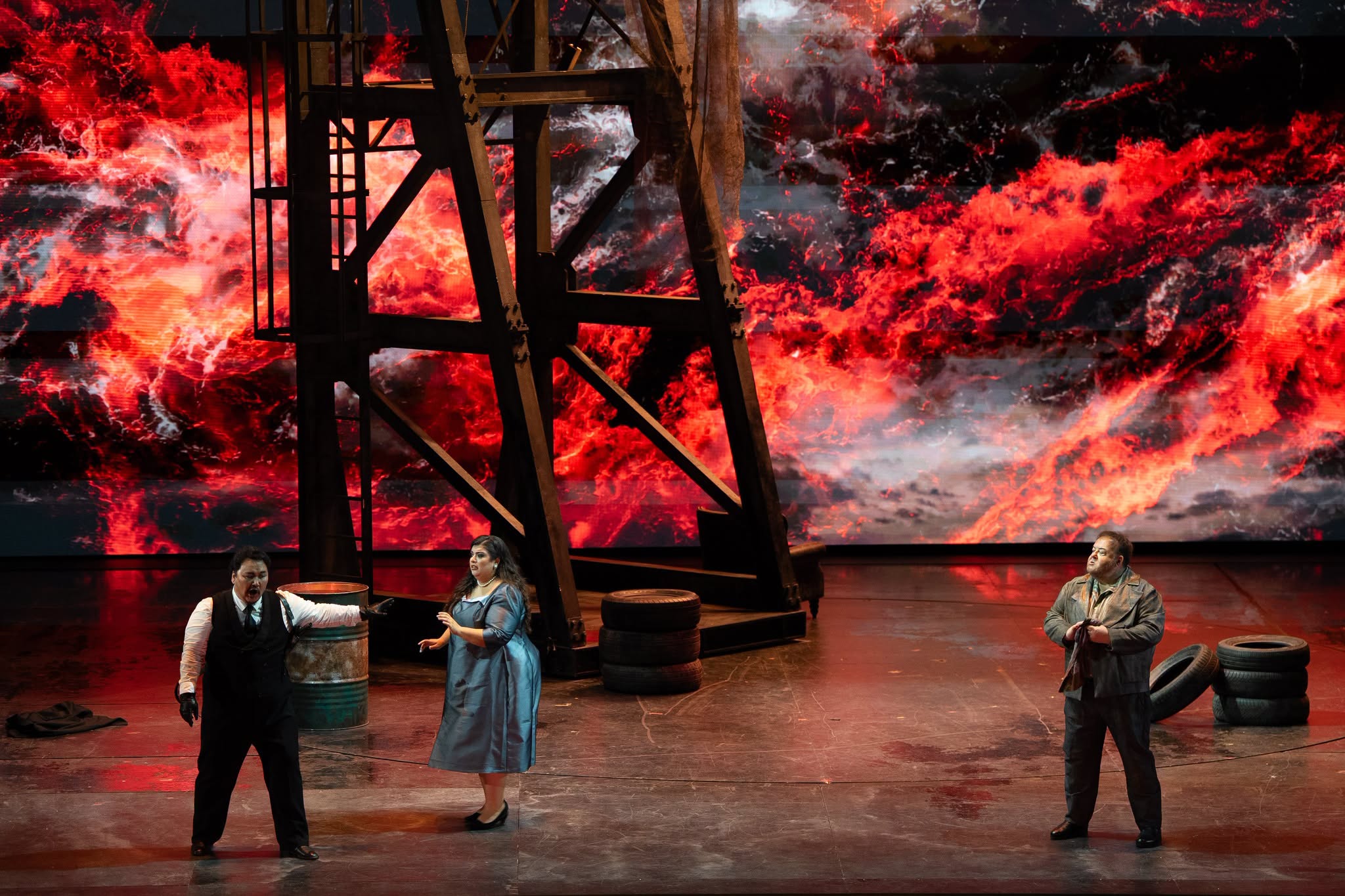
This was an evening that offered significant rewards. Yes, Livermore’s staging is dark and gloomy and barely directs the principals, but musically tonight was especially satisfying. Panza is a major talent, one I hope will be nurtured and not pushed too fast, too soon. Beltrami’s mezzo may have struggled, but her textual acuity made her Azucena utterly compelling. Magrì’s Manrico was focused and terrifically musical, while Amartuvshin’s baritone offered us some superb Verdian singing in his big aria. Milletarì conducted his forces with idiomatic verve and profound understanding of the Verdian style. The audience responded frequently during the evening with genuine appreciation, while the reception at the close was warm for the entire cast.

