Bizet – Carmen
Carmen – Ketevan Kemoklidze
Don José – José de Eça
Micaëla – Rafaela Albuquerque
Escamillo – Gustavo Castillo
Frasquita – Raquel Alão
Mercédès – Ana Ferro
Moralès – Christian Luján
Le Dancaïre – Tiago Matos
Remendado – Marco Alves dos Santos
Zuniga – Luis Rodrigues
Coro da Escola de Música do Colégio Moderno, Coro do Teatro Nacional de São Carlos, Orquestra Sinfónica Portuguesa / Antonio Pirolli.
Stage director – Francisco López.
Teatro Nacional de São Carlos – Centro Cultural de Belém, Lisbon, Portugal. Sunday, November 1st, 2026.
This new production of Carmen marks the first main-stage production of the Teatro Nacional de São Carlos’s 2026 – 27 season. Coming up later in the season are new productions of Fidelio and Un ballo in maschera, both with notable, and primarily local, casts, reflecting the theatre’s duty to be the national lyric theatre of the Portuguese Republic. Indeed, taking that national duty seriously, tonight was the last performance of this run in the capital, while later this month the house will take the entire cast to give a single performance in Ponta Delgada, the capital of the Azores, a rare opportunity to see the company in one of the Portuguese Atlantic islands.
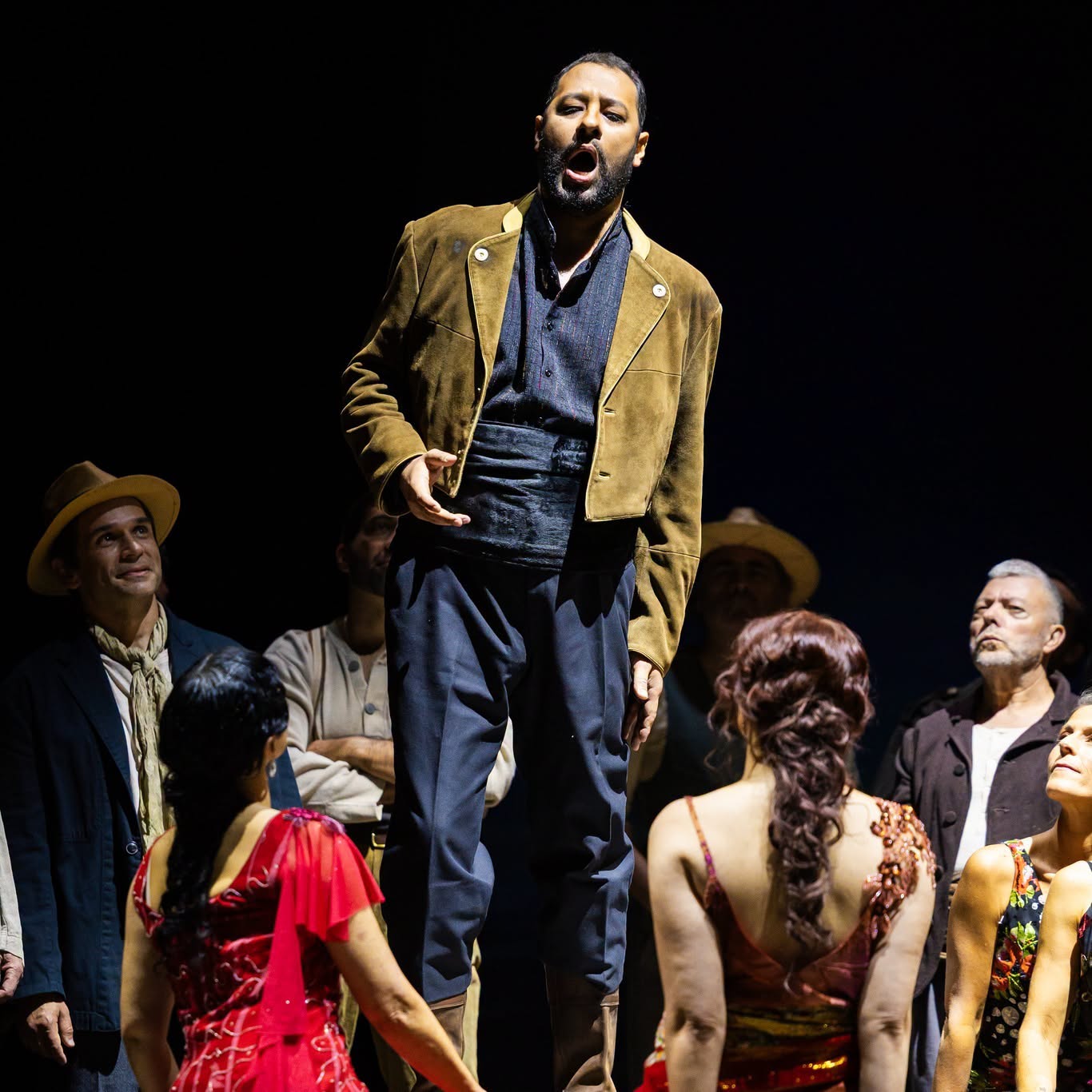
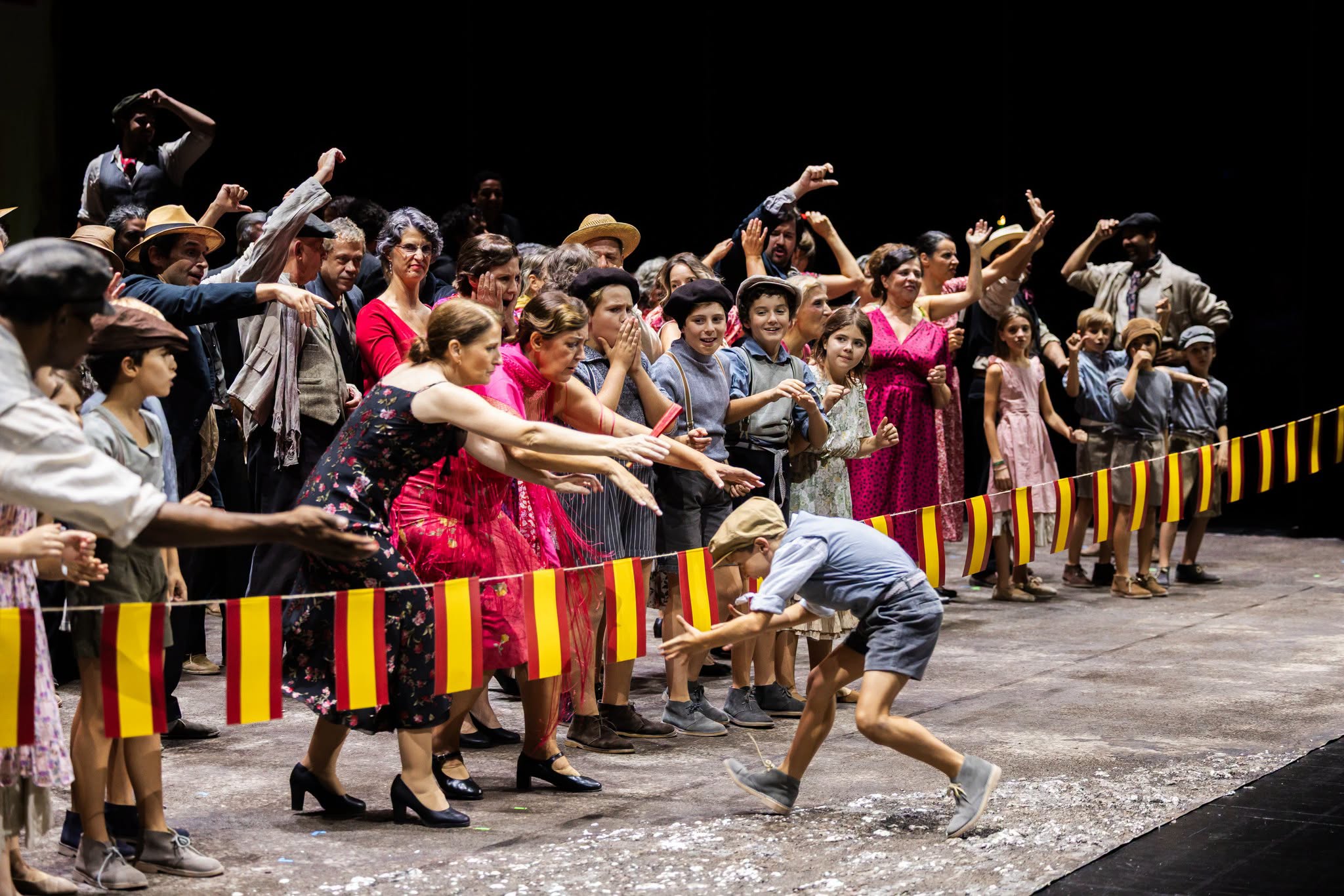
This new production has been confided to Francisco López and conducted by the house music director, Antonio Pirolli. López’s is a very utilitarian staging. The set, by Diogo Ribeiro Pereira, is extremely simple. In Act 1, the focus is on a simple, barren tree with a few benches, while in Act 2, some hanging lanterns add additional visual interest to the scene. Act 3 sees a slaughtered bull laid out at the rear of the stage, while in Act 4 the bull is lifted to the flies, only to be lowered back down after Carmen’s murder. The rear of the stage displays a video backdrop, also by Pereira, which occasionally shows some changing vistas. López clearly sets the action in Franco-era Spain, displayed by the use of the Franco-era flag and how a protestor hangs up a poster that the figure of Lilas Pastia tears down. It makes for an efficient staging for the action, which had clearly been done on a very tight budget.
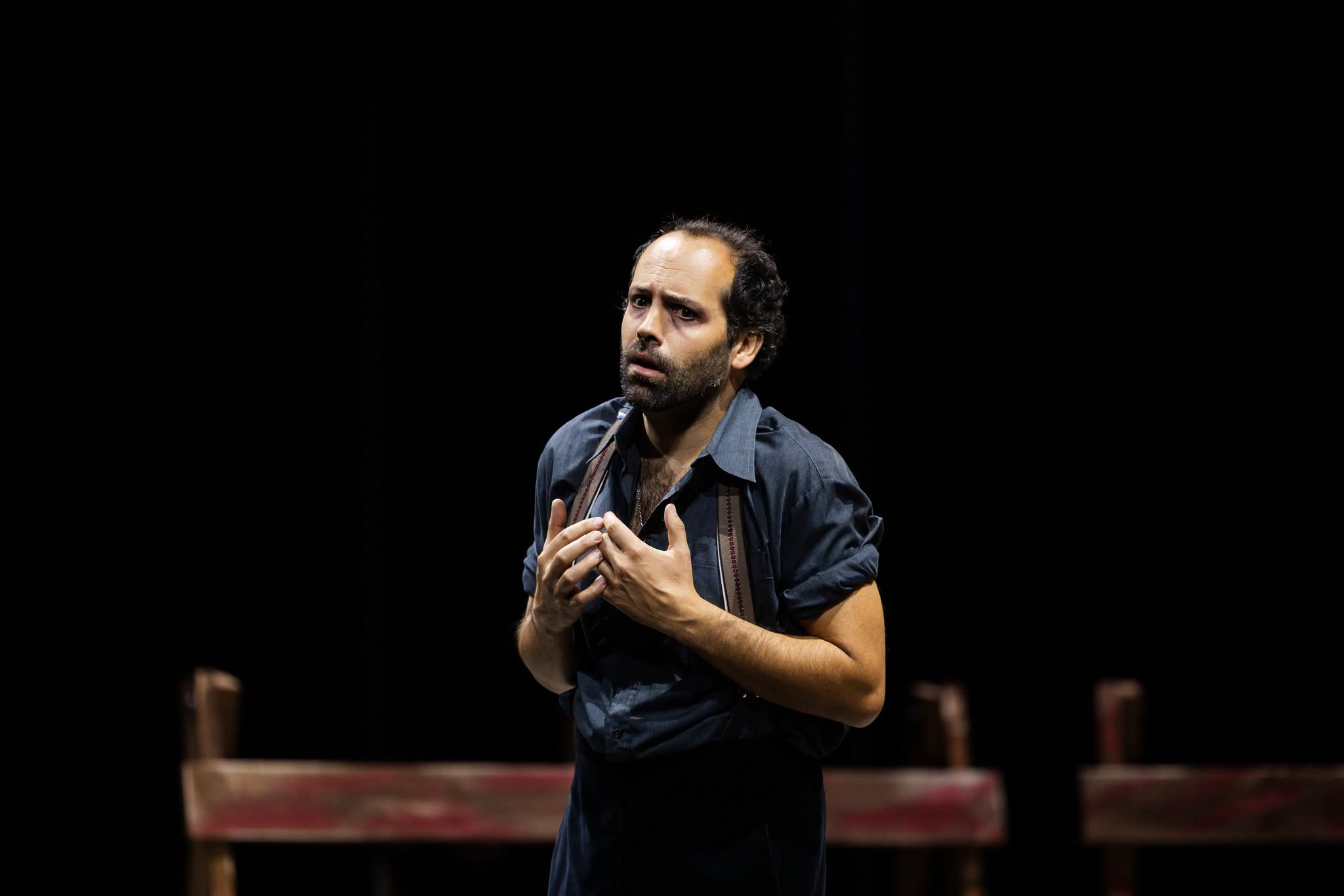
In a set such as this, the need to create cogent and thoughtful personenregie then becomes key. López adds the additional figure of a danseuse. She showed up from time to time, usually at the start or end of acts, did a few random gyrations and then disappeared. Perhaps she was the physical representation of the fate motif; perhaps she represented Don José’s mother. At any rate. I can’t say I’m any the wiser about either what she represented or why she was there, but at least it didn’t distract much. The principals and chorus were moved around the stage efficiently, although in the opening of Act 4, much of what was done with the chorus consisted of moving them from one side of the stage to the other. There were also some stock operatic gestures for the principals, lots of emoting with arms outstretched to the front, and yet despite that, one did very much get a sense of who the characters were and how they related to each other. That was primarily done through the clarity of the diction, which was, on the whole, very good. Indeed, it was a pleasure to hear a Carmen with a non-francophone cast and have the words so clear.
The evening was also helped immensely by Pirolli’s invigorating conducting. Right from the opening measures, he kept the music alive, vivid, and full of colour. I don’t think I’ve heard the Orquestra Sinfónica Portuguesa playing with this kind of verve and freedom. Pirolli made frequent use of rubato, allowing the music to live, yet always keeping stage and pit in tight coordination. He led the chanson bohème in an irresistible accelerando, starting from near-stasis and whipping it up into an uninhibited frenzy. Pirolli brought out a sense of visceral rhythm from the orchestra, even in an acoustic in which it can sound somewhat recessed, making the sound overtake the listener and pull one into the drama. The strings coped extremely well with the treacherous high writing in the violins in the entr’acte at the start of Act 4, while the winds played with cantabile poetry in the Act 3 entr’acte. The brass were similarly extremely extrovert and the orchestral sound was always well balanced. Interestingly, tonight they used the Choudens edition with recitatives – only the second time in my life I’ve heard it in the theatre. I can’t say I found it the most felicitous choice, but thanks to his intelligent and vital pacing, Pirolli kept the evening moving.
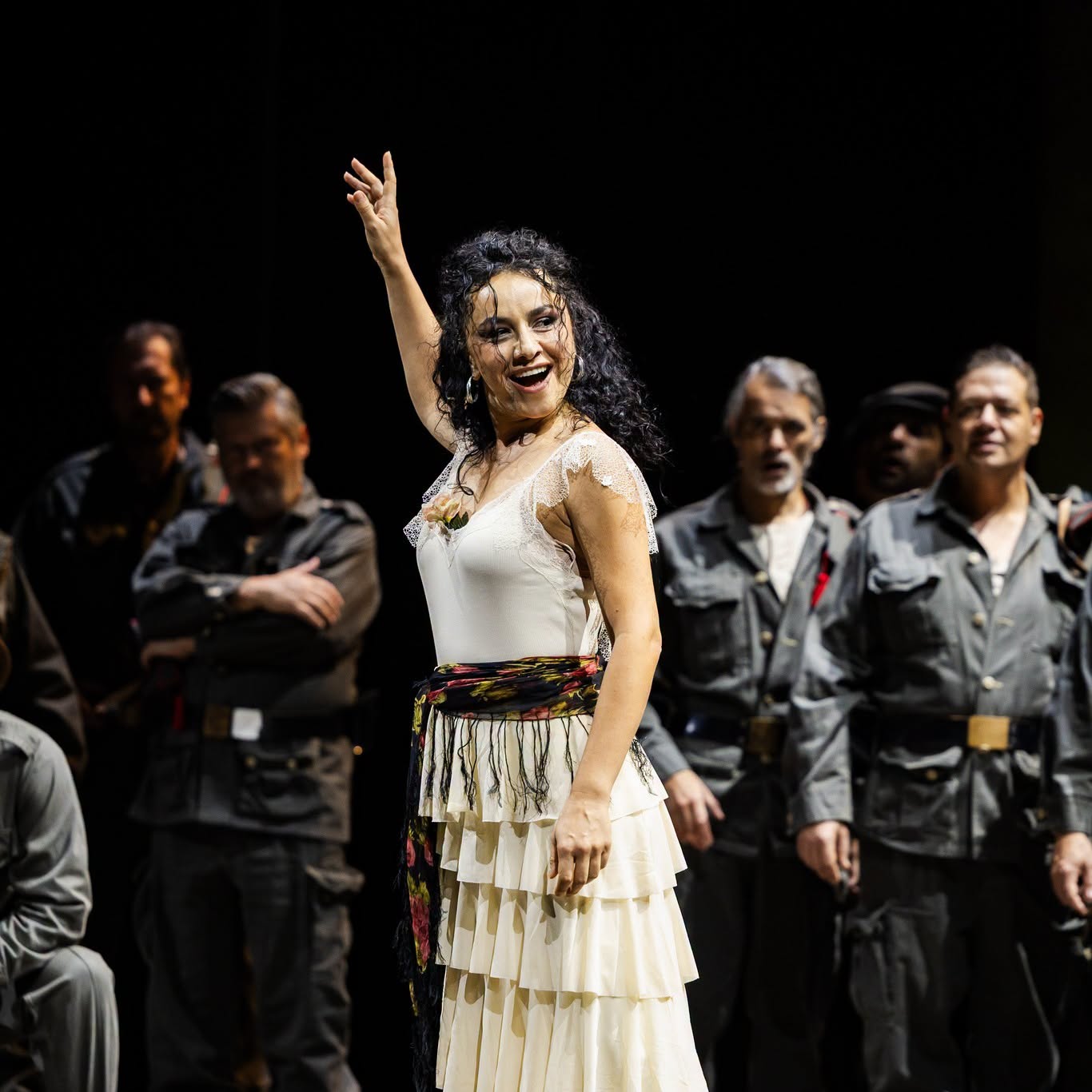
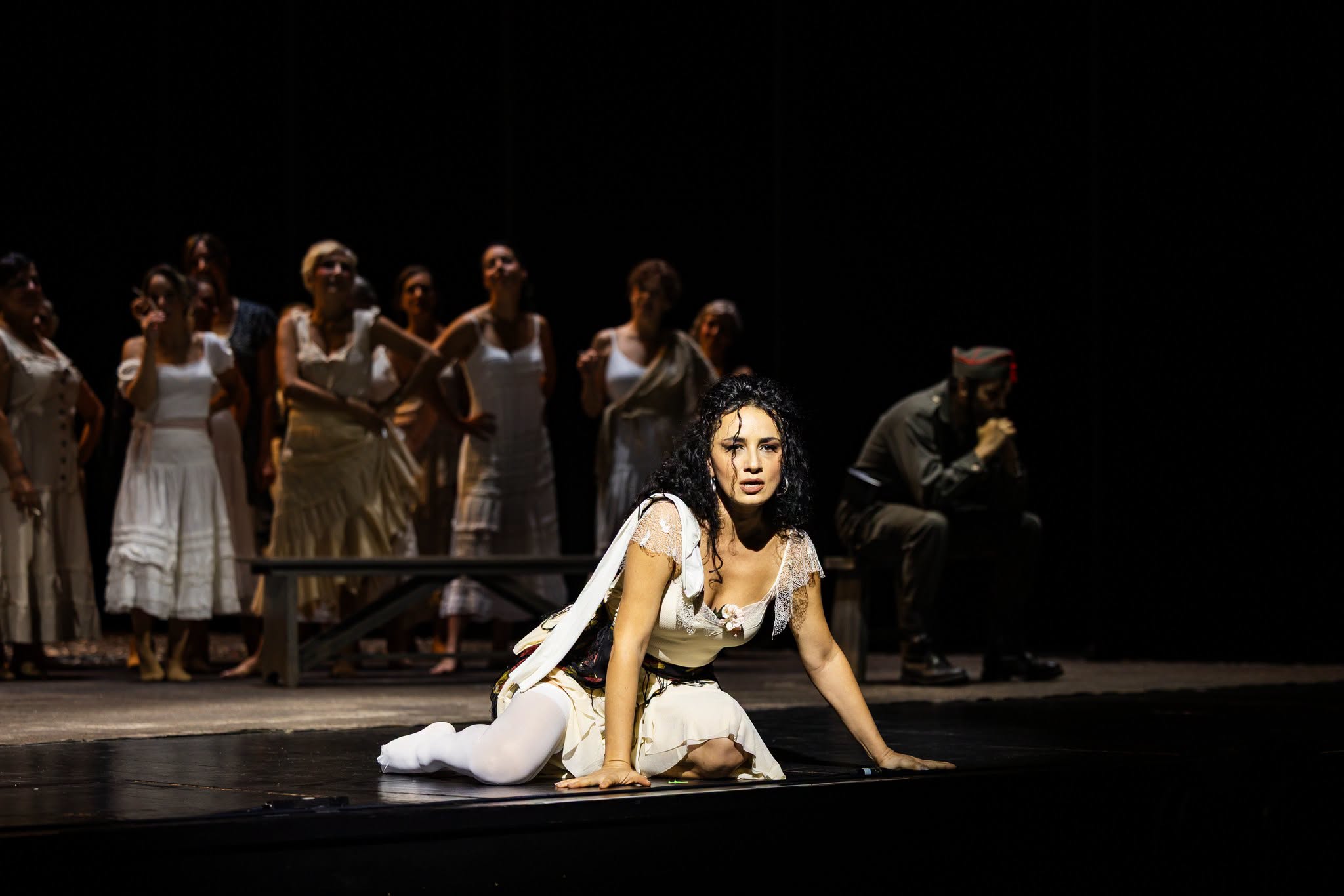
I saw Ketevan Kemoklidze in the title role in Macerata a few years ago. She’s clearly an experienced Carmen and a confident stage actress. Kemoklidze makes a clear effort to enunciate the text and it’s generally clear. Her mezzo does have a very audible break, however, with a focused chest voice and a plummy, almost matronly middle, which made her Act 2 seduction of José rather bumpy. Still, she’s a dedicated actress and certainly threw herself into the role. Her José was taken by José de Eça. The Portuguese tenor sings in excellent French, the words always filled with meaning. He started out as a baritone and while the top is easily produced and free, his vocal origins are betrayed in the long, sustained high-lying phrases towards the end of the flower song where the tuning had a tendency to succumb to gravity. Still, he gave us a very secure ascent to the high B-flat and also a smoothly executed diminuendo up there. He also made a genuine attempt to bring out the volcanic anger at the end of Act 3, while also singing with gentle lyricism in his Act 1 duet with Micaëla.
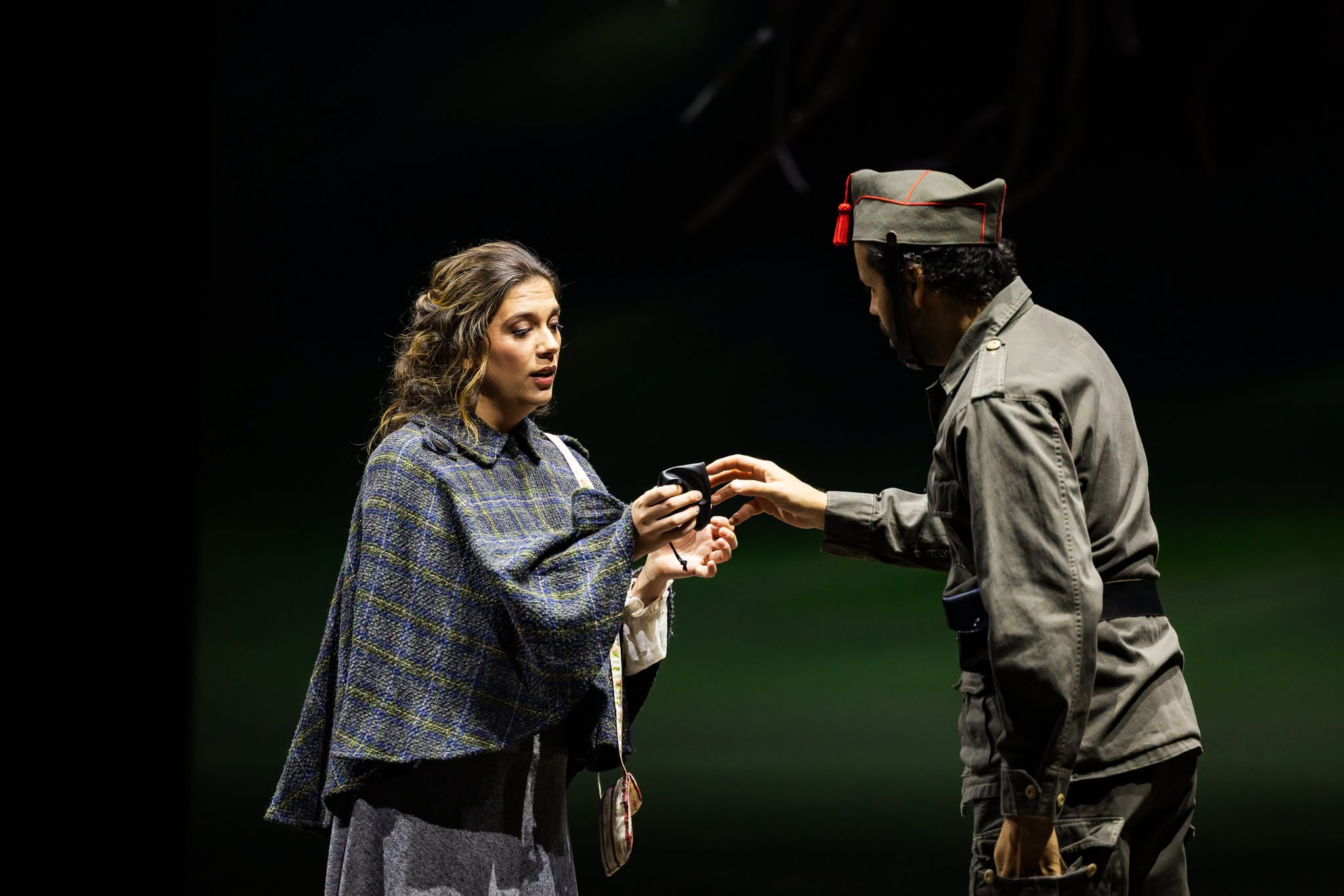
Micaëla was taken by Rafael Albuquerque, most recently seen here as a charming Lauretta in Gianni Schicchi last year. Albuquerque sang her Act 3 aria with passionate generosity, filling it with emotion and unafraid to take the voice to its limits. It was certainly deeply felt, although I did wish she had taken her foot off the gas slightly as she would still have been heard. That said, the emotion she brought was absolutely palpable. Her creamy, lyric soprano is certainly attractive and her diction was clear, even if the words were occasionally lost in the longer, legato lines. Clearly a singer of generosity and feeling. As Escamillo, Gustavo Castillo is a new name to me and one I hope I’ll see again soon. The Venezuelan baritone has a burgeoning career in regional Swiss and Italian theatres and is undoubtedly a name to watch. There’s something about the voice. It hits you straight in the soul, so rich in overtones that one can’t help but be immediately taken by it. He executed the difficult tessitura of his big number with ease and aplomb; the registers absolutely integrated from top to bottom. Castillo also has charisma to spare, holding the stage with winning confidence.
The remainder of the cast consisted of familiar names. Raquel Alão’s crystalline, focused soprano was an asset to the cast as Frasquita, while Ana Ferro’s sunny mezzo was a congenial Mercédès. Marco Alves dos Santos brought his customary verbal acuity and well-placed tenor to the role of the Remendado, while Tiago Matos gave us a confident Dancaïre. Christian Luján’s Morales was suitably gruff, while Luís Rodrigues sang Zuniga with efficiency. The choruses had a very good evening. The adults, prepared as always by Giampaolo Vessella, sang with big, bold tone and excellent diction. I was pleased to hear the sopranos sing with focused intonation, while the mezzos were nicely piquant. The tenors and basses sang with firm tone and good blend. The children, prepared by Francisco Pinheiro, were absolutely terrific. They sang with winning confidence, in excellent French, and were also extremely disciplined in sound. Given how young several of them were, this was really impressive.
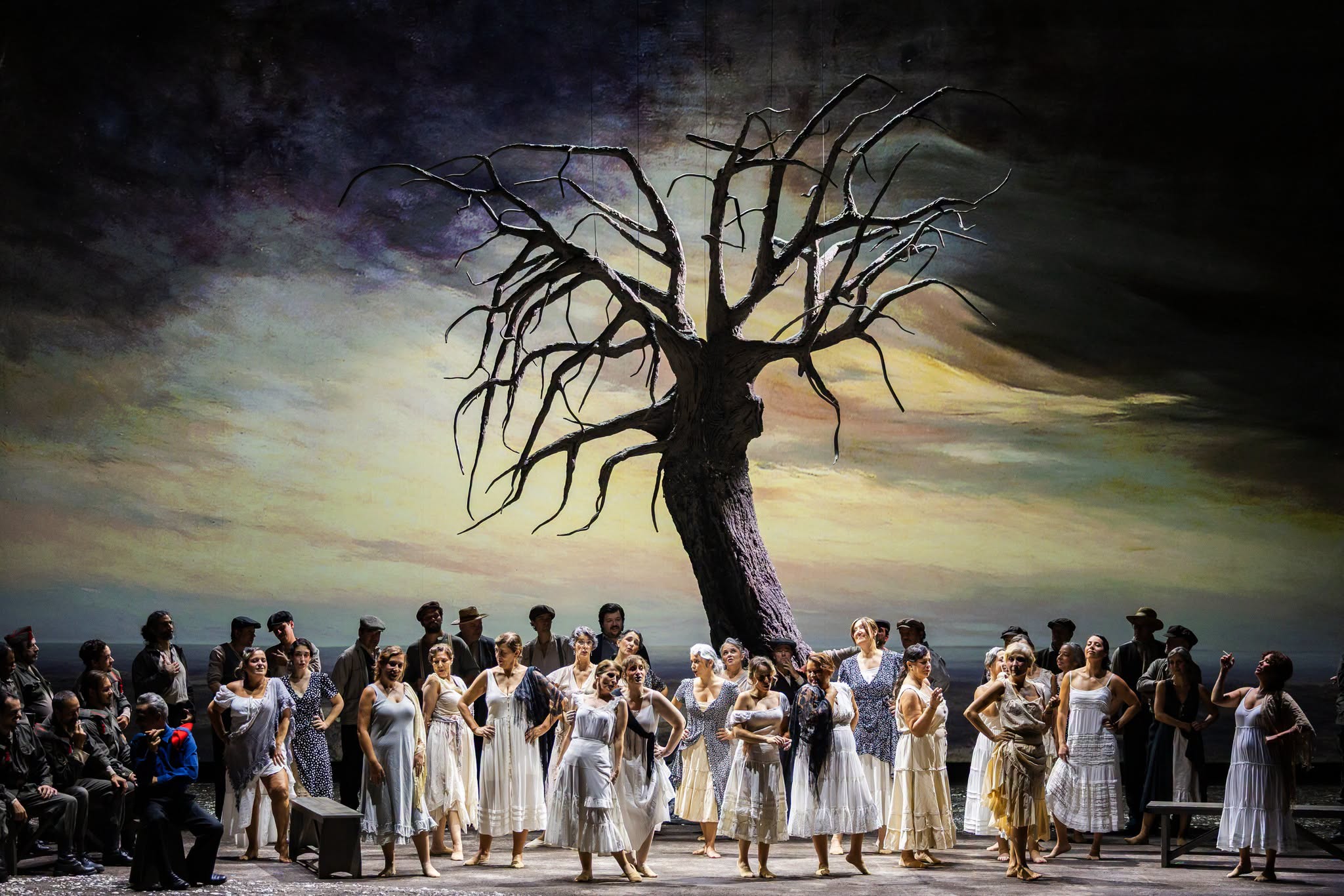
I must admit that I found this evening’s Carmen to be most enjoyable. Yes, López’s staging is rather basic and some of his personenregie is rather rudimentary. And yet, the clarity of the diction from most of the cast made their roles live and the text come alive. Combined with Pirolli’s wonderfully fluid and vibrant conducting, with an orchestra on top form and choruses singing with great assurance, this was an evening that passed by as if in an instant. The audience response at the close was extremely warm and generous for the entire cast.

