Wagner – Der fliegende Holländer
Holländer – Claudio Sgura
Senta – Johanni van Oostrum
Erik – Ian Koziara
Daland – Sorin Coliban
Steuermann – Paolo Antognetti
Mary – Ester Ferraro
Coro del Teatro Municipale di Piacenza, Orchestra dell’Emilia-Romagna Arturo Toscanini / Martijn Dendievel.
Stage director – Matteo Mazzoni.
Teatro Municipale di Piacenza, Piacenza, Italy. Sunday, November 8th, 2026.
Today was only my third-ever visit to the Teatro Municipale in Piacenza. For a city with a population of just over 100 000, it’s remarkable that it’s able to host such an enterprising theatre – and to engage such tempting casts. This Der fliegende Holländer is the last production in the house’s 2025 – 26 season, before the new operatic year opens next month with a new production of Siberia. For this final show of the season, the house has presented an international cast, featuring singers who regularly frequent some of the world’s most eminent theatres, all under the direction of the exciting young Flemish conductor, Martijn Dendievel. The house itself is an absolute jewel. To be able to hear Wagner’s score in such an intimate space was certainly a treat and the performance standards are generally of a strong level.
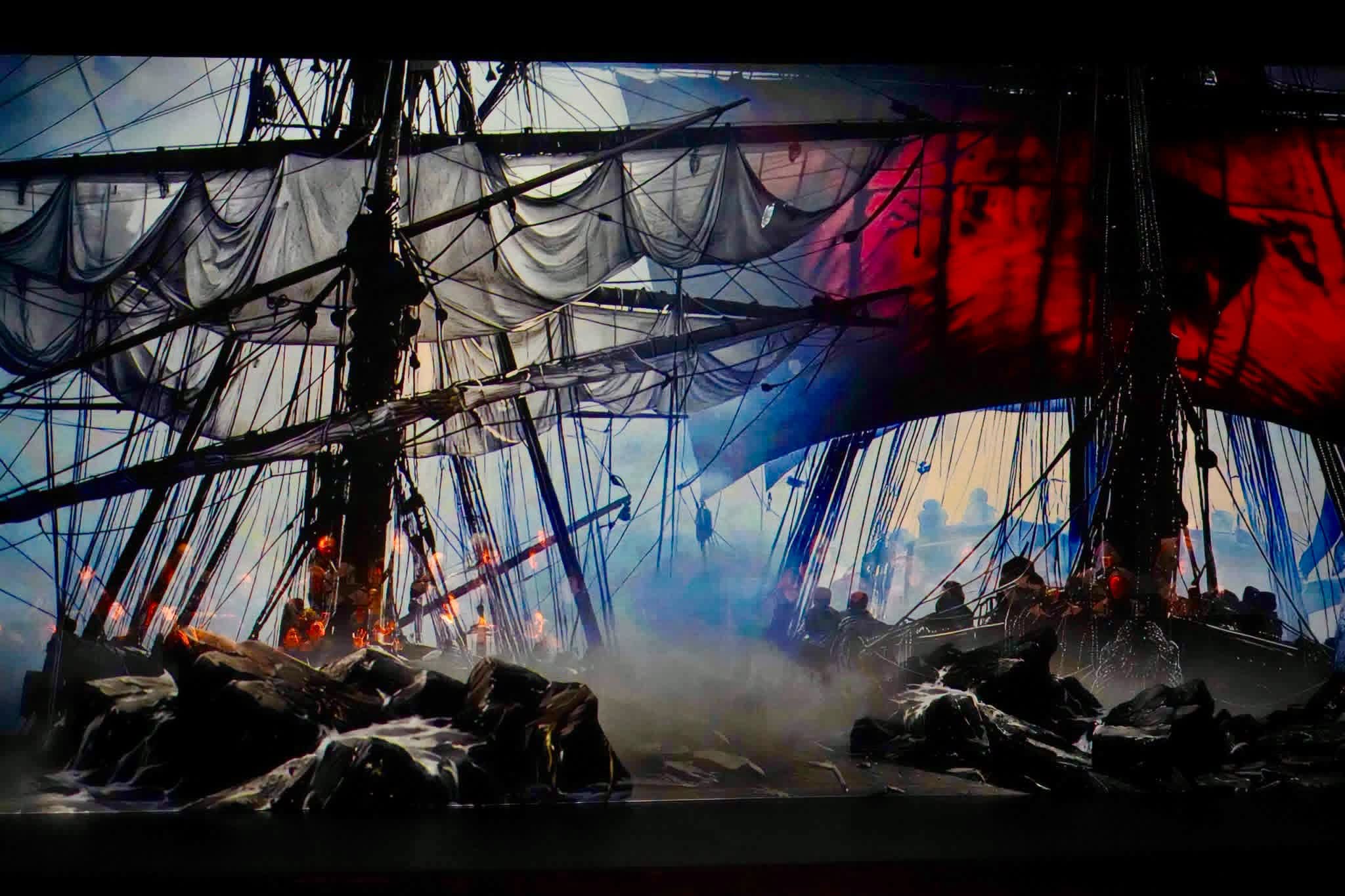
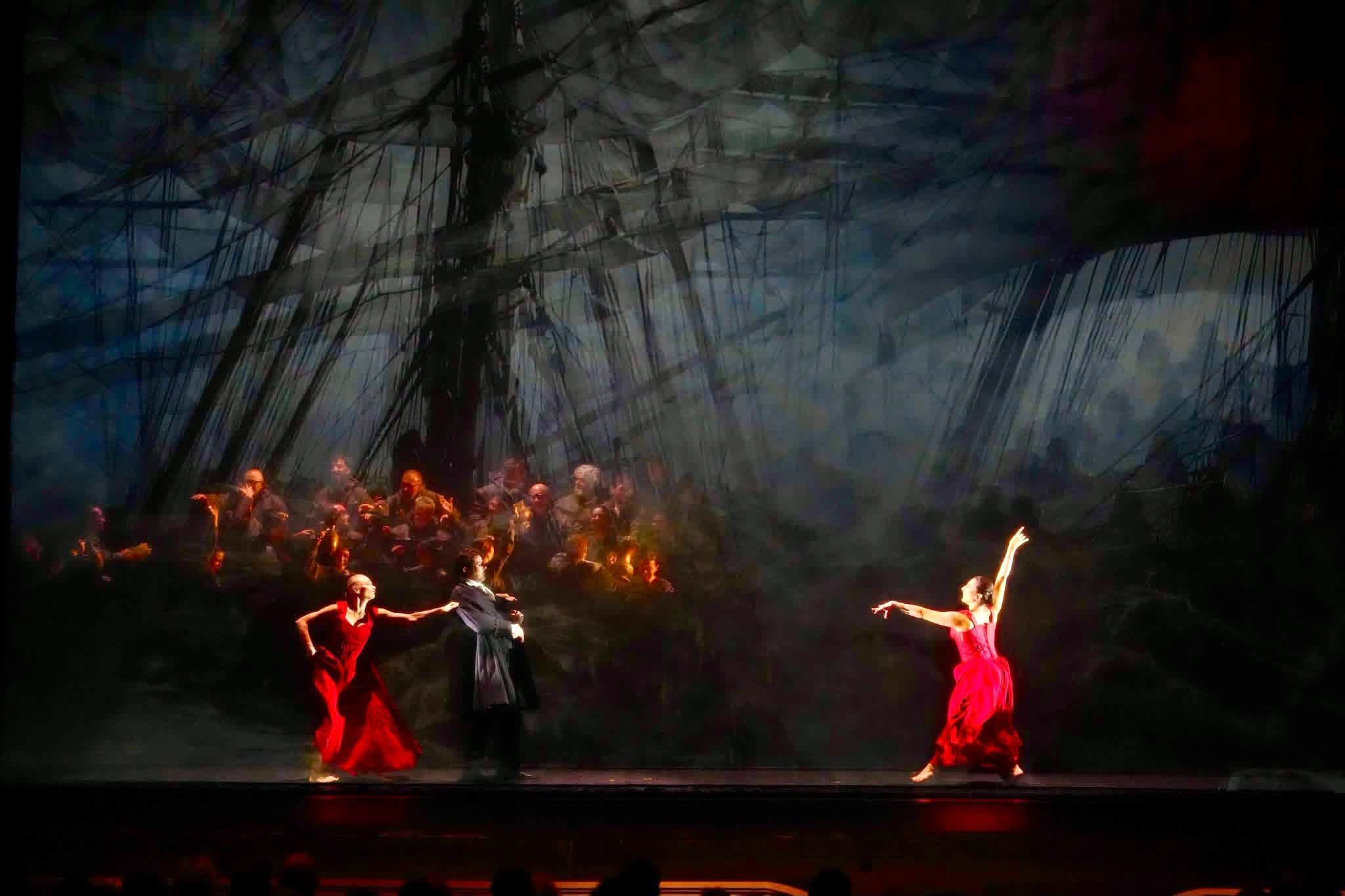
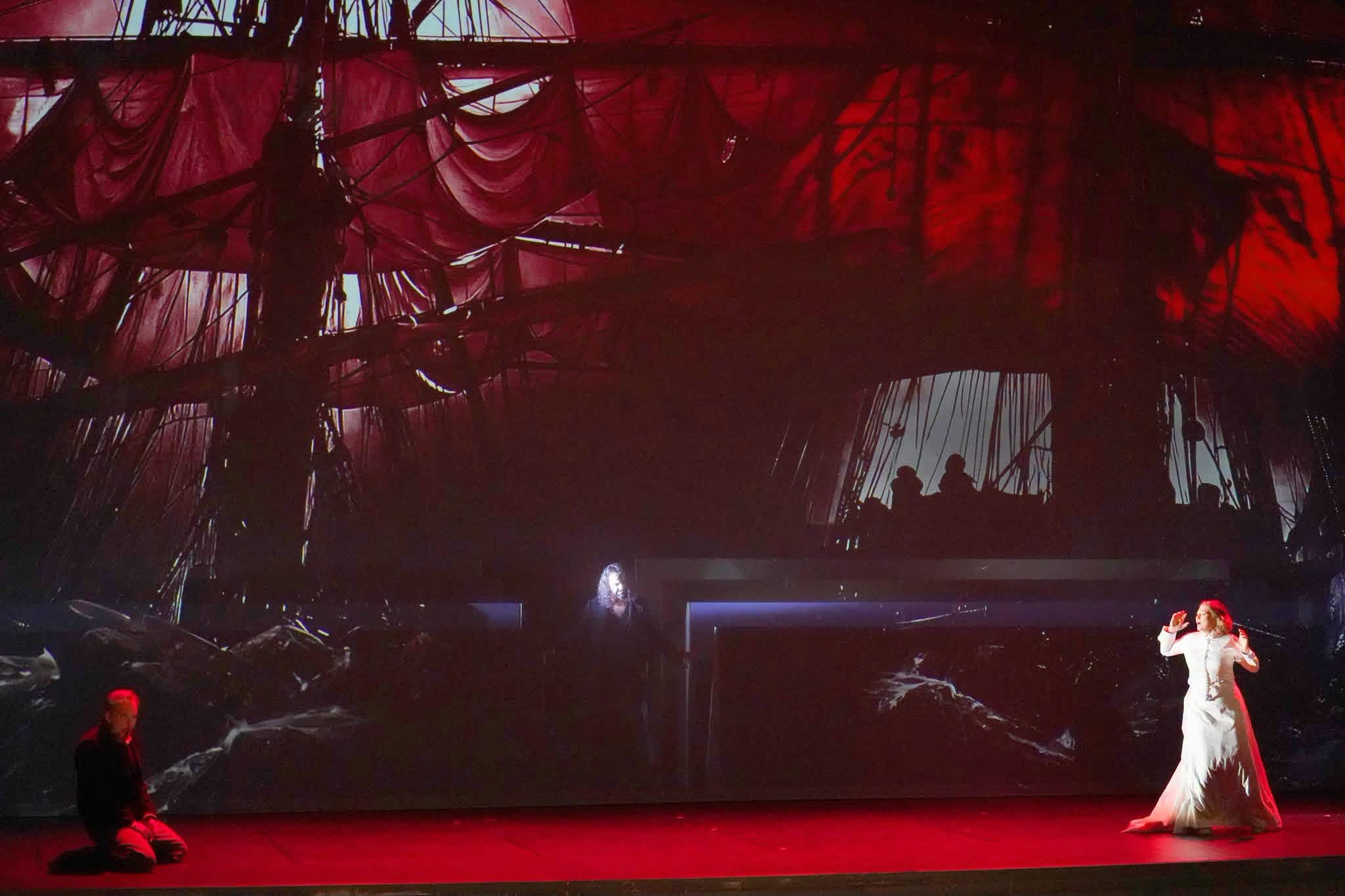
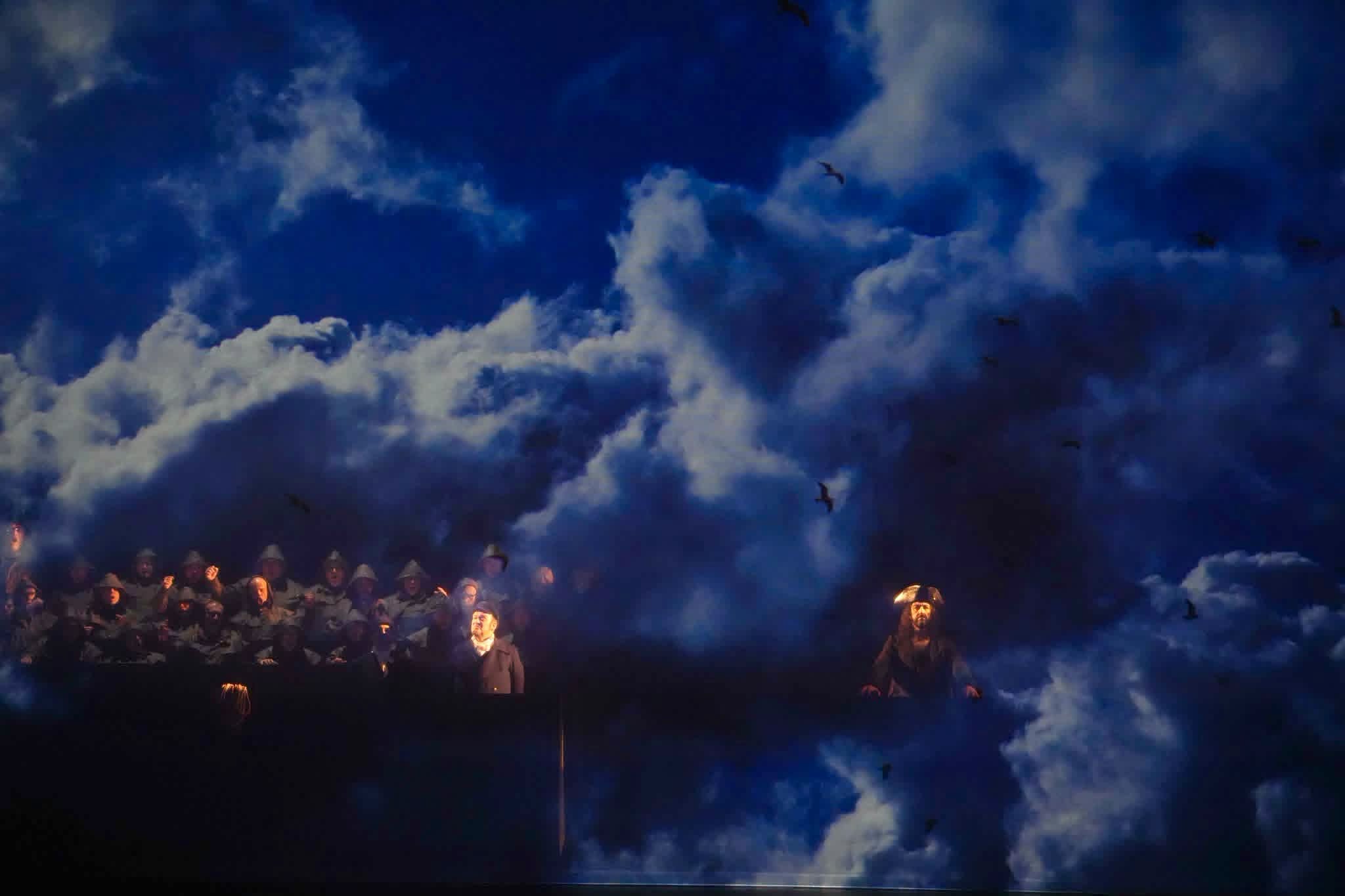
The staging was confided to Matteo Mazzoni, with video designs by Luca Attilii. They give us an intelligent solution to being able to present such a phantasmagorical work in an efficient, and also presumably cost-effective, way. Attilii’s projections are used to cover the entirety of the proscenium, making it actually look like the Holländer is appearing from the waves and that the crews of seamen are indeed on the boat. The set is extremely basic, consisting simply of rows of choir pews, where the chorus sings, while also giving them the facility to use the score as they dispatch the music. What Mazzoni and Attili do very much succeeds in amplifying the ideas of the score, bringing out its fantasy and otherworldliness, thanks to the video projections that are as integral to creating the characters as the principals themselves.
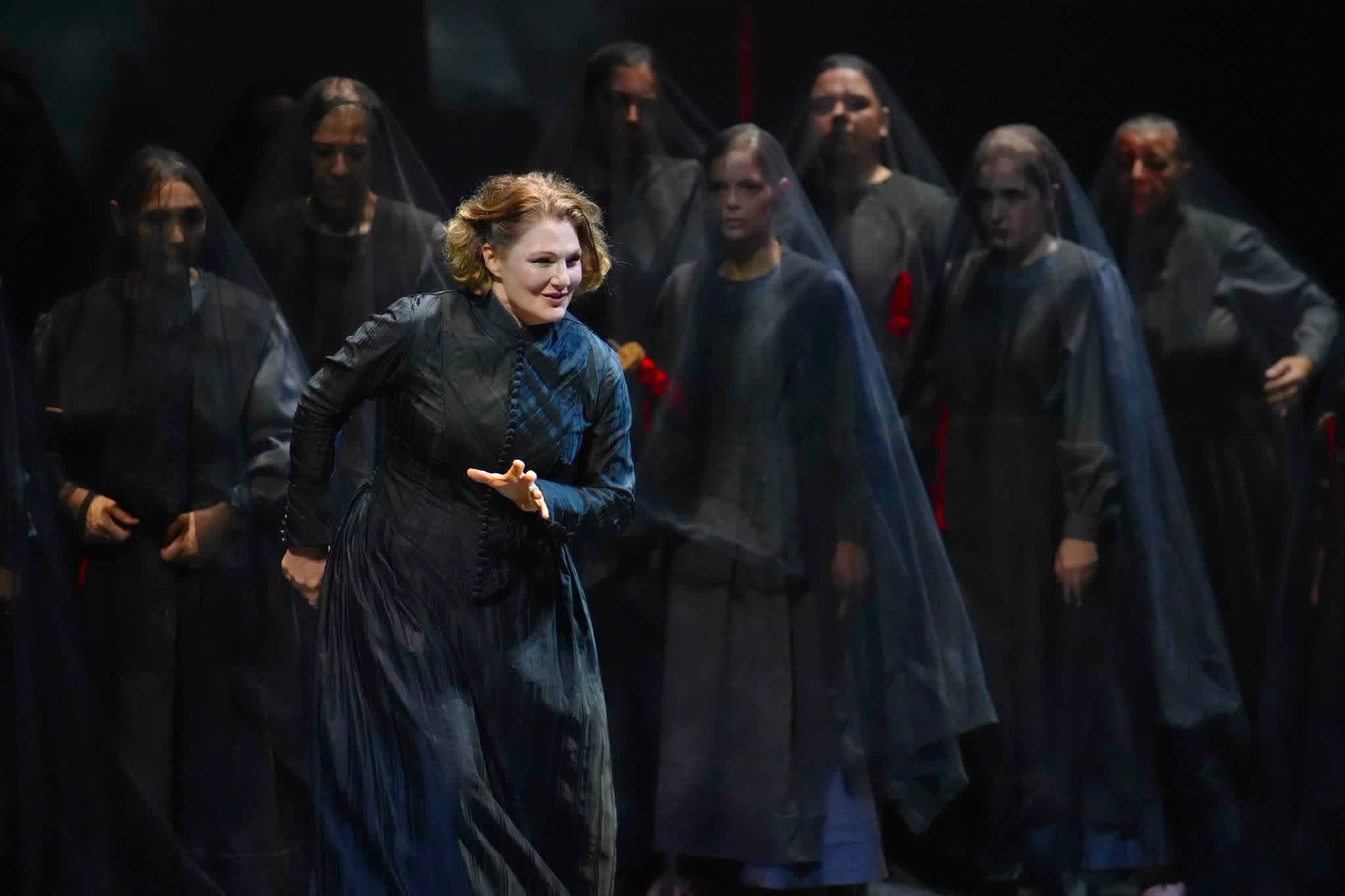
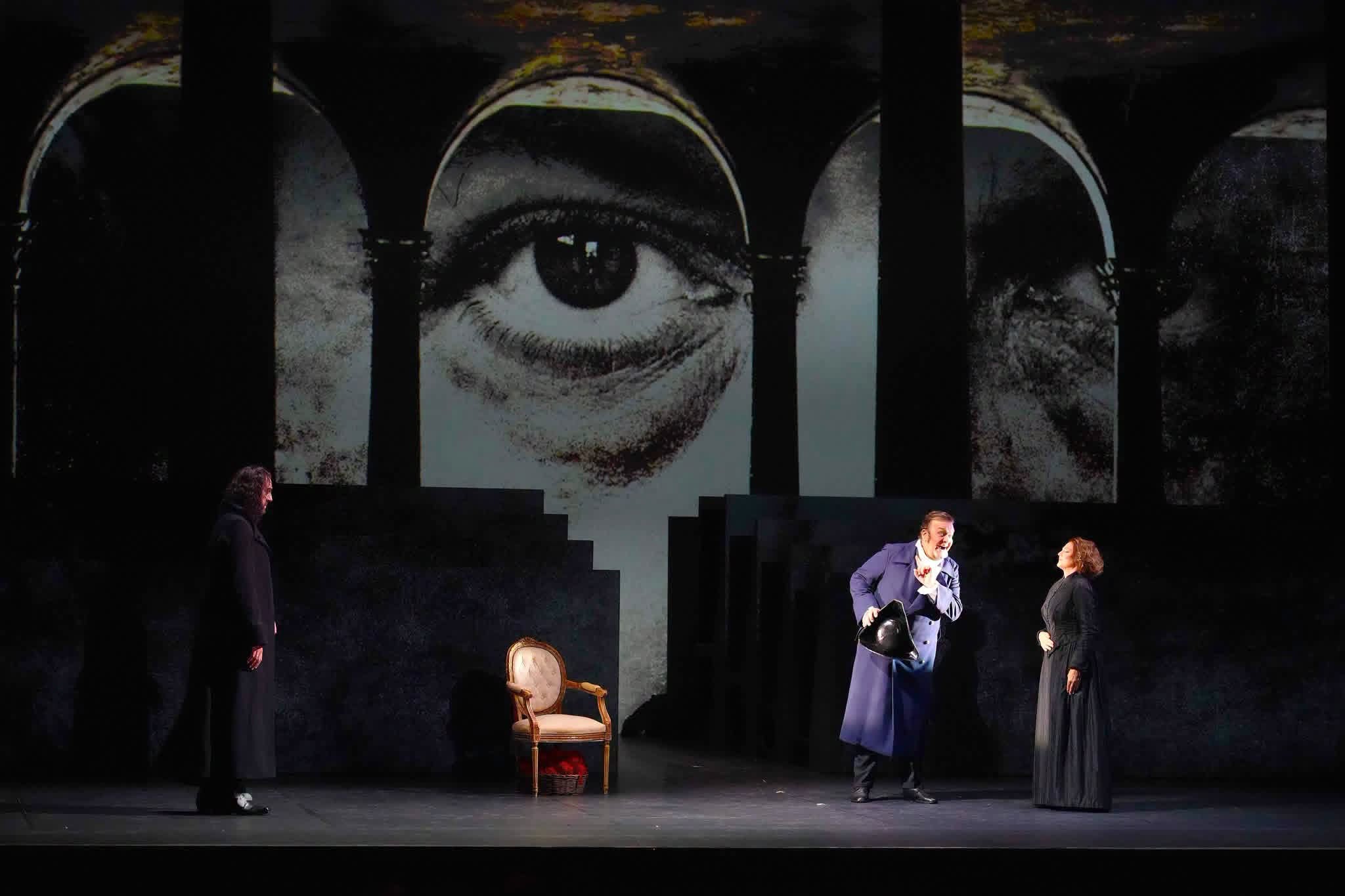
That said, not quite everything works. I’m not quite sure what the two sirènes in red ball gowns were dancing around the stage for – they looked rather out of place in such a maritime environment, though they were clearly not Scotswomen since their gyrations also included what appeared to be a slow-motion cancan. Perhaps it was a way to make use of the house’s ballet. The personenregie also consisted of a considerable amount of time spent parking the principals at the front, with arms outstretched, while moments of great importance were marked with them descending to their knees. Similarly, I don’t quite see why Senta’s ballad included her indulging in what appeared to be slow-motion Pilates movements, but I’m sure it was useful for her vocal production. Perhaps as a consequence of needing to use the score, the chorus was placed in the rows while occasionally indulging in some random arm movements that seemed aleatory and inconsistent. It’s a shame the personenregie was so perfunctory because the staging itself looks good and it really does make the story come to life visually. The most positive aspect of the direction of the principals is that they most certainly engaged with each other and were clearly differentiated characters.
Dendievel led a vigorous reading that was generally very well paced. The start of that celebrated overture was most striking: icy strings bringing that cold maritime air, heroic horns invoking life on the high seas, all combined in this most immediate acoustic with an exhilarating rhythmic dynamism that just pulled the listener in. He obtained some very good playing from the orchestra, the odd bit of scratchiness in the strings in the faster figures at the close of the overture, or a few small brass accidents along the way, were very much passing moments. I did find his pacing of the first half of the Senta/Holländer duet to be somewhat on the luxurious side, although it was very well supported by the principals – and again, this was very much an exception in a reading that was visceral and exciting. Dendievel also succeeded in keeping his forces fully together in ‘Steuermann, laß die Wacht’ in what must have been very tricky circumstances given that the chorus was obscured by the projections and I wonder how much of him they were able to see. It was obvious from the clarity of his gestures to them that they were fully on board with the direction set from the pit. This is only Dendievel’s second Wagner, after a Lohengrin in Sofia before the summer that sadly I was unable to get to. I very much look forward to seeing more Wagner from him in due course.
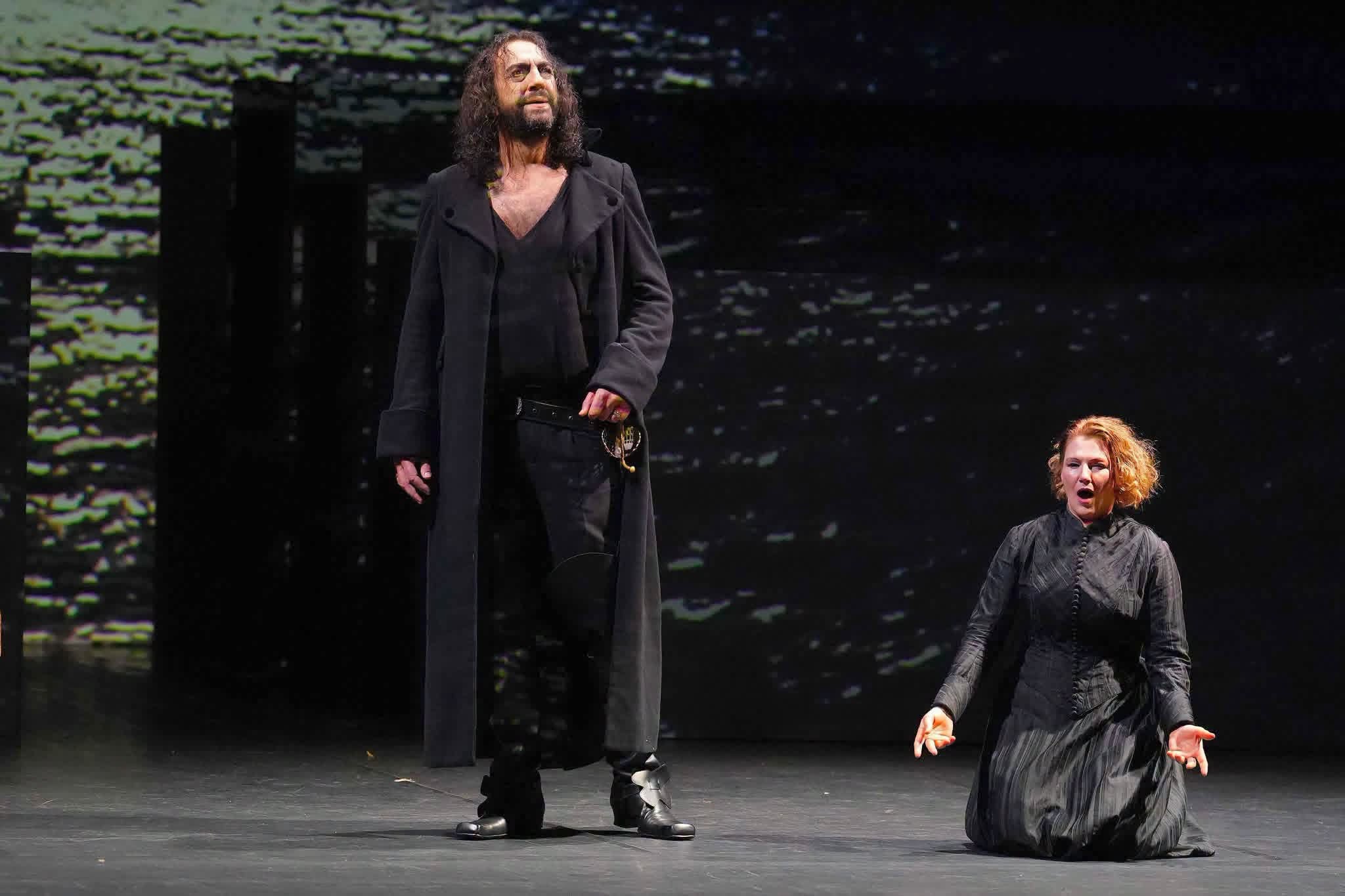
Claudio Sgura was an intriguing piece of casting in the title role. Having seen him as an utterly musical and aristocratic Scarpia in both Naples and Florence, I was keen to see him take on a very different assignment. Sgura has clearly worked very hard at internalizing the role and familiarizing himself with the language. It’s a role that sits well in his dark, velvety baritone and the tessitura was negotiated with confidence. As a singer of the Italian school, Sgura’s vocalism privileges the line and legato over a text-forward approach, and this made his Holländer much more focused on beauty of tone rather than illustrating the character through the text – although the words were frequently perceptible. That said, his stage presence made the haunted, almost neurotic, nature of his character most realistic and his was an interesting take on the role.
His Senta was Johanni van Oostrum. She’s a natural stage animal and, combined with her significant experience of singing Wagner’s music, brought an energizing effect to the stage. Her soprano has creamy chalkiness to the tone, with a focused burst of vocal energy, all combined with the easy top that this role requires. Van Oostrum kept the text constantly forward, making the words live, so that her singing became utterly compelling thanks to that explicit union between word and action. Erik was sung by Ian Koziara. He made a genuine attempt to sing with long, legato lines, in so doing giving us a very classy piece of singing. His tenor has a rich lower register, while the top does have a tendency to become paler and taper off. The voice is, however, a very good size and his diction impeccable.
Sorin Caliban took a little while to find his optimal form as Daland, the voice initially slightly grey. He very quickly found his feet, his bass emerging with generous resonance and silky tone. As Mary, Ester Ferraro was a very welcome surprise. The owner of a sunny mezzo she also has excellent sung German. Paolo Antognetti sang the Steuermann in a warm, handsome and forwardly-placed tenor. The chorus, prepared by Corrado Casati, sang with lusty enthusiasm, with the tenors and basses giving some delightfully uninhibited and rustic singing. The sopranos and mezzos featured some very confident contralto singing, while their tuning in the spinning chorus was strikingly accurate.
Today’s Holländer gave much to enjoy. The staging was visually intriguing and offered several striking stage pictures. The singing was always honourable with performances from the principals that were vibrant and deeply felt. Getting to hear this score in such an intimate house was a real treat and Dendievel led a vigorous and exciting reading, ensuring a unanimity of approach between stage and pit. The audience response at the end was warm and generous for the entire cast. While this was the final performance of two in Piacenza, the cast will be decamping to the Teatro Pavarotti-Freni in Modena for two further performances later this month.

