Britten – Peter Grimes
Peter Grimes – Daniel Brenna
Ellen Orford – Maria Bengtsson
Auntie – Tuija Knihtilä
Niece 1 – Emma Kajander
Niece 2 – Hanna Juntunen
Balstrode – Tuomas Pursio
Mrs Sedley – Sarah Zieba
Swallow – Jouni Kokora
Ned Keene – Ville Rusanen
Bob Boles – Mika Pohjonen
Rev Horace Adams – Heikki Hattunen
Hobson – Marko Nykänen
Finlands nationaloperas kör, Suomen kansallisoopperan orkesteri / Dima Slobodeniouk.
Stage director – David Radok.
Suomen kansallisooppera ja -baletti – Finlands nationalopera och -balett, Helsinki, Finland. Saturday, November 21st, 2026.
This afternoon marked the first performance in the latest run of David Radok’s 1998 production of Peter Grimes at Finnish National Opera. When the staging was new, it was the first ever of this work in the Finnish Republic. Now, the theatre has chosen to revive it under the musical direction of house chief, Dima Slobodeniouk. It’s a great choice of repertoire for a company with such a superlative chorus and orchestra, not to mention a strong ensemble, with the vast majority of the cast consisting of local singers. The two imports, Daniel Brenna in the title role and Maria Bengtsson, an experienced Ellen Orford, complement the cast as a whole.
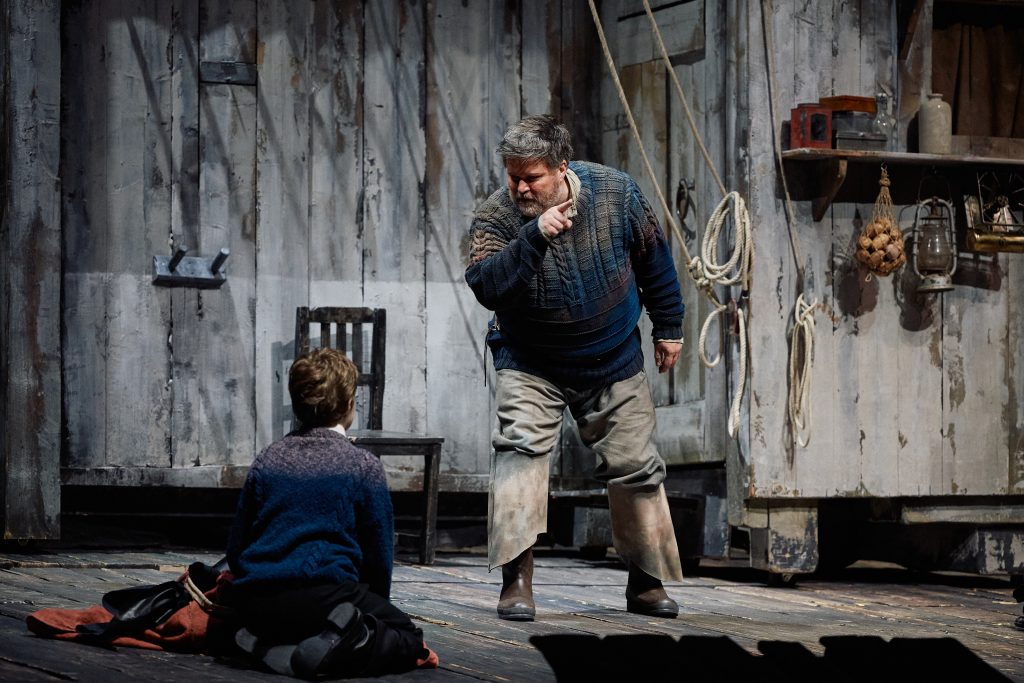
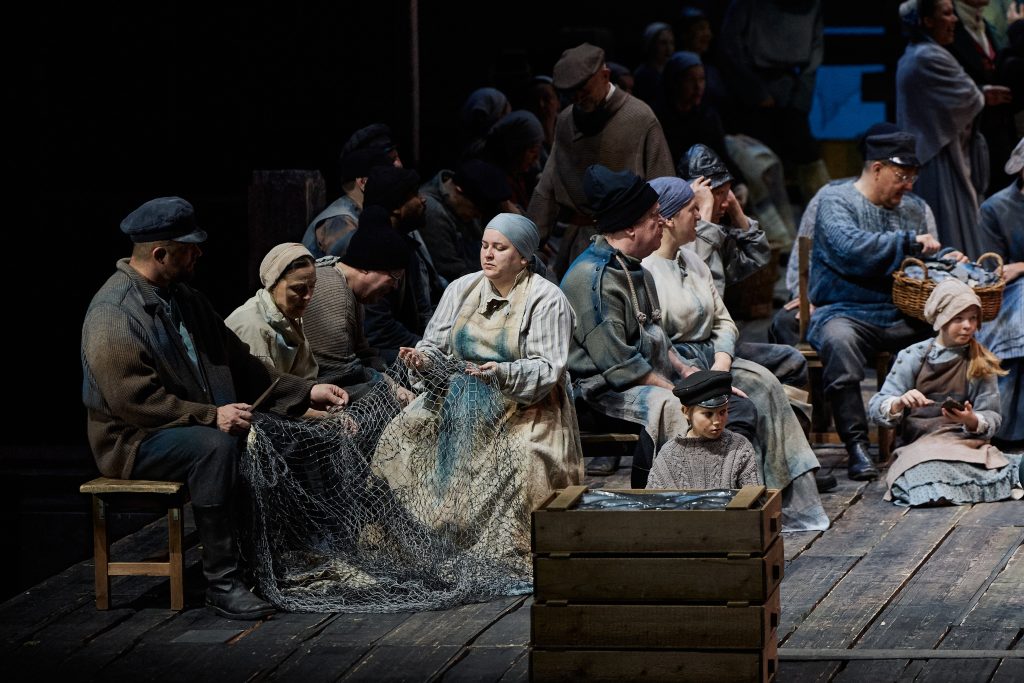
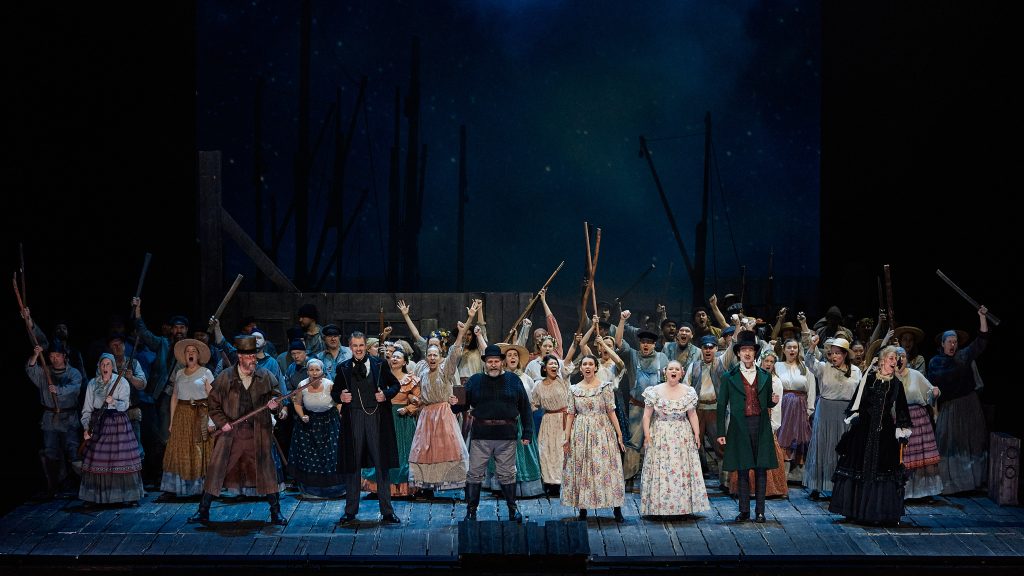
Radok’s staging, revived here by Kim Amberla, is an interesting one. He sets the action during the period specified in the libretto, in a closed Victorian community. The costumes, by Tazeena Firth, give that sense of a brutal, homogeneous environment, particularly as the villagers emerge from church in Act 2, with the sea of black costumes reinforcing a sense of collective conformity in which any difference immediately stands out. Against this backdrop, Radok seems to suggest that Grimes has a very tenuous grasp of sanity from the very first moment. ‘Now the Great Bear and Pleiades’ comes across less as the musings of a dreamy outsider who has nothing in common with the village, and more the ravings of someone who has already lost his way. The loss of Grimes’ second apprentice in Act 2 was staged as a clear accident, the consequence of a man unable to live in the present, inhabiting instead a dream world with fatal implications for the boy in his charge. It gave the impression of someone who was fully negligent, rather than pointing to a more nefarious explanation. And yet, for the first two acts, I found this approach highly problematic: it felt all too simplistic, reducing Grimes from a character of unfathomable complexity to an all-too-obvious symbol of mental disintegration.
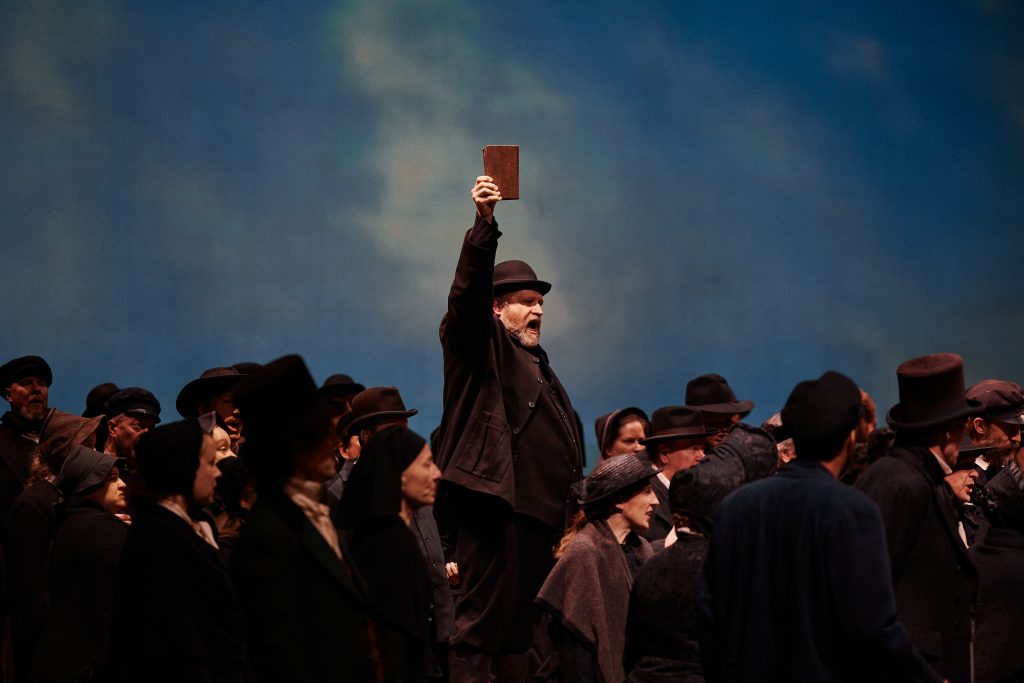
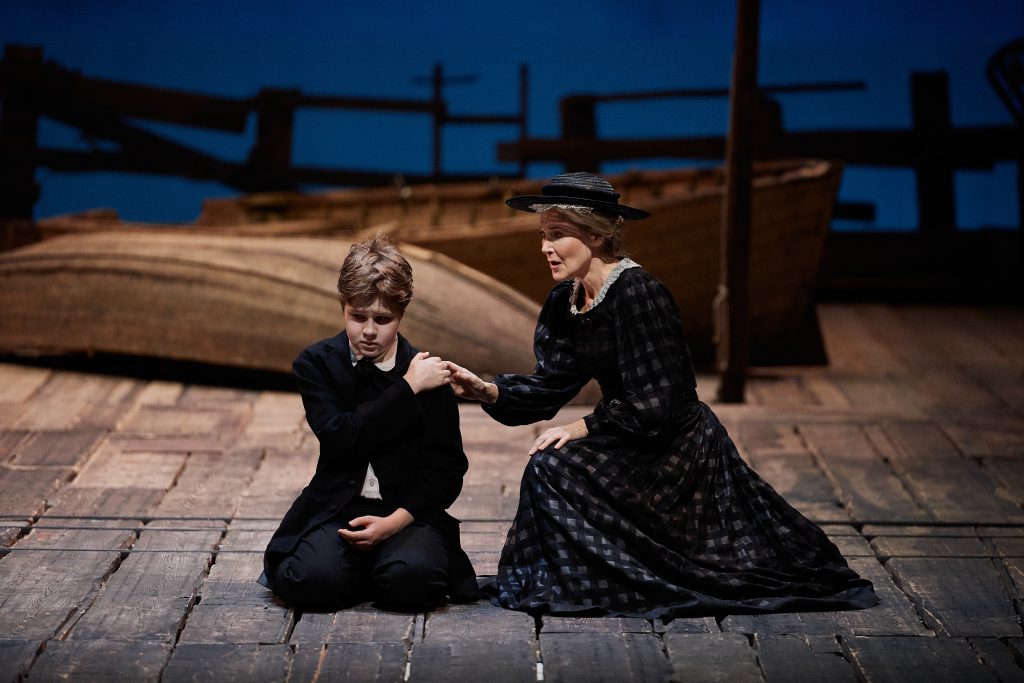
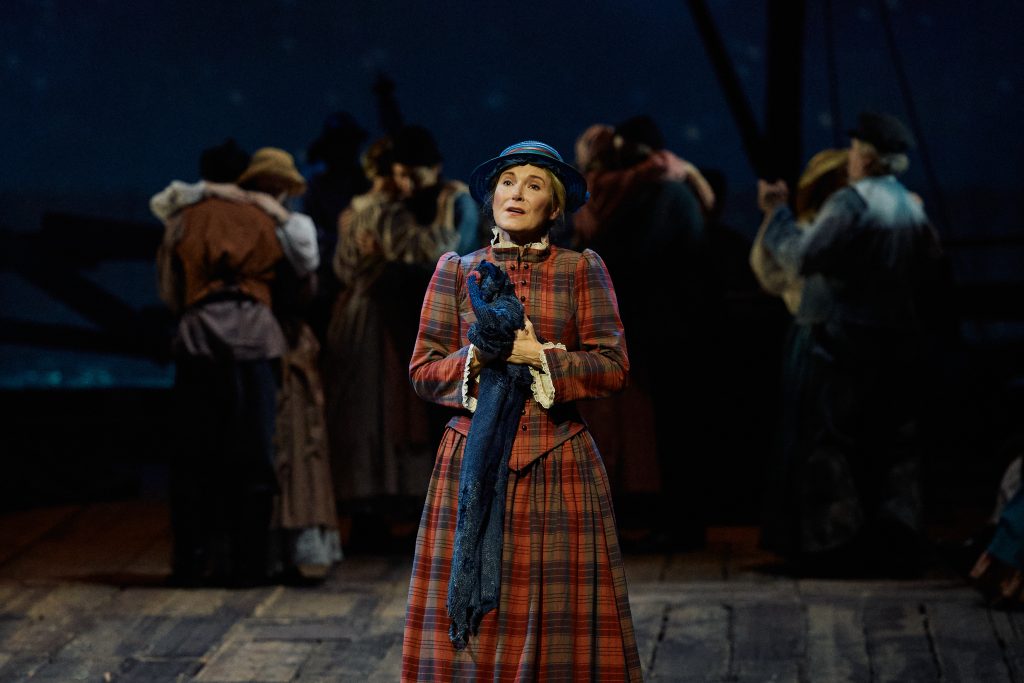
However, this impression changed in Act 3, with Grimes’ mad scene taking on extraordinary authority and shattering power. It was precisely because Radok and Brenna showed us how much further Grimes had to fall that Brenna’s ravings, accompanied by the shadowy off-stage voices, came across with such sheer horror and immediacy. One could not help but be moved. Radok’s staging also made me reflect on how nobody in the Borough was entirely innocent and that hypocrisy was rife – from Mrs Sedley’s gossiping and Ned Keene’s drug dealing, to Bob Boles’ sexual hypocrisy. Naturally, these hypocrisies have been explored in previous productions of the work, yet where Radok’s more original contribution lies is in the character of Ellen. Whereas one usually sees her as the force for good in the village, here, it felt that here that she bore some responsibility for the fates of Grimes and John, having insisted on securing a new apprentice for a man clearly unable to look after himself, let alone a child. In so doing, Radok sets up a rather bleak world where no one among the villagers is without fault.
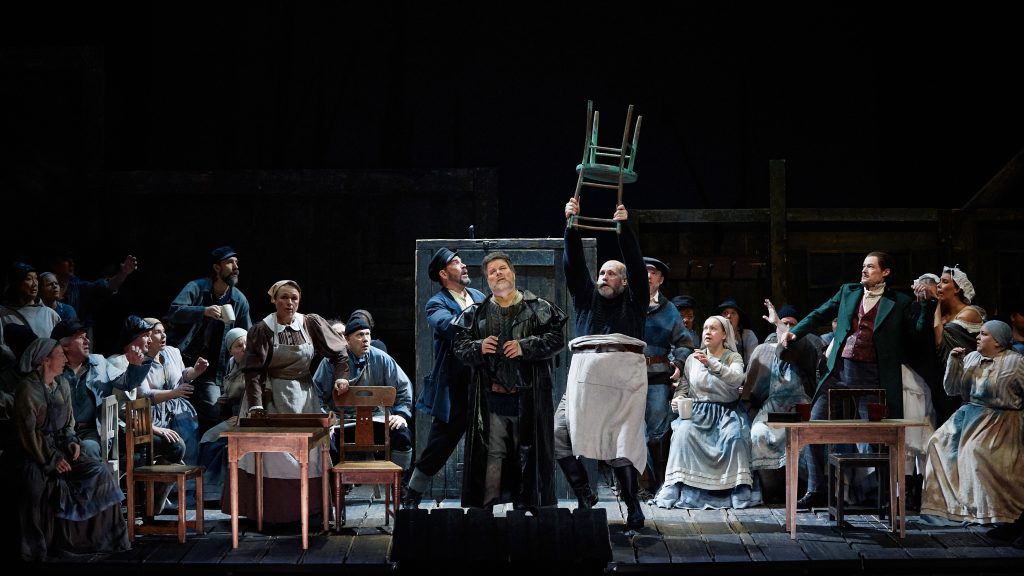
The personenregie is effective enough, with the forces moved around the stage appropriately. However, there was a considerable amount of stock operatic acting in the large ensembles, with principals lined up downstage, emoting towards the audience, while the chorus was placed behind them. I did wish that Radok had moved the chorus to the front in the storm scene to give us the benefit of the wall of sound they could produce, but there was a good reason he kept them back. By the time we got to the bloodcurdling cries of ‘Peter Grimes’ in Act 3, the choristers were brought to the front, and the sonic impact was absolutely massive – all the more overwhelming because Radok had reserved this positioning for that moment. On the whole, Radok’s staging is one that grows in power and impact, even if the approach doesn’t initially convince.
What did convince from the first measure was Slobodeniouk’s conducting. He’s especially fortunate to have such a superb orchestra at his disposal, and they maintained the excellent standard one has come to expect here throughout the evening. Slobodeniouk’s reading was fluid and rhythmically pointed, to the extent that the entire evening passed by as if in seconds. He was rewarded with playing of supreme rhythmic accuracy from his orchestra, whether in the icy strings of the first interlude that descended into the spectral depths of the cellos and basses, or the chilly harshness of the piercing winds. Slobodeniouk also gave Brenna the space for his mad scene to reach its full power, the solo tuba adding an appropriately eerie edge to the sound. The brass playing throughout was excellent, always unanimous in attack.
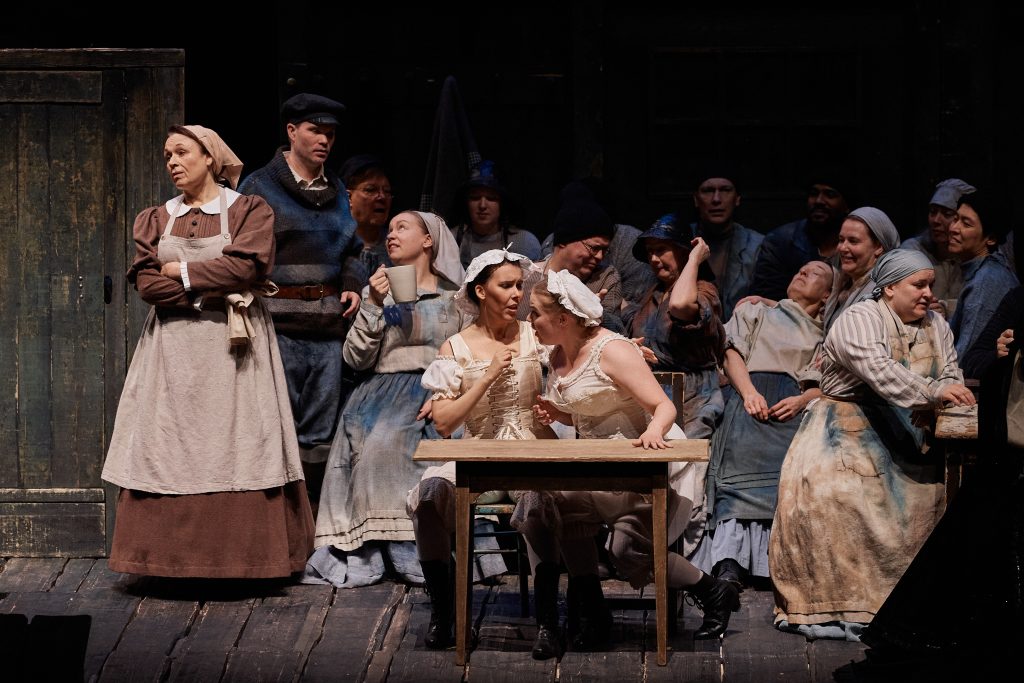
The house chorus was on simply phenomenal form, prepared by Marge Mehilane and Mauro Fabbri. This piece is a big sing for them, with the chorus as much of a protagonist as any of the principals. They gave us singing of staggering rhythmic precision, no ragged consonants here, just a group of people inhabiting the drama and singing a complex score with the utmost discipline, both of rhythm and of tone. The blend of the sound was so even, which meant that when they got to those big cries of ‘Peter Grimes’, the impact was shattering, the sound absolutely overwhelming. This is the kind of operatic choral singing one would travel a long way to hear – indeed, I did today.
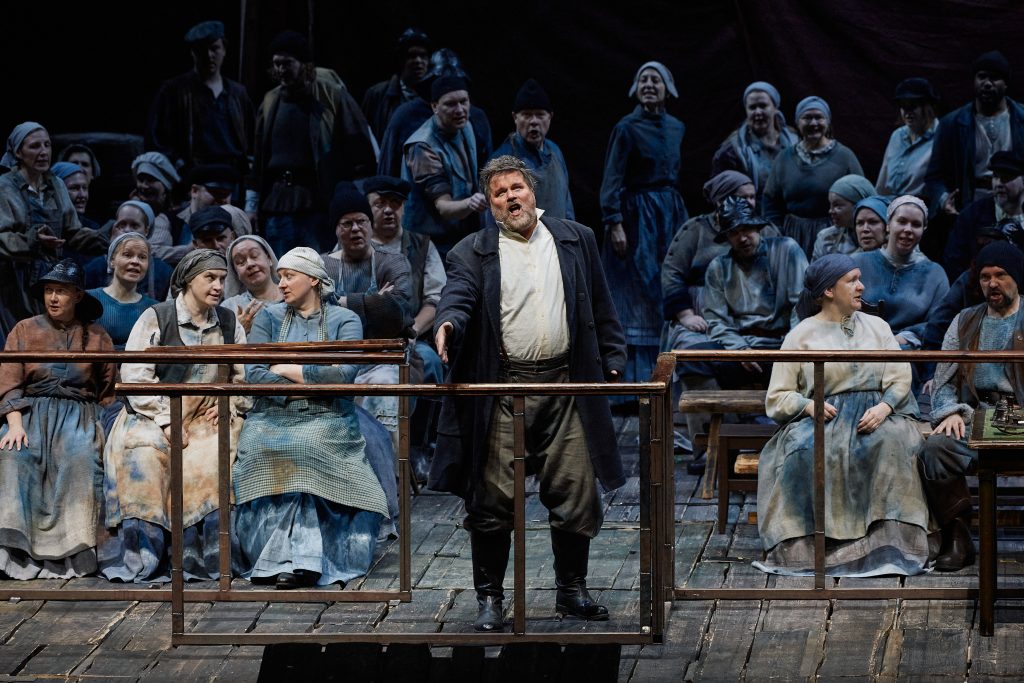
Brenna’s was an interesting Grimes. I imagine many of the choices he made in his interpretation were shaped by Radok’s staging. His ‘Now the Great Bear and Pleiades’ was initially sung in a crooning voix mixte, the oddness of the vocal incantation seemingly out of place in the pub, making Grimes’ grasp of sanity immediately tenuous. His big, bulky tenor also sounded ungainly in his conversation with Ellen at the start of Act 1, but that too may well have been part of his character portrayal. Brenna sang the role in very crisp English, although some of his vowels and diphthongs were perhaps more suggestive of Nouvelle-Angleterre than Suffolk. Brenna rose to the demands of the mad scene with horrifying power, his repeated cries of ‘Peter Grimes’ seemingly disintegrating, revealing the harrowing depths of the character’s psychological collapse.
Bengtsson brought her familiar soprano, with its creamy duskiness, to the role of Ellen. She sang Britten’s melismas as if they were the easiest thing in the world, bringing a sense of limpid beauty that belied the angularity of the lines. She also capped the textures in the Act 2 quartet with Auntie and the nieces, bringing generosity and warmth, the echoes of Der Rosenkavalier unmistakable. In Act 3, Bengtsson’s horror at Grimes’ imminent demise was all-too palpable giving her interpretation a combination of humanity and implicit guilt that was immensely affecting.
The cast as a whole was testament to the extremely high standards one has come to expect here. Tuija Knihtilä’s Auntie was deliciously chesty, yet also seemed to serve as the moral centre of the Borough, despite her line of business. Her Nieces, Emma Kajander and Hanna Juntunen, blended exquisitely in their interactions, both with crystalline voices of easy bloom. Tuomas Pursio’s Balstrode was sung in a big, beefy baritone, with impressive ease throughout the range, and his concern for Grimes as he sent him out to sea for the final time was clearly apparent both in his singing and in his brief speech. Sarah Zieba was perhaps mis-cast as Mrs Sedley. While her assumption was utterly professional, with great textual attention and admirable stage presence, the role ideally needs a contralto with organ-pedal low notes, particularly for Act 3. Zieba gave her utmost to the assignment and was completely dedicated to the role; on this occasion, however, it was perhaps not the best vehicle for her talents.
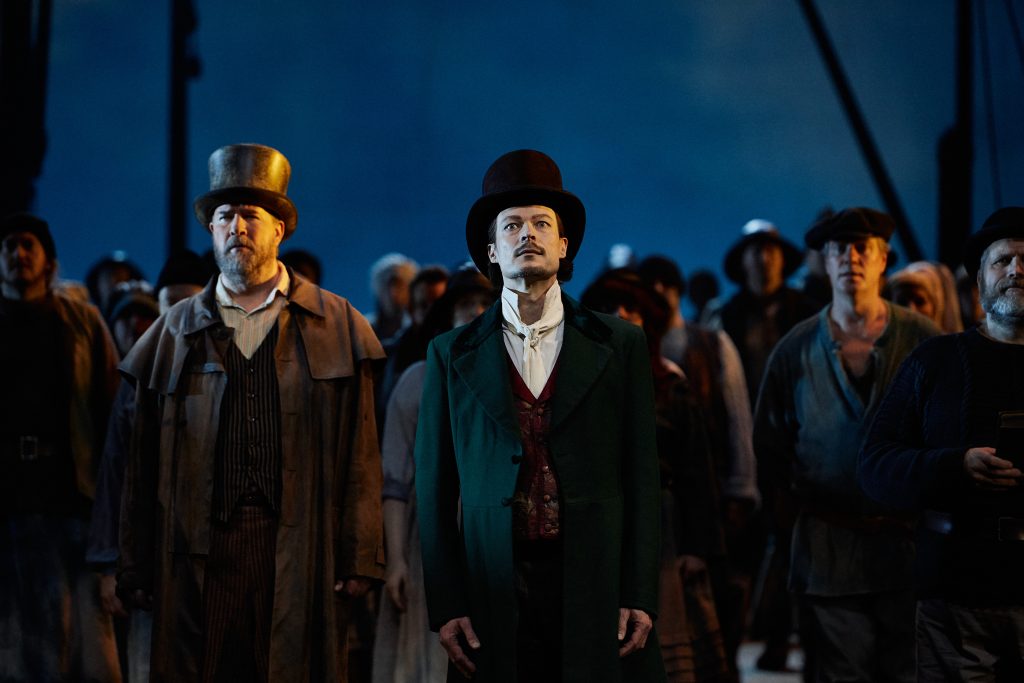
Ville Rusanen sang Ned Keene in a very healthy and focused baritone, and brought an extrovert and foppish stage presence. Jouni Kokora sang Swallow in a similarly firm bass-baritone with a rich lower extension. Mika Pohjonen’s Bob Boles was gregarious and generously sung, while Heikki Hattunen’s Reverend Adams was sung in a focused, well-placed tenor. Marko Nykänen sang Hobson in a big, cavernous bass, while also hitting his drum with impressive precision of rhythm.
Today’s Peter Grimes was above all a triumph for the house forces. The orchestral playing was thrilling in its accuracy and rhythmic agility, while the choral singing was nothing short of overwhelming. Radok’s staging is an interesting one, where he places mental illness at the heart of the story and leads one to question whether Grimes might have flourished had the inhabitants of the Borough made the effort to understand his mental state, rather than judging him or offering unthinking help. The solo singing gave much satisfaction and the diction throughout the cast was impeccable, with every word clear. The audience response at the close was warm for the entire cast. If you cannot get to Helsinki, the house will be streaming the production on OperaVision from November 28th.

